
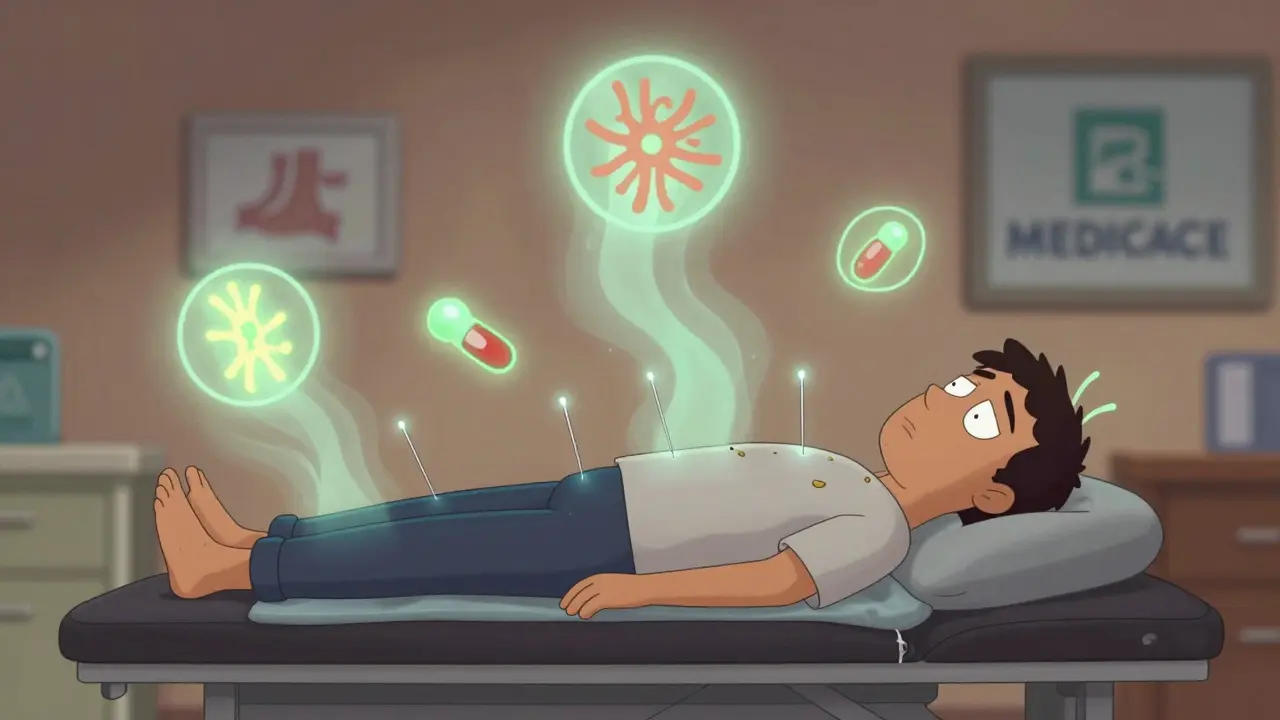
When you’ve been living with chronic pain for months-or years-it’s not just your body that’s tired. Your mind is worn out from trying everything: pills, physical therapy, ice packs, heat lamps, even those expensive massage guns. And then there’s the fear: What if the next pill makes me sick? What if I become dependent? What if nothing works?
That’s where acupuncture comes in. Not as a miracle cure, not as a fringe alternative, but as a real, evidence-backed option that millions are turning to-not because it’s trendy, but because it actually helps.
Acupuncture isn’t new. It’s been used for over 2,500 years in China. But today, it’s not just grandmothers in Beijing relying on it. Hospitals in the U.S., Australia, and Europe are adding it to their pain clinics. The Veterans Health Administration now offers it at 64% of its facilities. Medicare covers it for chronic low back pain. And the data? It’s hard to ignore.
How Acupuncture Actually Works for Pain
People often think acupuncture is about balancing energy flows or mystical meridians. That’s part of the tradition, yes. But modern science looks at what happens when a tiny needle goes into your skin.
Studies show it triggers real biological changes. Needles stimulate nerves, which send signals to your brain. That triggers the release of natural painkillers like endorphins and serotonin. It also reduces inflammation at the site of pain and can calm overactive pain pathways in your spinal cord and brain. Think of it like resetting a faulty alarm system-your body’s pain signals were stuck on loud, and acupuncture helps turn them down.
Dr. Peter Wayne from Harvard’s Osher Center says it best: acupuncture likely works by modulating how your central nervous system processes pain. That’s not magic. That’s neuroscience.
What Conditions Does It Actually Help?
Not all pain is the same. And acupuncture doesn’t work equally for all types.
Strong evidence supports its use for:
- Chronic low back pain (pain lasting more than 12 weeks)
- Knee osteoarthritis-especially the kind that makes walking painful
- Tension-type headaches and migraines
These aren’t minor complaints. In the U.S. alone, over 50 million people suffer from chronic pain. And for many, standard drugs like NSAIDs (ibuprofen, diclofenac) cause stomach bleeding, kidney damage, or don’t help enough. Acupuncture offers a different path.
One 2018 meta-analysis of nearly 21,000 patients found acupuncture provided meaningful pain relief that lasted at least a year after treatment ended. That’s not placebo. That’s durability.
For acute pain-like after surgery-acupuncture doesn’t beat strong painkillers. But it can help reduce how many pills you need. A 2022 review found acupuncture could lower opioid use after surgery, which matters when 47,000 Americans died from opioid overdoses in 2022.
It’s less effective for things like sciatica, fibromyalgia, or neuropathic pain from spinal injuries. Not because it doesn’t work at all-but because the evidence isn’t as strong yet.
Real Results: Numbers That Matter
Let’s cut through the noise with hard numbers.
In a major 2012 analysis of nearly 18,000 patients across 29 high-quality studies:
- Acupuncture reduced back and neck pain by 0.55 standard deviations compared to no treatment
- For knee osteoarthritis, the effect was 0.57 standard deviations
- For chronic headaches, it was 0.42
These aren’t tiny changes. A 0.5 SD drop is considered clinically meaningful-it’s the difference between being unable to sleep and being able to rest.
Even compared to sham acupuncture (where needles don’t go in the right spots or barely touch the skin), real acupuncture still showed a small but real advantage: 0.23 SD for back pain, 0.16 for osteoarthritis. That means the effect isn’t just about belief. There’s something happening with the real needles.
One study with 30 patients who had nerve pain after spinal injuries found a 61% drop in pain scores after 12 sessions. Another compared acupuncture to diclofenac (a common NSAID) for acute low back pain. The acupuncture group had greater pain reduction at 2 and 4 weeks.
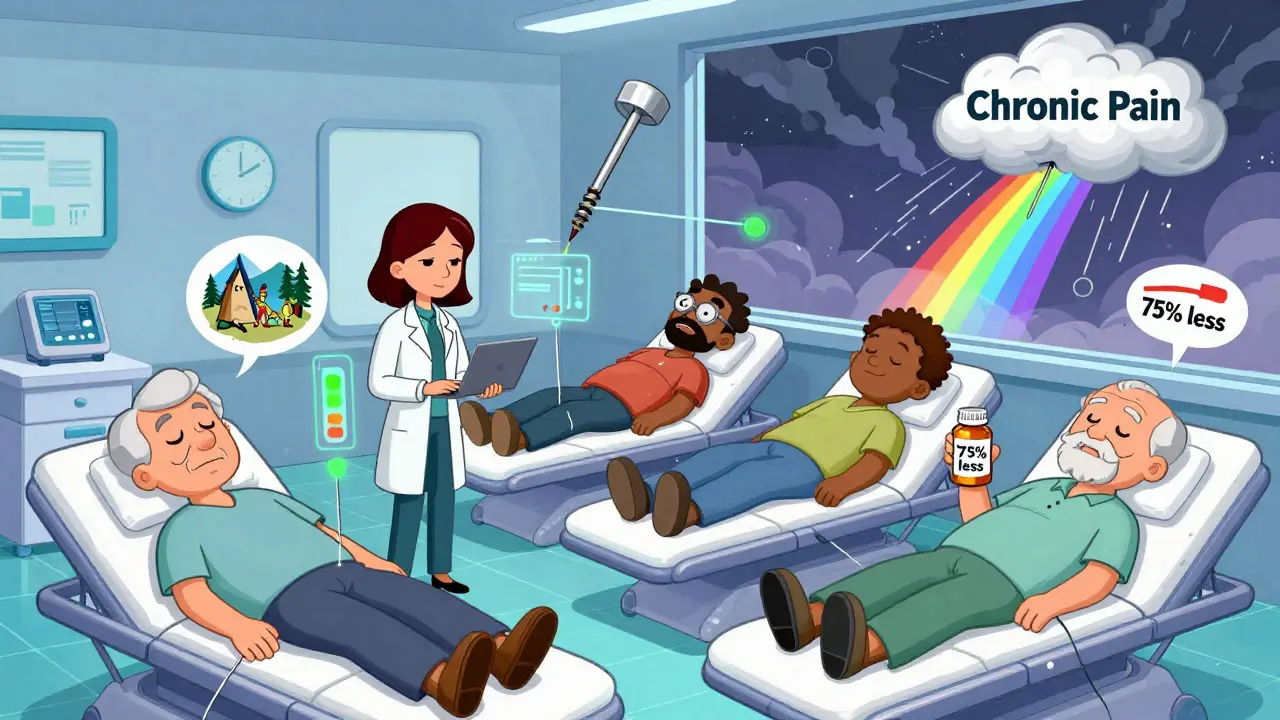
And here’s something patients notice: many reduce their pain medication. One Healthgrades review said, “After 10 sessions, I cut my pain pills by 75%-and it’s held for eight months.”
How Many Sessions Do You Really Need?
It’s not a one-and-done thing. Acupuncture builds up over time.
Most studies use 6 to 15 sessions, spread over 6 to 8 weeks. That usually means one or two visits per week. Each session lasts less than 30 minutes. Needles stay in for 15 to 30 minutes. Some practitioners use electrical stimulation on the needles-called electroacupuncture-which some studies suggest works better for certain types of pain.
Point selection varies. Some use fixed points (same for everyone). Others tailor them based on your symptoms, pulse, tongue, and history. The most effective approach? It’s often a mix: core points for the condition, plus personalized ones for your body’s response.
Don’t expect instant relief after the first visit. About 68% of patients report noticeable improvement by session six. That’s why sticking with the full course matters.
Once you feel better, maintenance sessions every 4 to 8 weeks help keep pain under control. For chronic conditions, it’s more like managing blood pressure than curing a cold.
Is It Safe?
Yes. Extremely safe.
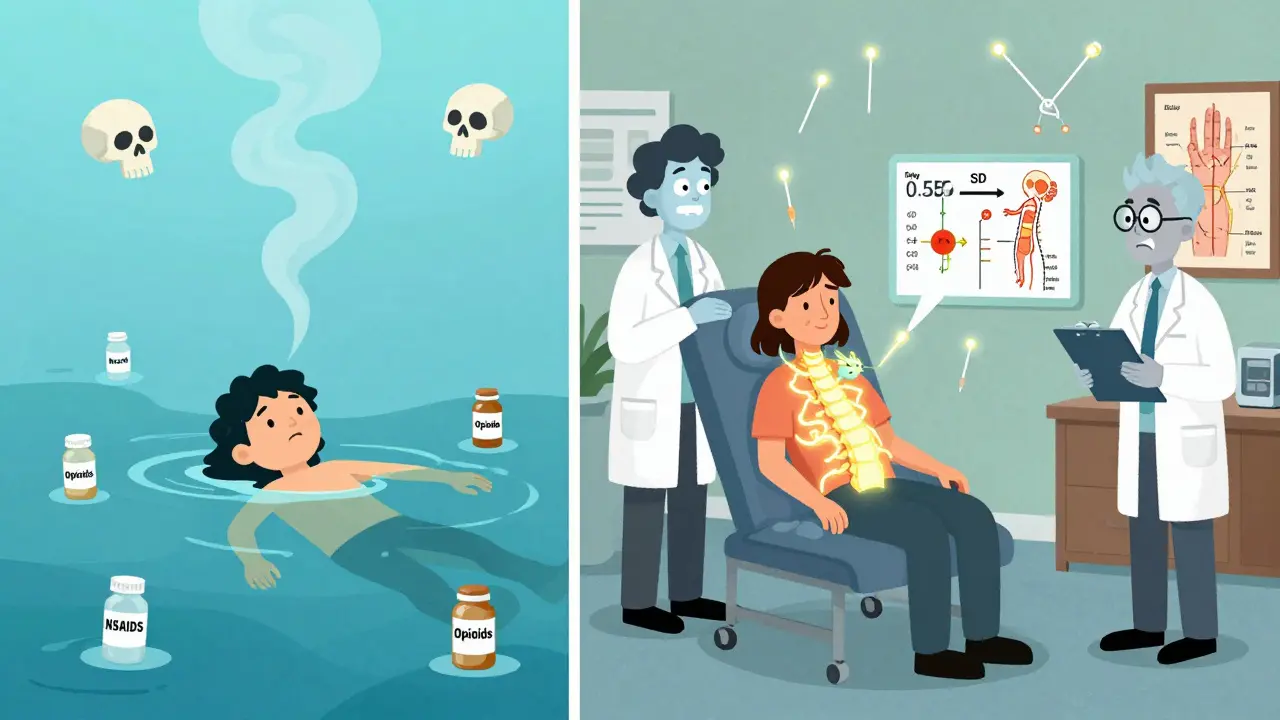
Acupuncture needles are thin-thinner than a human hair-and sterile. Single-use, FDA-approved Class II medical devices. Serious side effects? Less than 0.05% of treatments. That’s fewer than one in 2,000.
Compare that to NSAIDs. In the U.S., they cause over 100,000 hospitalizations every year from stomach bleeding and kidney damage. Opioids? They’re addictive. Acupuncture has none of that.
The most common side effects? Minor bruising, slight soreness, or feeling relaxed to the point of drowsiness. Some people even fall asleep during treatment.
The biggest risk? A poorly trained practitioner. That’s why certification matters.
What to Look for in a Practitioner
In the U.S., 47 states require certification from the National Certification Commission for Acupuncture and Oriental Medicine (NCCAOM). That means at least 1,800 hours of training, plus a clean exam.
Look for credentials. Ask about experience with your specific condition. Don’t be afraid to ask how many people they’ve treated for back pain or osteoarthritis.
Check reviews. On Healthgrades, acupuncture has a 4.2 out of 5 rating. But the complaints? High cost and inconsistent results. That’s often tied to practitioner skill, not the therapy itself.
And yes-cost is a barrier. Sessions range from $60 to $120. Insurance? Only 56% of private plans in the U.S. cover it for pain. Medicare does cover it for chronic low back pain. Some Australian private insurers cover it too. Always check.
How It Compares to Other Options
Let’s be honest: you’re probably comparing acupuncture to pills, physical therapy, or even surgery.
- vs. NSAIDs: Acupuncture works as well for back pain and osteoarthritis, without the stomach damage.
- vs. Opioids: It doesn’t cause addiction or overdose. It’s a safer long-term option.
- vs. Physical therapy: PT builds strength and movement. Acupuncture reduces pain so you can do PT better. They work well together.
- vs. Surgery: For knee osteoarthritis, acupuncture can delay or even avoid surgery in some cases.
The CDC’s 2022 guidelines for chronic pain recommend non-drug options like acupuncture as first-line treatments. That’s huge. It’s no longer “alternative.” It’s part of standard care.
Why It’s Gaining Ground in Mainstream Medicine
The opioid crisis forced a rethink. Doctors couldn’t keep prescribing pills that were killing people. Hospitals needed alternatives.
Now, the Joint Commission requires hospitals to offer non-drug pain options-including acupuncture. The Veterans Health Administration rolled it out nationwide because 40% of veterans suffer chronic pain. Medicare’s decision to cover it for back pain opened the door for millions.
The U.S. acupuncture market is worth $3.65 billion and growing at over 11% a year. That’s not hype. That’s demand.
Researchers are still digging deeper. The National Center for Complementary and Integrative Health (NCCIH) is funding $15.7 million in new studies on how acupuncture works and how to optimize it. There are 47 active trials right now, many focused on cancer pain and reducing opioid use after surgery.
What to Expect When You Try It
You’ll lie down. The acupuncturist will clean your skin with alcohol. Then-quietly, gently-they’ll insert needles. You might feel a tiny pinch, or nothing at all. Some people feel a dull ache or warmth-that’s normal. Most feel deeply relaxed.
There’s no dramatic moment. No electric shock. No burning. Just quiet stillness for half an hour. Then the needles come out. You might feel a little tired, or surprisingly energized.
Keep a pain journal. Rate your pain before and after each session. Track your sleep, mood, and medication use. You’ll start to see patterns.
Don’t quit after two sessions. Give it six. If you don’t feel anything by then, it might not be right for you. But if you start to feel relief? That’s your body responding.
Final Thoughts: Is It Worth It?
If you’re tired of painkillers that make you sick, or afraid of addiction, or just done with waiting for relief-acupuncture is worth trying.
It’s not a cure-all. It’s not magic. But it’s one of the few pain treatments that works, doesn’t harm you, and lets you stay in control of your life.
The science is clear. The safety record is excellent. The patient stories? They’re real. People are reducing their meds. Getting back to walking, sleeping, playing with their kids.
It’s not about rejecting modern medicine. It’s about adding something that works-without the side effects.
Try it. Give it a fair shot. Six sessions. Track your progress. If it helps, keep going. If it doesn’t, you’ve tried something safe and smart.
Pain doesn’t have to be your default setting. There are better ways.
Does acupuncture really work for chronic pain, or is it just a placebo?
Yes, it works-and it’s not just placebo. Multiple high-quality studies, including a 2018 meta-analysis of over 20,000 patients, show acupuncture provides clinically meaningful pain relief for conditions like chronic back pain, osteoarthritis, and headaches. Even when compared to sham acupuncture (fake needles), real acupuncture still shows a small but significant advantage. This means the effect goes beyond belief. It’s tied to real biological changes in pain processing.
How many acupuncture sessions do I need to see results?
Most people start noticing improvement by the sixth session. A typical course is 6 to 12 sessions over 6 to 8 weeks, with treatments once or twice a week. For chronic conditions, maintenance sessions every 4 to 8 weeks help sustain results. Don’t expect instant relief after one visit-it’s a cumulative process.
Is acupuncture safe? Can it make my pain worse?
Acupuncture is very safe when done by a certified practitioner. Serious side effects are rare-less than 0.05% of treatments. Common reactions are minor: slight bruising, temporary soreness, or feeling relaxed. It won’t make your pain worse. The biggest risk comes from untrained providers. Always choose someone with NCCAOM certification or equivalent in your country.
Does insurance cover acupuncture for pain?
In the U.S., Medicare covers acupuncture for chronic low back pain. Private insurance coverage varies-only about 56% of plans cover it for pain as of 2022. In Australia, some private health funds include it. Always check with your insurer. Even without coverage, many find the cost worth it compared to long-term medication expenses or side effects.
Can acupuncture replace my pain medication?
It can help reduce your reliance on medication-but don’t stop your meds without talking to your doctor. Many patients report cutting their NSAID or opioid use by 50-75% after consistent acupuncture. It works best as part of a broader plan: combining acupuncture with movement, stress management, and smart medication use. Think of it as support, not replacement.
What’s the difference between traditional and Western acupuncture?
Traditional acupuncture uses points along meridians based on Chinese medicine theory, often including diagnosis through pulse and tongue. Western acupuncture focuses on anatomical points near nerves and muscles, often used alongside physical therapy. Both use needles and show similar effectiveness for pain. Many practitioners today blend both approaches. The key is whether the practitioner is skilled, not which label they use.
Ishmael brown
January 31, 2026 AT 23:47Aditya Gupta
February 1, 2026 AT 05:11Nancy Nino
February 2, 2026 AT 22:13Deep Rank
February 3, 2026 AT 02:07Bob Cohen
February 4, 2026 AT 18:53vivian papadatu
February 4, 2026 AT 21:12Sami Sahil
February 6, 2026 AT 20:56franklin hillary
February 7, 2026 AT 04:25Ed Di Cristofaro
February 8, 2026 AT 22:22Lilliana Lowe
February 9, 2026 AT 22:31Melissa Melville
February 11, 2026 AT 22:08Bryan Coleman
February 12, 2026 AT 21:20Naresh L
February 14, 2026 AT 01:38