
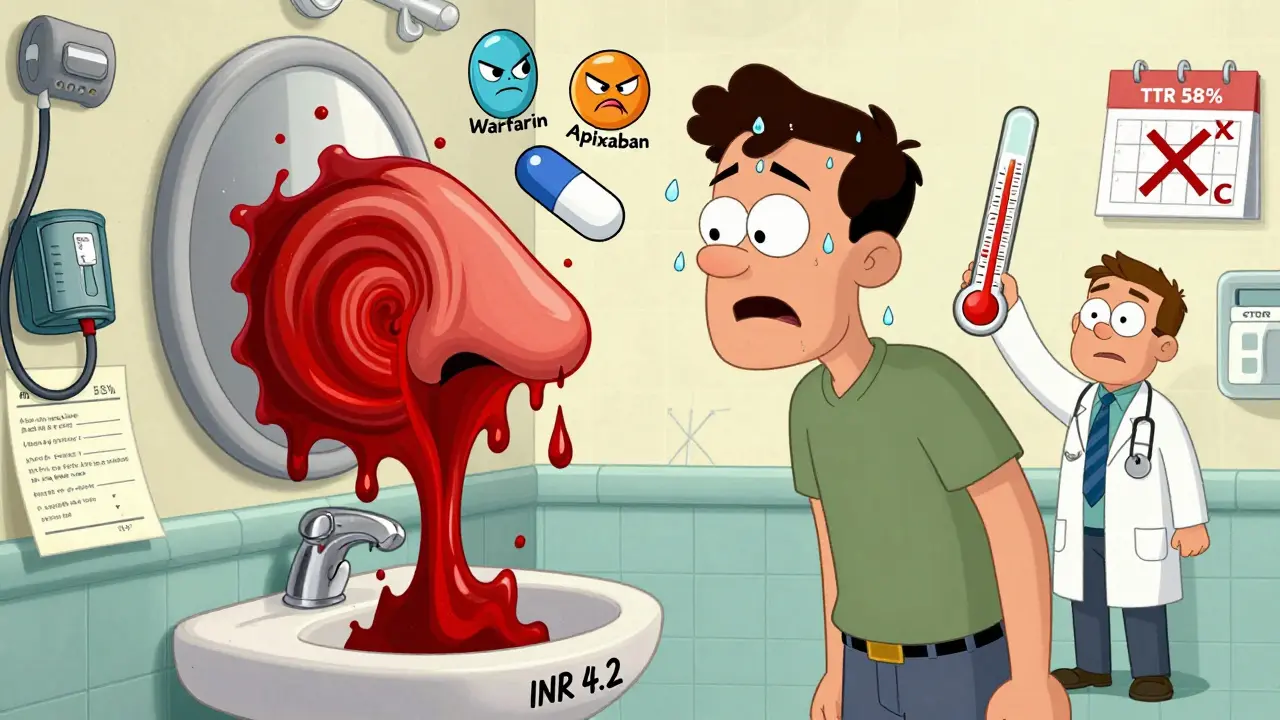
When you're on anticoagulants, your blood doesn't clot as easily. That’s the whole point - to stop dangerous clots from forming in your heart, lungs, or legs. But this benefit comes with a real risk: uncontrolled bleeding. Every year, 1 in 50 people taking these medications ends up in the hospital because of a bleed. It’s not rare. It’s predictable. And it’s often preventable.
Why Anticoagulants Are Necessary - and Dangerous
Anticoagulants, or blood thinners, are prescribed for conditions like atrial fibrillation, deep vein thrombosis, and mechanical heart valves. Without them, these patients face a high risk of stroke or pulmonary embolism. But the same mechanism that stops clots from forming can cause internal bleeding if something goes wrong.
Warfarin has been the go-to for decades. It works by blocking vitamin K, which your body needs to make clotting factors. But it’s finicky. Your INR - a lab test that measures how long your blood takes to clot - must stay between 2.0 and 3.0 for most people. If it’s too low, clots form. Too high, and you bleed. Studies show that if your time in therapeutic range (TTR) drops below 60%, your bleeding risk jumps by 20%. That’s why many patients on warfarin end up in the ER after a fall, a nosebleed that won’t stop, or unexplained bruising.
Then came the DOACs - direct oral anticoagulants. Dabigatran, rivaroxaban, apixaban, edoxaban. These drugs don’t need regular blood tests. They’re easier to take. And for most people, they’re safer. A major 2019 review found that DOACs cause 19-20% fewer major bleeds than warfarin. Apixaban, in particular, showed a 31% lower risk compared to warfarin in the ARISTOTLE trial. But they’re not magic. They still carry bleeding risk. And if you have kidney problems, your body can’t clear them well. That’s when the danger spikes.
Who’s at Highest Risk for Bleeding?
Not everyone on anticoagulants bleeds. But some groups are far more vulnerable.
- People over 75: Bleeding rates double or even triple compared to younger adults. Kidneys slow down. Liver function declines. Medications stick around longer.
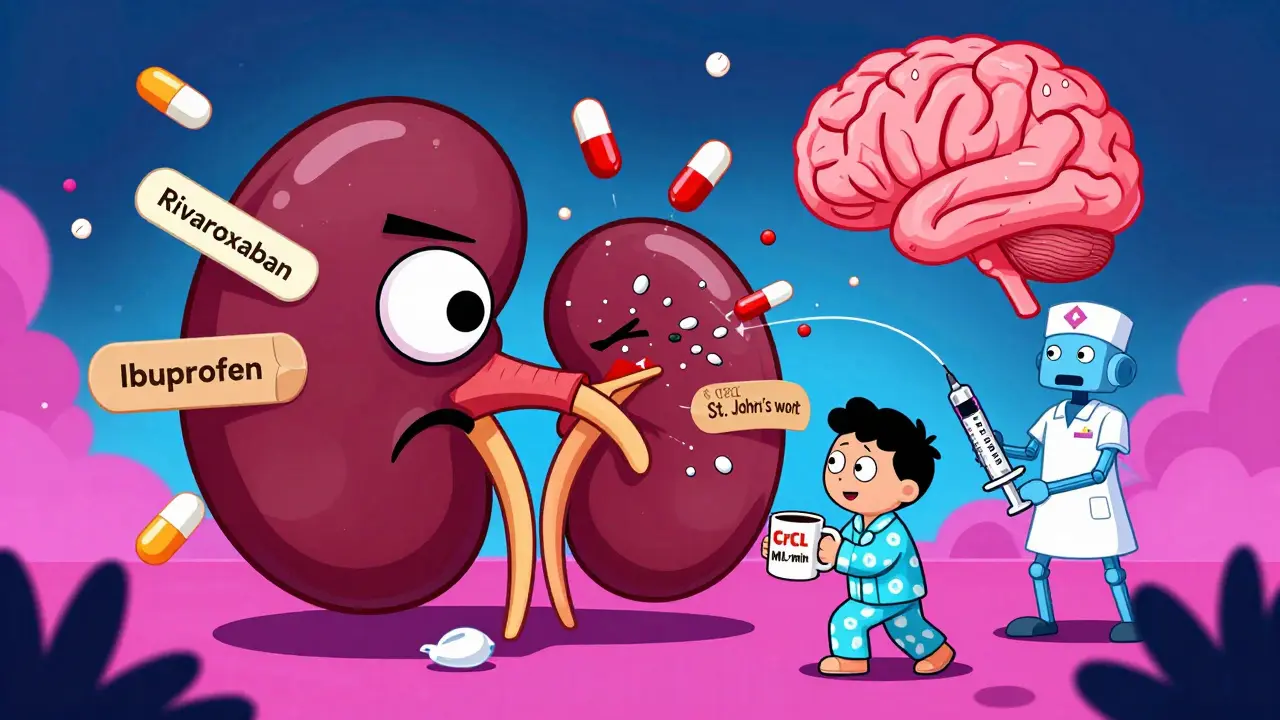
- Those with kidney disease: If your creatinine clearance (CrCl) is below 50 mL/min, your risk of major bleeding doubles. For DOACs like rivaroxaban, that means dose reduction. For apixaban, it’s a hard cutoff - avoid if CrCl is under 25 mL/min.
- Patients on dual therapy: Taking a blood thinner with aspirin or clopidogrel? That combo increases major bleeding risk by 50-70%. Unless you’ve had a recent stent or heart attack, this is often unnecessary.
- People with uncontrolled high blood pressure: High pressure puts stress on blood vessels. Add an anticoagulant? A small tear can turn into a brain bleed.
Even something as simple as skipping a dose or taking too much can tip the balance. One study found that nearly 30% of bleeding events in elderly patients were due to dosing errors - often because someone took two pills by accident or didn’t understand the instructions.
How to Prevent Bleeding - Practical Steps
Preventing hemorrhage isn’t about avoiding anticoagulants. It’s about managing them smartly.
- Know your kidney function. Get a CrCl test at least once a year - more often if you’re over 70 or have diabetes or high blood pressure. If your kidneys are declining, your DOAC dose may need to drop. Apixaban can be used safely at lower doses in moderate kidney disease. Rivaroxaban? Not so much.
- Check for drug interactions. Some antibiotics, antifungals, and even St. John’s Wort can spike your anticoagulant levels. Always tell your pharmacist you’re on a blood thinner before starting anything new.
- Use the lowest effective dose. Many patients are over-dosed, especially with DOACs. For example, apixaban 5 mg twice daily is standard. But if you’re over 80, weigh under 60 kg, or have kidney issues, 2.5 mg twice daily is just as effective and much safer.
- Avoid NSAIDs. Ibuprofen, naproxen, diclofenac - these are common painkillers, but they irritate the stomach lining and make bleeding more likely. Use acetaminophen (paracetamol) instead.
- Don’t stop suddenly. Stopping warfarin or a DOAC without a plan can trigger a clot. If you need surgery, talk to your doctor. Sometimes you pause for 1-2 days. Sometimes you don’t. It depends on the procedure and your clot risk.
Reversal Agents - What Works When Things Go Wrong
When a major bleed happens - like a brain hemorrhage or a GI bleed that won’t stop - time is everything. You need to reverse the anticoagulant fast.
For warfarin: 4f-PCC (four-factor prothrombin complex concentrate) is the gold standard. It works in 15 minutes. Fresh frozen plasma? Too slow. It takes hours to thaw and infuse. Also give vitamin K (5-10 mg IV) to fix the root cause.
For dabigatran: idarucizumab (Praxbind) is the specific antidote. It binds to dabigatran and neutralizes it. One 5g IV dose can reverse anticoagulation within minutes. It’s expensive - around $3,000 per dose - but worth it in a life-threatening bleed.
For apixaban, rivaroxaban, edoxaban: andexanet alfa (Andexxa) is approved. It’s a modified factor Xa protein that soaks up the DOAC. But it costs about $13,000 per dose. Many hospitals keep it on standby only for critical cases. It’s not a cure-all - it doesn’t reverse all bleeding, and it can cause clots itself.
For heparin: protamine sulfate is still the go-to. It reverses about 60-100% of unfractionated heparin. But it barely touches low-molecular-weight heparins like enoxaparin. That’s why LMWHs are trickier to manage in emergencies.
Special Cases: Kidneys, Age, and Pregnancy
Renal impairment changes everything. DOACs are cleared by the kidneys. If your CrCl is below 30 mL/min, most DOACs aren’t recommended. Apixaban is the least dependent on kidney function - it’s often the only option left. Warfarin may be safer here, even with its monitoring hassles.
For the elderly, the key is simplicity. A once-daily pill is better than twice-daily. A fixed dose is better than one that needs lab checks. But don’t assume all older adults need lower doses. Some 80-year-olds have great kidney function. Test before you assume.
Pregnancy is another minefield. Warfarin can harm the fetus. LMWHs like enoxaparin are preferred. But even then, bleeding during delivery is a real concern. Studies show that women on anticoagulants during labor can have significant blood loss - sometimes over 500 mL. Close monitoring and having reversal agents ready (like protamine) is essential.
What You Can Do Right Now
If you’re on a blood thinner:
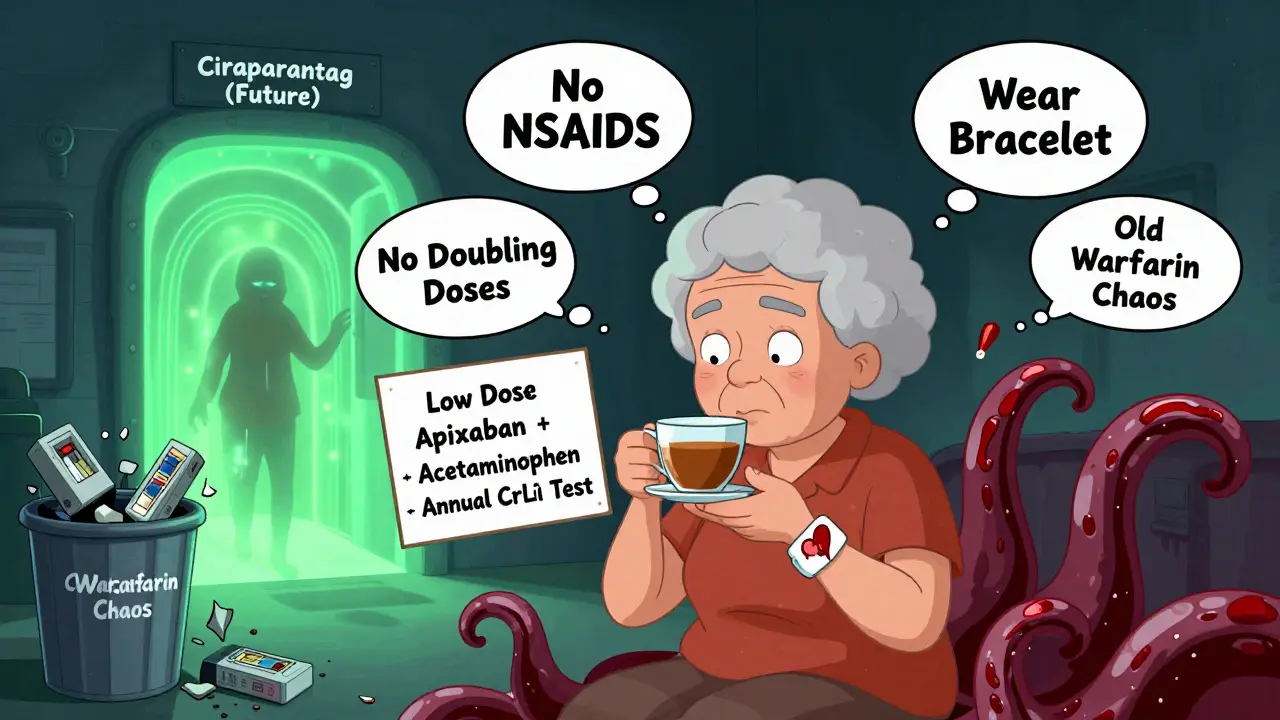
- Get your kidney function checked - CrCl - at least once a year.
- Make sure your doctor knows every medication you take, including supplements.
- Ask: "Is this the lowest effective dose for me?"
- Wear a medical alert bracelet that says you’re on anticoagulants.
- Know the signs of internal bleeding: dizziness, dark stools, severe headaches, unexplained bruising, or swelling in joints.
If you’re a caregiver for someone on anticoagulants: help them keep a log of doses. Set phone alarms. Watch for falls. Don’t wait for a crisis to act.
Future of Bleeding Prevention
Researchers are working on a universal reversal agent - one drug that works for all anticoagulants. Ciraparantag is in trials. If it works, it could cut emergency deaths from bleeding by up to 40%. Point-of-care tests for DOACs are also in development. Imagine a finger-prick test that tells you your anticoagulant level in 10 minutes, like an INR machine for warfarin. That could prevent 15-20% of bleeding events.
But right now, the best tool is awareness. Anticoagulants save lives. But they demand respect. They’re not just pills. They’re powerful tools that need careful handling.
Can I take aspirin while on a blood thinner?
Only if your doctor specifically recommends it. Combining aspirin with anticoagulants increases major bleeding risk by 50-70%. This combination is usually only used after a recent heart attack or stent placement. For most people with atrial fibrillation or deep vein thrombosis, aspirin adds risk without benefit.
Do DOACs need regular blood tests like warfarin?
No, DOACs don’t require routine INR testing. That’s one of their main advantages. However, kidney function should be checked at least once a year - and more often if you’re over 70, have diabetes, or have signs of kidney disease. Some doctors may check drug levels in special cases, like before surgery or if bleeding occurs.
What should I do if I miss a dose of my anticoagulant?
If you miss a dose, take it as soon as you remember - but only if it’s within a few hours of your usual time. If it’s almost time for your next dose, skip the missed one. Never double up. Doubling your dose can spike your anticoagulant level and increase bleeding risk. Always check your specific medication’s instructions - they vary by drug.
Are natural supplements like fish oil or garlic safe with anticoagulants?
They can be risky. Fish oil, garlic, ginger, ginkgo, and turmeric all have mild blood-thinning effects. While they’re not as strong as prescription drugs, they can add up - especially if you’re already on a DOAC or warfarin. Talk to your doctor before taking any supplement. Even "natural" doesn’t mean safe.
Can I still have surgery if I’m on anticoagulants?
Yes - but timing matters. For minor procedures like dental work, you may not need to stop. For major surgery, your doctor will decide whether to pause the medication. For warfarin, it’s often stopped 5 days before surgery. For DOACs, it’s usually 1-3 days, depending on your kidney function. Always get a clear plan from your care team - never stop on your own.
Nicole Blain
March 20, 2026 AT 20:01Kathy Underhill
March 21, 2026 AT 06:01Srividhya Srinivasan
March 22, 2026 AT 06:30Prathamesh Ghodke
March 23, 2026 AT 07:50Stephen Habegger
March 23, 2026 AT 22:00Justin Archuletta
March 25, 2026 AT 16:37Sanjana Rajan
March 26, 2026 AT 03:47Kyle Young
March 26, 2026 AT 20:22Aileen Nasywa Shabira
March 28, 2026 AT 05:06Kendrick Heyward
March 28, 2026 AT 07:53lawanna major
March 29, 2026 AT 12:37Ryan Voeltner
March 29, 2026 AT 14:54Linda Olsson
March 30, 2026 AT 09:00Ayan Khan
March 30, 2026 AT 09:26