
Choosing the right anticoagulant isn’t just about preventing clots-it’s about balancing safety, lifestyle, and long-term risk. Two main types dominate today’s treatment: warfarin and direct oral anticoagulants (DOACs). While both reduce the chance of stroke and dangerous blood clots, their safety profiles differ in ways that matter deeply to patients. If you’re on one or considering switching, here’s what actually happens in real life-based on the latest data from 2023 and 2024.
How Warfarin Works (and Why It’s Tricky)
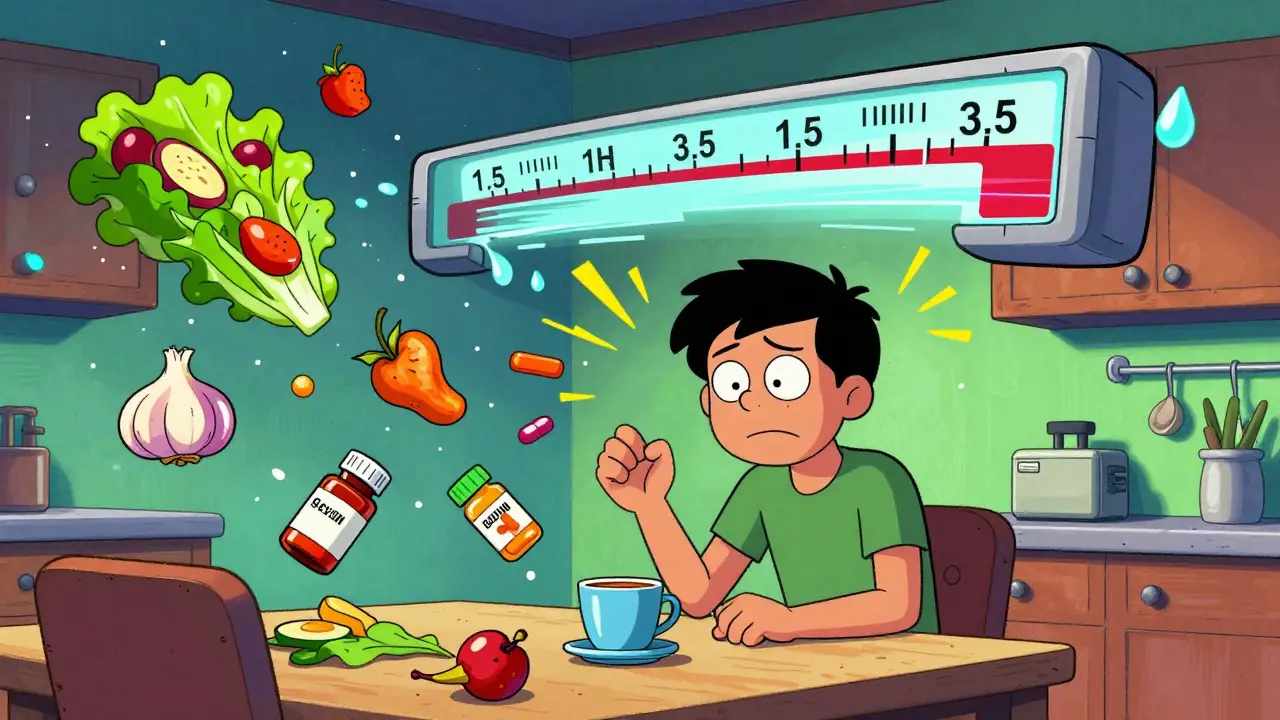
Warfarin has been around since the 1950s. It works by blocking vitamin K, which your body needs to make clotting factors. Simple in theory, messy in practice. To keep it safe, you need frequent blood tests-INR checks-to make sure your level stays between 2.0 and 3.0. Go below that, and clots become likely. Go above, and you risk serious bleeding.
That’s not all. Warfarin interacts with over 300 medications and dozens of foods. Eating a big salad one day and skipping it the next can swing your INR out of range. Antibiotics, painkillers like ibuprofen, even herbal supplements like garlic or ginkgo can throw things off. Many patients report feeling like they’re constantly on edge, never sure if their next meal or cold medicine will cause trouble.
According to the International Normalized Ratio (INR) Collaborative Group, keeping time in therapeutic range (TTR) above 70% is ideal. But real-world data shows only about 65% of patients manage that. Missed tests, inconsistent diets, or forgetting pills all add up. That’s why the American Heart Association now recommends DOACs for most people-not because warfarin doesn’t work, but because it’s hard to get right consistently.
DOACs: Simpler, But Not Perfect
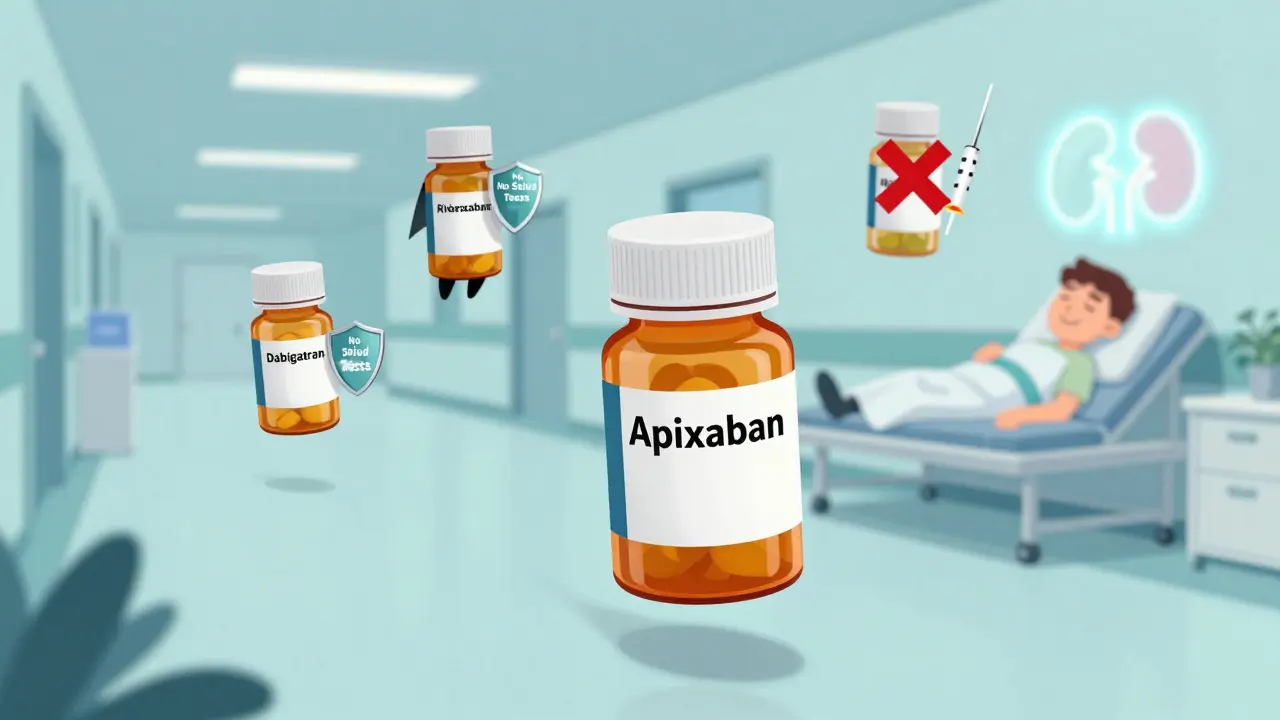
DOACs-like apixaban (Eliquis®), rivaroxaban (Xarelto®), dabigatran (Pradaxa®), and edoxaban (Savaysa®)-changed the game. They don’t need regular blood tests. Dosing is fixed. No dietary restrictions. For many, this means less stress and better adherence.
But they’re not magic. Each one works differently. Dabigatran blocks thrombin (factor IIa). The others-apixaban, rivaroxaban, edoxaban-block factor Xa. That matters because their safety depends on your kidneys. Dabigatran is cleared 80% through the kidneys. If your eGFR drops below 30 mL/min, it builds up in your system. Apixaban? Only 27% is cleared by the kidneys. That’s why it’s often the go-to for older adults or those with mild kidney issues.
And here’s the catch: DOACs have no universal reversal agent like vitamin K does for warfarin. But we’ve made progress. Andexanet alfa (Andexxa®) reverses apixaban and rivaroxaban. Idarucizumab (Praxbind®) reverses dabigatran. These aren’t in every ER, but they’re available in most major hospitals now. Still, if you’re in a rural area or get into trouble on a weekend, the window to act is narrow.
Safety Numbers That Matter
Let’s cut through the noise with real data. A 2023 JAMA Network Open study tracked over 120,000 patients on either DOACs or warfarin for extended VTE treatment. Here’s what they found:
- DOACs reduced recurrent clots by 34% compared to warfarin.
- Major bleeding events were 20% lower with DOACs.
- Intracranial hemorrhage (bleeding in the brain) dropped by over 50% with DOACs.
For atrial fibrillation patients, the numbers are even clearer. The American Heart Association Journal (2024) showed DOACs cut stroke risk by 30% and bleeding risk by 28% compared to warfarin. Apixaban stood out again-its major bleeding rate was 1.8% per year, while rivaroxaban sat at 3.1%. Dabigatran had the lowest stroke rate but slightly higher GI bleeding risk.
Weight matters too. Patients under 60 kg had a 40% lower risk of major bleeding on DOACs than on warfarin. That’s not a small difference-it’s life-changing.
When Warfarin Still Wins
Don’t assume DOACs are better for everyone. There are three key situations where warfarin is still the only choice:
- Mechanical heart valves: DOACs are not approved here. Studies show higher rates of valve clots and strokes when DOACs are used. Warfarin remains the gold standard.
- Severe kidney failure (eGFR <15 mL/min): Most DOACs aren’t cleared well enough in dialysis patients. Warfarin is still the safest bet, though even here, data is limited.
- Severe mitral stenosis: This rare valve condition doesn’t respond well to DOACs. Again, warfarin is the only proven option.
And if you’ve been on warfarin for years-say, 10 or more-and your INR is stable? Switching might not be worth the risk. Stability matters more than convenience sometimes.
Cost and Adherence: The Hidden Battle
DOACs cost more. A 30-day supply of apixaban runs about $587. Warfarin? $4.27. That’s not a typo. For many, especially without good insurance, that gap is impossible to cross. But here’s the twist: the higher cost of DOACs often leads to better adherence.
A 2023 study in the American Journal of Managed Care found DOAC users were 32% more likely to take their medication consistently than warfarin users. Why? Fewer doctor visits, no dietary stress, no blood draws. For younger patients (18-45), adherence jumped 41% higher with DOACs. That’s not just about convenience-it’s about survival. Missing doses of warfarin increases stroke risk. Missing a DOAC dose? Less risky, but still dangerous.
Some patients on warfarin report spending 2-3 hours a month just for INR checks. Traveling? Getting sick? That time adds up. DOACs give back hours, days, even weeks of your life.

What Should You Do?
If you’re on warfarin and it’s working well-with stable INRs, no bleeding, and no major interactions-stay the course. Don’t fix what isn’t broken.
If you’re starting anticoagulation now, DOACs are almost always the better first choice. Apixaban is the safest overall. Rivaroxaban works well but has higher bleeding risk. Dabigatran is great for stroke prevention but watch for stomach upset. Edoxaban is a solid middle ground.
Check your kidney function first. If your eGFR is below 30, talk to your doctor about whether warfarin is safer. If you have a mechanical valve, don’t even consider DOACs.
Ask about reversal agents. Know which one works for your drug. Keep the emergency contact info for your pharmacy or hospital handy.
And if cost is an issue? Ask about patient assistance programs. Apixaban and rivaroxaban have manufacturer coupons that can drop the price to under $10/month. Don’t assume you can’t afford it-many patients don’t know these options exist.
Looking Ahead
Research is moving fast. A new drug called Librexia™-a combination of warfarin and vitamin K-is in phase 3 trials. It could stabilize INR without frequent testing. If it works, warfarin might make a comeback in a smarter form.
Meanwhile, the AUGUSTUS-CKD trial is comparing apixaban to warfarin in patients with advanced kidney disease. Results expected by late 2024 could change guidelines again.
For now, the evidence is clear: for most people, DOACs are safer, simpler, and more effective. But safety isn’t just about the drug-it’s about matching the drug to your life, your body, and your situation.
Rachele Tycksen
March 25, 2026 AT 12:46Aaron Sims
March 25, 2026 AT 15:42Namrata Goyal
March 26, 2026 AT 19:08J. Murphy
March 27, 2026 AT 17:22Alex Arcilla
March 29, 2026 AT 03:09Jesse Hall
March 29, 2026 AT 12:31Blessing Ogboso
March 30, 2026 AT 23:39Sean Bechtelheimer
April 1, 2026 AT 06:08rebecca klady
April 2, 2026 AT 06:36Jefferson Moratin
April 2, 2026 AT 22:50