

Why Antipsychotics Can Change Your Body in Ways You Didn’t Expect
Antipsychotic medications save lives. For people with schizophrenia, bipolar disorder, or severe psychosis, these drugs can mean the difference between isolation and stability. But there’s a hidden cost many don’t talk about: metabolic risks. These aren’t just side effects-they’re serious, life-threatening changes to how your body processes sugar, fat, and energy. And they often start before you even notice weight gain.
Second-generation antipsychotics (SGAs), like olanzapine, risperidone, and quetiapine, were supposed to be safer than older drugs. Less muscle stiffness, fewer tremors. But in exchange, many patients face rapid weight gain, rising blood sugar, and high cholesterol. In fact, up to 68% of people on these medications develop metabolic syndrome-a cluster of conditions that triple your risk of heart attack or stroke. That’s not rare. That’s routine.
Which Antipsychotics Carry the Highest Risk?
Not all antipsychotics are created equal when it comes to metabolism. Some are far more likely to cause trouble than others.
- Olanzapine and clozapine are the worst offenders. In the CATIE study, people on olanzapine gained an average of 2 pounds per month. About 30% gained so much weight in 18 months that it became a reason to stop taking the drug.
- Quetiapine, risperidone, and amisulpride fall in the middle. They cause noticeable weight gain and changes in blood sugar, but less than olanzapine.
- Ziprasidone, lurasidone, and aripiprazole are the safest bets. Patients on these drugs often see little to no weight gain and minimal impact on blood sugar or cholesterol.
It’s not just about the drug name. It’s about your body’s response. Some people gain 30 pounds on a low-risk drug. Others stay stable on olanzapine. But you can’t guess your risk-you need to measure it.
Metabolic Syndrome: The Silent Killer Behind the Medication
Metabolic syndrome isn’t one condition. It’s five warning signs working together:
- Large waistline (over 94 cm for men, 80 cm for women)
- Triglycerides above 150 mg/dL
- HDL (good cholesterol) below 40 mg/dL for men, 50 mg/dL for women
- Blood pressure at or above 130/85 mmHg
- Fasting blood sugar of 100 mg/dL or higher
Having three or more of these means you have metabolic syndrome. And if you’re on an antipsychotic, your chances are 3 to 5 times higher than someone not on these drugs. The problem? These changes often happen before you feel sick. Your waistline creeps up. Your energy dips. Your doctor doesn’t ask. You don’t think to mention it. By the time you’re diagnosed with type 2 diabetes, the damage is already done.

Why Do These Drugs Cause Metabolic Problems?
It’s not just that you’re eating more. Though appetite stimulation is real-especially with olanzapine-the real issue runs deeper. These drugs interfere with your body’s internal control systems.
They mess with the hypothalamus, the part of your brain that tells you when you’re full. They reduce insulin sensitivity in your muscles and liver. They disrupt fat storage in your belly. And they can even affect how your pancreas releases insulin. Some studies suggest these drugs may also damage mitochondria, the energy factories inside your cells, especially with clozapine and olanzapine.
This means metabolic changes can start within weeks-even if your weight hasn’t budged yet. Blood sugar can rise before your waistline does. Cholesterol can climb before you feel sluggish. That’s why waiting for visible weight gain to act is too late.
What Should Be Monitored-and When?
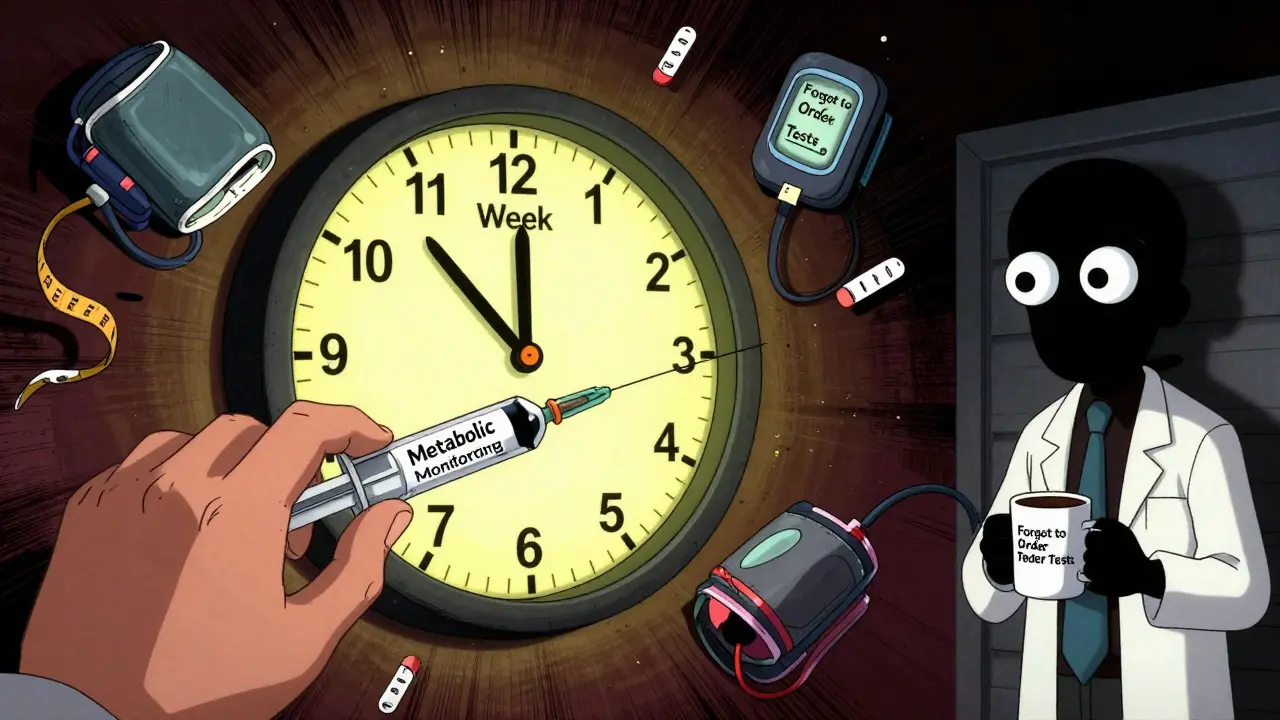
Guidelines from the American Psychiatric Association and Australian Prescriber are clear: every patient on antipsychotics needs regular metabolic checks. But in practice, less than half get them.
Here’s what you need, and when:
- Before starting: Weight, BMI, waist circumference, blood pressure, fasting blood glucose, and lipid panel (cholesterol and triglycerides).
- At 4 weeks: Weight, blood pressure, and fasting glucose.
- At 12 weeks: Full metabolic panel again.
- At 24 weeks: Repeat full panel.
- Every 3 to 12 months after that: Depends on your risk. High-risk patients (like those on olanzapine or with a family history of diabetes) need checks every 3 months. Stable patients can go every 6-12 months.
Don’t skip these. Even if you feel fine. Even if your doctor doesn’t bring it up. You have to ask.
What If You’re Already Gaining Weight or Your Blood Sugar Is High?
Stopping your medication isn’t the answer. Relapse is dangerous. But you don’t have to stay stuck.
First, lifestyle changes work. Not because you’re “not trying hard enough,” but because they directly counter the drug’s effects. A structured program combining 150 minutes of walking or light exercise per week with a diet low in refined carbs and sugar can reduce weight gain by up to 50% in some studies. Even small changes-swapping soda for water, taking stairs instead of the elevator-help.
Second, talk to your doctor about switching. If you’re on olanzapine and gaining weight fast, switching to aripiprazole or lurasidone might be possible. It’s not a betrayal of your treatment-it’s adjusting your tool to fit your body. Many patients stay just as stable on lower-risk drugs.
Third, add medications if needed. Metformin, a common diabetes drug, has been shown to reduce weight gain and improve insulin sensitivity in people on antipsychotics. Statins can help manage cholesterol. These aren’t “extra” drugs-they’re part of your treatment plan now.
Long-Acting Injections Don’t Solve This Problem
Some people think switching to a monthly shot will help. It won’t. Long-acting injectables (LAIs) like risperidone Consta or paliperidone palmitate don’t reduce metabolic risk. The drug is still the same. The body still reacts the same way. Monitoring is just as critical.
Why So Many People Don’t Get Checked
Doctors are stretched thin. Mental health care is fragmented. Patients don’t know to ask. Insurance doesn’t always cover the tests. But the consequences are real: people on antipsychotics die 15-20 years earlier than the general population-and most of those deaths are from heart disease or diabetes.
This isn’t about blaming anyone. It’s about awareness. If you’re on an antipsychotic, you’re not just managing psychosis. You’re managing your metabolism, too. And that means taking charge of your health, not waiting for someone else to do it for you.
What You Can Do Today
- Write down your current weight, waist size, and blood pressure if you have them.
- Call your doctor or pharmacist and ask: “What metabolic tests have I had since starting this medication?”
- Request a fasting glucose and lipid panel if you haven’t had one in the last 3 months.
- Start walking 20 minutes a day. It’s not a cure, but it’s the most effective, accessible tool you have.
- Keep a food and mood journal. Notice if certain foods make you feel more sluggish or hungrier. That’s data your doctor can use.
You’re not alone. Thousands of people on antipsychotics face this. But you can change the outcome-if you act before it’s too late.
Do all antipsychotics cause weight gain?
No. While many do, especially olanzapine and clozapine, others like aripiprazole, lurasidone, and ziprasidone have much lower risks. Weight gain isn’t inevitable-it’s drug-specific and individual. Knowing your medication’s profile helps you plan ahead.
Can I stop my antipsychotic if I’m gaining weight?
Never stop without talking to your prescriber. Stopping suddenly can cause psychosis to return, sometimes worse than before. Instead, work with your doctor to switch to a lower-risk medication or add interventions like metformin or lifestyle changes. There are solutions that don’t mean giving up your treatment.
How soon do metabolic changes start after starting antipsychotics?
Changes can begin within the first 2 to 4 weeks-even before you notice weight gain. Blood sugar and cholesterol levels can rise before your waistline changes. That’s why early monitoring at 4 and 12 weeks is critical.
Are children and teens at higher risk?
Yes. Young people are more sensitive to metabolic side effects. Weight gain can be rapid and severe, increasing long-term risk of type 2 diabetes and heart disease. Guidelines recommend even stricter monitoring for patients under 18, with baseline and follow-up checks every 4 weeks initially.
Can exercise and diet reverse antipsychotic-induced metabolic damage?
They can significantly slow or even reverse early changes. Studies show structured diet and exercise programs reduce weight gain by up to half and improve insulin sensitivity. While they won’t undo all damage, they’re the most effective non-drug tool available. Starting early gives you the best chance.
Should I get my heart checked too?
Yes, especially if you’re on ziprasidone, haloperidol, or thioridazine. These can prolong the QT interval, a heart rhythm issue that can lead to sudden death. A baseline ECG is recommended before starting, and repeat if you have heart disease, fainting episodes, or a family history of sudden cardiac death.
Is this risk the same for everyone?
No. Genetics, age, existing weight, family history of diabetes, smoking, and diet all play a role. Two people on the same drug can have completely different outcomes. That’s why personalized monitoring-not one-size-fits-all-is essential.
What if my doctor won’t order the tests?
Bring printed guidelines from the American Psychiatric Association or Australian Prescriber. Ask specifically for fasting glucose, lipid panel, blood pressure, and waist measurement. If your doctor refuses, ask for a referral to a psychiatrist who specializes in metabolic health or a primary care provider experienced in mental health comorbidities.
Donna Fleetwood
January 30, 2026 AT 23:43And yes, walking 20 minutes a day actually helps. I did it. I'm not a fitness person. I just moved more. Small steps matter.
Bobbi Van Riet
February 1, 2026 AT 19:19Also, food journals? Game changer. I noticed sugar made me crash harder than the meds ever did.
Diana Dougan
February 3, 2026 AT 15:17Melissa Cogswell
February 4, 2026 AT 10:39Amy Insalaco
February 4, 2026 AT 18:53Jodi Olson
February 6, 2026 AT 05:06Beth Cooper
February 6, 2026 AT 22:59Lily Steele
February 6, 2026 AT 23:18Sazzy De
February 7, 2026 AT 02:05Carolyn Whitehead
February 8, 2026 AT 05:42Kathleen Riley
February 9, 2026 AT 21:16Katie and Nathan Milburn
February 10, 2026 AT 05:55Marc Bains
February 10, 2026 AT 06:37Shubham Dixit
February 11, 2026 AT 12:06Rohit Kumar
February 12, 2026 AT 22:11