
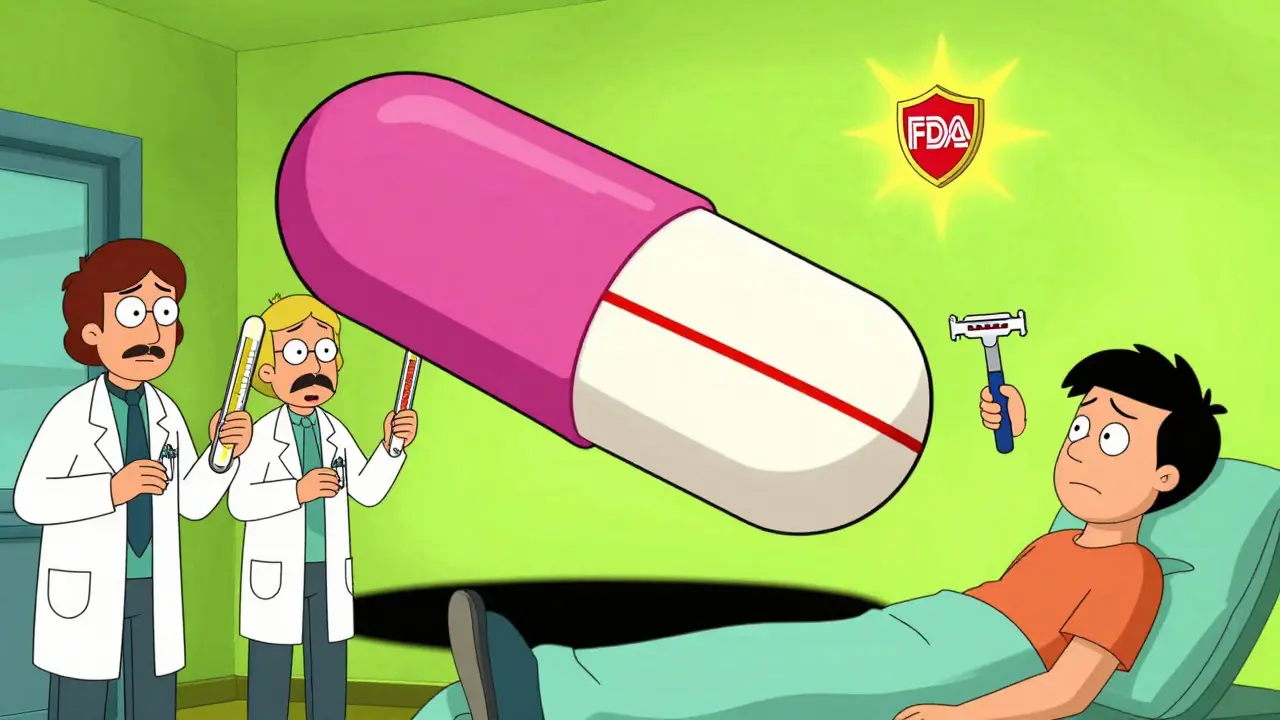
When a drug has a narrow therapeutic index, even a small change in dosage can mean the difference between healing and harm. These are the medications where the line between effective and toxic is razor-thin-warfarin, phenytoin, digoxin, levothyroxine. For patients relying on these drugs, switching from brand to generic isn’t just about cost. It’s about survival. That’s why bridging studies for NTI generics aren’t optional. They’re non-negotiable.
What Makes a Drug an NTI Drug?
Not all generic drugs need the same level of scrutiny. Most can be approved based on standard bioequivalence studies: compare the brand and generic versions in healthy volunteers, measure how much drug enters the bloodstream (AUC), and how fast it peaks (Cmax). If the numbers fall between 80% and 125%, it’s approved.
But for NTI drugs, that range is too wide. A 20% difference in absorption could push a patient into toxicity-or leave them underdosed and at risk of clotting, seizures, or heart failure. So regulators define NTI drugs differently. The FDA uses five criteria: a maximum 2-fold difference between minimum effective and minimum toxic dose, routine therapeutic monitoring required, low within-subject variability (under 30%), doses adjusted in small increments (under 20%), and a therapeutic index of 3 or less. That means the dose that works is no more than three times lower than the dose that kills.
Warfarin is the classic example. A 1 mg change can turn a stable INR of 2.5 into a life-threatening bleed. Levothyroxine? A 5 mcg shift can cause palpitations or fatigue. These aren’t hypothetical risks. They’re documented in hospital records.
Why Standard Bioequivalence Isn’t Enough
Standard bioequivalence studies use a two-way crossover design: one group gets the brand first, then the generic; another group gets the generic first, then the brand. Simple. Efficient. Cost-effective.
For NTI generics, that’s not enough. The FDA requires a four-way, fully replicated crossover design. Each participant takes the brand twice and the generic twice, in random order. Why? To capture within-person variability. With NTI drugs, the same person can absorb the same dose differently across days. A standard study might miss that. A four-way design catches it.
The acceptance criteria are tighter too. For standard generics, the 90% confidence interval for Cmax and AUC must fall between 80% and 125%. For NTI generics, it’s 90.00% to 111.11%. That’s a much narrower window. Even a 12% difference in absorption could mean rejection.
And it doesn’t stop there. The quality control for the generic must be stricter. Active ingredient content must be within 95% to 105% of the target, not 90% to 110%. Dissolution profiles must match exactly. A pill that dissolves 5% faster could be unsafe.
The Cost and Complexity of Bridging Studies
Developing an NTI generic isn’t just harder-it’s exponentially more expensive. A standard bioequivalence study costs between $1.5 million and $2.5 million. For NTI drugs, it’s $2.5 million to $3.5 million. Why? More subjects. Longer duration. More samples. More analysis.
A typical NTI study needs 36 to 48 participants, compared to 24 for standard generics. Each subject spends 8 to 12 weeks in and out of the clinic. That’s four periods of dosing, washouts, blood draws, and monitoring. Subject dropout rates are higher. The logistics are brutal.
And the statistical analysis? It’s not just a t-test. It’s reference-scaled average bioequivalence (RSABE). Only a handful of biostatisticians in the world know how to run this correctly. Most generic manufacturers don’t have this expertise in-house. They hire consultants. Add $500,000 to $800,000 in consulting fees.
According to the FDA, 37% of complete response letters for NTI generics cite inadequate bridging study design as the main reason for rejection. That’s nearly four times higher than for non-NTI drugs. One wrong assumption in the statistical model, one poorly timed blood draw, and the entire application fails.

Who’s Doing It-and Why So Few?
Between 2018 and 2022, the FDA approved just 18 NTI generics. Meanwhile, over 1,000 non-NTI generics got approval. Why the gap?
It’s not lack of demand. NTI drugs make up about 14% of all small-molecule drugs. The global market was worth $78.5 billion in 2022. Yet generics hold only 42% of that market-compared to 85% for non-NTI drugs.
The barrier isn’t patents. It’s science. It’s cost. It’s risk. Generic manufacturers know that if they get it wrong, someone could die. And if they get it right, they’ll spend 3 to 5 years and $30 million to get there. That’s a long time to wait for a return on investment.
Only a few companies have built the internal capabilities. Teva, Mylan, and Sandoz have teams dedicated to NTI development. Smaller firms? They avoid it. One senior regulatory director told me, “We’d rather launch 10 standard generics than risk one NTI.”
Regulatory Differences Around the World
The U.S. FDA leads the world in NTI guidelines. Their 2017 guidance on warfarin set the gold standard. The European Medicines Agency (EMA) followed with similar rules in 2022, stating that “NTI drugs require specific bioequivalence study designs that cannot be waived.”
But not all countries are aligned. Some still accept standard bioequivalence for NTI drugs, especially in low- and middle-income regions. That’s a problem. A generic approved in India might meet local standards but fail FDA requirements. Patients switching from brand to imported generic could be exposed to untested variability.
That’s why the ICH is working on E18-a new guideline to harmonize ethnic and regional differences in NTI drug testing. Target completion: 2025. If successful, it could prevent dangerous inconsistencies across markets.
What’s Changing on the Horizon
There’s hope on the horizon. The FDA is testing physiologically-based pharmacokinetic (PBPK) modeling as a potential alternative to full clinical bridging studies. In a 2022 pilot study, PBPK models accurately predicted the behavior of warfarin generics without needing human trials. It’s promising.
But the FDA is cautious. “For the foreseeable future, robust clinical data will remain essential,” says Dr. Sally Sepehrara from the Office of Generic Drugs. PBPK might reduce the number of subjects needed. It might shorten timelines. But it won’t replace clinical data yet.
Another development: the FDA’s Complex Generic Drug Products Pilot Program. Since launching in 2022, it’s cut review times by 25% for NTI applications. Companies that engage early with pre-ANDA meetings report saving 6 to 9 months in development time.
And the list of NTI drugs requiring special studies? It’s growing. In 2023, the FDA expanded it from 12 to 27 drugs. That includes more antiepileptics, thyroid meds, and cardiac drugs. More companies will need to adapt-or stay out of the space.
What This Means for Patients
Patients on NTI drugs deserve access to affordable generics. But they deserve safety even more. The current system isn’t perfect. It’s slow. It’s expensive. But it’s designed to prevent harm.
When you switch from brand to generic warfarin, your doctor checks your INR. That’s not because the generic is suspect. It’s because the system demands vigilance. The bridging studies ensure the generic is close enough. The monitoring ensures you stay safe.
There’s no shortcut here. No trade-off between cost and safety. The science says: if you want to make a generic for a narrow therapeutic index drug, you must prove it’s as safe as the brand. No exceptions. No compromises.
That’s why the number of NTI generics is low. Not because manufacturers can’t make them. But because they won’t make them unless they’re sure they won’t hurt someone.
What’s Next for NTI Generics?
The future of NTI generics depends on three things: better science, smarter regulation, and more investment.
With PBPK modeling, we might one day reduce the need for lengthy clinical trials. With global harmonization, we might stop exporting unsafe versions to countries with weaker oversight. With more manufacturers investing in NTI expertise, we might finally close the 42% generic penetration gap.
But until then, the bridging study remains the only reliable shield between a patient and a dangerous dose. It’s not glamorous. It’s not cheap. But it’s necessary.
For every NTI generic approved, someone’s life got a little safer. That’s the real metric that matters.
saurabh singh
January 3, 2026 AT 18:06Man, I’ve seen this play out in India - cheap generics hitting the market, patients switching, and then ending up in the ER because their INR went off the charts. We need to stop pretending cost savings are worth risking lives. The science isn’t complicated: if the drug’s narrow, the testing has to be tighter. No excuses.
Dee Humprey
January 4, 2026 AT 08:21I’ve worked in hospital pharmacy for 18 years. I’ve seen patients on levothyroxine go from stable to symptomatic after a generic switch - no warning, no change in dose. The FDA’s 90–111% window isn’t overkill. It’s the bare minimum. And yes, it’s expensive. But so is a heart attack caused by underdosing.
John Wilmerding
January 4, 2026 AT 23:10While the regulatory framework for NTI generics is indeed rigorous, it is imperative to recognize that the current paradigm may inadvertently stifle innovation by imposing disproportionate financial burdens on smaller manufacturers. The statistical methodology of RSABE, while scientifically sound, introduces significant barriers to market entry that may not be justified in all clinical contexts. A risk-based, tiered approach - perhaps incorporating pharmacokinetic modeling as a supplementary tool - could enhance both accessibility and safety.
Ashley Viñas
January 5, 2026 AT 02:43Of course the FDA is strict. Because unlike some countries, we don’t treat human lives like a cost-benefit spreadsheet. You think it’s expensive to run a four-way crossover? Try paying for the funeral of someone who bled out because their generic warfarin dissolved 7% faster. That’s not a business problem - that’s a moral failure.
Brendan F. Cochran
January 5, 2026 AT 09:21USA rules. Other countries let their people die with fake generics. We got the best science, the best regs, and the best damn patients. Why are we even letting other countries get away with this? If you can’t meet FDA standards, don’t export. Period. #AmericaFirst #SafeMedicine
jigisha Patel
January 5, 2026 AT 10:58The premise of this article is fundamentally flawed. The assumption that NTI generics require more rigorous testing ignores the fact that bioequivalence thresholds are statistically arbitrary. The 90–111% range is not grounded in pharmacodynamic evidence but in regulatory convenience. Furthermore, the claim that 37% of CRs cite inadequate study design is misleading - it conflates protocol deviations with substantive scientific inadequacy. A deeper analysis reveals that most failures stem from poor statistical power, not flawed methodology.
Ethan Purser
January 6, 2026 AT 19:58What if… we’re all just chasing safety like it’s some holy grail? What if the real tragedy isn’t the occasional bad generic - but the fact that we’ve turned medicine into a fear-based industry? Patients don’t need more studies. They need more trust. More access. More humanity. We’ve turned a life-saving drug into a battlefield of compliance. When did we forget that people are dying waiting for perfection?
Doreen Pachificus
January 8, 2026 AT 05:57Just curious - has anyone looked at real-world outcomes? Like, do patients on approved NTI generics actually have worse outcomes than those on brand? Or is this all theoretical? I get the caution, but I wonder if the fear’s outpacing the data.
Cassie Tynan
January 9, 2026 AT 02:09So we spend $30 million and 5 years to make a pill that’s 95% identical to the brand… and call it a victory? How is this progress? We’re not curing cancer. We’re just making sure the poison isn’t *too* poisonous. Welcome to 21st-century medicine - where the goal isn’t to heal, but to not get sued.