
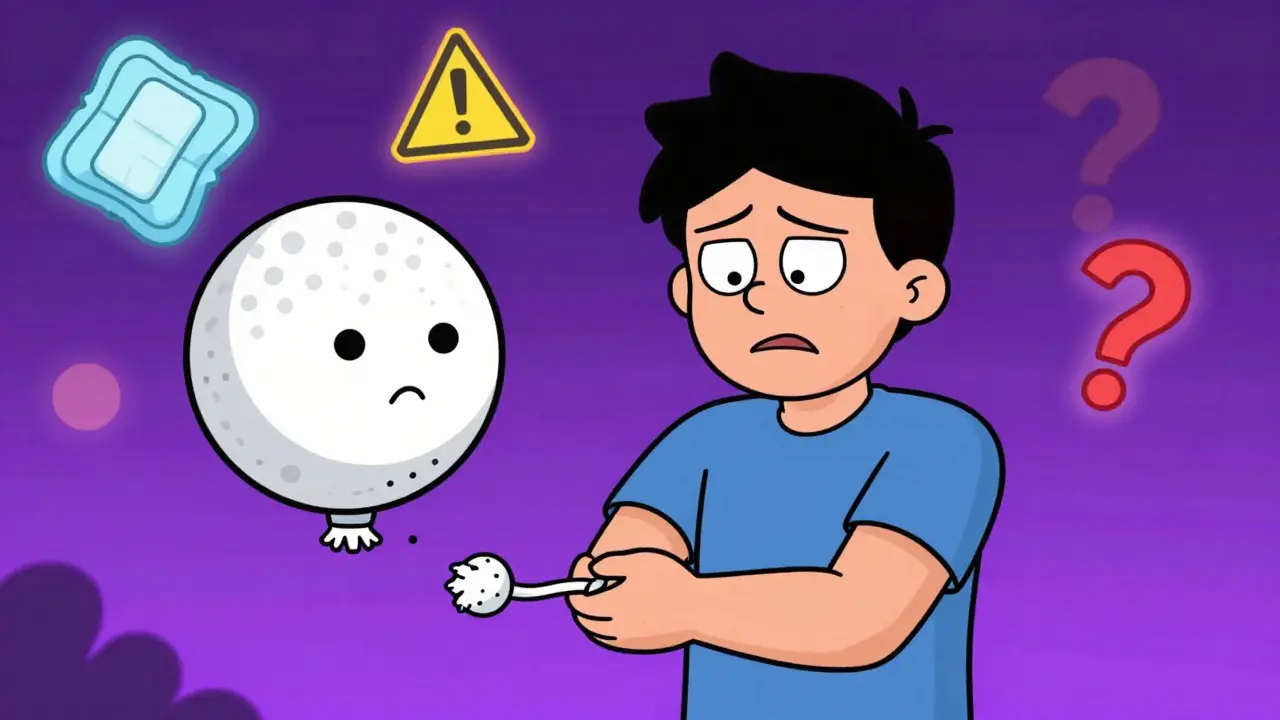
What’s the difference between bursitis and tendinitis?
You feel pain near your shoulder, knee, or elbow. Maybe it hurts when you lift your arm, kneel down, or even sleep on that side. You’ve heard terms like bursitis and
Bursitis is inflammation of the bursae - tiny, fluid-filled sacs that act like cushions between bones, tendons, and muscles. Think of them as shock absorbers. When they get irritated from repeated pressure or friction, they swell up and cause pain. Common spots? The shoulder (subacromial), elbow (olecranon), hip (trochanteric), and knee (prepatellar).
Tendinitis, on the other hand, is inflammation of the tendons - the thick cords that connect muscles to bones. When you move, your muscles pull on these tendons. If you overuse them or do the same motion too often, they get inflamed. The most common types involve the rotator cuff in the shoulder, the Achilles tendon in the ankle, and the patellar tendon below the kneecap.
Here’s the catch: they often happen together. In fact, about 65% of shoulder pain cases involve both a swollen bursa and an inflamed tendon. But treating them the same way can make things worse.
How do you know which one you have?
The pain feels different. That’s your first clue.
If it’s bursitis, the pain is usually more spread out - like a dull ache around the joint. It often gets worse when you lie directly on the area. A swollen hip bursa might hurt when you roll over in bed. An elbow bursa might look puffy, like a golf ball under the skin.
Tendinitis pain follows the tendon’s path. It’s sharp during movement and fades when you stop. If your Achilles tendon is inflamed, it stings when you push off your foot to walk or climb stairs. Rotator cuff tendinitis hurts when you reach overhead or behind your back. The pain doesn’t usually make the area swell visibly - but it feels tight and stiff.
Doctors use simple tests to tell them apart. Pressing on the bursa? If it’s tender and swollen, it’s likely bursitis. Moving the joint in a way that pulls on the tendon? If that triggers sharp pain, it’s tendinitis. Ultrasound is 92% accurate at spotting which structure is inflamed, but most cases are diagnosed just by asking about your symptoms and testing your movement.
Why misdiagnosis makes recovery take longer
Too many people get the wrong treatment because they assume it’s just "shoulder pain" or "knee tendinitis." That’s a problem.
Here’s what happens when you mix them up: If you have bursitis and do aggressive stretching or strengthening, you’re rubbing the inflamed sac against bone - making it worse. If you have tendinitis and get a cortisone shot without doing rehab, you’re silencing the pain without fixing the underlying weakness - and you risk a tendon tear.
Studies show patients who get the wrong diagnosis take 3.2 times longer to recover. One group had symptoms for 18.7 weeks on average. Another, with the right treatment, was back to normal in under 6 weeks.
And here’s the scary part: 40% of people over 50 show signs of bursitis or tendinitis on an MRI - even if they feel zero pain. That means imaging alone doesn’t tell the full story. Your symptoms matter more than the scan.
What actually works to fix it
The good news? Most cases don’t need surgery. In fact, fewer than 5% of patients ever do.
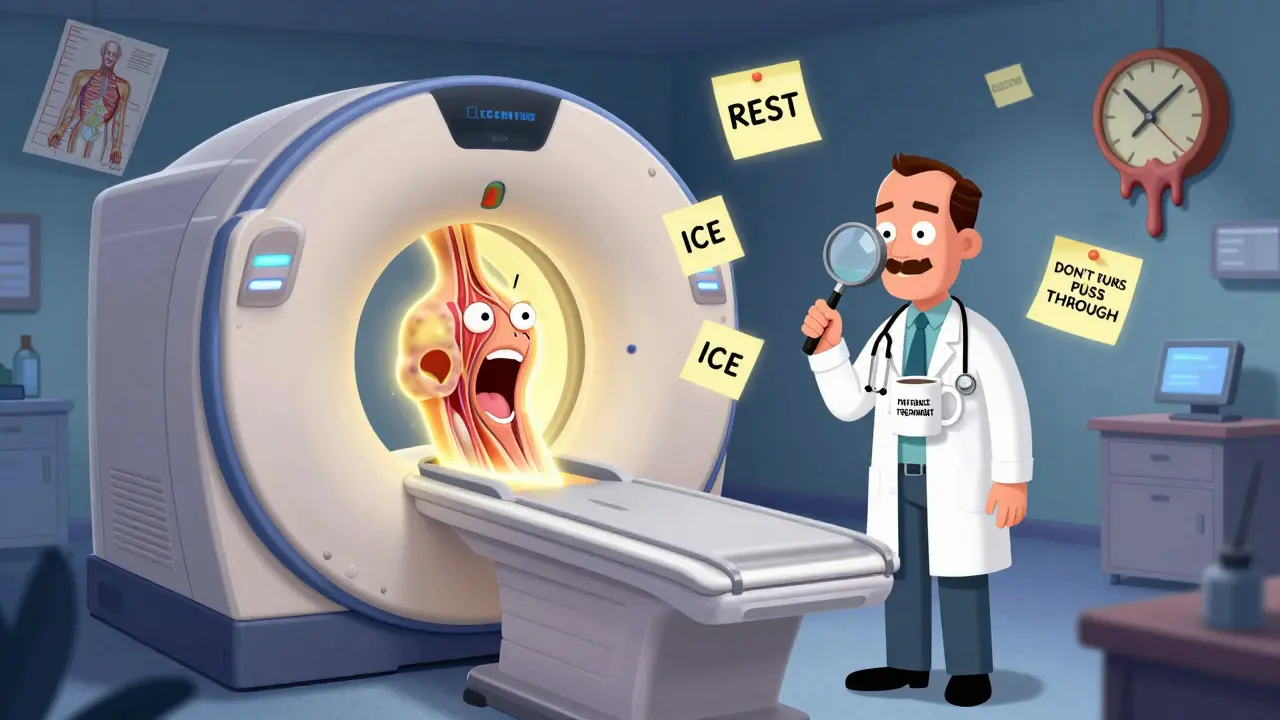
Start with the basics: rest, ice, and avoiding the trigger movement. Ice for 15 minutes, 3-4 times a day, especially in the first few days. Use a frozen water bottle for rolling over your elbow or knee - it’s more targeted than a bag of peas.
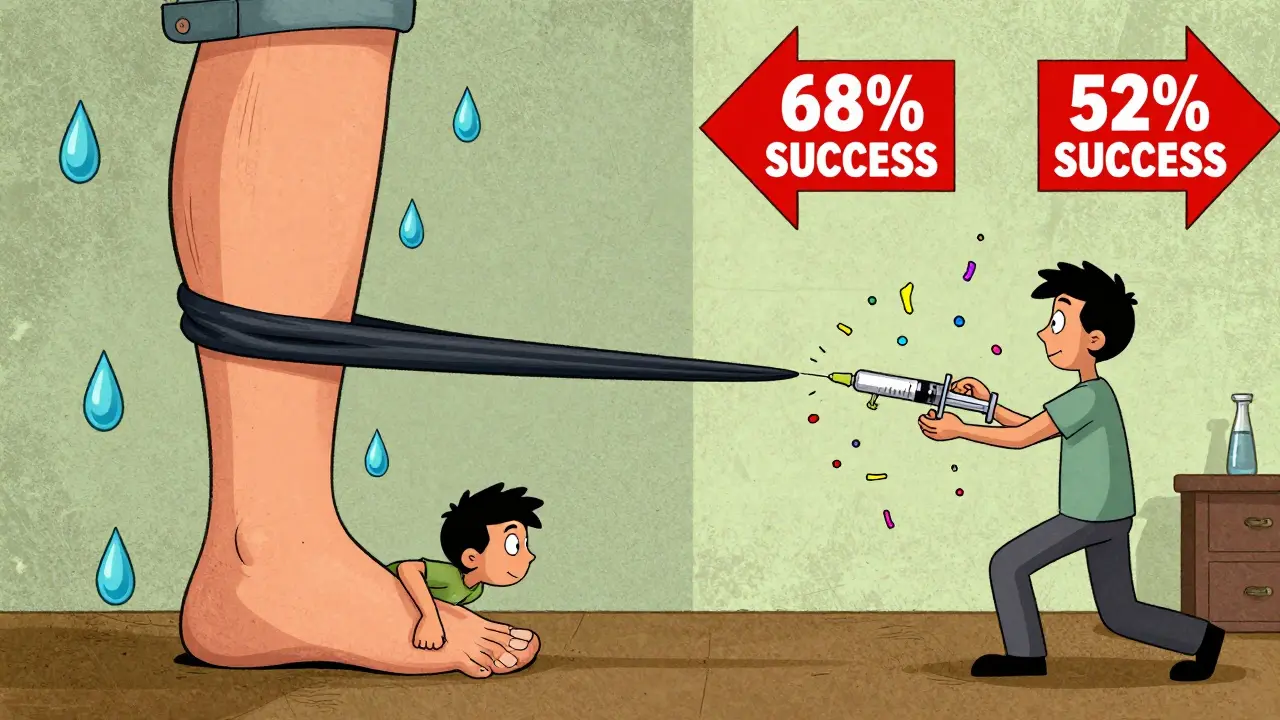
For bursitis, cortisone injections work well - 78% of patients report major relief within four weeks. But don’t get more than two or three in a year. Too many can weaken nearby tissues.
For tendinitis, injections help less - only 52% feel better. What works better? Eccentric strengthening. That’s a fancy term for slowly lowering a weight against resistance. For Achilles tendinitis, that means standing on your toes, then slowly lowering your heel down over 3-5 seconds. Do 3 sets of 15 reps, twice a day, for 12 weeks. It’s boring. It’s hard. But it rebuilds the tendon’s strength better than any shot or pill.
Studies show 68% of people with chronic tendinitis see lasting improvement with this method. Only 41% improve with injections alone.
What to avoid - and what to do instead
Don’t push through pain. That’s the biggest mistake.
There’s a big difference between "therapeutic discomfort" and "harmful pain." If your pain stays under 3 out of 10 during movement, you’re probably okay. If it spikes to 5 or higher, stop. That’s your body screaming.
Don’t rely on painkillers long-term. NSAIDs like ibuprofen help with swelling, but using them for more than 10-14 days can irritate your stomach and kidneys. Use them to get through the worst days, not as a crutch.
Do this instead: Fix your posture. If you’re a desk worker, your shoulders roll forward - that squeezes the bursa in your shoulder. If you’re a runner, tight calves pull on your Achilles. Stretch your chest, strengthen your upper back, and loosen your calves. One study found 82% of people improved just by adjusting their workstation or running form.
Use the "pain monitoring rule" recommended by physical therapists: If an exercise hurts more than 3/10 during or after, you’re doing too much. Back off. Try again in a few days.
When to see a doctor
You don’t need to rush to the clinic for every twinge. But here’s when to get help:
- Pain lasts more than 2 weeks despite rest and ice
- You can’t move the joint without sharp pain
- The area is red, hot, or swollen - could be infection
- You heard a pop or felt sudden weakness - possible tendon tear
- You’ve had injections before and they stopped working
Ask for an ultrasound. It’s quick, painless, and shows exactly what’s inflamed. A good physical therapist can also assess your movement patterns and spot what’s causing the problem - not just treat the symptom.
Real people, real recoveries
Tom Wilcox, a former gym coach, had chronic Achilles tendinitis for 14 months. He tried rest, braces, and shots. Nothing stuck. Then he started Alfredson’s eccentric heel drop program - 180 reps a day, every day, for 12 weeks. He tracked his progress with the Victorian Institute of Sports Assessment questionnaire. At week 8, his pain dropped from 8/10 to 3/10. By week 27, he was back to running. His video on YouTube has over 2 million views.
On Reddit, a nurse with shoulder bursitis said ice rolling with a frozen water bottle was her "game-changer." She also started doing wall slides to retrain her shoulder movement. Within 5 weeks, her pain was gone.
These aren’t miracles. They’re science-backed, consistent efforts. Recovery takes time. Bursitis often improves in 4-6 weeks. Tendinitis? 12-16 weeks. Patience isn’t optional - it’s the treatment.
The future of treatment
Science is moving beyond just shots and stretches.
Platelet-rich plasma (PRP) injections - using your own blood to trigger healing - are showing better results than cortisone for chronic tendinitis. One 2023 trial found 67% of patients improved at 6 months with PRP, compared to 42% with cortisone. The catch? It costs about $850 per shot versus $120 for cortisone.
Ultrasound-guided injections are now standard because they hit the target 95% of the time, compared to 70% with "blind" injections.
And wearable tech? Apple Watch’s motion sensors can now detect movement patterns linked to tendinitis risk with 89% accuracy. In a Stanford pilot study, users got alerts to adjust their form before pain even started. Early intervention could stop problems before they begin.
Bottom line
Bursitis and tendinitis aren’t the same. They don’t respond the same way. Mistaking one for the other wastes time, increases pain, and delays recovery.
Start with rest, ice, and avoiding the movement that hurts. If it doesn’t improve in 1-2 weeks, see someone who understands the difference. Get an ultrasound if needed. For bursitis, a cortisone shot can help fast. For tendinitis, slow, controlled strengthening is the real fix.
And remember: pain isn’t your enemy - it’s your guide. Listen to it. Don’t ignore it. Don’t push through it. Adjust, recover, and come back stronger.
Ambrose Curtis
January 27, 2026 AT 09:11Linda O'neil
January 28, 2026 AT 06:09Chris Urdilas
January 30, 2026 AT 05:08Jeffrey Carroll
January 30, 2026 AT 06:10Phil Davis
January 31, 2026 AT 15:09Irebami Soyinka
February 1, 2026 AT 14:06doug b
February 3, 2026 AT 09:06SRI GUNTORO
February 4, 2026 AT 07:19