
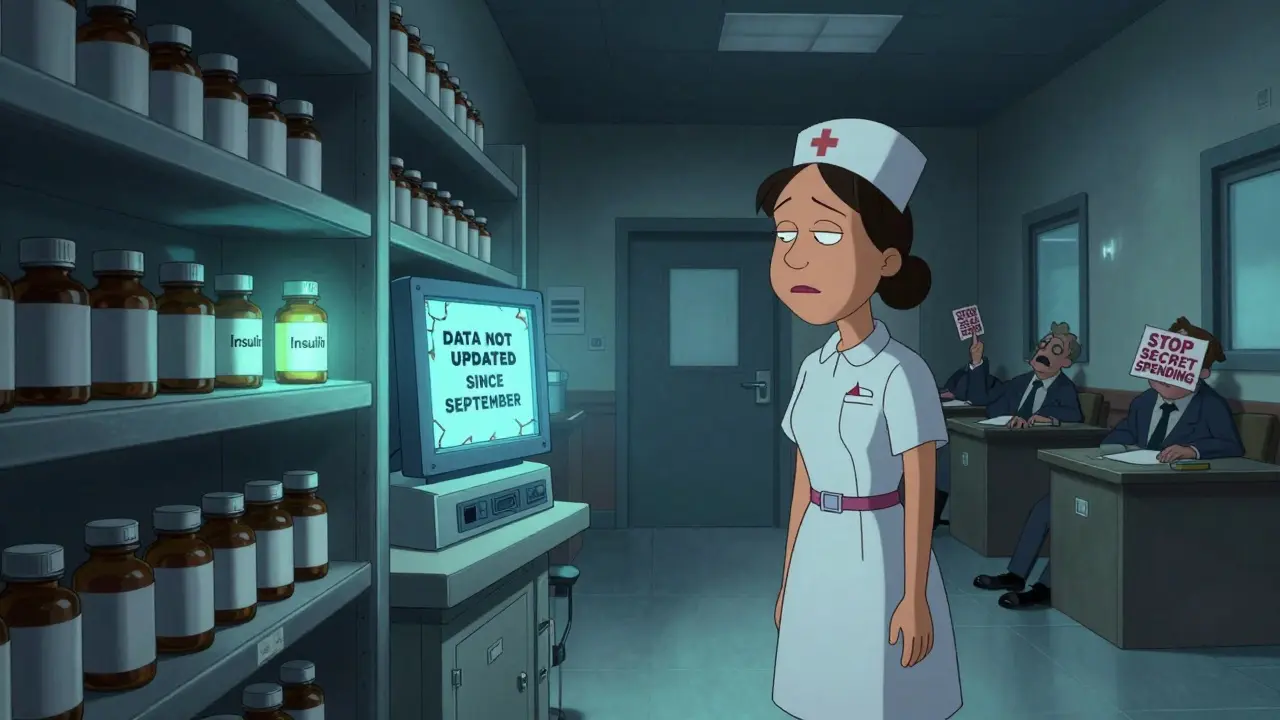
The U.S. is facing one of its worst drug shortage crises in decades. As of September 2025, the FDA listed 287 drugs in short supply, with nearly half of them being critical for life-saving treatments-like insulin, chemotherapy agents, and antibiotics. Hospitals are rationing doses. Patients are skipping doses. Doctors are prescribing less effective alternatives. And Congress? Two bills were introduced in early 2025 to fix this. But here’s the catch: they’re stuck. Not because they’re flawed. Not because they’re unpopular. But because the federal government has been shut down since October 1, 2025-the longest shutdown in U.S. history.
What’s in the Drug Shortage Prevention Act (S.2665)?
S.2665, introduced by Senator Amy Klobuchar in August 2025, is the most detailed legislative attempt to tackle drug shortages head-on. It doesn’t just ask manufacturers to do better-it forces them to act.
The bill requires pharmaceutical companies to notify the FDA before a shortage hits. Not after. Not when a hospital calls in panic. Not when a patient can’t get their heart medication. Before. Specifically, if a manufacturer sees demand for a critical drug rising by more than 20% over a 30-day window, they must report it. That’s it. Simple. Direct.
Why does this matter? Because 63% of all drug shortages are caused by manufacturing delays, according to the Association for Accessible Medicines. A factory outage. A supply chain hiccup. A raw material shortage. These aren’t surprises. They’re predictable. But right now, companies aren’t required to say anything until it’s too late.
S.2665 would change that by building on the FDA’s existing Drug Shortage Portal. The idea? Give regulators a heads-up so they can find alternative suppliers, fast-track approvals, or even temporarily import drugs from overseas. The bill doesn’t create new bureaucracy-it just makes existing systems work when they’re needed most.
But here’s the problem: the FDA’s portal is already broken. With 800,000 federal workers furloughed during the shutdown, the team that maintains the portal is gone. Updates haven’t been posted since September. The system is lagging. Data is outdated. How can a notification system work if the inbox is empty?
The other bill? H.R.1160. And no one knows what it does.
While S.2665 at least has a clear purpose, H.R.1160-the Health Care Provider Shortage Minimization Act of 2025-is a mystery. The House introduced it in January 2025. The title sounds important: addressing shortages of doctors, nurses, and pharmacists. And yes, we’re in crisis. Over 122 million Americans live in areas with too few primary care providers. By 2034, the AAMC says we’ll be short 124,000 physicians.
So what’s in H.R.1160? Official records don’t say. No summary. No committee assignment. No sponsor details beyond the bill number. LegiScan, the most comprehensive congressional tracking tool, lists it as “no details available.” Even the Congressional Research Service hasn’t released an analysis. Zero public commentary. Zero expert review.
Is it about loan forgiveness for medical students? Expanding telehealth training? Fast-tracking visas for foreign-trained nurses? No one knows. And that’s the real danger. A bill with a noble goal, buried under political noise. It’s not dead. But it’s not alive either. It’s in limbo.
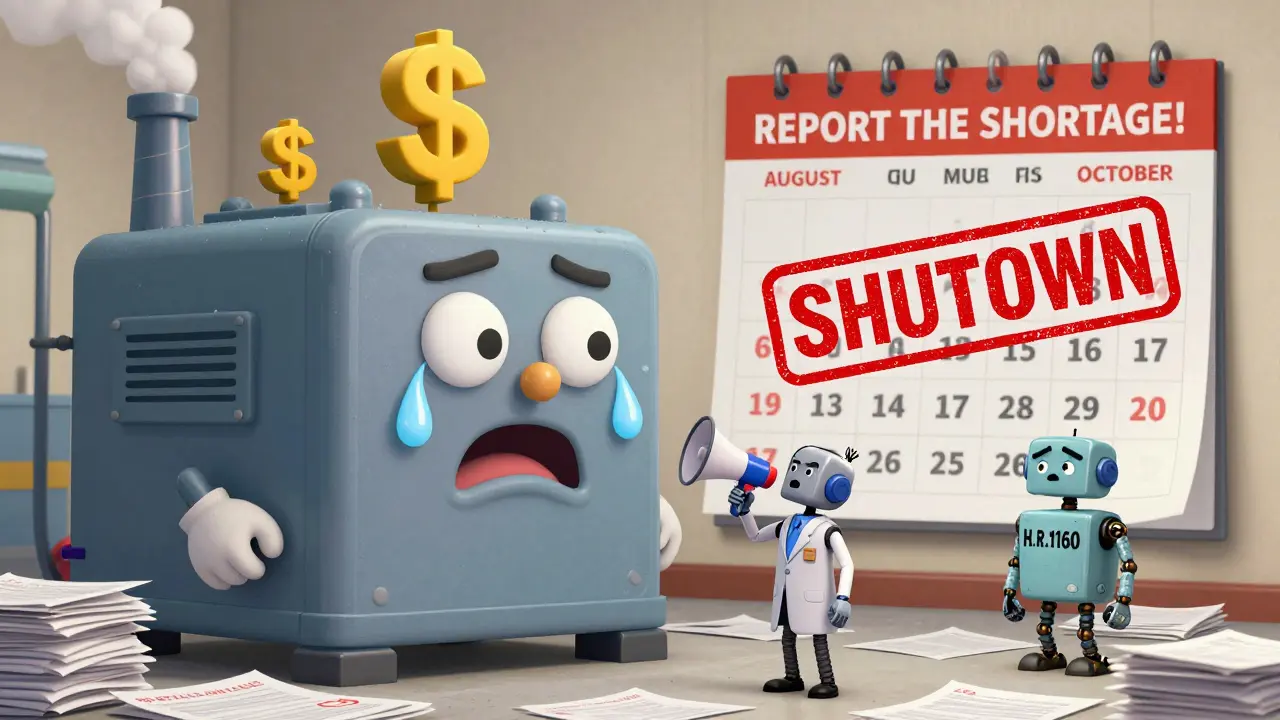
Why the shutdown is killing progress
The government shutdown isn’t just about unpaid workers. It’s about broken systems. The FDA can’t inspect foreign drug factories. The CDC can’t track supply chain trends. The Department of Health and Human Services can’t update emergency protocols. And Congress? They’re not passing bills. They’re fighting over phone records.
The Stop Secret Spending Act (S.872) and the Rescissions Act of 2025-bills that cut billions from foreign aid and public media-are moving forward. But S.2665? It’s gathering dust in the Senate Health Committee. H.R.1160? It’s not even on the committee roster.
And here’s the kicker: implementing S.2665 would cost about $45 million a year. That’s less than 0.003% of the $1.74 trillion federal deficit. But in a shutdown environment, even small, smart investments get blocked. Why? Because lawmakers aren’t thinking about patient safety. They’re thinking about winning the next election.
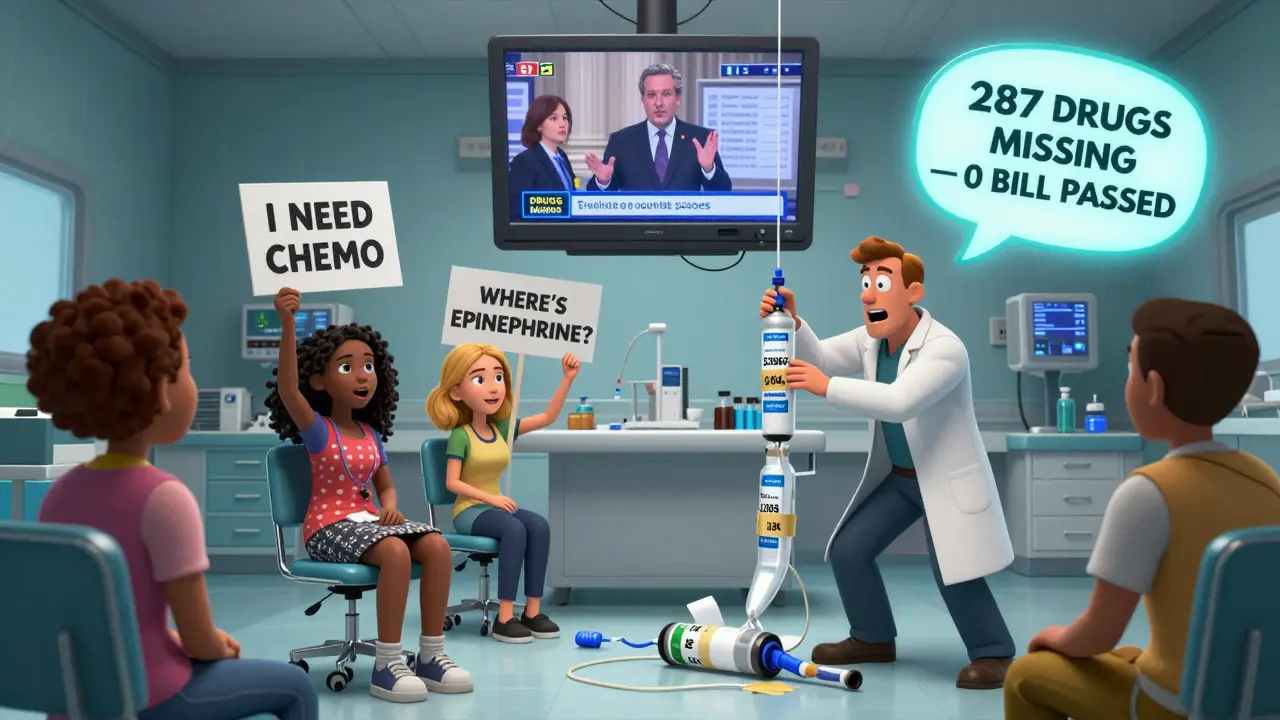
What’s happening on the ground?
While Congress debates, hospitals are making impossible choices.
The American Hospital Association reported in October 2025 that 98% of hospitals experienced at least one critical drug shortage in the third quarter of 2025. One nurse in Ohio told a local reporter she had to give a child with leukemia a less effective, more toxic version of a chemotherapy drug because the standard version was out. A pharmacy in Texas ran out of epinephrine auto-injectors for three weeks. Parents had to drive 90 miles to the nearest hospital for refills.
And doctors? A September 2025 survey by the American Medical Association found that 87% of physicians are seeing shortages impact patient care. Yet only 12% even knew H.R.1160 existed.
This isn’t theoretical. It’s daily. It’s personal. It’s life or death.
What’s next? And what can you do?
If the shutdown ends before January 30, 2026, both bills might get revived. But if Congress doesn’t pass a funding bill by then, everything resets. S.2665 and H.R.1160 die. And we start over in January 2027.
There’s no magic fix. No quick solution. But here’s what’s clear: notification systems work. The FDA already tracks shortages. It just needs real-time data. And workforce gaps can be filled-with incentives, not empty promises.
Until then, the burden falls on patients and providers. Call your representative. Ask them: “What are you doing about drug shortages?” Share stories. Demand transparency. The system won’t fix itself. And the next time a life-saving drug disappears from your pharmacy shelf, remember: Congress had a chance to stop it. They just didn’t act.
Rex Regum
March 13, 2026 AT 07:50Kelsey Vonk
March 14, 2026 AT 15:57Emma Nicolls
March 16, 2026 AT 02:43Jimmy V
March 17, 2026 AT 05:44douglas martinez
March 17, 2026 AT 10:28Sabrina Sanches
March 17, 2026 AT 23:50Shruti Chaturvedi
March 18, 2026 AT 02:04Katherine Rodriguez
March 18, 2026 AT 18:52Devin Ersoy
March 20, 2026 AT 18:41Scott Smith
March 22, 2026 AT 18:05Sally Lloyd
March 22, 2026 AT 20:10Emma Deasy
March 24, 2026 AT 00:30tamilan Nadar
March 25, 2026 AT 01:54Jimmy V
March 26, 2026 AT 06:37