
Quick Summary
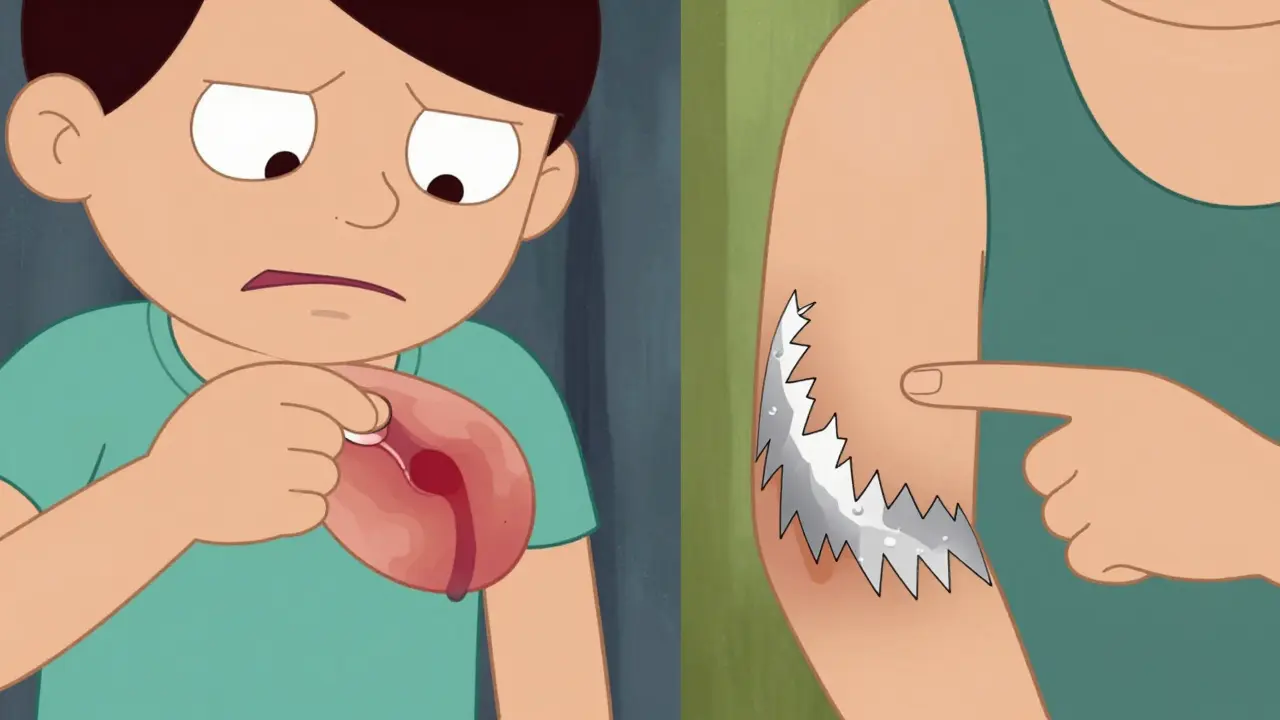
- Location: Eczema loves the creases (inner elbows, behind knees); Psoriasis prefers the outer edges (elbows, knees).
- Texture: Eczema is often weepy, raw, or crusty; Psoriasis is typically thick, dry, and silvery.
- Borders: Eczema blends into the skin; Psoriasis has sharp, well-defined edges.
- Nails: Psoriasis often causes tiny pits or nail separation; Eczema rarely affects the nails.
Where does the rash show up?
One of the fastest ways to spot the difference is to look at where the rash is hanging out. Dermatologists often use a simple rule of thumb: check the creases. Atopic Dermatitis (the most common form of eczema) predominantly hits the flexural surfaces. We're talking about the inner elbows and the backs of the knees. In kids, it often shows up prominently on the cheeks. If your rash is hiding in the folds of your skin, there is a very high chance it's eczema.
Psoriasis does the opposite. It favors the extensor surfaces-the parts of your joints that stretch. You'll most often find Plaque Psoriasis on the outer elbows, the front of the knees, and the scalp. It also commonly appears on the lower back. While there is a version called "inverse psoriasis" that appears in skin folds, it looks smooth and shiny, even though it's in a "crease" area, unlike the crusty nature of eczema.
Texture and Visual Appearance
If you look closely at the rash, the texture tells a story. Eczema usually looks like an angry, red, and poorly defined patch. The skin often feels thinner and may exhibit "weeping"-where fluid oozes from the skin-or crusting. If you've had it for a long time and have been scratching, the skin might undergo lichenification, which is just a fancy way of saying the skin has become thick and leathery from constant rubbing.
Psoriasis is more like "armor plating." The plaques are raised and have very distinct, sharp borders. The most telling sign is the presence of thick, adherent silvery-white scales. Unlike the fine scaling of eczema, psoriasis scales are significantly thicker. There is even a clinical sign called the Auspitz sign: if you gently scrape a psoriasis scale, it often reveals tiny pinpoint bleeding. You won't see that with eczema.
| Feature | Eczema (Atopic Dermatitis) | Psoriasis (Plaque) |
|---|---|---|
| Primary Location | Inner elbows, behind knees | Outer elbows, front of knees, scalp |
| Border Definition | Blended, vague edges | Sharp, well-demarcated |
| Surface Texture | Weepy, oozing, crusty | Dry, thick, silvery scales |
| Skin Feeling | Intensely itchy, raw | Sore, tight, burning |
| Nail Changes | Rare (some ridging) | Common (pitting, onycholysis) |
The Impact of Skin Tone on Diagnosis
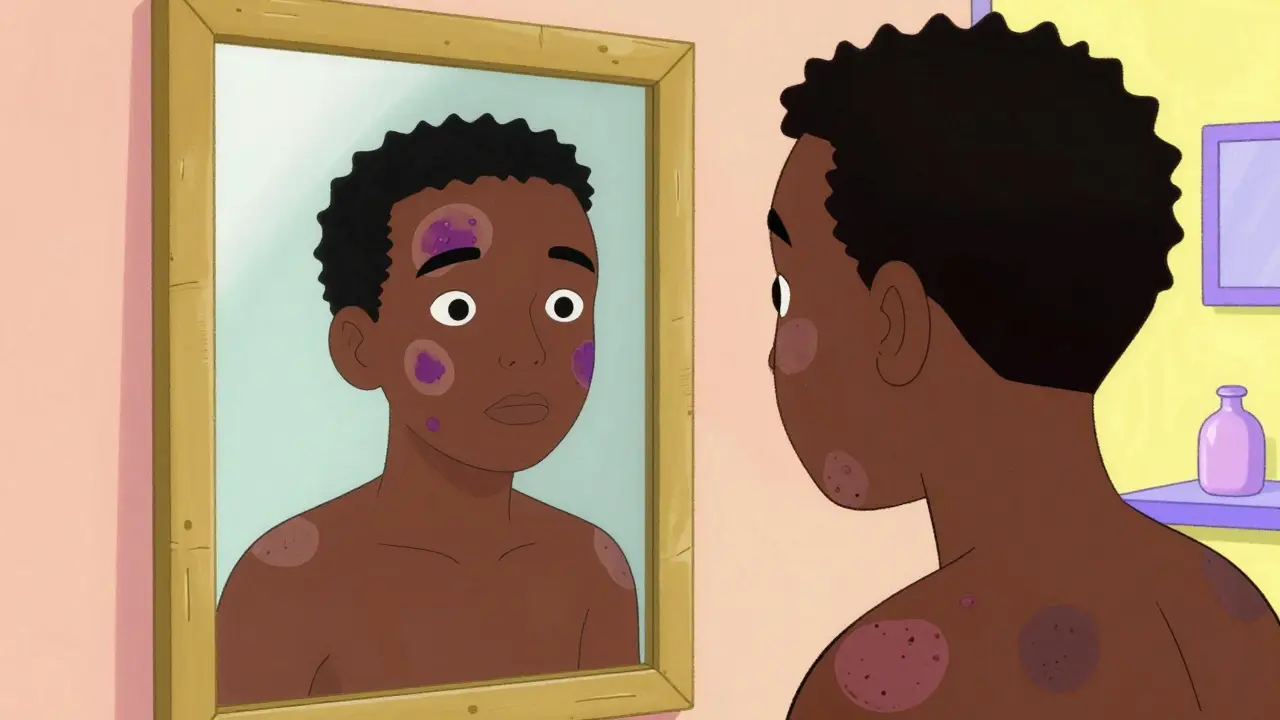
Most medical textbooks show these conditions on light skin, but that makes things difficult for people with darker skin tones. If you have a Fitzpatrick skin type IV-VI, the colors change completely. Eczema doesn't always look "red"; it can appear ashen, purple, or gray. The inflammation might be subtle, appearing as hyperpigmented (darker) or hypopigmented (lighter) patches.
Psoriasis on darker skin also shifts. Instead of bright red plaques, you might see violaceous (purple) or dark brown patches. The silvery scale is still usually present, but it can be harder to spot. Some patients with psoriasis on darker skin also develop a "halo" of lighter skin around the active lesion, which is a specific clue that doesn't usually happen with eczema. Because of these differences, misdiagnosis rates are unfortunately 35% higher for people of color, often leading to months of delay in getting the right treatment.
Looking Beyond the Rash: Nails and Trauma
When the skin is too confusing, look at your nails. Psoriasis has a strong relationship with nail health. About half of all psoriasis patients experience "nail pitting," which looks like tiny random depressions in the nail plate. Others deal with onycholysis, where the nail actually separates from the nail bed. Eczema almost never does this; it might cause some discoloration or ridging in severe cases, but it doesn't "pit" the nail.
Another weird but helpful clue is the Koebner phenomenon. This happens when a new psoriasis lesion forms exactly where the skin was injured-like a scratch or a burn. If you notice a new patch appearing in a straight line where you scratched yourself, it's a classic sign of psoriasis. This is very rare in people with eczema.
Modern Tools for Differentiation
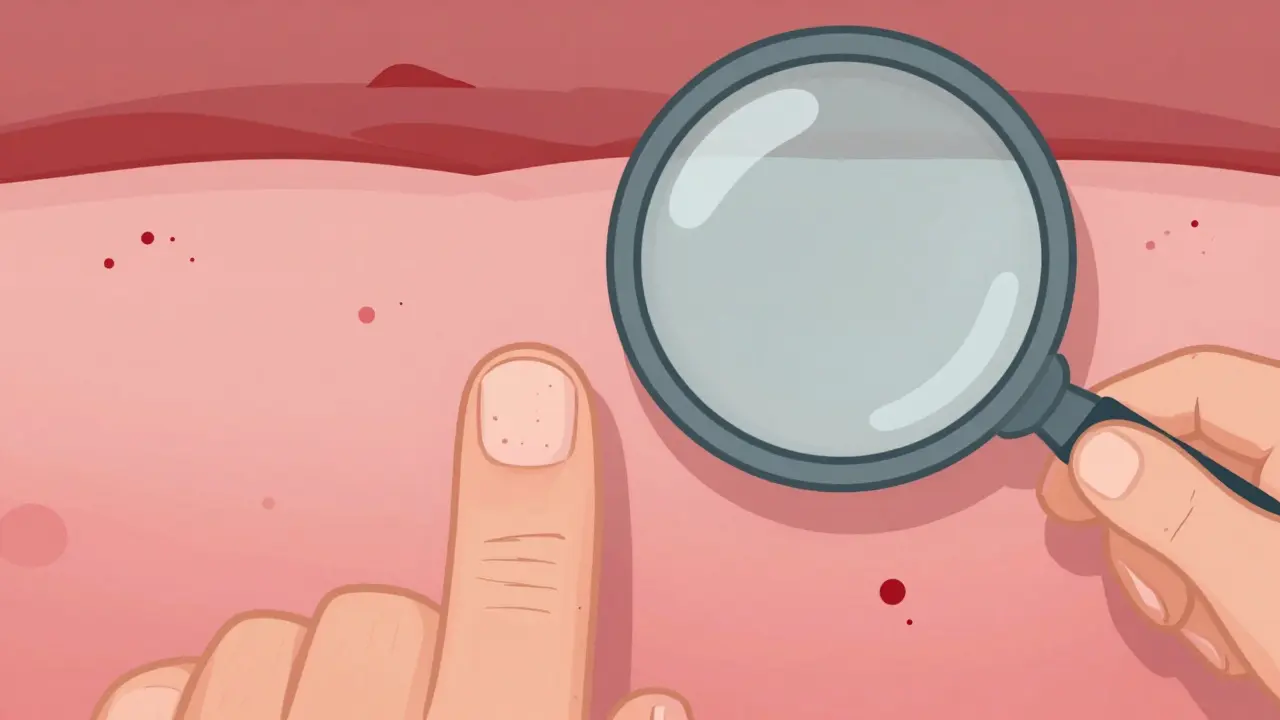
While a dermatologist's eye is still the gold standard, technology is catching up. Some clinics now use multispectral imaging to analyze how skin reflects light. Psoriasis reflects more light at 540nm (related to oxygenated hemoglobin), while eczema reflects more at 660nm because of the higher water content in the tissue. There are even AI-assisted tools now approved by the FDA that analyze smartphone photos against hundreds of thousands of verified cases.
However, keep in mind that these AI tools are still learning. They can be up to 22% less accurate on darker skin tones due to algorithmic bias. The best way to track your own skin is to take photos under the same lighting conditions every week. Psoriasis plaques tend to stay consistent, whereas eczema often fluctuates wildly based on what you've touched or how stressed you are.
Can I have both eczema and psoriasis at the same time?
Yes, it is possible. This is sometimes called "psoriasiform dermatitis." When this happens, the skin can show a mix of symptoms, such as the thick scales of psoriasis and the intense itching and location of eczema. This is why a professional diagnosis is so important, as the treatment plan would need to address both pathways.
Does eczema always itch more than psoriasis?
Generally, yes. While psoriasis can definitely itch, the "itch that rashes" is a hallmark of eczema. Eczema is often described as an unbearable itch that leads to scratching, whereas psoriasis is often described more as a stinging or burning sensation, though both can be incredibly uncomfortable.
Why is it dangerous to mistake one for the other?
The treatments can conflict. For example, some strong steroid creams used for psoriasis might be too aggressive for the thin, weepy skin of an eczema flare-up and could cause skin thinning (atrophy). Conversely, a mild moisturizer meant for eczema won't penetrate the thick, armored scales of psoriasis, leaving the condition untreated.
What is the "scale test" mentioned by doctors?
The scale test involves gently scraping the surface of the lesion. In psoriasis, this often removes thick, silvery scales and reveals tiny dots of blood (the Auspitz sign). In eczema, the scaling is much finer and doesn't typically result in that specific pinpoint bleeding pattern.
How do I prepare for a dermatology appointment to get a faster diagnosis?
Keep a photo log of your flares under consistent lighting. Note down any triggers (like new soaps or stress) and specifically mention if you've noticed changes in your nails or if the rash appeared after a skin injury. This helps the doctor distinguish between the two much faster than a single snapshot in the office.
What to do next
If you're trying to figure out your skin, the first step is a detailed photo log. If your rash is in the creases, oozing, and driving you crazy with an itch, start by looking into triggers like fragrances or detergents. If you see thick, silver plaques on your elbows or pits in your nails, you should prioritize an appointment with a specialist to discuss autoimmune management.
For those with darker skin tones, be your own advocate. If a doctor tells you your skin "isn't red," remind them that inflammation looks different on your skin tone. Ask them specifically about the presence of violaceous plaques or hypopigmented halos to ensure you're getting an accurate assessment.
dwight koyner
April 6, 2026 AT 12:08It is imperative to emphasize that while these visual markers are highly useful for preliminary identification, they should not replace a clinical diagnosis. For those experiencing severe flare-ups, I strongly recommend maintaining a detailed symptom diary including environmental triggers and a precise timeline of when the lesions first appeared, as this data significantly assists dermatologists in differentiating between an autoimmune response and an allergic reaction.
Jay Vernon
April 7, 2026 AT 23:39Thanks for the tips! 😊 Super helpful stuff! 👍
Danielle Kelley
April 9, 2026 AT 15:00AI-assisted tools? Give me a break. This is just another way for big pharma and tech giants to collect our biometric data to profile us. They want our skin patterns to track us and then they'll push the most expensive steroids on us just to keep us sick for profit. Wake up people, the bias in the AI is just a cover for the fact that the whole system is rigged to control our health!
Ethan Davis
April 9, 2026 AT 23:02Typical. Just another corporate-sponsored article pushing us toward doctors who get kickbacks for prescriptions. The AI part is the real joke here. They probably use the same broken algorithms for everything. Total waste of time.
Grace Lottering
April 10, 2026 AT 04:10Data collection is a sin. They're lying to us.
Brady Davis
April 10, 2026 AT 21:23Oh sure, because taking a photo of my crusty elbows is exactly what my social life was missing. I can't wait to show my dermatologist my "armor plating" so we can both marvel at how fabulous I look while I'm basically shedding like a lizard. Truly a peak human experience right here.
Srikanth Makineni
April 10, 2026 AT 21:35accurate enough for a quick check
Dhriti Chhabra
April 11, 2026 AT 08:19I believe it is most commendable that the author addressed the complexities of diagnosis for individuals with darker skin tones. Ensuring that medical literature is inclusive and accurate for all ethnicities is a vital step toward achieving true equity in healthcare delivery across the globe.
Laurie Iten
April 12, 2026 AT 00:59the idea that our skin reflects our inner state is a curious thought though maybe the borders we see on the skin are just mirrors of the borders we build in our minds to keep others out
Jitesh Mohun
April 12, 2026 AT 14:35listen up if you aint checking your nails you aint doing it right just look at the pits and stop whining about the itch it is simple as that
Timothy Burroughs
April 14, 2026 AT 02:01Only in America do we need an app to tell us we have a rash! Pathetic. Back in the day people just dealt with it or used real remedies instead of staring at a smartphone screen like idiots. This whole obsession with "AI tools" is just a sign of how weak and dependent we've become as a nation. Get a grip and go outside
Sarabjeet Singh
April 15, 2026 AT 19:59Keep tracking those photos and stay positive everyone. Just a small step every day makes a difference in managing these things.