
Fentanyl Patch Safety Checklist
Critical Safety Practices
Verify you're following all recommended safety protocols. This tool checks if you're meeting essential guidelines to prevent overdose and withdrawal risks.
When you’re living with severe, chronic pain, a fentanyl patch might seem like a lifeline. It’s designed to deliver steady pain relief for three full days without needing to take pills every few hours. But behind that convenience lies a powerful and dangerous drug - one that can kill if not handled with extreme care. Fentanyl is 50 to 100 times stronger than morphine. A single patch contains enough medication to stop breathing in someone who hasn’t built up a tolerance. That’s not a hypothetical risk. It’s a documented reality.
How Fentanyl Patches Work - and Why They’re So Dangerous
Fentanyl patches, like the original Duragesic brand (discontinued in 2021) and its generic versions, slowly release the drug through your skin over 72 hours. The idea is simple: avoid the spikes and crashes of oral opioids by keeping a constant level in your bloodstream. That works well for people who’ve been on opioids long-term and need stable pain control. But it’s also why these patches are so risky. The patch doesn’t start working right away. It takes 12 to 24 hours to reach full effect. That’s why doctors never prescribe them for sudden or acute pain. If you’re new to opioids - meaning you haven’t taken at least 60 mg of morphine daily for a week or more - even one patch can be deadly. The FDA and EMA both strictly warn against use in opioid-naive patients. And it’s not just about misuse. Accidental exposure is a major problem. Children have died after finding a used patch on the floor or in a trash can. In fact, between 1997 and 2012, the FDA recorded 32 pediatric deaths from accidental fentanyl patch exposure.Overdose: The Silent Killer
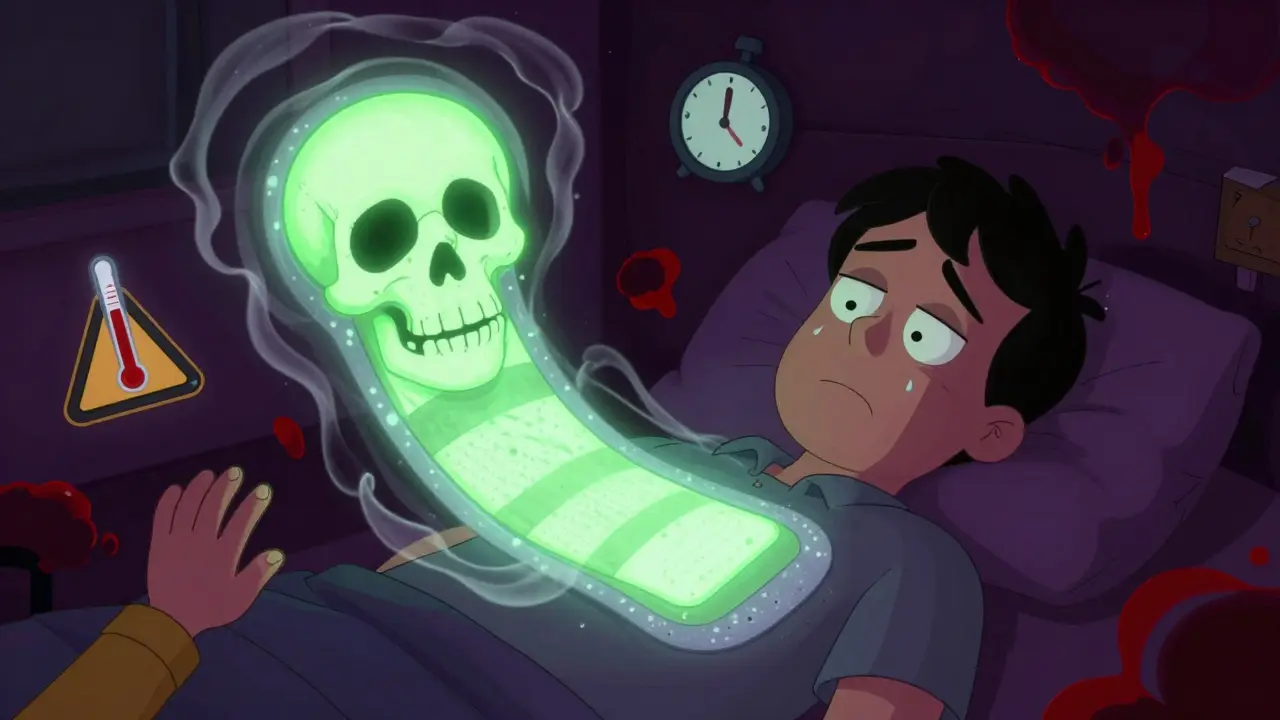
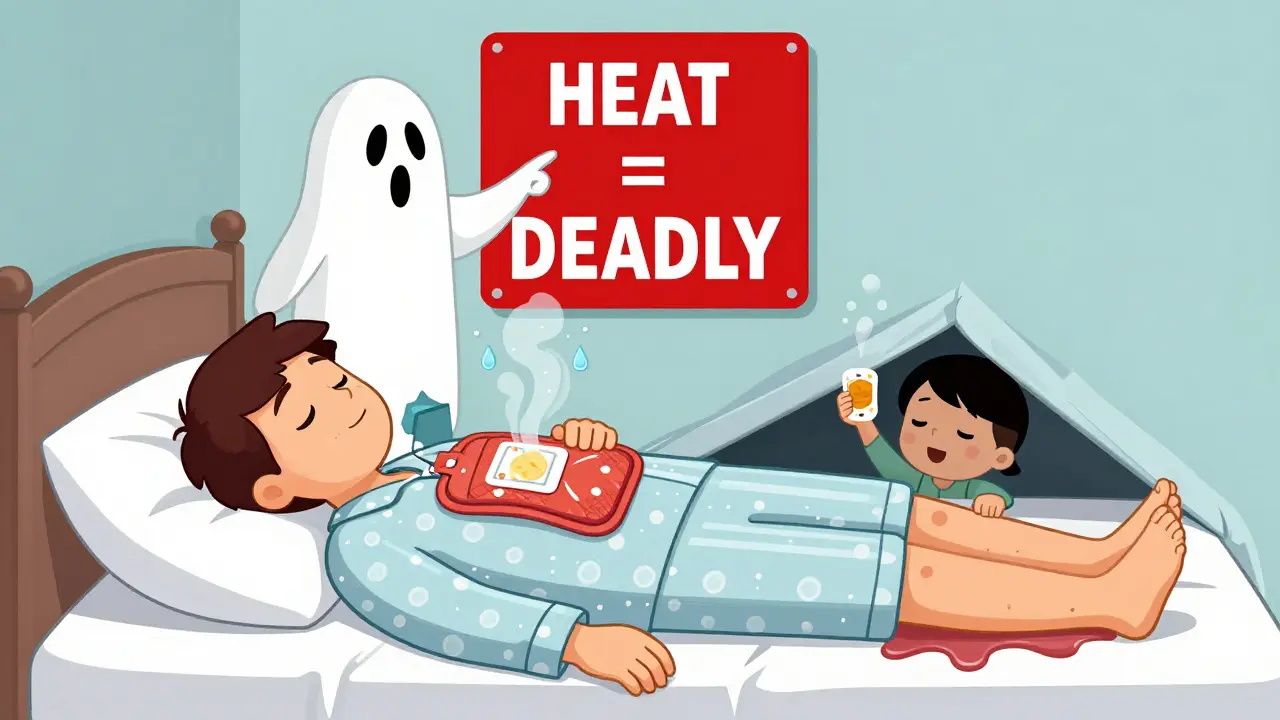
An overdose from a fentanyl patch doesn’t always look like a drug user collapsing. It often starts quietly. You might feel unusually sleepy, confused, or dizzy. Then comes the real danger: slow, shallow, or irregular breathing. Your lips or skin may turn blue. Your muscles go limp. Your heart rate drops. You might stop responding entirely. In many cases, the person doesn’t even realize they’re in trouble until it’s too late. Heat makes it worse. If you have a fever, take a hot shower, sit in a hot tub, or use a heating pad while wearing the patch, your body absorbs fentanyl faster. That can push your blood levels into a toxic range - even if you’ve been using the patch safely for months. The FDA issued a safety alert in 2013 specifically warning about this. One patient on a 25 mcg/hour patch developed fatal respiratory depression after a fever spiked from 99°F to 102°F. Symptoms of overdose include:- Difficulty breathing or very slow, shallow breaths
- Unusual snoring or gurgling sounds
- Extreme drowsiness - can’t wake up
- Cold, clammy, or bluish skin
- Limp muscles
- Pupils that are pinpoint or unusually wide
- Slow heartbeat
- Seizures
Withdrawal: The Hidden Consequence
If you’ve been using fentanyl patches for more than a few weeks, your body becomes physically dependent. That doesn’t mean you’re addicted - it means your nervous system has adapted to the drug being there. Stop suddenly, and your body goes into chaos. Withdrawal symptoms don’t show up right away. They usually start 8 to 24 hours after your last patch is removed. They peak around 36 to 72 hours and can last a week or longer. Some people report symptoms for weeks. Common withdrawal signs include:- Restlessness and anxiety
- Excessive sweating and chills
- Runny nose and tearing eyes
- Yawning uncontrollably
- Nausea, vomiting, diarrhea
- Stomach cramps
- Increased heart rate and blood pressure
- Tremors, muscle aches, weakness
- Insomnia and trouble sleeping
- Loss of appetite
- Thoughts of suicide
Stopping Safely: Tapering Is Non-Negotiable
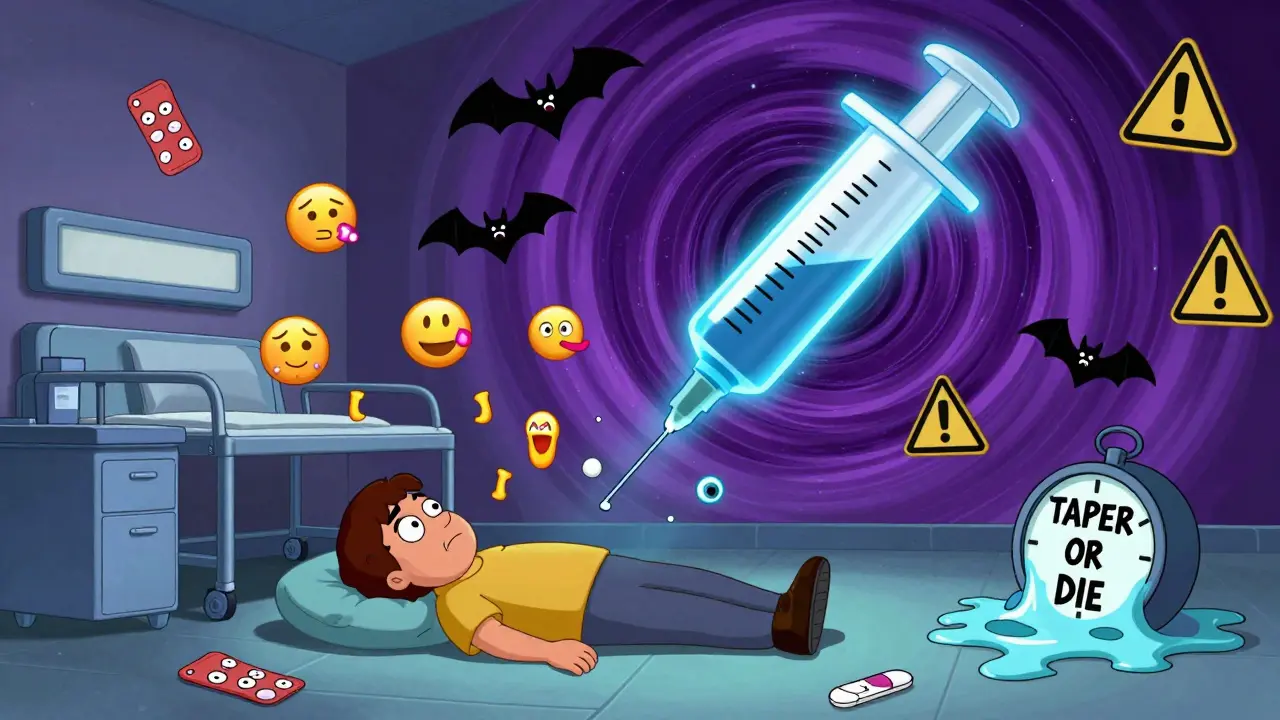
You never stop a fentanyl patch cold turkey. Not even if you feel fine. The EMA and Mayo Clinic both say tapering must be slow and supervised. For someone on a high dose, this can take weeks or even months. A typical taper reduces the dose by no more than 10% to 25% every 1 to 3 weeks. If you’re on a 100 mcg/hour patch, your doctor might drop you to 75 mcg/hour for two weeks, then 50 mcg/hour, and so on. Skipping steps or rushing the process increases the risk of severe withdrawal - or worse, relapse. Relapse after abstinence is especially dangerous. Your tolerance drops fast. If you go back to using the same dose you used before, you’re at high risk of overdose. A 2021 Johns Hopkins study found that 37% of fatal fentanyl overdoses happened in people who had recently stopped using.What You Must Do Every Day
Using a fentanyl patch isn’t like taking a painkiller. It requires strict routines:- Apply only to clean, dry, intact skin - never on cuts, burns, or irritated areas.
- Rotate application sites - don’t reuse the same spot for at least a week.
- Avoid heat sources: no saunas, hot tubs, heating pads, or sunbathing while wearing the patch.
- Keep patches away from children and pets. Store them locked up.
- After removing a patch, fold it in half so the sticky sides stick together. Flush it down the toilet or take it to a drug take-back site. Never throw it in the trash.
- Never cut, poke, or microwave a patch. That can release the full dose at once.
- Tell every doctor, dentist, or surgeon you see that you’re using fentanyl patches - even for minor procedures.
- Don’t mix with alcohol, benzodiazepines, sleep aids, or other opioids. The combination can stop your breathing.
Who Should Never Use Fentanyl Patches
These patches are not for everyone. They are strictly for:- Adults with chronic, severe pain that hasn’t responded to other treatments
- Patients already tolerant to opioids (taking at least 60 mg morphine daily for a week or more)
- People who need around-the-clock pain control, not occasional relief
- People with acute or post-surgical pain
- Children or teenagers
- Anyone who has never taken opioids before
- People with breathing problems like sleep apnea or severe asthma
- Those with liver or kidney disease without close monitoring
The Bigger Picture: Why Prescriptions Are Dropping
Between 2016 and 2022, fentanyl patch prescriptions in the U.S. fell by 42%. Why? Because doctors are learning the hard way. The CDC now says fentanyl patches should only be considered after all other options have failed. A 2023 survey found 78% of physicians now use them as a last resort - up from 52% just seven years ago. The FDA’s mandatory REMS program, launched in 2012, requires prescribers to complete training before writing these prescriptions. Since then, safe tapering practices have improved by 35%. But gaps remain. Many patients still don’t get proper education on overdose or withdrawal. New research is underway. Two clinical trials are testing next-gen patches that reduce accidental exposure risk. But until those are available, the rules haven’t changed: use only as directed, never share, and always have naloxone on hand.What to Do If You’re Worried
If you’re using a fentanyl patch and feel like you can’t stop, or you’re scared of withdrawal, talk to your doctor. Don’t wait until you’re in crisis. If you’re caring for someone who uses these patches, learn the signs of overdose and how to use naloxone. Keep the rescue medication where it’s easy to reach - not tucked in a drawer. Fentanyl patches can help. But they’re not a casual tool. They’re a high-stakes medical device. The difference between safety and tragedy often comes down to one thing: respect for the drug.Can you overdose from a fentanyl patch even if you’ve been using it for months?
Yes. Even long-term users can overdose if they’re exposed to heat - like a fever, hot tub, or heating pad - which speeds up fentanyl absorption. Other risks include accidental exposure to another person’s patch, or taking other drugs like alcohol or benzodiazepines that slow breathing. Your body doesn’t become immune to the dangers just because you’ve been using it for a while.
How long does fentanyl withdrawal last?
Symptoms usually start 8 to 24 hours after the last patch is removed. They peak around 36 to 72 hours and most physical symptoms fade within 7 to 10 days. But some people experience fatigue, anxiety, and sleep problems for weeks. The timeline depends on how long you’ve used the patch, your dose, and your overall health.
Is it safe to cut a fentanyl patch to lower the dose?
Never cut, chew, or puncture a fentanyl patch. Doing so releases the entire drug dose at once, which can cause a fatal overdose. Dose changes must be made by your doctor switching you to a lower-strength patch - never by altering the patch yourself.
Can children get poisoned by a used fentanyl patch?
Yes. Even a used patch still contains enough fentanyl to kill a child. Between 1997 and 2012, the FDA documented 32 pediatric deaths from accidental exposure to discarded patches. Always fold used patches sticky-side together and flush them down the toilet or take them to a drug disposal site.
Should I keep naloxone at home if I’m using fentanyl patches?
Yes. The FDA now recommends naloxone be available for all patients prescribed fentanyl patches. Naloxone can reverse an overdose and save a life. Keep it in an easy-to-reach place, and make sure someone close to you knows how to use it.
Can you stop fentanyl patches cold turkey if you’ve only used them for a week?
Even if you’ve used them for just a week, your body may have started adapting. Stopping suddenly can still trigger withdrawal symptoms like anxiety, sweating, nausea, and trouble sleeping. Always talk to your doctor before stopping - even if you think it’s "just a short time."
Kathy Scaman
January 28, 2026 AT 04:39My grandma used one of these after her hip surgery and ended up in the ER because she put a heating pad on top of it. She didn’t even know it was a thing. Doctors need to hand out pamphlets like it’s candy.
Colin Pierce
January 30, 2026 AT 00:21As a pain management nurse, I’ve seen too many people treat these like magic stickers. The real tragedy isn’t the overdoses-it’s the ones who taper too fast because they’re scared of withdrawal and then end up back on the street. Naloxone should come with the patch, period. And yeah, flush the damn thing.
Lexi Karuzis
January 31, 2026 AT 10:50Anna Lou Chen
February 2, 2026 AT 02:15There’s an ontological paradox here: if a fentanyl patch is designed to stabilize the body’s neurochemical equilibrium, but its very mechanism of delivery induces physiological dependency, then is it a therapeutic tool or a structural instrument of control? We’ve pathologized pain and commodified sedation. The patch isn’t the problem-it’s the epistemological framework that reduces human suffering to a dosage algorithm.
Brittany Fiddes
February 3, 2026 AT 14:45Oh wow, the Americans are at it again. Can’t even manage a pain patch without turning it into a national tragedy. In the UK, we have actual doctors who know how to prescribe, not some Walmart pharmacist handing out patches like candy. And don’t get me started on flushing them-disgusting. We just dispose of them properly. You lot need a lesson in responsibility.
Chris Urdilas
February 5, 2026 AT 07:53So let me get this straight-this thing can kill you if you sweat too hard, but we’re still letting people use it? Cool. Cool cool cool. I’m just glad I’m not the one deciding who gets to live or die based on whether they took a hot shower. Also, why does no one ever talk about how the patches leak in your pants? I’ve seen it. It’s not pretty.
Mindee Coulter
February 5, 2026 AT 21:46Timothy Davis
February 6, 2026 AT 05:18Actually, the 37% relapse overdose stat is misleading. The study didn’t control for concurrent polysubstance use, and the sample size was skewed toward urban populations with higher rates of heroin use. Also, the FDA’s REMS program has had minimal impact on prescribing behavior outside academic centers. You’re being fed a narrative.
Lance Long
February 6, 2026 AT 14:15Hey, if you’re on this stuff and you’re scared-you’re not alone. I’ve been there. I tapered over 6 months. It sucked. I cried. I couldn’t sleep. But I did it. And now I’m pain-free and sober. You don’t have to choose between suffering and death. Talk to your doc. Get support. There’s a way out. You got this.
Mark Alan
February 7, 2026 AT 05:16JUST FLUSH IT 🚽🔥 I don’t care if your cat is cute or your kid is curious-IF YOU DON’T FLUSH IT, YOU’RE A TERRIBLE PARENT 🤡💀 #FentanylIsNotAToy
jonathan soba
February 7, 2026 AT 17:07Interesting how the article cites FDA data from 2012 but ignores the 2020 CDC report showing a 71% decline in pediatric exposure incidents since the introduction of child-resistant packaging and mandatory disposal education. The piece leans into fear, not facts. The risk is real, but it’s been mitigated significantly-yet the narrative remains unchanged.
Mel MJPS
February 8, 2026 AT 13:32I’m so glad this was posted. My brother used these for cancer pain and we kept naloxone in the fridge next to the milk. One night he passed out after a fever. We used it. He woke up. I don’t even know what we would’ve done without it. Just please, if you’re on this, keep it close.
John Rose
February 10, 2026 AT 13:17Thanks for laying this out so clearly. I’ve been considering this for my chronic back pain, but after reading this, I’m going to hold off and explore alternatives first. Knowledge is power, and this is the kind of info you don’t get from a 5-minute doctor visit.
Ambrose Curtis
February 11, 2026 AT 05:31ok so i was on these for 8 months and i didnt know you were sposed to flush em so i threw em in the trash and my neighbor’s kid found one and got sick but he lived so… yeah. lesson learned. now i flush em. also dont use a hot tub. i did that once. felt like i was dying. 911. big mistake. dont be me.