

When you’re diagnosed with glaucoma, the first thing your doctor will likely talk about is lowering your eye pressure. It’s not just a number on a chart-it’s about protecting your vision before you even notice it fading. Two main types of eye drops dominate first-line treatment: prostaglandins and beta blockers. They work differently, have different side effects, and affect your life in different ways. Choosing between them isn’t just about which one lowers pressure more-it’s about what you can live with for the rest of your life.
How Prostaglandins Work (and Why They’re the Go-To)
Prostaglandin analogs like latanoprost, bimatoprost, and travoprost don’t stop fluid from being made in your eye. Instead, they open a new exit route. Think of your eye like a sink with a clogged drain. Beta blockers turn down the faucet. Prostaglandins unclog the drain. They activate receptors in the eye’s drainage system, letting fluid flow out more easily through the uveoscleral pathway. This simple trick lowers eye pressure by 24% to 33% on average.
That’s why they’re the most prescribed glaucoma drops in Australia, the U.S., and Europe. A 2023 market report showed they make up nearly half of all new glaucoma prescriptions. One big reason? Convenience. You use them once a day, usually at night. No reminders at 8 a.m. and 8 p.m. Just one drop before bed. That alone makes a huge difference in whether people stick with their treatment.
But there’s a catch. These drops cause real, visible changes. About 1 in 5 users notice their eyelashes getting longer, thicker, and darker. Some see their iris color slowly darken-especially if they have hazel or green eyes. It’s permanent. It doesn’t hurt. But it’s not something you can undo. For some, that’s a dealbreaker. Others don’t mind. Your doctor should tell you this upfront.
Beta Blockers: The Old Reliable with Hidden Risks
Timolol is the most common beta blocker used for glaucoma. It’s been around since the 1970s. It works by reducing how much fluid your eye produces. It lowers pressure by about 20% to 25%. Not as much as prostaglandins, but still effective.
Here’s the problem: it doesn’t just stay in your eye. A tiny bit gets absorbed into your bloodstream. For most people, that’s fine. But if you have asthma, COPD, or a slow heart rate, it can be dangerous. Beta blockers can trigger breathing trouble, make your heart race or skip beats, or cause fatigue. That’s why doctors screen for these conditions before prescribing them. If you’ve ever been told to avoid beta blockers for high blood pressure, the same warning applies here.
They also require two doses a day. That means more chances to forget. A 2019 study found that only 25% of people were still using beta blockers after a year. Compare that to 39% for prostaglandins. Missing a dose means your pressure creeps back up. And glaucoma doesn’t care if you’re busy, tired, or forgot. It just keeps damaging your optic nerve.
Safety: What You Can’t Ignore
Safety isn’t just about big risks like heart attacks. It’s also about daily discomfort. Prostaglandins cause red eyes in 30% to 50% of users. It’s not an allergic reaction-it’s just how the drug works. The blood vessels in your eye dilate. It looks scary, but it’s harmless. Still, people hate it. They think it’s an infection. They stop using the drops.
Bimatoprost, the strongest prostaglandin, is also the most irritating. About 1 in 4 users feel a burning or stinging sensation. Latanoprost? Only 1 in 5. If you’re sensitive, latanoprost is the better pick-even if it lowers pressure a little less.
Beta blockers bring systemic risks. Fatigue? Common. Dizziness? Possible. Depression? Rare, but documented. If you’re on other heart or lung meds, your pharmacist should check for interactions. And if you’re over 65, your doctor might avoid beta blockers altogether. Older eyes are more sensitive, and older bodies process drugs slower.
There’s another layer: preservatives. Most eye drops contain benzalkonium chloride (BAK). It keeps the bottle sterile. But if you’re using drops every day for 10, 15, 20 years? That chemical can dry out your eyes, make them burn, and damage the surface. A 2021 review found that preservative-free versions improved tear quality and comfort-without changing how well they lowered pressure. The catch? They cost 20% to 25% more. For someone using drops long-term, that’s worth considering.
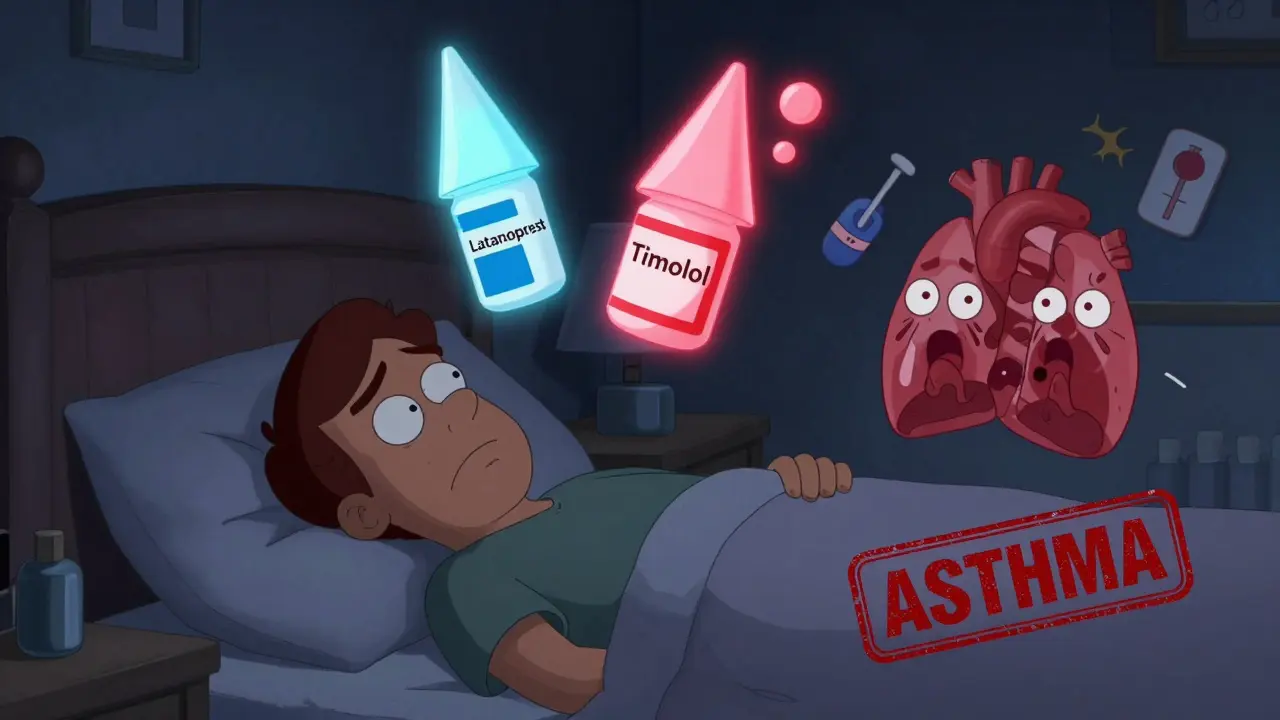
Combining Them: More Power, More Problems
Many people need more than one drop. If one isn’t enough, your doctor might add a beta blocker to a prostaglandin. That’s a smart move. Together, they can lower pressure an extra 13% to 25%. That’s the kind of drop you can’t ignore.
But here’s the twist: don’t mix two prostaglandins. Some doctors used to try it-thinking more is better. But studies show it can actually raise pressure. The same goes for mixing two beta blockers. Stick to one from each class, if needed.
Fixed combinations-like latanoprost plus timolol in one bottle-exist. They’re convenient. But they’re not always better. Some studies show they don’t lower pressure more than using two separate drops. And if you need to switch one, you have to change the whole combo. That’s why many doctors still prefer separate bottles.
What the Long-Term Studies Say
A seven-year study tracking over 1,200 glaucoma patients in the Czech Republic found something surprising: visual field loss was nearly identical between people on prostaglandins and those on beta blockers. The same went for bimatoprost versus latanoprost. That means, over time, they protect your vision just as well.
So why do we push prostaglandins first? Because adherence matters more than tiny differences in pressure numbers. If you stop using your drops, your vision will decline-no matter how good the drug is. Prostaglandins win because people stick with them. They’re easier. They have fewer scary side effects. And they work.
Another key finding: visual fields often improve in the first six months. Then they stabilize. That’s the goal-not perfect vision, but no further loss. That’s what these drops do. They’re not a cure. They’re a shield.
Choosing the Right One for You
There’s no universal best. It depends on you.
- If you have asthma, COPD, or heart problems-avoid beta blockers. Go with a prostaglandin.
- If you’re worried about darkening eyelashes or iris color-talk to your doctor about latanoprost. It’s the mildest.
- If you have dry eyes or use other eye drops-ask about preservative-free options.
- If you’re forgetful-once-daily dosing is a game-changer.
- If cost is a factor-generic timolol is cheaper. But if you stop using it, the cost of vision loss is higher.
Most people start with latanoprost. It’s the gold standard. If pressure isn’t low enough, your doctor might add timolol. If you can’t tolerate timolol, they’ll try a different class-like a carbonic anhydrase inhibitor or alpha agonist.
What to Do If Side Effects Start
Red eyes? Don’t panic. Keep using the drops for a few weeks. It often fades. If it doesn’t, ask about switching to another prostaglandin.
Burning or stinging? Try refrigerating the bottle. Cold drops hurt less. Or switch to preservative-free.
Feeling tired or short of breath? Stop the beta blocker and call your doctor. Don’t wait. It could be serious.
Always report changes in vision, eye pain, or swelling. Rarely, prostaglandins can cause cystoid macular edema-especially after cataract surgery. It’s uncommon, but treatable if caught early.
The Bottom Line
Glaucoma isn’t a race. It’s a marathon. The best medication is the one you’ll use every day, for decades. Prostaglandins lead because they’re easier, safer for most people, and work well. Beta blockers still have a place-but only if you’re healthy enough to use them.
Don’t let fear of side effects stop you. Talk to your doctor. Ask about alternatives. Ask about preservative-free options. Ask what happens if you don’t use them. Your vision isn’t just about numbers. It’s about your life. And you deserve a treatment that fits it.
Paul Barnes
January 19, 2026 AT 14:33Prostaglandins are the gold standard, no question. But let’s be real-1 in 5 people get permanent iris darkening? That’s not a side effect, that’s a cosmetic surgery you didn’t sign up for. I’d rather have slightly higher IOP than look like I’m auditioning for a vampire movie.
Jacob Cathro
January 19, 2026 AT 21:16bro why are we still using beta blockers like its 1997?? timolol is basically a chemical slap in the face if you have any kind of lung or heart issue. i had a friend who went into cardiac arrest from glaucoma drops-yes, really. the docs act like it’s no big deal but it’s literally a silent killer with a dropper. prostaglandins? yeah they make your lashes look like you’re a pornstar but at least you’re alive to see it.
thomas wall
January 21, 2026 AT 12:52It is imperative to underscore that the systemic absorption of beta-blockers, particularly timolol, constitutes a significant pharmacological hazard in vulnerable populations. The notion that ‘it’s just eye drops’ reflects a dangerous misconception. The cardiovascular and respiratory implications are not trivial, nor are they adequately communicated in primary care settings. Furthermore, the preservative benzalkonium chloride, though ostensibly inert, is a proven cytotoxic agent that induces ocular surface disease with chronic use. The medical community must prioritize preservative-free formulations as standard of care, not luxury options.
Shane McGriff
January 22, 2026 AT 14:14I’ve been on latanoprost for 8 years. My lashes are wild now-like I’ve got a pair of furry little curtains on my eyes. At first I freaked out, but honestly? I kinda love it. And my pressure’s been stable since day one. The redness faded after a couple weeks. If you’re scared of side effects, talk to your doctor about switching to preservative-free. They’re not expensive if you have insurance. And if you’re worried about forgetting? Set a phone alarm labeled ‘Save Your Sight.’ It’s not dramatic-it’s survival. You’re not just treating pressure. You’re protecting your ability to see your kids grow up. That’s worth a little inconvenience.
Edith Brederode
January 22, 2026 AT 19:20Thank you for this! 🙏 I’ve been on bimatoprost and honestly, the lash thing was a shock-but I didn’t know it was permanent until I read this. Now I’m asking my doc about preservative-free options. Also, cold drops are a GAME CHANGER 😍
Arlene Mathison
January 23, 2026 AT 15:20Look, I get it-prostaglandins are easier. But don’t let convenience blind you to the fact that beta blockers have saved vision for decades. My mom’s been on timolol since 2005. She’s 82. No asthma. No heart issues. Still sees her grandkids clearly. If you’re healthy, don’t ditch the old reliable just because it’s not ‘trendy.’ And yes, two doses a day sucks-but I set a reminder every morning and night. It’s not hard. It’s just discipline. Your eyes won’t thank you for being lazy.
Emily Leigh
January 23, 2026 AT 15:59Wait… so you’re telling me that the ‘miracle drops’ that make your eyelashes look like you’re in a L’Oréal ad… also permanently darken your EYES? Like… your actual irises? And no one told me this? This is not a drug. This is a cursed artifact. Who signed off on this? Who approved the marketing? ‘Side effects: You will look like a witch who’s been cursed by a goth wizard.’ I’m not taking it. I’d rather go blind than look like I’m in a Twilight fanfic.
Renee Stringer
January 25, 2026 AT 01:26It’s irresponsible to frame prostaglandins as ‘better’ without emphasizing the irreversible changes. This isn’t a cosmetic choice-it’s a bodily transformation. If your doctor doesn’t mention iris darkening upfront, they’re not doing their job. And yes, I know it’s ‘harmless.’ But my body is not a lab experiment. I refuse to be normalized into a version of myself I didn’t consent to.
Courtney Carra
January 25, 2026 AT 05:25It’s funny how we treat glaucoma like a problem to be solved, not a lifelong companion. We obsess over pressure numbers, but never ask: what does this do to your identity? Your self-image? Your sense of control? I’ve watched people stop drops because of red eyes, not because they were dangerous-but because they felt like their eyes were screaming at them. Maybe the real issue isn’t the medication-it’s that we’ve turned medical treatment into a performance. We’re not just treating disease. We’re trying to stay invisible in a world that judges appearances.
pragya mishra
January 26, 2026 AT 09:21Why are you all talking about lashes and color changes? What about the people who can’t afford these drops? In India, most people can't even get latanoprost. Timolol is the only option. And yes, it causes fatigue. Yes, it’s two doses. But if you don’t use it, you go blind. No one cares. You talk about safety like it’s a luxury. For us, it’s survival. Stop being so dramatic. Just use the drop. Any drop. Before it’s too late.