
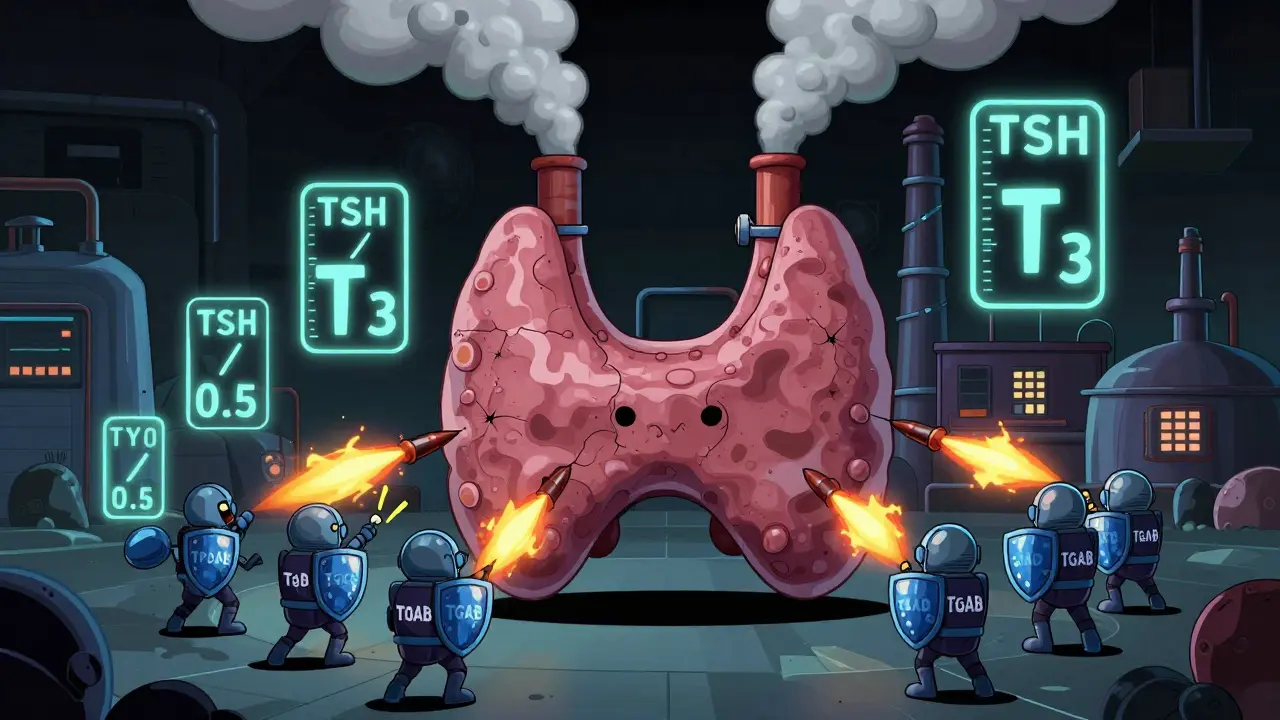
Hashimoto's thyroiditis isn't just another thyroid issue. It's the most common cause of hypothyroidism in countries like Australia, the U.S., and Canada - affecting up to 10% of women over 50. Unlike simple thyroid underactivity, this condition is your own immune system attacking your thyroid gland. It starts quietly, often with no symptoms at all. But over time, it slowly destroys the gland’s ability to make hormones. The key to managing it? Understanding TSH - and how to keep it in the right range.
What Actually Happens in Hashimoto's?
Think of your thyroid as a hormone factory. It makes T4 and T3 - the hormones that control your energy, temperature, heart rate, and mood. In Hashimoto's, your immune system mistakes thyroid cells for invaders. It sends T-cells and antibodies to destroy them. The two main antibodies? Thyroid peroxidase (TPOAb) and thyroglobulin (TgAb). Over 90% of people with Hashimoto's have high TPOAb. That’s the red flag doctors look for.
This isn't a sudden crash. It’s a slow burn. Most people go through four phases:
- Phase 1: Antibodies are up, but your thyroid still works fine. TSH is normal. You feel okay.
- Phase 2: Your thyroid is struggling. TSH climbs above 4.5 mIU/L. Free T4 is still normal. This is called subclinical hypothyroidism.
- Phase 3: Your thyroid can’t keep up. TSH jumps past 10 mIU/L. Free T4 drops. You start feeling tired, cold, and heavy. This is overt hypothyroidism.
- Phase 4: The gland shrinks. Goiter fades. TSH stays high, but the damage is done.
It can take years to get from phase 1 to phase 3. That’s why so many people miss it. They chalk up fatigue to stress or aging.
TSH: The Most Important Number You’re Not Paying Attention To
TSH - thyroid-stimulating hormone - is your body’s way of saying, “Thyroid, work harder!” When your thyroid is underperforming, your pituitary gland pumps out more TSH to try to fix it. So a high TSH = your thyroid isn’t doing its job.
For most adults, a normal TSH range is 0.5 to 4.5 mIU/L. But that’s not one-size-fits-all. If you’re under 60 and feeling awful, your doctor should aim for 1.0 to 2.5 mIU/L. Why? Because studies show people in this range report better energy, mood, and weight control. If you’re over 80? Don’t push it too low. TSH between 4.0 and 6.0 mIU/L is safer. Too much suppression can strain your heart and bones.
For women trying to get pregnant? Target TSH should be under 2.5 mIU/L. A 2017 study in the New England Journal of Medicine found that women with TSH above that level had more than double the risk of miscarriage. That’s not a small detail - it’s critical.
And here’s the catch: TSH alone isn’t always enough. About 5-10% of people with Hashimoto’s have antibodies that interfere with TSH tests. The machine thinks your TSH is high when it’s not. That’s why free T4 must be checked too - especially if you’re still tired, gaining weight, or depressed despite a “normal” TSH.
Levothyroxine: The Standard Treatment - But It’s Not Perfect
Levothyroxine (T4) is the go-to treatment. It replaces what your thyroid can’t make anymore. Most people feel better within weeks. But here’s what no one tells you: getting the dose right is harder than it looks.
- Dosing isn’t based on weight alone. A 150-pound woman might need 75 mcg. Her neighbor, also 150 pounds, might need 100 mcg. It depends on age, metabolism, and how much thyroid tissue is left.
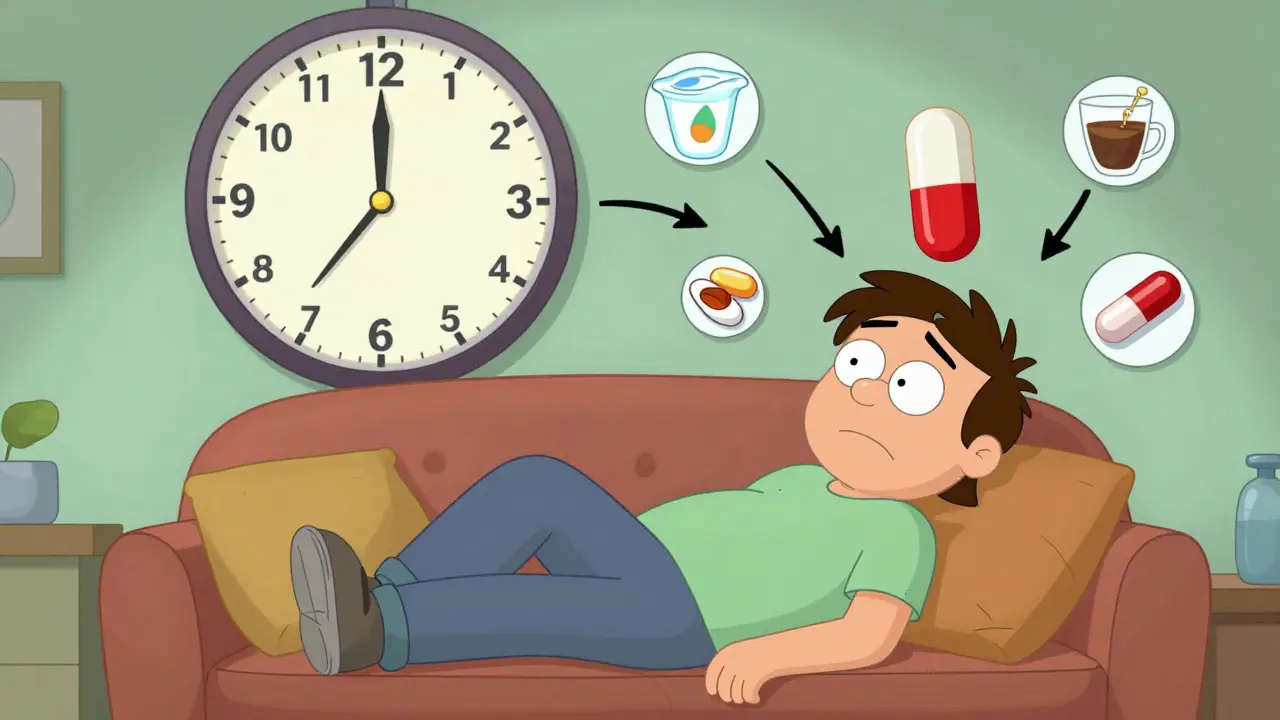
- Timing matters. Take it on an empty stomach, at least 30-60 minutes before breakfast. If you eat or drink coffee right after, absorption drops by 30-40%.
- Interactions are real. Calcium supplements, iron pills, and even antacids can block absorption if taken within 4 hours. Many patients need higher doses simply because they’re taking a multivitamin with iron at night.
- Seasonal shifts happen. In Melbourne, TSH levels naturally rise in winter. A dose that worked in July might leave you sluggish in January. Doctors who don’t track this miss the mark.
Some people say, “I take my pill and still feel awful.” That’s not unusual. Around 10-15% of patients don’t feel normal even with a perfect TSH. Why? Because T4 doesn’t always convert well to T3 - the active hormone. Some doctors try adding T3 (liothyronine), but large studies show it doesn’t help most people. The American Association of Clinical Endocrinologists says don’t use it routinely. Only consider it after 6 months of optimized T4, and only if free T3 is low.
Hashitoxicosis: The Surprising Flip Side
Not everyone starts with fatigue. About 15-20% of people with Hashimoto's go through a phase called hashitoxicosis. It’s when your immune system attacks so hard that your thyroid leaks out stored hormones. You get temporary hyperthyroidism.
Symptoms? Heart palpitations. Anxiety. Weight loss. Sweating. You might think you have Graves’ disease. But it’s temporary. Within weeks or months, the leak stops - and you crash into hypothyroidism. A 2021 survey of over 2,000 patients found 63% experienced this. Many were misdiagnosed and put on anti-thyroid drugs - which made things worse.
If you’re newly diagnosed and suddenly feel jittery, don’t panic. Get your TSH and free T4 tested. If TSH is below 0.1 and free T4 is high - it’s likely hashitoxicosis. No treatment needed. Just monitor. It will pass.
Real-Life Challenges: Why TSH Won’t Stay Put
Patients on forums like Reddit’s r/Hashimotos report wild swings. One month, TSH is 1.8. Next month, it’s 7.2. Why?
- Gluten. About 32% of patients report flare-ups after eating gluten. Even if you don’t have celiac disease, Hashimoto’s is linked to gluten sensitivity. Cutting it out helps some - not all.
- Stress. Cortisol messes with thyroid hormone conversion. High stress = less T3, more reverse T3 (inactive). That’s why burnout often triggers symptoms.
- Medication timing. Taking levothyroxine with food? Skipping doses? Switching brands? All cause TSH to bounce.
- Biotin. Found in hair, skin, and nail supplements. It can make TSH look falsely low - or high. Stop it 3 days before blood tests.
One patient in Melbourne told me: “I took my pill at night, ate yogurt with calcium at 7 p.m., and my TSH jumped from 2.1 to 6.8. I didn’t realize the yogurt was the problem.”
How to Get It Right: A Practical Guide
If you have Hashimoto’s, here’s what works:
- Test TSH and free T4 together. Never rely on TSH alone if you still feel bad.
- Test in the morning. Before taking your pill. Same time every test.
- Wait 6-8 weeks after a dose change. TSH doesn’t stabilize fast. Rushing leads to overcorrection.
- Avoid biotin for 3 days before testing. Check supplement labels.
- Take levothyroxine on an empty stomach. Wait 30-60 minutes before eating or drinking anything but water.
- Space calcium, iron, and antacids 4 hours apart. Take them at night if possible.
- Track symptoms, not just numbers. If your TSH is 2.0 but you’re still exhausted - talk to your doctor.
- Re-test annually. Even if you’re stable. TSH can drift over time.
What’s Next? The Future of Hashimoto’s Treatment
Levothyroxine has been the standard for decades. But research is changing.
A 2022 study in Nature Medicine found that 25% of treatment-resistant patients have antibodies that block TSH receptors - something we used to think only happened in Graves’ disease. This opens the door to new drugs that target these antibodies.
Right now, 12 clinical trials are testing drugs that calm overactive T-cells. If they work, we might see the first immunomodulatory treatments for Hashimoto’s by 2028. Long-term, genetic testing for markers like CTLA-4 and PTPN22 could help predict who will need higher doses - or who might respond to diet changes.
For now? Stick with the basics. TSH management, consistent dosing, and awareness of triggers still work. They’re not flashy. But they’re proven.
Can Hashimoto's thyroiditis be cured?
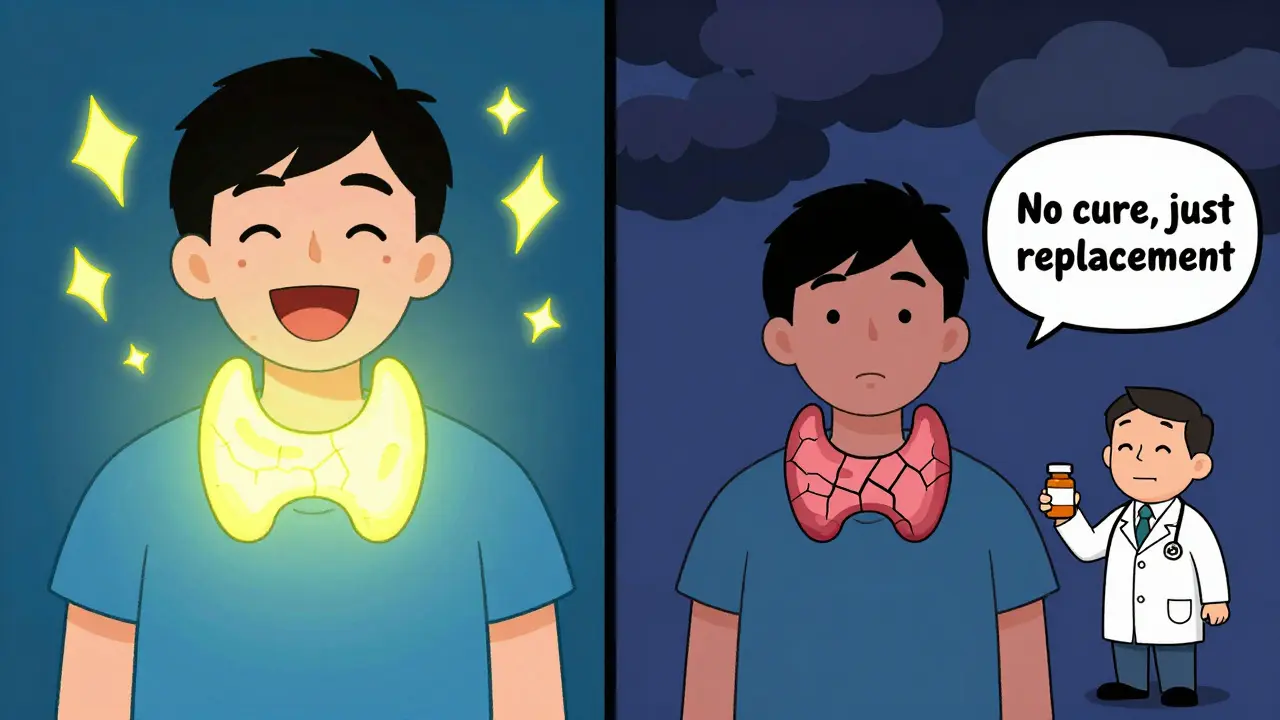
No, Hashimoto’s cannot be cured. The immune system’s attack on the thyroid is permanent. But it can be managed. With the right dose of levothyroxine, most people live normal, symptom-free lives. The goal isn’t to stop the disease - it’s to replace what the thyroid can no longer make.
Why does my TSH keep changing even though I take my pill every day?
Many factors affect TSH: seasonal changes (winter levels are higher), weight gain or loss, stress, and interactions with food or supplements. Even switching between generic brands can cause small shifts. It’s not you - it’s biology. That’s why retesting every 6-8 weeks after a dose change is essential.
Should I go gluten-free if I have Hashimoto’s?
It’s not required, but it helps some people. Studies show a link between gluten sensitivity and Hashimoto’s. If you have digestive issues, fatigue, or brain fog, try eliminating gluten for 3 months. If you feel better, keep it out. If not, it’s not the trigger for you. Don’t assume it will fix everything.
Can I stop taking levothyroxine if I feel better?
No. Once your thyroid is destroyed by Hashimoto’s, it won’t recover. Stopping levothyroxine will bring back symptoms - and can lead to serious complications like heart problems or myxedema coma. Even if you feel fine, you still need the hormone replacement.
Is it true that TSH tests can be wrong?
Yes. Antibodies can interfere with lab tests, making TSH look higher or lower than it is. Biotin supplements can cause errors of up to 30%. That’s why free T4 is critical - and why you should avoid biotin before testing. If your symptoms don’t match your TSH, ask for a free T4 test.
Sonja Stoces
February 10, 2026 AT 11:55Jim Johnson
February 11, 2026 AT 14:41Vamsi Krishna
February 12, 2026 AT 15:32Brad Ralph
February 12, 2026 AT 18:35Craig Staszak
February 13, 2026 AT 06:58alex clo
February 14, 2026 AT 14:18Ernie Simsek
February 14, 2026 AT 16:35Joanne Tan
February 15, 2026 AT 04:12