
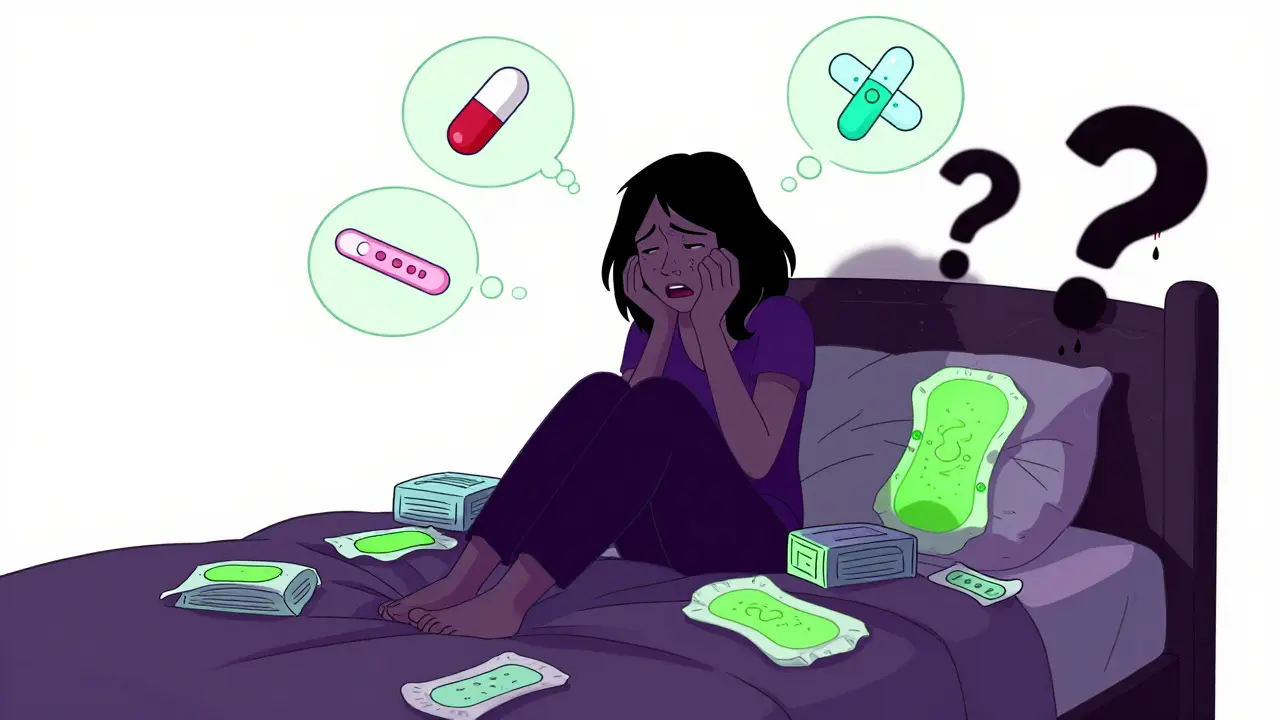
When you start taking a blood thinner-whether it’s for a blood clot, atrial fibrillation, or another condition-you’re told the big risks: stroke, pulmonary embolism, internal bleeding. But no one talks about your period.
Yet for women of reproductive age, heavy menstrual bleeding (HMB) is one of the most common and disruptive side effects of anticoagulants. Studies show that 70% of menstruating women on blood thinners experience periods so heavy they interfere with daily life. That’s not rare. That’s the norm. And most doctors don’t ask about it.
You’re not imagining it. Changing pads or tampons every 30 minutes. Leaking through clothing. Canceling plans because you’re afraid of an accident. Waking up soaked. Feeling dizzy from blood loss. These aren’t "just periods." They’re a medical issue tied directly to your medication-and there are real, effective ways to fix it without stopping your blood thinner.
Why Blood Thinners Make Periods Heavier
Blood thinners don’t thin your blood like water. They interfere with the clotting cascade-the body’s natural system to stop bleeding. That’s great when you’re trying to prevent a clot in your lung or brain. But it’s a problem when your uterus sheds its lining every month.
Normally, about 10% to 30% of women experience heavy periods. With anticoagulants, that jumps to 70%. It’s not random. It’s predictable. And it’s worse with some drugs than others.
Research shows that rivaroxaban carries the highest risk of heavy bleeding. Apixaban and dabigatran are significantly better-though still not risk-free. Warfarin, the older blood thinner, also increases bleeding, but its effects are harder to predict because they change with diet and other medications.
The key point: you don’t have to accept this. Stopping your blood thinner isn’t an option. Skipping doses to make your period lighter increases your risk of a life-threatening clot by up to five times. But there are safe, proven treatments that work alongside your anticoagulant.
First-Line Treatments: Hormones That Work With Your Blood Thinner
The most effective solution for heavy bleeding on blood thinners isn’t a new drug-it’s a hormonal method that’s already used for decades to treat heavy periods in women not on anticoagulants.
The levonorgestrel intrauterine system (IUD), like Mirena or Kyleena, is the gold standard. It releases a low dose of progesterone directly into the uterus. This thins the uterine lining so there’s less to shed. Studies show it reduces menstrual blood loss by 70% to 90% within 3 to 6 months. Many women end up with light spotting or no period at all.
And here’s the best part: it’s safe to use while on any blood thinner. No interaction. No increased bleeding risk. In fact, women on apixaban or rivaroxaban who got the IUD reported going from ER visits for blood loss to nearly no bleeding at all.
Other hormonal options include:
- Subdermal implants (like Nexplanon): A small rod placed under the skin that releases progesterone. Reduces bleeding in 60-80% of users.
- Progestin-only pills (like norethisterone): Taken daily, not just during your period. A high-dose regimen (5 mg three times a day for 21 days) can cut bleeding in half within one cycle.
- Combined hormonal contraceptives (pill, patch, ring): Contain estrogen and progestin. Safe to use with most blood thinners and can reduce bleeding by 40-60%. Not recommended if you have other clotting risk factors.
These treatments don’t interfere with your anticoagulant. They target the uterus directly. That’s why they’re the first recommendation from the American Society of Hematology and the American College of Obstetricians and Gynecologists.
Tranexamic Acid: A Non-Hormonal Option
If you don’t want hormones-or can’t use them-tranexamic acid is your next best option. It’s not a blood thinner. It’s a clot stabilizer. It works by preventing the breakdown of clots in the uterus.
You take it only during your period: two 650 mg tablets three times a day for up to five days. Clinical trials show it cuts menstrual blood loss by 30% to 50%. It’s been used safely in women on anticoagulants, but timing matters. Don’t take it continuously. Only during bleeding days.
It’s not as effective as the IUD, but it’s a good bridge if you’re waiting to get an IUD inserted or want to avoid hormones. It’s also a good option if you’re trying to get pregnant and need to control bleeding without long-term contraception.
One caution: avoid combining tranexamic acid with NSAIDs like ibuprofen. Both affect clotting. While ibuprofen alone can reduce bleeding by 20-40%, using it with tranexamic acid and a blood thinner increases bleeding risk. Stick to one or the other.
What Not to Do: NSAIDs, Aspirin, and DIY Fixes
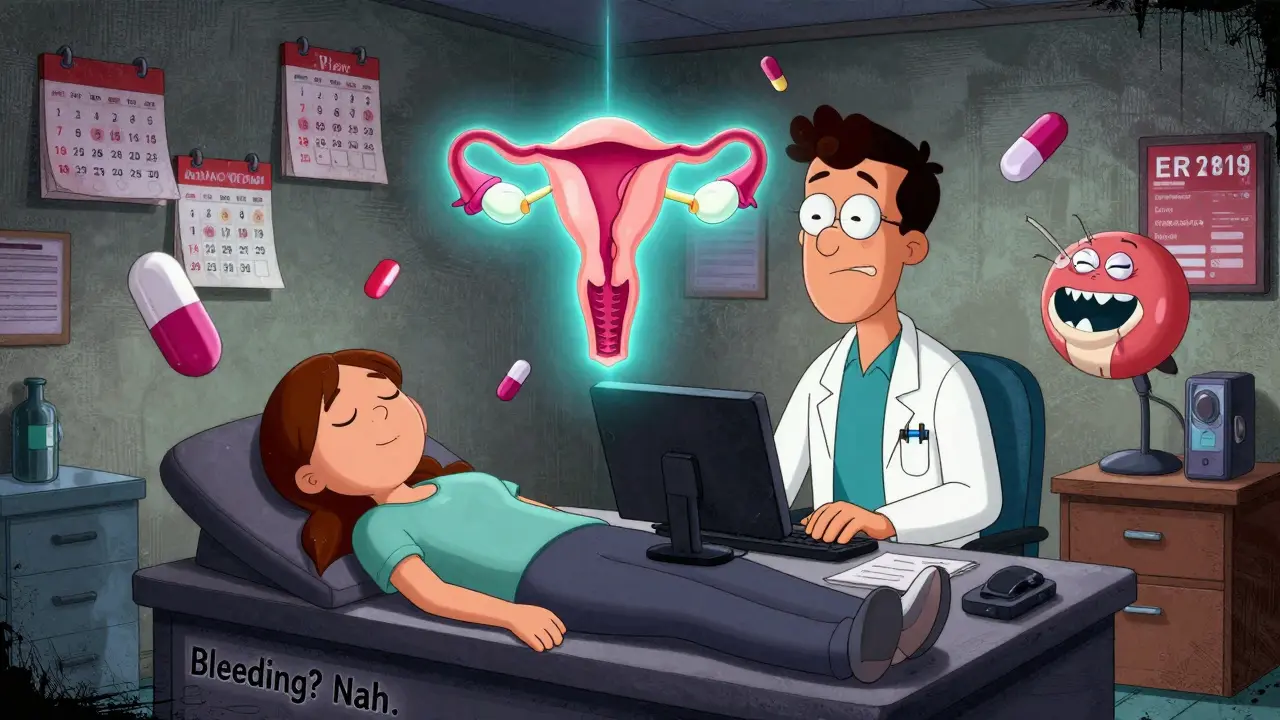
You might think, "I’ll just take ibuprofen to stop the bleeding." It sounds logical. But here’s the problem: NSAIDs like ibuprofen and naproxen also thin the blood slightly. When you combine them with anticoagulants, you’re stacking two bleeding risks.
Yes, some studies show NSAIDs can reduce menstrual flow. But in women on blood thinners, the added risk isn’t worth the benefit. The Cleveland Clinic warns against this combination. The same goes for aspirin-even low-dose aspirin. It’s a blood thinner too. Adding it on top of your prescription anticoagulant is dangerous.
And don’t try herbal supplements like vitamin K, iron pills alone, or red raspberry leaf tea. Iron supplements are important if you’re anemic, but they don’t stop bleeding. They just help your body recover. They don’t fix the root cause.
What you need is a targeted, medical solution-not a band-aid.
When Surgery Might Be an Option (and When to Avoid It)
Endometrial ablation-a procedure that destroys the uterine lining-is effective for 80-90% of women with heavy periods. But for women on blood thinners? It’s high-risk.
During the procedure, you need to be able to clot properly. If you’re on a blood thinner, your risk of severe bleeding during or after ablation is much higher. Some doctors will temporarily switch you to heparin (a short-acting anticoagulant) before the procedure, then restart your oral blood thinner after. But that’s complicated. And even then, the risk remains.
Also, ablation makes pregnancy impossible. If you might want kids in the future, skip it. And it’s not always permanent-some women need repeat procedures.
For most women on anticoagulants, hormonal methods are safer, reversible, and more effective. Save surgery for when everything else fails.
Iron Deficiency and Anemia: The Silent Consequence
Heavy bleeding doesn’t just mess with your schedule. It drains your iron.
Over time, you can develop iron deficiency anemia. Symptoms: fatigue, shortness of breath, heart palpitations, pale skin, cold hands. It’s easy to blame stress or lack of sleep. But if you’re on a blood thinner and your periods are heavy, this is likely the cause.
The National Blood Clot Alliance recommends that every woman on anticoagulants get a blood test for ferritin (iron stores) and hemoglobin within 3 months of starting the medication. If your levels are low, you need iron supplements. But again-iron doesn’t stop the bleeding. It just helps you recover. You still need to treat the source.
Don’t wait until you’re dizzy to get tested. Get checked early. Even if you feel fine, your body might be quietly running on empty.

Why Your Doctor Isn’t Talking About This
Here’s the uncomfortable truth: most hematologists don’t ask about menstrual bleeding. A survey by the National Blood Clot Alliance found that 68% of women said their hematologist never brought it up after starting anticoagulation.
It’s not malpractice. It’s ignorance. Most doctors are trained to think of bleeding as "minor" if it’s not life-threatening. But for women, heavy periods are a major quality-of-life issue. They cause missed work, anxiety, embarrassment, and depression.
One woman on Reddit said she carried emergency changes in her purse, her car, and her gym bag. Another missed 4 days of work every month. These aren’t minor inconveniences. They’re disabling.
And it’s getting worse. With more women on long-term anticoagulants-especially for atrial fibrillation-the number of affected women is growing. An estimated 500,000 to 750,000 women in the U.S. alone are dealing with this right now.
But awareness is changing. The American Society of Hematology and ACOG are developing joint guidelines expected in mid-2025. For the first time, there will be official recommendations on how to screen for and treat heavy bleeding in anticoagulated women.
What to Do Next: A Practical Action Plan
If you’re on a blood thinner and your periods are heavy, here’s exactly what to do:
- Track your bleeding. Use an app or journal. Note how often you change pads/tampons, if you leak, if you pass clots larger than a quarter, if you’re tired or dizzy.
- Ask for a blood test. Request ferritin and hemoglobin levels. Don’t wait for symptoms.
- Request a referral to a gynecologist. Not just any gynecologist. One experienced in treating women on anticoagulants. Tell them you’re on a blood thinner and need a solution that doesn’t interfere with it.
- Ask about the levonorgestrel IUD. Say: "Is the Mirena or Kyleena IUD an option for me while I’m on [name of drug]?" It’s safe. It’s effective. It’s long-term.
- If you can’t get the IUD, ask about tranexamic acid. Get a prescription. Take it only during your period.
- Never stop or skip your blood thinner. The risk of a clot is too high.
- Bring this information to your doctor. Print out the key points. Most doctors haven’t been trained on this. You may need to educate them.
Heavy bleeding on blood thinners isn’t something you have to live with. It’s a treatable side effect. You don’t need to suffer in silence. You don’t need to quit your job or avoid social events. There are solutions that work. You just need to ask for them.
Frequently Asked Questions
Can I still get pregnant if I use the Mirena IUD while on blood thinners?
Yes, you can get pregnant after removing the Mirena IUD. The IUD doesn’t cause permanent infertility. It’s a reversible method. But while it’s in place, it prevents pregnancy by thickening cervical mucus and thinning the uterine lining. If you’re planning pregnancy soon, talk to your doctor about timing. The IUD can be removed in your provider’s office in minutes, and fertility typically returns within one cycle.
Does apixaban cause less heavy bleeding than warfarin?
Yes. Studies show that apixaban and dabigatran are associated with significantly lower rates of heavy menstrual bleeding compared to warfarin and rivaroxaban. While warfarin’s effect varies with diet and other drugs, apixaban provides more consistent anticoagulation and less disruption to menstrual flow. If you’re on warfarin and struggling with heavy periods, switching to apixaban may help-but only under your doctor’s supervision.
Can I take iron supplements while on blood thinners?
Yes, iron supplements are safe to take with all blood thinners. In fact, they’re often necessary if heavy bleeding has caused iron deficiency or anemia. Iron helps your body make new red blood cells. But remember: iron doesn’t stop the bleeding. It only helps your body recover. You still need to treat the cause of the heavy flow with hormonal therapy or tranexamic acid.
How long does it take for the IUD to work?
Most women notice lighter bleeding within 1 to 3 months. By 6 months, 70-90% report a major reduction-many have periods that are very light or stop altogether. It’s not instant, but it’s durable. Once it’s in place, it lasts 3 to 8 years depending on the brand. It’s one of the most effective long-term solutions for heavy bleeding on anticoagulants.
What if my doctor says there’s nothing I can do?
That’s not true. There are multiple proven options: the levonorgestrel IUD, progestin implants, tranexamic acid, and hormonal pills. If your doctor says there’s no solution, ask for a referral to a gynecologist who specializes in reproductive health and anticoagulation. You can also ask to speak with a hematologist who works with women’s health. This is a recognized medical issue-and you deserve care that addresses it.
Jason Silva
December 22, 2025 AT 06:19mukesh matav
December 24, 2025 AT 04:18Peggy Adams
December 25, 2025 AT 19:01Theo Newbold
December 27, 2025 AT 11:28Jay lawch
December 28, 2025 AT 22:18Christina Weber
December 29, 2025 AT 13:05Michael Ochieng
December 30, 2025 AT 16:28Dan Adkins
December 31, 2025 AT 01:51Erika Putri Aldana
January 1, 2026 AT 21:05Jerry Peterson
January 3, 2026 AT 17:58Meina Taiwo
January 4, 2026 AT 15:18