
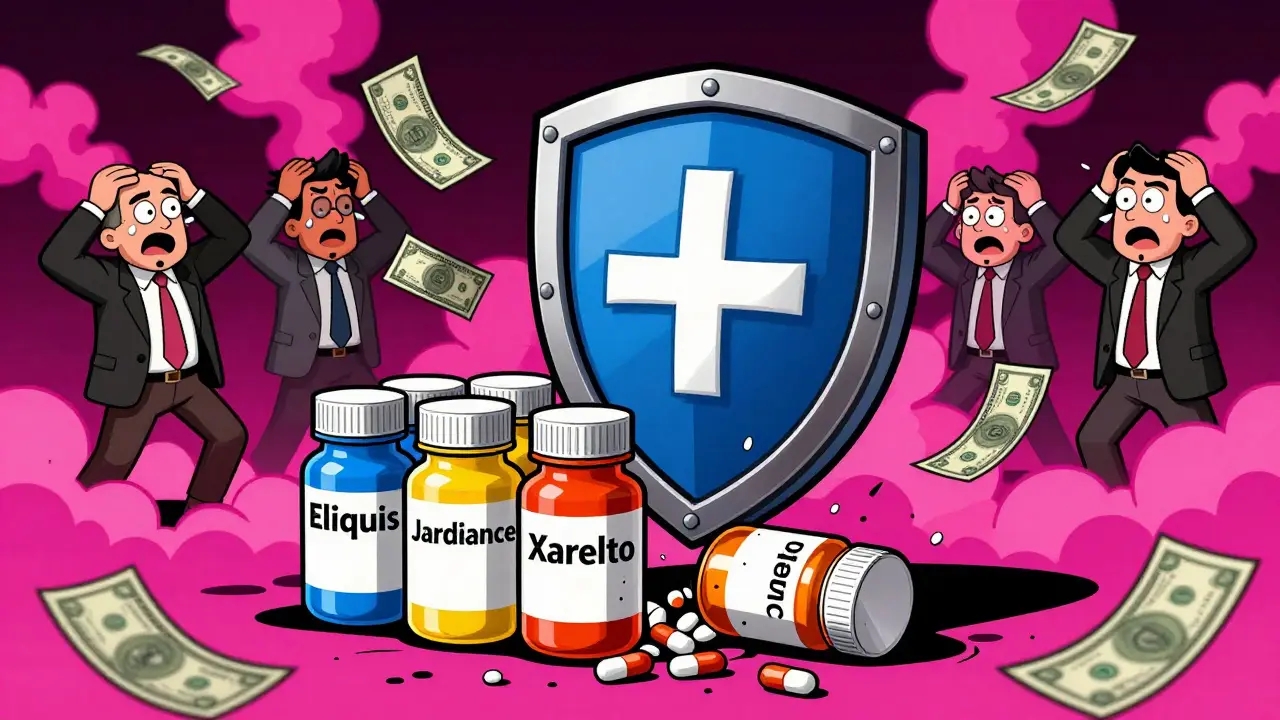
For decades, Medicare couldn’t negotiate drug prices. That meant billions in spending went to pharmaceutical companies with no leverage to lower costs. But in 2022, everything changed. The Inflation Reduction Act gave Medicare the power to directly negotiate prices for the most expensive, single-source prescription drugs - and the first results are in. Starting January 1, 2026, 10 top-selling medications will see price drops of 38% to 79%. This isn’t a guess. It’s law. And it’s going to change how you pay for pills like Eliquis, Jardiance, and Xarelto.
What Drugs Are Being Negotiated?
The first round of negotiations picked drugs that cost Medicare the most and had no generic or biosimilar alternatives. These aren’t obscure meds - they’re the ones millions of seniors rely on every day. Eliquis, for example, is used to prevent strokes in people with atrial fibrillation. In 2022 alone, Medicare spent $6.3 billion on it. Now, after negotiations, that price is dropping by over 60%. Same with Jardiance, a diabetes drug that saw a 79% price cut. Xarelto, a blood thinner, is down 52%. These aren’t small changes. They’re life-altering for people on fixed incomes.How the Negotiation Process Actually Works
This isn’t like haggling at a flea market. It’s a strict, government-run process with deadlines, rules, and paper trails. Here’s how it played out:- On February 1, 2024, Medicare sent each drugmaker an initial offer - based on what other countries pay, what private insurers negotiated, and how much the drug actually costs to make.
- Drug companies had 30 days to respond with a counteroffer.
- Medicare then held three face-to-face meetings with each company between March and July 2024.
- By August 1, 2024, all negotiations were closed. Five drugs agreed during meetings. The other five were settled with final written offers.
Why This Is a Big Deal - and Why It Took So Long
Before this law, Medicare was legally barred from negotiating. Private insurers could - and did - get big discounts. But Medicare, which covers over 65 million people, couldn’t. The result? Americans paid more than people in Canada, Germany, or the UK for the same drugs. The VA, which has had negotiation rights since the 1990s, pays about 40% less than Medicare did for the same medications. Now, Medicare is finally catching up. The delay wasn’t about money. It was about politics. Drugmakers spent over $500 million lobbying to block any negotiation power for Medicare since Part D started in 2003. They argued it would hurt innovation. But studies show the opposite: innovation thrives when companies compete on value, not just price tags.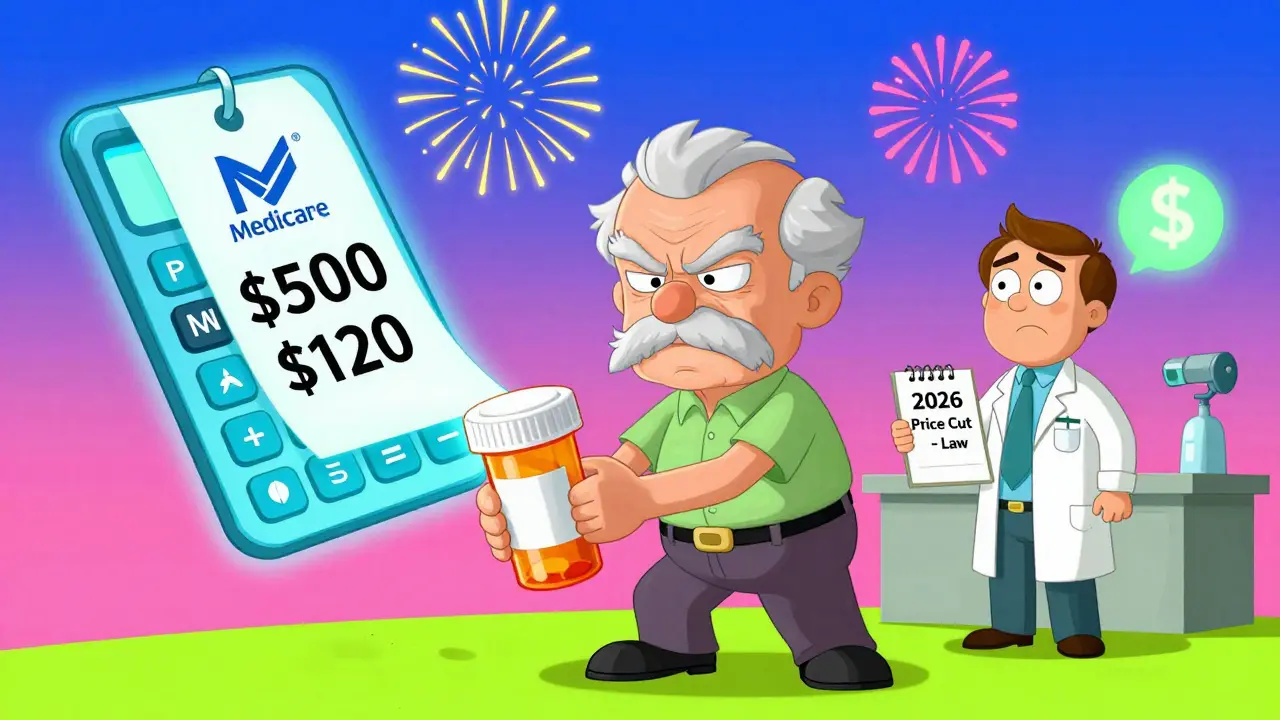
What Happens to Your Out-of-Pocket Costs?
Lower list prices don’t always mean lower bills - but they usually do. If you’re in Medicare’s coverage gap (the “donut hole”), you’ll see immediate savings because you pay a percentage of the drug’s price. If you’re in catastrophic coverage, your savings might be smaller - but they’re still there. And if you’re paying cash, you’ll pay less at the pharmacy counter. Here’s the catch: some plans might swap your drug for a cheaper alternative. That’s legal. But if your doctor says you need Eliquis specifically - not a generic - your plan must cover it at the new lower price. No substitution without approval.What About Private Insurance?
You might think, “I’m not on Medicare - does this affect me?” Yes. It already is. Private insurers often use Medicare’s negotiated prices as a benchmark. If Medicare cuts Eliquis to $100 a month, a private insurer won’t pay $200. They’ll match it - or go lower. Experts estimate this could save private plans $200-250 billion over the next decade. That means lower premiums, lower copays, and fewer surprise bills for millions of Americans.What’s Next? The Big Expansion
The first 10 drugs are just the start. In 2027, Medicare will negotiate 15 more. In 2028, it’ll be 15 again - plus it starts negotiating drugs given in doctor’s offices (Part B), like cancer treatments and infusions. That’s a bigger jump. These drugs are often more expensive and harder to replace. But the same rules apply: no negotiation unless the drug is at least 7 years old (or 11 for biologics). That protects new drugs, but it also means the biggest savings come from older, blockbuster meds. By 2029, 20 drugs per year will be up for negotiation. That’s over 100 drugs by 2030. And the savings? The Congressional Budget Office estimates $98.5 billion over 10 years. Some analysts think it could hit $112 billion.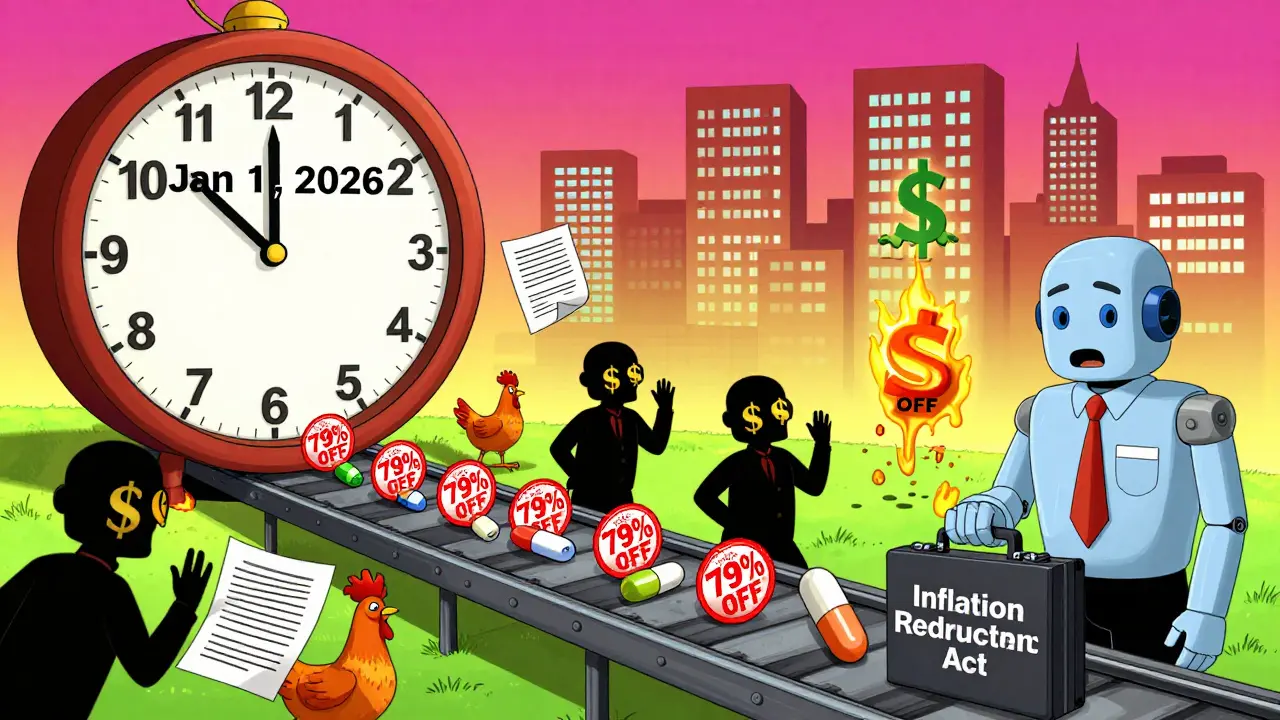
What Are the Risks?
Drugmakers aren’t happy. Four of the 10 companies sued to stop the program. They claimed it was unconstitutional. A federal judge dismissed those lawsuits in August 2024. Appeals are coming, but so far, the courts have backed Medicare’s authority. Some doctors worry about Part B drugs. Right now, they get paid 6% above what they pay for the drug. If the drug price drops, their reimbursement drops too. That could hurt small practices. But Medicare is adjusting the formula to protect providers while still lowering costs. There’s also the risk of drug shortages - if companies cut production to save money. So far, no shortages have been reported for the first 10 drugs. The FDA is monitoring this closely.What Should You Do Now?
If you’re on Medicare and take one of the 10 negotiated drugs:- Check your plan’s formulary in late 2025. Your drug might move to a lower cost tier.
- Ask your pharmacist if the price has changed - they’ll know before your bill does.
- If you’re on a high-deductible plan, ask about switching to a Medicare Advantage plan with better drug coverage.
- Don’t stop taking your meds. The lower price is coming - but not until January 1, 2026.
Bottom Line: This Isn’t a Trend. It’s a New System.
Medicare’s drug price negotiation isn’t a temporary fix. It’s a structural shift in how America pays for medicine. It’s not about cutting corners. It’s about stopping overpayment. For the first time, the government is using its massive buying power to bring prices down - not by force, but by smart negotiation. The numbers don’t lie. A 79% cut on Jardiance? That’s $1,200 a year saved for a single patient. Multiply that by millions. That’s not just savings. That’s security. It means fewer people choosing between insulin and rent. Fewer seniors skipping doses because they can’t afford the copay. And fewer families drained by pharmacy bills. This is what real change looks like. And it’s just getting started.Which drugs are getting price cuts starting in 2026?
The first 10 drugs selected for Medicare negotiation in 2026 include Eliquis (apixaban), Jardiance (empagliflozin), Xarelto (rivaroxaban), Farxiga (dapagliflozin), Linagliptin, Lantus (insulin glargine), Enbrel (etanercept), Stelara (ustekinumab), Revlimid (lenalidomide), and Ibrance (palbociclib). These were chosen because they’re high-cost, single-source medications with no generic alternatives and over $1 billion in annual Medicare spending each.
How much will my prescription cost go down?
Discounts range from 38% to 79%, depending on the drug. For example, Jardiance saw a 79% price cut, while Eliquis dropped by 62%. If you’re paying $500 a month for a drug before, you could pay as little as $100-150 after. Exact savings depend on your plan, but all Medicare Part D beneficiaries will see lower out-of-pocket costs starting January 1, 2026.
Will my insurance company cover the same drug at the new price?
Yes - but your plan may switch you to the negotiated version of the drug. If your doctor says you need a specific brand (like Eliquis) for medical reasons, your plan must cover it at the new lower price. You can’t be forced to switch unless your doctor agrees. Always check your plan’s formulary before 2026 and ask your pharmacist for details.
Does this affect people who aren’t on Medicare?
Yes. Private insurers often use Medicare’s negotiated prices as a benchmark. If Medicare cuts the price of a drug, private plans typically follow - sometimes even lowering it further. Experts predict this could save private insurance enrollees $200-250 billion over the next decade through lower premiums and copays.
Why can’t Medicare negotiate prices for newer drugs?
The law requires drugs to be at least 7 years old for small molecules or 11 years for biologics before they’re eligible. This protects innovation by giving companies a window to recoup R&D costs. But it also means the biggest savings come from older, blockbuster drugs - not brand-new ones. Future legislation could shorten these timelines, but for now, only established drugs are included.
What happens if a drugmaker refuses to negotiate?
They can’t refuse. If a company doesn’t participate, Medicare imposes a massive tax - up to 95% of the drug’s sales revenue - on that manufacturer. That’s a financial penalty so steep, no company has chosen to opt out. All 10 manufacturers in the first round negotiated, even if they sued later.
Will this lead to drug shortages?
So far, no shortages have occurred. The FDA is closely monitoring supply chains, and manufacturers have confirmed they’ll continue production. The price cuts are based on existing production volumes and costs - not on reducing output. If shortages emerge, Medicare can pause negotiations for that drug until the issue is resolved.
When will the next round of drugs be announced?
The second round of 15 drugs for 2027 was announced on January 12, 2024. Negotiations for those drugs will run through November 2025, with prices taking effect January 1, 2027. The list includes Farxiga, Stelara, and other high-cost medications. Each year, the number of negotiated drugs increases - up to 20 per year by 2029.
Joanne Smith
December 26, 2025 AT 12:22So let me get this straight - after 20 years of Big Pharma laughing all the way to the bank while seniors skip doses, we finally get a law that says ‘nope, not anymore’? And the same companies who spent half a billion lobbying against this are now suing because they’re ‘hurt’? 😂 The audacity. I’d laugh if it weren’t so tragic.
Prasanthi Kontemukkala
December 26, 2025 AT 14:07This is such a beautiful step forward. I’m from India, where many people can’t even afford basic medicines, so seeing this kind of change happen in the U.S. gives me hope. Not everyone is out for profit - sometimes, systems can be fixed with courage and policy. Thank you for sharing this clearly.
Alex Ragen
December 27, 2025 AT 00:37One must pause - and I do mean *pause* - to contemplate the epistemological rupture this policy represents: the state, once rendered impotent by corporate capture, now wields its sovereign purchasing power not as a passive conduit, but as an active arbiter of value. The implications for neoliberal orthodoxy? Catastrophic. And yet… necessary. The market, it seems, was never the solution - merely the problem dressed in a suit.
Lori Anne Franklin
December 28, 2025 AT 04:16omg i just checked my meds and im on jardiance… i thought i was paying too much but didn’t realize it was gonna drop that much?? like… 79%?? i might actually be able to afford my coffee again 😭
Bryan Woods
December 29, 2025 AT 16:48This is a well-structured and thoroughly documented update on a significant policy shift. The transparency in the negotiation process, the clear timelines, and the inclusion of both economic and human impact metrics make this one of the most effective public policy communications I’ve seen in recent years. Well done.
Ryan Cheng
December 31, 2025 AT 07:51For anyone worried about shortages - don’t panic. The FDA is watching, and manufacturers have no incentive to stop making these drugs. The tax penalty for refusing to negotiate is basically a death sentence for profits. They’ll keep producing - just at a fairer price. This isn’t a threat to innovation. It’s a correction.
wendy parrales fong
December 31, 2025 AT 15:31im so glad this is happening. i used to watch my mom pick between her insulin and her heating bill. she’s gone now but i hope others won’t have to choose like she did. this is real help. not politics. just care.
Jeanette Jeffrey
January 1, 2026 AT 04:22Let’s be real - this is just the beginning of the government’s slow creep into every aspect of your life. Next they’ll tell you what to eat, how to sleep, and whether you can have a glass of wine with your $100 Eliquis. Don’t be fooled. This is socialism with a smiley face.
Shreyash Gupta
January 2, 2026 AT 12:53but… what if the drug companies just raise prices BEFORE the negotiation? 🤔 i mean… they did it for years… and now they’re just… gonna play nice? 😅
Ellie Stretshberry
January 4, 2026 AT 10:00my grandma takes xarelto and i was so scared she’d lose her coverage… this makes me cry happy tears. thank you for explaining it so simply. i finally get it.
Zina Constantin
January 6, 2026 AT 05:12As a Filipino-American, I’ve seen how drug pricing crushes families in developing countries - and now I’m seeing the U.S. finally catch up. This isn’t just policy. It’s dignity. Thank you for writing this with such clarity.
Dan Alatepe
January 7, 2026 AT 18:23THEY SUED?! 😱 Like… they actually sued the government for trying to stop them from charging $800 for a pill?! I’m not mad… I’m just disappointed. Like… how much money do you need?! 🤡
Angela Spagnolo
January 9, 2026 AT 17:01im not sure if i believe this… i mean… what if the prices drop but then the insurance companies just raise premiums to make up for it? i’ve been burned before…
Sarah Holmes
January 10, 2026 AT 17:37This is a dangerous precedent. The federal government has no moral or constitutional authority to dictate pricing in a free market. You think you’re helping seniors? You’re destroying innovation, disincentivizing R&D, and setting the stage for rationing. This is not reform - it is tyranny wrapped in a policy memo.
Joanne Smith
January 12, 2026 AT 07:04Re: @6289 - they tried that. The law specifically caps the price based on last year’s *after-rebate* cost. So if they jack up the sticker price before Feb 1, 2024, Medicare just uses the real price (after rebates) as the baseline. They’re not dumb - they just got caught trying to cheat.