
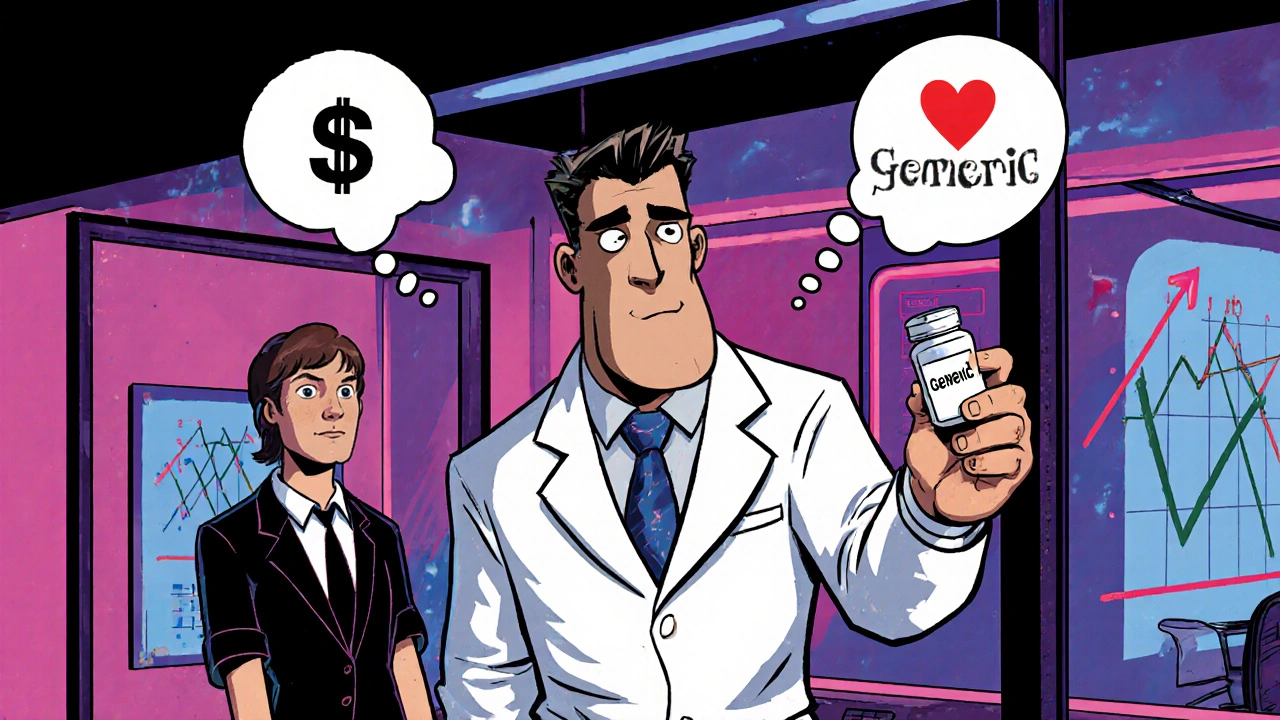
Workplace wellness programs aren’t just about yoga classes and standing desks. The real game-changer? Pharmacists helping employees take the right meds at the right price.
Imagine this: An employee with high blood pressure skips their pill because it costs $80 a month. Their boss notices they’re tired, missing meetings, and their healthcare claims spike. Now imagine that same employee gets a 15-minute chat with the company pharmacist, learns their brand-name drug has a generic version that works identically-and costs $12. They start taking it. Their blood pressure drops. Their energy comes back. Their employer saves thousands. This isn’t fiction. It’s happening right now in offices across the U.S.
Pharmacists are the missing link in workplace wellness. They don’t just fill prescriptions. They fix adherence problems, cut drug costs, and prevent hospital visits-all by talking to people about generic medications. And they’re doing it with data, not guesswork.
Why Generics Matter More Than You Think
Generic drugs aren’t cheap knockoffs. They’re exact copies of brand-name drugs, approved by the FDA under the same strict rules. Same active ingredient. Same dose. Same safety profile. The only difference? Price.
In the U.S., generics make up 90% of all prescriptions filled-but only 22% of total drug spending. That’s a $300 billion annual savings potential. And yet, nearly half of patients still avoid generics because they’re scared they won’t work. That fear? It’s mostly myth.
Pharmacists are the only healthcare professionals trained to explain why that myth is wrong. They can show patients the Orange Book, which lists therapeutically equivalent drugs. They can point to the ANDA process-where generics must prove they’re absorbed in the body at the same rate and extent as the brand. They can even say, “I take a generic statin myself.”
One study found that 78% of employees felt more confident about generics after talking to a pharmacist. That’s not just trust. That’s behavior change.
The Pharmacist’s Toolkit in Workplace Wellness
Pharmacists in workplace programs don’t wait for people to walk in. They proactively engage. Here’s how:
- Medication Therapy Management (MTM): A 20-30 minute review of every pill, supplement, and OTC drug an employee takes. Pharmacists spot duplicates, interactions, and opportunities to switch to generics.
- Point-of-care counseling: At on-site clinics or telehealth kiosks, pharmacists answer questions in real time. “Is this generic as good as the brand?” “Why is mine so much cheaper?”
- Formulary navigation: They know which drugs are on the employer’s three-tier plan, what the copay is for each, and how to get prior authorizations waived for generics.
- Cost-savings tracking: Using systems like MAC (Maximum Allowable Cost) schedules and McKesson’s OneStop Generics, they identify the lowest-cost therapeutic equivalent-every time.
These aren’t theoretical tools. They’re used daily. CVS Caremark, Express Scripts, and OptumRX now embed pharmacists directly into employer wellness plans. Large companies with 5,000+ employees are 68% more likely to include pharmacist services than they were in 2020.
Real Results, Real Numbers
Numbers don’t lie. Here’s what happens when pharmacists lead generic promotion:
- Medication adherence improves by 15-20% in programs with pharmacist involvement.
- Prescription drug costs drop 20-30% when pharmacists actively recommend generics.
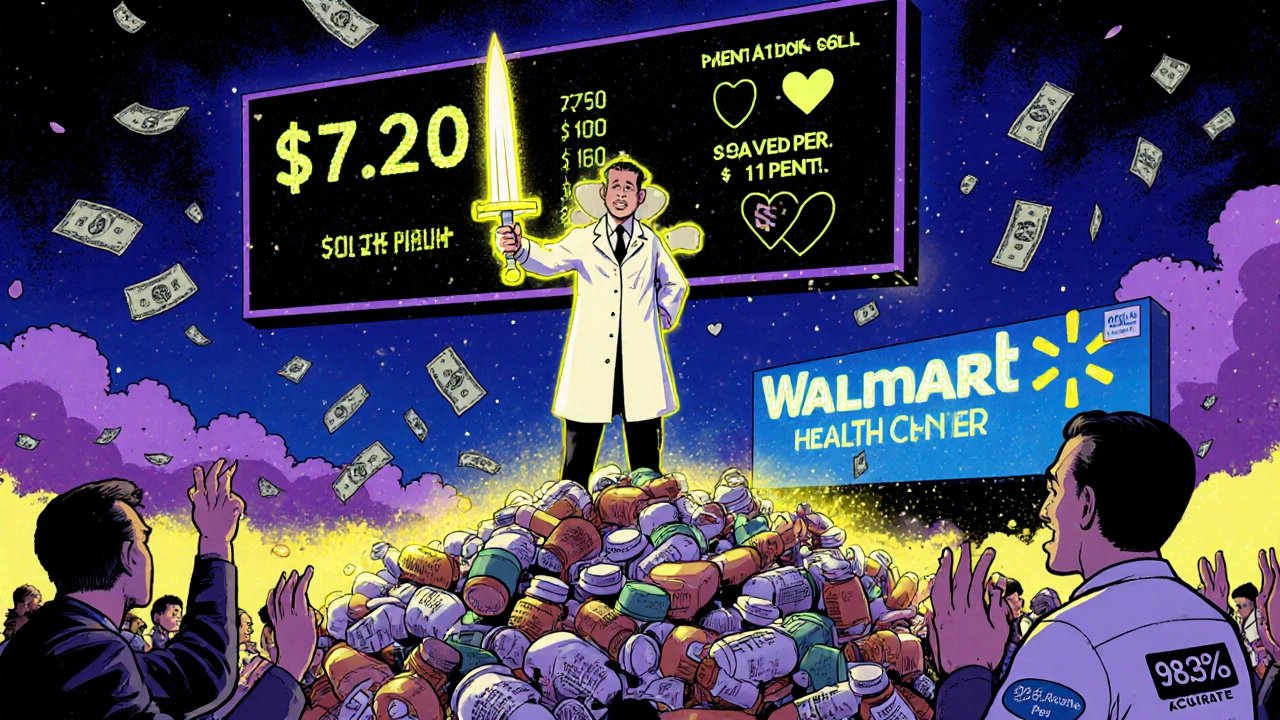
- For every $1 spent on pharmacist-led care, employers save $7.20 in reduced hospitalizations and lost productivity.
- At Walmart Health Centers, employees saw a 23% drop in prescription costs after pharmacist-led interventions.
And the biggest win? Preventing deaths. The CDC says better medication adherence alone could stop nearly 125,000 deaths a year in the U.S. That’s not just a statistic-it’s a mother who doesn’t die from uncontrolled diabetes. A father who doesn’t have a stroke because he finally took his blood pressure med.
Where It Falls Short (And How to Fix It)
It’s not perfect. Pharmacists face real barriers:
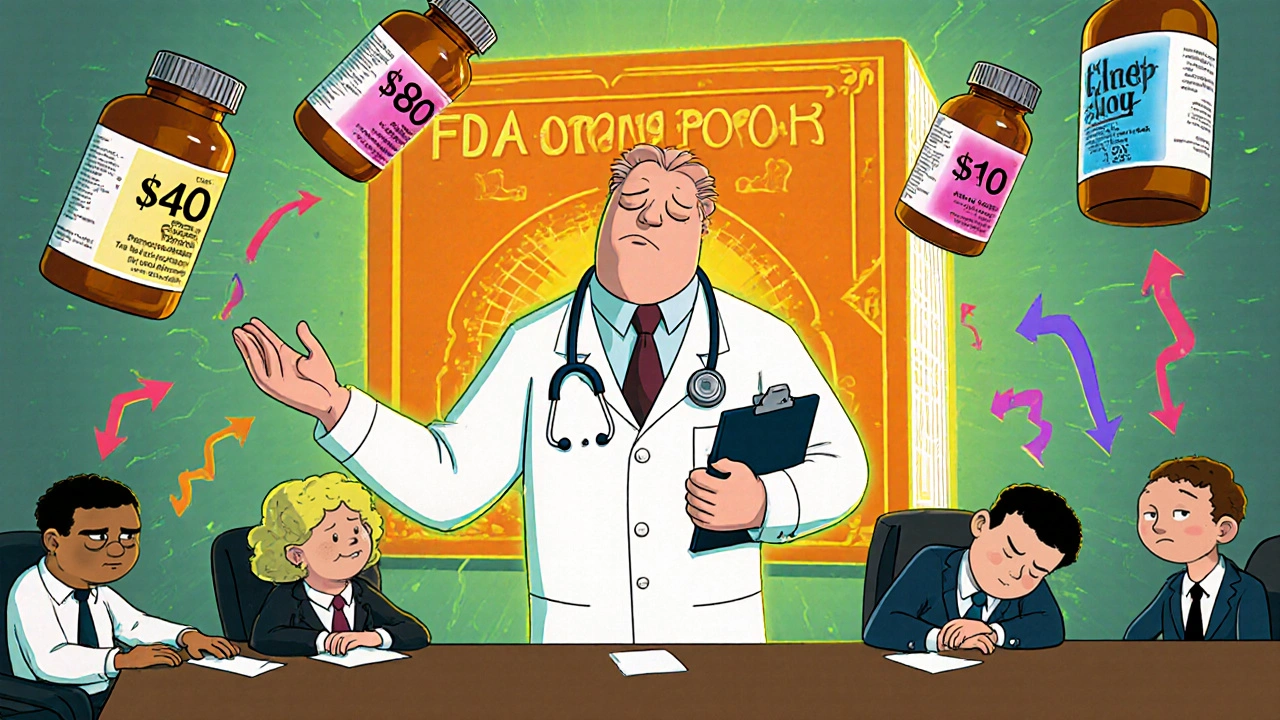
- State laws: In some states, pharmacists can substitute generics without a doctor’s OK. In others, they need prior approval for every switch. That kills speed and savings.
- Doctor resistance: Some physicians still hesitate to let pharmacists make substitutions, even though studies show pharmacists choose the right generic 98.7% of the time when following protocols.
- Confusion over “authorized generics”: Many patients don’t know that some generics are made by the same company that makes the brand. A pharmacist can explain: “This generic? It’s the exact same pill, just in a cheaper bottle.”
The fix? Training. Employers need to invest in pharmacist education on benefit design, pharmacoeconomics, and patient communication. They need to give pharmacists access to employee data (with consent) so they can flag high-cost, low-adherence meds before problems start.
And they need to stop treating pharmacists like order-takers. They’re clinical experts. Treat them like it.
What Employees Really Say
Reddit threads and surveys tell the real story. One pharmacist shared: “I had a guy on $140/month for his cholesterol med. I found a generic that was $18. He cried. Said he’d been skipping doses because he couldn’t afford it.”
Another: “I tell patients I take a generic for my thyroid. If it wasn’t safe, I wouldn’t take it. And I’ve been on it for 12 years.”
Employees aren’t skeptical because they’re stubborn. They’re skeptical because no one ever explained the science. Pharmacists do that. And when they do, people listen.
The Future Is Already Here
By 2027, the American Pharmacists Association predicts 85% of large employer wellness programs will include pharmacist-led medication optimization. Why? Because the ROI is undeniable.
The 2024 PBM Transparency Act is forcing pharmacy benefit managers to stop hiding markups. That means employers are looking harder at who’s actually saving money-and pharmacists are at the top of that list.
Companies like Walmart, Target, and Kroger are opening health centers inside their stores, staffed with pharmacists who serve employees and their families. These aren’t pilot programs anymore. They’re becoming standard.
And in Melbourne, where I’m based, we’re seeing the same shift. Employers are realizing that health isn’t just about gym memberships. It’s about whether someone can afford to take their medicine every day.
What Employers Can Do Today
If you’re an employer wondering how to start:
- Partner with your PBM to add a clinical pharmacist to your wellness plan. Don’t just ask for discounts-ask for consultations.
- Train your HR team to explain generics during open enrollment. Use simple language: “Same medicine. Same effect. Way less money.”
- Offer incentives: Lower copays for generics. Bonus points for employees who complete a medication review.
- Track outcomes: Measure adherence rates and drug costs before and after pharmacist involvement.
- Give pharmacists a seat at the table. They’re not just a cost center-they’re a prevention strategy.
Workplace wellness isn’t about perks. It’s about outcomes. And the best way to improve health outcomes? Make sure people can-and will-take their meds.
Pharmacists are the ones who make that happen.
Are generic medications really as effective as brand-name drugs?
Yes. The FDA requires generics to have the same active ingredient, strength, dosage form, and route of administration as the brand-name drug. They must also prove they’re absorbed in the body at the same rate and extent-within 80-125% of the brand. Thousands of studies confirm they work the same way. The only difference is price.
Can pharmacists legally switch my brand-name drug to a generic without my doctor’s approval?
In 49 U.S. states, pharmacists can substitute a generic for a brand-name drug if it’s listed as therapeutically equivalent in the FDA’s Orange Book. But rules vary. Some states require the pharmacist to notify the prescriber or get prior approval, especially for controlled substances. Always check your state’s pharmacy board guidelines.
Why do some people still prefer brand-name drugs?
Mostly because of marketing and misinformation. Brand-name companies spend billions on ads that make people believe their drug is superior. But the truth? Generics are often made in the same factories. Some are even produced by the same company as the brand-called “authorized generics.” Pharmacists help cut through the noise by explaining the science, not the sales pitch.
How do pharmacists know which generic is the best substitute?
They use the FDA’s Orange Book, which lists all approved generics and their therapeutic equivalence ratings. They also check their pharmacy’s MAC (Maximum Allowable Cost) schedule to find the lowest-cost option that meets clinical standards. Many use software like McKesson’s OneStop Generics to automate this process while ensuring safety.
Do workplace wellness programs actually save money with pharmacist-led generic promotion?
Yes. Studies show employers save $7.20 for every $1 spent on pharmacist services. That’s because better adherence reduces hospital visits, ER trips, and lost workdays. One company saw a 23% drop in prescription costs after adding a pharmacist to its wellness program. The savings aren’t theoretical-they’re in the payroll and insurance claims.
Rusty Thomas
November 20, 2025 AT 19:15Sarah Swiatek
November 21, 2025 AT 11:05Dave Wooldridge
November 22, 2025 AT 21:27Rebecca Cosenza
November 24, 2025 AT 08:35swatantra kumar
November 25, 2025 AT 23:05Cinkoon Marketing
November 26, 2025 AT 03:29robert cardy solano
November 27, 2025 AT 04:45Pawan Jamwal
November 28, 2025 AT 03:47Bill Camp
November 30, 2025 AT 02:53Lemmy Coco
November 30, 2025 AT 09:13rob lafata
December 2, 2025 AT 08:12Matthew McCraney
December 4, 2025 AT 06:54serge jane
December 5, 2025 AT 15:37Nick Naylor
December 7, 2025 AT 02:17Brianna Groleau
December 8, 2025 AT 21:53