
Managing medications shouldn’t feel like a guessing game. If you’re taking more than a few pills a day-prescription, over-the-counter, or even supplements-you’re at risk for mistakes that can lead to serious harm. The good news? You don’t have to figure it out alone. A medication safety plan isn’t just a list of drugs. It’s a living, shared system built with your doctors, pharmacists, and caregivers to keep you safe. And it starts with one simple step: writing everything down.
Step 1: Make a Complete Medication List
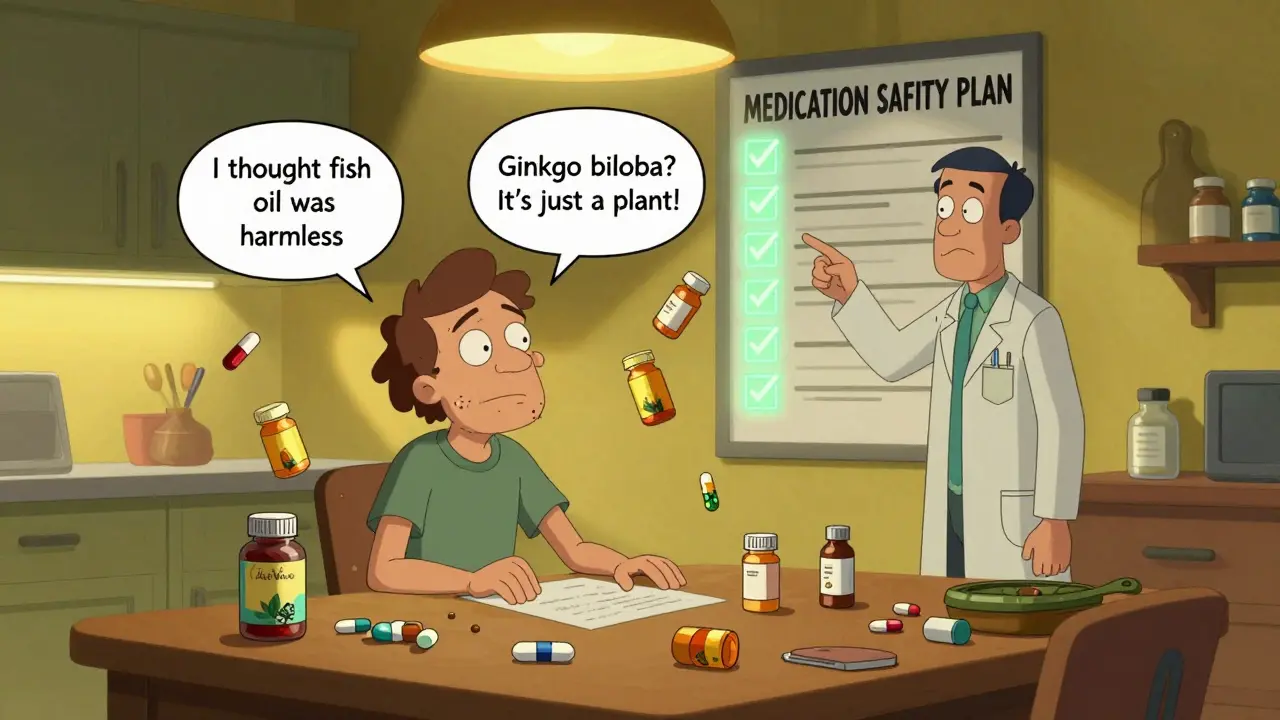
Start by listing every single thing you take. Not just your prescriptions. Include vitamins, herbal supplements, pain relievers, sleep aids, and even antacids. Many people forget these, but they’re often the hidden cause of bad reactions. One woman in Melbourne stopped taking her blood pressure pill because she thought she felt fine. She kept taking her fish oil and ginkgo biloba, thinking they were harmless. A month later, she ended up in the ER with a dangerous drop in blood pressure. Turns out, the combination of those three things was too much. Her doctor had no idea about the supplements because she never told them.
Write down:
- The full name of each medication (brand and generic if you know it)
- The dose (e.g., 10 mg, 500 mg)
- How often you take it (once daily, twice a day, as needed)
- Why you’re taking it (e.g., "for high blood pressure," "for joint pain")
- Who prescribed it (doctor’s name or clinic)
Keep this list in your wallet or phone. Update it every time you start, stop, or change a dose. Don’t rely on memory. Even if you’ve been taking the same meds for years, things change. Your body changes. New drugs get added. Old ones get pulled.
Step 2: Talk to Your Care Team - Together
Don’t wait for your annual checkup. Bring your list to every appointment-doctor, pharmacist, even the physiotherapist. Ask them to check for interactions. Pharmacists are trained to spot these. They see hundreds of drug combinations every week. Your doctor might not remember that your heart medication and that herbal tea you’re drinking can slow your heartbeat dangerously.
Bring someone with you. A family member, friend, or caregiver. They can ask questions you might forget. They can remember details you didn’t realize were important. One man in his 70s didn’t know his new antidepressant made him dizzy. His daughter noticed he was stumbling around the house. At the next visit, she asked, "Has his balance changed?" That question led to a dose adjustment-and a fall avoided.
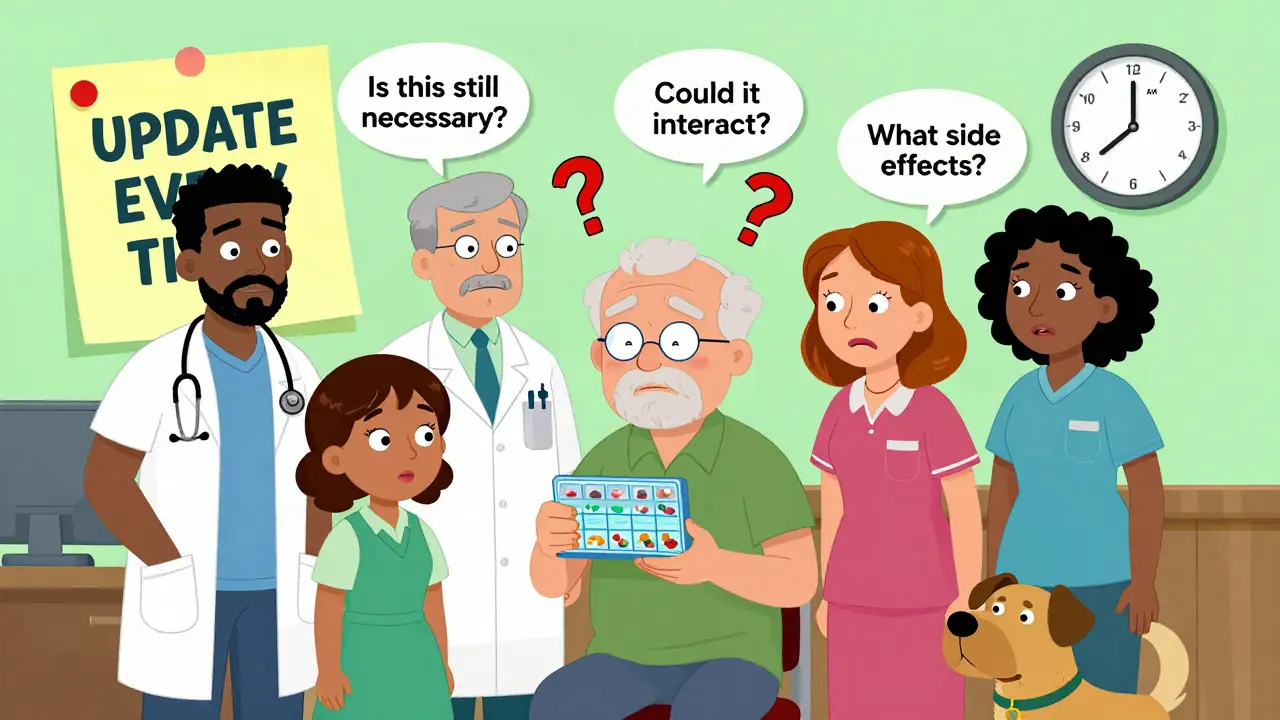
Ask these three questions every time:
- Is this medication still necessary?
- Could it interact with anything else I’m taking?
- What side effects should I watch for, and what should I do if I notice them?
Step 3: Store Medications Safely
Keep all medications out of reach of kids, pets, and anyone who might accidentally grab the wrong bottle. That includes your own future self. A study from the Institute for Safe Medication Practices found that nearly 1 in 4 medication errors in older adults happen because pills were stored in unmarked containers. One man kept his heart pills in an old vitamin bottle. He took them twice by accident because he thought they were his daily multivitamin.
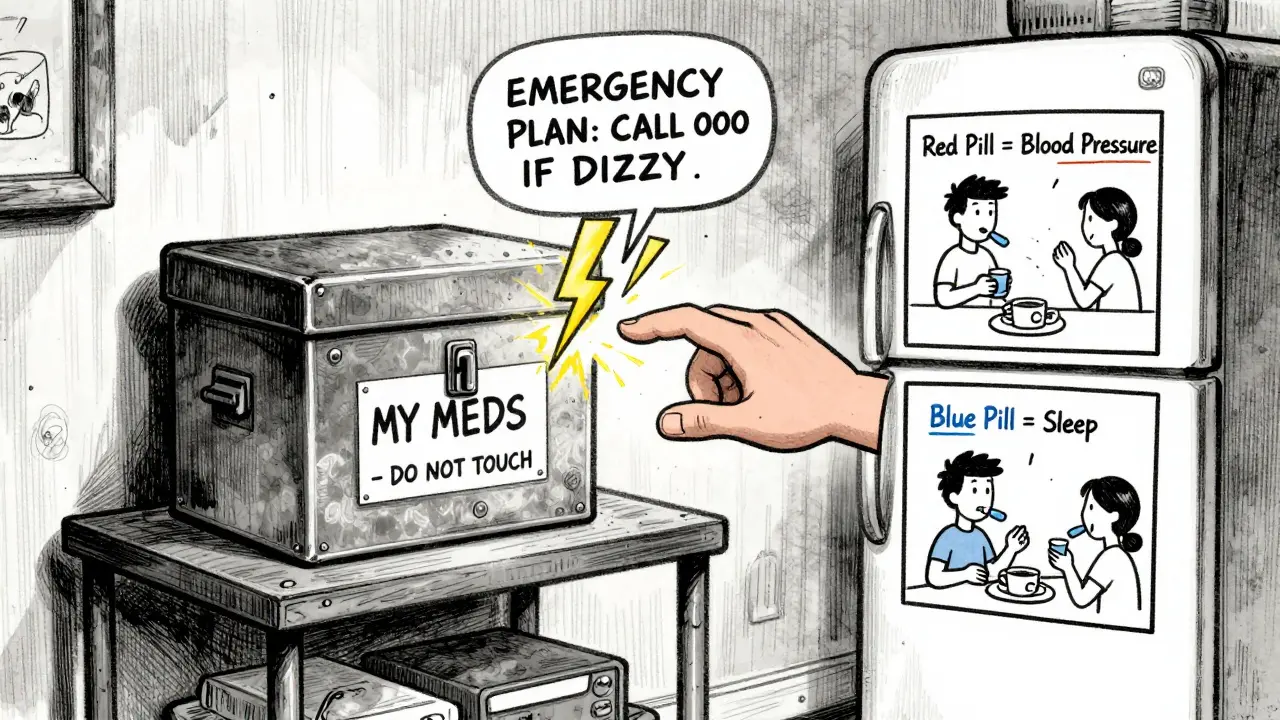
Use a locked cabinet or box. You don’t need a safe. A simple lockable box in a high cupboard works. If you live with others, make sure they know the box is off-limits. If you have memory issues, consider keeping only your current week’s pills in a visible spot. Store the rest locked away.
Label everything. Even if the pharmacy gave you a labeled bottle, add a sticker with:
- Your full name
- The medication name
- The dose
- The reason you take it
For example: "John Smith. Lisinopril 10mg. For high blood pressure. Take 1 daily. Dr. Lee."
Step 4: Use Tools to Help You Take Them Right
Pill organizers aren’t just for seniors. They help anyone who takes multiple meds. Choose one with compartments for morning, afternoon, evening, and night. Fill it weekly. Do it on the same day each week-Sunday works well for most people.
Pair your pills with daily habits. Take your morning pill after brushing your teeth. Take your evening one after dinner. This builds a routine that’s harder to forget.
If you’re forgetful, set alarms on your phone. Use voice assistants like Siri or Alexa: "Remind me to take my blood pressure pill at 8 a.m."
For people with dementia or memory loss, use simple language. Instead of "Take 10 mg of lisinopril once daily," say: "This is your blood pressure pill. Take it with breakfast. One pill. One time a day."
Step 5: Monitor and Track What’s Happening
Medications don’t always work the way they should. Sometimes they cause new problems. A common mistake? Assuming every new symptom is just "getting older." Fatigue? Dizziness? Confusion? Changes in mood? These could be side effects.
Keep a simple journal. For one week, write down:
- When you took each pill
- Any unusual symptoms (headache, nausea, rash, drowsiness)
- Any missed doses
Bring this to your next appointment. It gives your care team real data-not just your memory. One woman in her 80s noticed she felt dizzy every afternoon after taking her diuretic. She wrote it down. Her doctor realized the timing was wrong. She was taking it at lunchtime, which meant she had to get up at night to use the bathroom. Moving it to breakfast fixed the problem.
Ask for regular reviews. Don’t wait a year. Every three to six months, ask your doctor: "Should I still be taking all of these?" Some meds are meant for short-term use. Others become unnecessary as your health changes.
Step 6: Plan for Emergencies
What if you collapse? What if you’re taken to the ER and can’t speak? Your medication list becomes your voice. Make two copies. Keep one in your wallet. Give the other to your main caregiver. Update both every time you change something.
Include emergency contacts. Who should they call? Your doctor? Your pharmacist? Your child? Write their names and numbers right on the list.
If you’re on high-risk meds-like blood thinners, insulin, or strong painkillers-consider giving your caregiver a quick action plan:
- If you miss a dose: "Call the pharmacy. Don’t double up."
- If you feel faint: "Call 000. Tell them I’m on warfarin."
- If you have a rash or swelling: "Stop all new meds. Go to ER."
Some families even keep a small printed card in the fridge next to the medicine cabinet. It’s not glamorous, but it’s life-saving.
Who Should Be on Your Care Team?
You’re not alone in this. Your team includes:
- Your primary doctor
- Your pharmacist (ask them to review your list every time you refill)
- Your specialist (cardiologist, endocrinologist, etc.)
- Your caregiver (family member, home helper, nurse)
- Your dentist (some meds interact with local anesthetics)
Make sure everyone has the same list. If your pharmacist gives you a new pill, tell your doctor. If your doctor changes your dose, tell your pharmacist. Communication gaps are where errors happen.
What to Avoid
Here are the most common mistakes people make:
- Not telling providers about supplements. Many think they’re "natural" so they’re safe. Not true.
- Sharing pills with others. Your medicine is prescribed for you. Not your spouse. Not your parent.
- Using old prescriptions. If a doctor stopped your medication, throw it out. Don’t keep it "just in case."
- Ignoring side effects. If you feel weird, say something. Don’t wait.
- Only using one pharmacy. Using multiple pharmacies means no one sees your full list. Stick to one.
Real Talk: It’s Not Perfect
Even the best plan can slip. Maybe you forget to update your list. Maybe your pharmacist is busy and doesn’t catch an interaction. That’s why your care team needs to be active-not just passive. You need to speak up. Ask questions. Push back if something doesn’t feel right.
Medication safety isn’t about being perfect. It’s about being prepared. It’s about having a system so that when you do slip up, the plan catches you.
What if I can’t remember all my medications?
Use your phone. Take a photo of each pill bottle with the label facing up. Save them in a folder called "My Meds." Or use a free app like MyTherapy or Medisafe. But don’t rely on apps alone. Always have a printed copy too. If you’re not tech-savvy, ask a family member to help you make a list. Just one time. Then update it yourself.
Do I need to see a pharmacist just to review my meds?
Yes. Most pharmacies in Australia offer free MedsCheck services. You just walk in. They’ll review all your meds, check for interactions, and help you organize your pills. No appointment needed. It takes 20 minutes. Do it every six months. Pharmacists are medication experts-use them.
What if my doctor says I don’t need all these meds?
That’s a good thing. Many older adults take more meds than they need. This is called "polypharmacy." It increases your risk of side effects. Ask your doctor to do a "medication reconciliation." They’ll go through every pill and decide what’s still necessary. Don’t be afraid to ask: "Is this still helping me?" Sometimes stopping a drug makes you feel better.
Can I use a pill organizer if I have dementia?
Yes-but only if someone else fills it. People with dementia often forget how to use organizers. A caregiver should fill the box weekly, using the same labels you’ve written. Pair it with a visual chart: "Red pill = morning blood pressure. Blue pill = night sleep aid." Pictures help more than words.
What should I do if I think I’ve taken too much?
Call 000 immediately. Don’t wait. If you’re not sure, call the Poisons Information Centre on 13 11 26. They’re available 24/7. Have your medication list ready. Tell them what you took, how much, and when. They’ll guide you. Never try to induce vomiting unless instructed.
Building a medication safety plan isn’t a one-time task. It’s a habit. Like brushing your teeth. Like checking your blood pressure. The more you do it, the safer you become. And you don’t have to do it alone. Your care team is there to help. All you have to do is ask.
Sarah Barrett
February 15, 2026 AT 00:17Love how this breaks it down like a life hack rather than a medical lecture. I started doing the pill photo folder after my grandma混了她的降压药和维生素,结果差点送急诊。现在全家都用这个系统,连我16岁的弟弟都知道别乱动那个锁着的盒子。
Mike Hammer
February 16, 2026 AT 02:46As someone who’s been taking 7 meds since 35, I can say this: the real game-changer was the Sunday refill ritual. Got a pillbox, set an alarm labeled "DON’T BE A DUMBASS", and now I don’t even think about it. It’s just what you do after coffee. Simple beats fancy every time.
Virginia Kimball
February 16, 2026 AT 07:49This made me cry. My mom just turned 82 and she’s been refusing to update her med list because she says "I know what I’m taking." Last week she took her blood thinner twice because the bottle label faded. We got her a new one with giant stickers. Now she points to it like a map. It’s not glamorous, but it’s love in sticker form.
Daniel Dover
February 18, 2026 AT 01:12Pharmacists are underrated heroes. Walk in. Get it reviewed. No appointment. Free. Do it. Now.
Kaye Alcaraz
February 18, 2026 AT 13:18One of the most vital pieces of health advice I’ve ever read. This isn’t about compliance-it’s about autonomy. When you control your meds, you control your life. I’ve coached dozens of elderly clients through this process. The moment they realize they’re not just a list of prescriptions, but a person with agency? That’s the turning point. Start small. Write one thing down. Then another. Momentum builds faster than you think.
Josiah Demara
February 20, 2026 AT 12:27Let’s be real. Most people don’t have the discipline to do this. They’ll take a photo of their pill bottles and then forget the folder exists. They’ll say they’ll update their list "next week." Then they die in a preventable ER visit. This system only works if you’re obsessive. If you’re not obsessive, you’re a liability to yourself and your family.
Joe Grushkin
February 21, 2026 AT 15:25Why are we still using paper lists in 2025? This is 2025. You have a smartphone. Use an app. QR code on your wallet. NFC tag on your keychain. Blockchain-medical-identity integration is already a thing in Singapore. Why are we still whispering about sticky notes like it’s 1998?
Esha Pathak
February 22, 2026 AT 03:25Medication is not just chemistry-it’s a mirror of our relationship with time. We take pills to postpone death, yet we ignore the rituals that sustain life. The pill organizer is a meditation. The list is a vow. To yourself. To your future self. Who, if you’re lucky, will still be here to read it.
Chiruvella Pardha Krishna
February 23, 2026 AT 12:06The real tragedy is not the overdose. It’s the silent erosion of dignity. When you forget why you’re taking a pill, you forget why you’re alive. This plan restores agency. Not because it’s perfect. But because it forces you to speak. To name. To claim ownership. That is the first step toward healing.
Charlotte Dacre
February 24, 2026 AT 10:52Oh great. Another article that treats seniors like confused toddlers who need stickers and alarms. What about people who live alone, have no family, and can’t afford a pharmacist visit? This is beautiful… for the privileged. For the rest of us? We just hope we don’t die before our next refill.
Erica Banatao Darilag
February 25, 2026 AT 15:27i just wanted to say thank you for writting this. i have a mom who is 80 and she took her heart med twice by accident last month. i didnt know she was taking ginkgo too. we made a list and put it on the fridge. she cries every time she looks at it. not because shes sad. because she feels seen. i dont know if this is the right way to say it but… this matters.
Kapil Verma
February 26, 2026 AT 06:04Why is this even an issue? In India, we don’t have time for this. We take what the doctor gives. We trust. We pray. We don’t need apps or stickers. Your Western obsession with control is what’s making you sick. Let go. Trust God. Trust your body. Stop overthinking. This article is a symptom of your broken system.
Michael Page
February 27, 2026 AT 08:59Interesting. I’ve been thinking about this differently. What if the real problem isn’t the patient forgetting, but the system failing to integrate. Why is the pharmacist not automatically synced with the doctor’s EHR? Why is the ER not scanning your pharmacy history? This isn’t about personal responsibility. It’s about infrastructure collapse. And we’re blaming the elderly for it.