
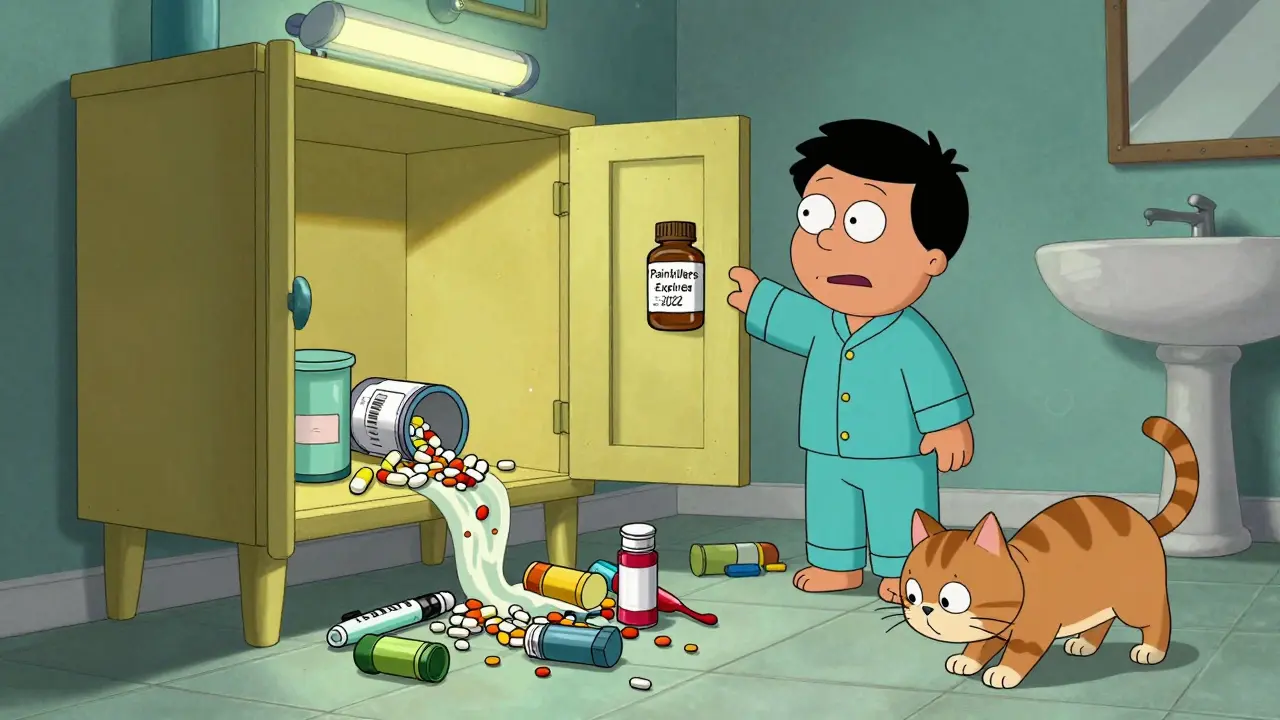
Keeping expired medications in your medicine cabinet isn’t just messy-it’s dangerous. Every year, thousands of children accidentally swallow pills they find at home. Teens grab old painkillers from the bathroom cabinet. And every time you flush a pill or toss it in the trash without proper steps, you’re adding to the slow poison seeping into our waterways. The good news? You don’t need a special kit or a trip to the pharmacy to do this right. You just need to know how.
Why You Can’t Just Flush or Toss Medications
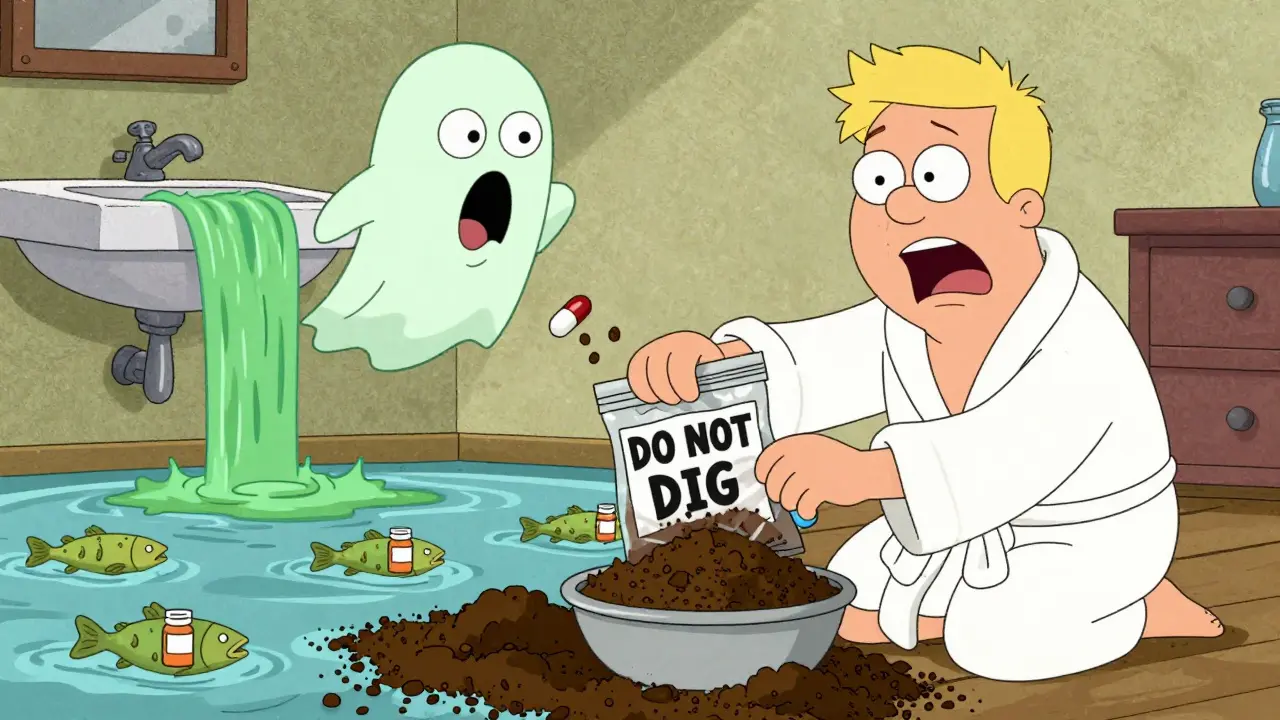
Flushing pills used to be the go-to fix. But now we know it’s not that simple. The FDA only allows flushing for a handful of high-risk drugs-like fentanyl patches or oxycodone-because they’re so dangerous if someone finds them. For everything else, flushing sends chemicals into rivers, lakes, and even drinking water. Studies show over 80% of U.S. streams contain traces of pharmaceuticals. That’s not just a U.S. problem. Australia’s waterways are catching up, and we’re starting to see the same patterns. Tossing pills in the trash sounds harmless, but it’s not. Trash collectors, kids, pets, and even scavengers can get into your bin. A 2023 study found that 23% of diverted prescription opioids came from improperly thrown-away meds. And if you leave the label on the bottle, someone can easily find your name, dosage, and condition. That’s not privacy-it’s risk.The Safe Home Disposal Method (FDA-Approved)
When you can’t get to a take-back bin right away, here’s the only method you should use at home. It’s simple, effective, and backed by the FDA and EPA:- Take pills out of the original bottle. Don’t crush them. Don’t break them. Just pour them into a small bowl or onto a piece of paper.
- Mix them with something unappetizing. Use one cup (240ml) of used coffee grounds, cat litter, or dirt. These are ideal because they’re smelly, gritty, and look gross. The goal is to make the pills look and smell so unpleasant that no one-human or animal-would want to dig through it.
- Stir it up. Mix the pills into the grounds or litter until you can’t see any pills left. If you have liquid medicine, pour it into the same mix. Don’t add water-just let the absorbent material soak it up.
- Seal it in a container. Put the mixture into a resealable plastic bag, an empty margarine tub, or even a jar with a tight lid. Make sure it won’t leak. A 2-mil thick bag works best.
- Hide your info. Take the empty prescription bottle and use a permanent marker to black out your name, address, prescription number, and pharmacy details. Don’t just scribble-cover every bit of text. Then throw the empty bottle in the recycling.
- Put it in the trash. Put the sealed container in your regular household bin. Not the recycling. Not the compost. Just the trash.
This process takes about 10 minutes. You’ve probably got all the materials already. Coffee grounds? You’re making coffee, right? Cat litter? If you have a pet, you’ve got it. If not, dirt from your garden works fine.
What to Do With Special Medications
Not all meds are the same. Some need extra care:- Needles and sharps: Never toss them loose. Use a rigid plastic container-like an empty laundry detergent bottle with a screw-top lid. Once full, tape the lid shut, label it “SHARPS-DO NOT RECYCLE,” and put it in the trash. Many pharmacies in Australia offer free sharps disposal bins if you ask.
- Inhalers: These are pressurized. If crushed in a trash compactor, they can explode. Don’t puncture them. Don’t burn them. Take them to a local pharmacy or hazardous waste collection event. Some councils in Melbourne run monthly drop-offs for these.
- Liquid medicines: Mix them with coffee grounds or cat litter just like pills. Use enough to absorb every drop. Pour slowly so it doesn’t spill. Seal tightly.
- Insulin and other temperature-sensitive drugs: Keep them cool until disposal. Mix them with absorbent material right away. Don’t let them sit out.
Take-Back Programs: The Best Option (When You Can Use Them)
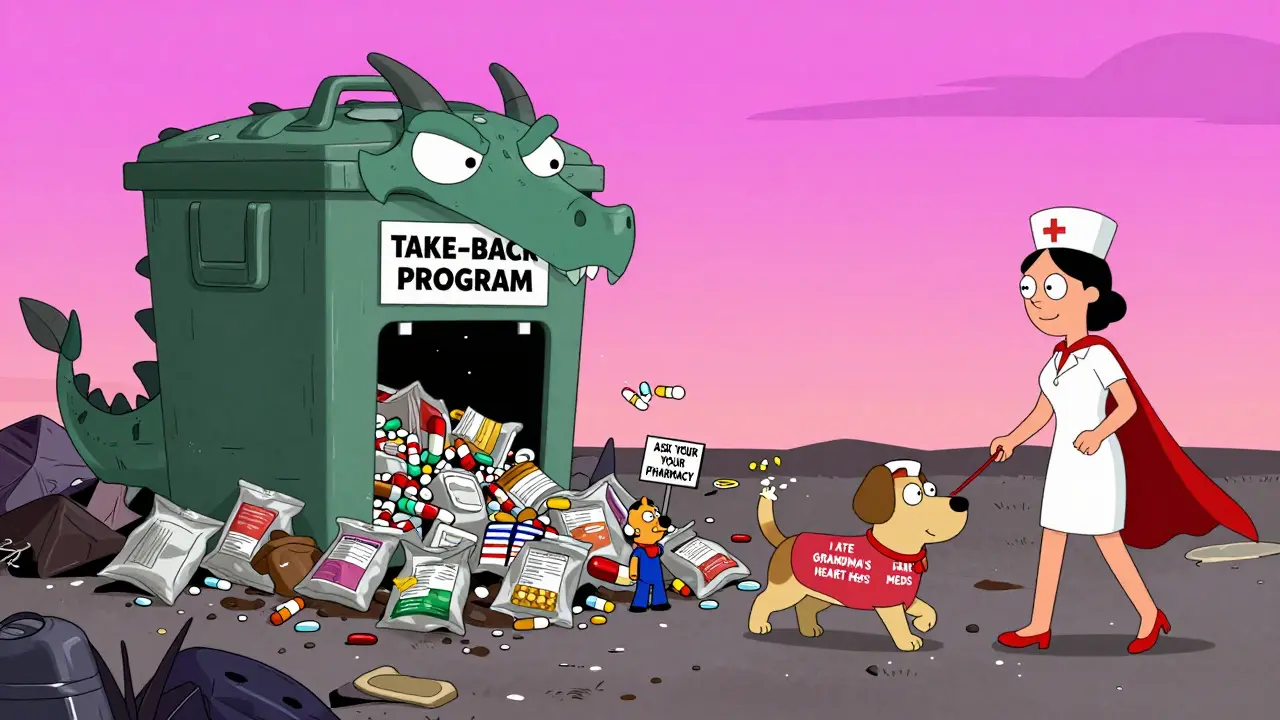
The safest way to dispose of any medication? A take-back program. These are run by pharmacies, hospitals, or local councils. In Australia, you can find drop-off points at:- Most major pharmacy chains (Chemist Warehouse, TerryWhite Chemmart, Amcal)
- Local council hazardous waste days
- Some hospitals and community health centres
These programs don’t just collect pills-they destroy them safely using high-temperature incineration. No contamination. No risk. The DEA in the U.S. collected over a million pounds of meds in one day. Australia’s programs aren’t as widespread yet, but they’re growing. Check your local council website or call your pharmacy. Many offer year-round drop-offs.
Pro tip: Keep a small box in your cupboard just for expired meds. When you notice something’s past its date, toss it in. Then, once a year, take the whole box to a drop-off point. No stress. No rush.
What NOT to Do
Avoid these common mistakes:- Don’t flush anything unless it’s on the FDA flush list. (Australia doesn’t have an official list, so don’t flush anything unless you’re absolutely sure.)
- Don’t pour meds down the sink. Same problem as flushing.
- Don’t recycle empty pill bottles unless you’ve scrubbed off all labels. Even a smudged label can be read with a magnifying glass.
- Don’t leave meds in their original bottles in the trash. That’s how kids and pets get into them.
- Don’t wait until you have a full cabinet. The longer you keep old meds, the higher the chance someone will misuse them.
How to Stay Prepared
Make disposal easy by keeping a small kit ready:- A small jar or container for collecting expired meds
- A permanent marker
- A few resealable plastic bags
- A small bag of used coffee grounds (keep one in the freezer if you don’t drink coffee)
Put it all in a drawer near your medicine cabinet. When you find an expired pill, you can dispose of it immediately-no thinking, no delay.
Also, check your meds every six months. Write the date on the bottle when you open it. Most pills lose effectiveness after a year. Don’t assume they’re still safe just because they haven’t expired.
What Happens After You Dispose of Them?
When you use a take-back program, your meds are burned in a controlled facility. The ash is then safely landfilled. No toxins enter the air or water. When you use the home method, the mixture ends up in landfill. Yes, trace amounts of drugs can still leak out-but studies show this method reduces environmental contamination by 80% compared to tossing pills whole. It’s not perfect, but it’s the best you can do at home.And here’s the real win: you’re protecting your family. You’re stopping a teenager from grabbing your painkillers. You’re keeping your dog from eating grandma’s heart medication. You’re not just disposing of pills-you’re preventing harm.
Can I throw expired medications in the recycling bin?
No. Never put medications or empty pill bottles with labels still visible in the recycling. Even if the bottle is clean, leftover residue can contaminate other recyclables. Always remove labels completely and dispose of bottles in the regular trash unless your local council has a specific program for pharmaceutical packaging.
What if I can’t find a take-back location near me?
Use the home disposal method: mix pills with coffee grounds or cat litter, seal in a bag, and toss in the trash. This is the official recommendation from health agencies when no other option is available. You can also call your local council-they often host annual collection events, even in rural areas. Some pharmacies offer mail-back kits for a small fee, but the home method is free and just as effective for most meds.
Are there any medications I should flush?
In Australia, there’s no official flush list. The FDA’s list (which includes fentanyl patches and certain opioids) is U.S.-specific. Since Australia doesn’t have the same regulatory framework, the safest rule is: never flush anything. Always use the mixing method or take it to a drop-off point. Flushing creates long-term environmental harm and isn’t necessary for any medication you’re likely to have at home.
How do I dispose of insulin pens or needles?
Place used needles and insulin pens in a rigid plastic container-like a clean detergent bottle with a tight lid. Tape the lid shut and write “SHARPS” on the outside. Then put it in your regular trash. Many pharmacies in Australia offer free sharps disposal bins. Ask at your local Chemist Warehouse or pharmacy. Never put sharps in recycling or loose in the trash.
Can I donate unused medications?
No. In Australia, it’s illegal to donate or resell prescription medications, even if they’re unopened. The only safe path is disposal through a take-back program or the home method. Some charities in other countries accept donations, but Australia doesn’t have any legal programs for this. Don’t risk it-dispose of it properly.
Next Steps
Start today. Look in your medicine cabinet. Find one expired pill. Grab your coffee grounds. Mix it. Seal it. Throw it out. That’s one less danger in your home.Next month, call your local pharmacy and ask if they have a medication take-back bin. If they don’t, ask them to start one. Community change starts with one person asking.
And if you have kids, elderly relatives, or pets in your home-this isn’t optional. It’s basic safety. Just like locking your doors or storing cleaning products out of reach, safe medication disposal is part of being a responsible adult.
Faith Wright
January 10, 2026 AT 12:55Okay, but can we talk about how ridiculous it is that we need a 10-step guide just to throw away old pills? In Australia, they’re basically treating us like toddlers who’ll eat glitter if left unsupervised. I get safety, but this feels like overkill wrapped in a PowerPoint.
Also, coffee grounds? I don’t even drink coffee. Do I just buy a bag of grounds for this one task? What’s next-buying a $15 ‘medication disposal kit’ from Amazon?
Also also-why is the FDA’s list the default reference? We’re not in the US. Australia doesn’t even have that list. Why are we importing American panic into our medicine cabinets?
Jose Mecanico
January 10, 2026 AT 19:31Just did this yesterday. Took my mom’s expired blood pressure pills, mixed them with her cat litter (she hates when I use it, but she’s not gonna argue with safety), sealed it in a ziplock, and tossed it. Took 8 minutes.
Also blacked out the bottle with a Sharpie. Didn’t even realize how much info was on there until I tried to scrub it off. Scary stuff.
Wish more people knew this. It’s not rocket science. Just common sense with a little elbow grease.
Abner San Diego
January 12, 2026 AT 02:27Oh great, another guilt-trip from the environmental elite. You want us to use coffee grounds? What, are we supposed to compost our prescriptions now? Next you’ll be telling us to meditate while we flush our insulin pens.
And who cares if trace chemicals get into the water? We’ve got lead in our paint, plastic in our fish, and microfibers in our sweat. One more pill won’t sink the ship. Stop acting like you’re saving the planet by dumping pills in cat litter.
Also, why are you telling Australians what to do? We’re not your lab rats. Go fix your own broken healthcare system before you lecture us on pill disposal.
And don’t even get me started on ‘take-back programs.’ That’s just another tax-funded bureaucracy waiting to happen. I’ll keep my meds in the cabinet until they turn to dust. Let someone else deal with the consequences.
George Bridges
January 12, 2026 AT 13:37Really appreciate the practical breakdown. I’ve been tossing pills in the trash for years thinking it was fine. Didn’t realize how much info was still readable on the bottles.
Blackout step is genius. I’m gonna keep a Sharpie next to my medicine cabinet now. Also, the coffee grounds tip? Smart. I’ve got a whole jar of used grounds in the freezer anyway.
And yeah, sharps disposal-biggest fear I’ve had since my dad started insulin. Glad they mentioned the detergent bottle trick. That’s way easier than hunting down a special container.
Thanks for making this feel doable instead of overwhelming.
TiM Vince
January 13, 2026 AT 09:33Just wanted to say I’ve been using the home method since last year. Mixed my dad’s old antidepressants with dirt from the garden, sealed it in a yogurt tub, threw it out. No one noticed. No one cared. But I felt better.
Also, I keep a small Tupperware in the linen closet now. Every time I see an expired bottle, I toss it in. Once a year I take the whole thing to the pharmacy. It’s become a quiet ritual.
Not glamorous. Not viral. But it’s peace of mind.
gary ysturiz
January 13, 2026 AT 13:39You got this. Seriously. One step at a time. Find one pill. One bottle. One coffee ground. Do it now. Not tomorrow. Not next week. Right now.
You don’t need to fix everything today. Just fix one thing. That’s how change starts.
And if you’re worried about the environment? You’re already doing better than 90% of people. Keep going. You’re making a difference. One sealed bag at a time.
Jessica Bnouzalim
January 14, 2026 AT 22:28OMG YES. I just did this last weekend!! I had like 12 bottles sitting there since 2021!! I used my cat’s litter-she was NOT happy about it, but she’s used to me being weird-sealed it in a ziplock, blacked out the labels with a Sharpie, and threw it in the trash!! I felt so proud!!
Also, I made a little ‘meds box’ out of a cereal box and put it under the sink. Now I just toss expired stuff in there as I find it. No thinking. No stress. Just toss and forget!!
Also also-don’t flush!! I saw a video of someone flushing a pill and it went down the drain and then… POOF. A fish floated up. I cried. Don’t be that person. Please.
Rinky Tandon
January 15, 2026 AT 20:07Let me tell you something-this is a classic case of Western over-medicalization and performative environmentalism. You’re treating pills like radioactive waste when they’re just molecules. You think mixing with coffee grounds makes it ‘safe’? HA. The molecules don’t care if they’re in cat litter or in a landfill-they still bioaccumulate.
And why are you ignoring the real issue? Pharma companies are the ones dumping bulk chemicals into water systems. Not you, not me. You’re just a cog in their PR machine.
Also, ‘take-back programs’? Those are corporate loopholes. Pharmacies don’t care-they profit from your anxiety. They want you to keep buying new meds, not dispose of old ones.
And what about the Global South? You think they have coffee grounds and Sharpies? No. They have open drains and kids scavenging for pills. Your ‘solution’ is a luxury. Your guilt is a privilege.
Stop pretending you’re saving the world. Start demanding systemic change. Or just keep your coffee grounds and shut up.
Ben Kono
January 15, 2026 AT 23:18Just mix it with dirt and toss it. Done. No need for all this drama. I don't have cat litter or coffee grounds and I'm not buying some special bag. I just pour it in the trash and call it a day. People are making this way too complicated.
Also the label thing? Who cares? I've never seen anyone dig through trash for pills. If they do they deserve what they get.
Stop overthinking. Just throw it out.