
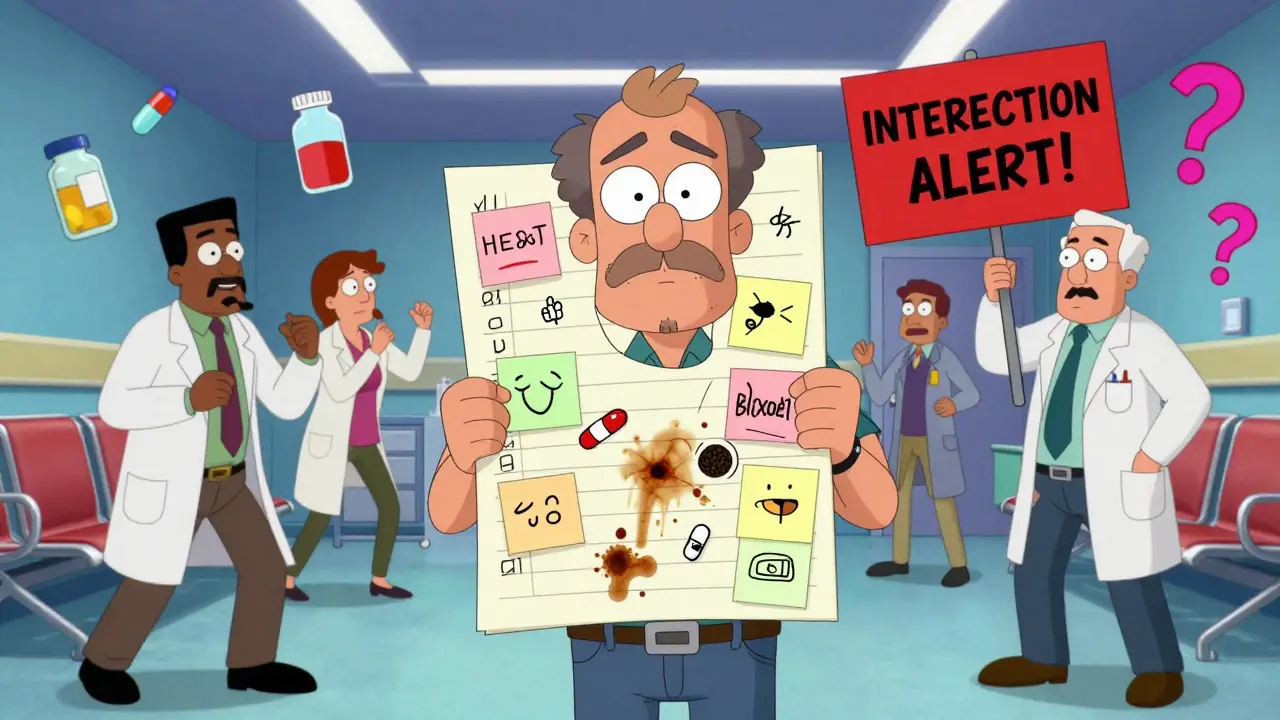
Every year, thousands of people in the U.S. end up in the hospital because of a simple mistake: someone didn’t know what medicines they were taking. It could be a missed dose, a dangerous interaction, or a drug prescribed that already conflicted with something else. These aren’t rare errors. They’re preventable. And the easiest tool to stop them? A medication list.
Why Your Medication List Matters More Than You Think
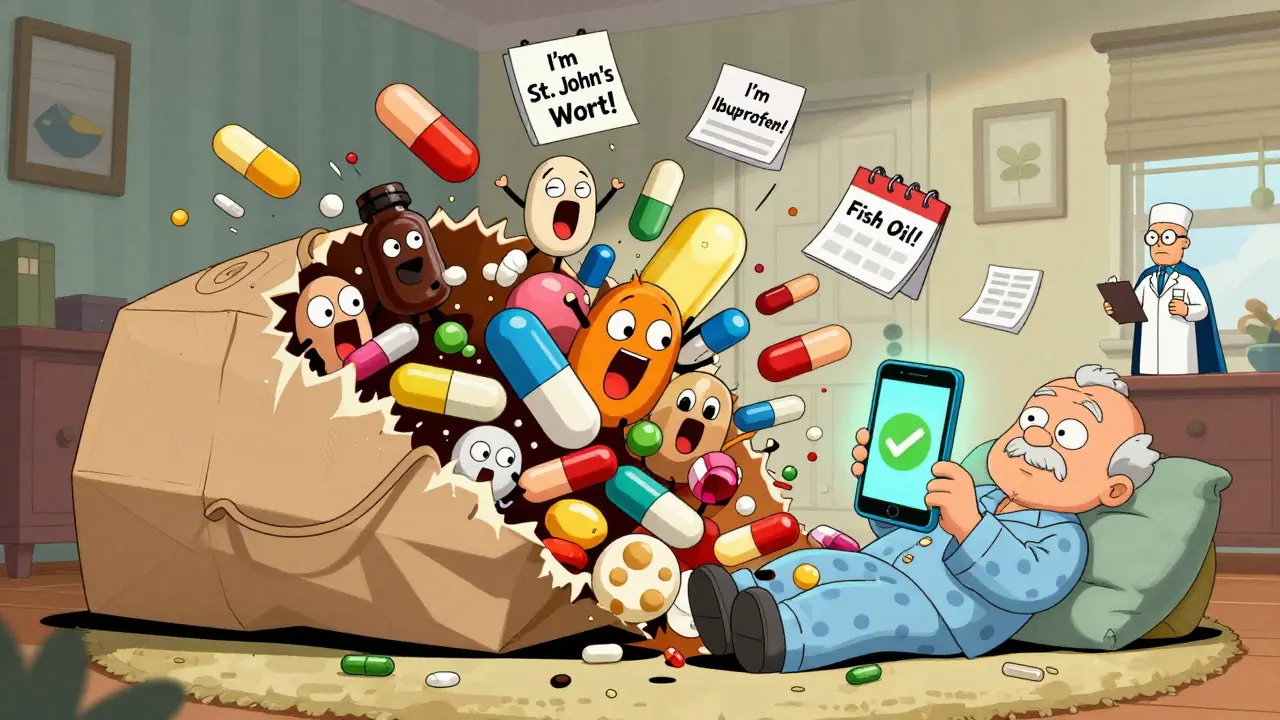
Think of your medication list like a GPS for your health. If the route is wrong, you end up lost - or worse. In emergency rooms, doctors often don’t have time to ask detailed questions. If you can hand them a clear, updated list of everything you take, they can make faster, safer decisions. The FDA estimates that medication errors cause about 7,000 deaths in the U.S. each year. A 2020 study found that proper medication reconciliation - matching what you say you take with what’s actually in your system - can prevent 50 to 80% of those errors during hospital transitions.Most people only think about their prescriptions. But your list needs to include everything: over-the-counter painkillers, vitamins, herbal supplements, even eye drops or patches. Why? Because ibuprofen can interfere with blood pressure meds. St. John’s Wort can cancel out antidepressants. And if your doctor doesn’t know you’re taking fish oil, they might not realize why your blood isn’t clotting right after surgery.
What to Include on Your Medication List
A good list isn’t just a scribble on a napkin. It needs details. Here’s what to write down for every medicine:- Drug name: Both brand and generic (e.g., “Lipitor” and “atorvastatin”)
- Dose: How much you take (e.g., “10 mg”)
- Frequency: How often (e.g., “once daily,” “every 6 hours”)
- Route: How you take it (e.g., “by mouth,” “applied to skin,” “inhaled”)
- Purpose: Why you take it (e.g., “for high cholesterol,” “for occasional heartburn”)
- Last dose: When you last took it (helpful in emergencies)
- Prescriber: Who wrote the script (e.g., “Dr. Lin, Cardiology”)
- Allergies and reactions: What happened when you took it (e.g., “rash after penicillin,” “swelling after aspirin”)
Don’t forget supplements. Many seniors take magnesium for sleep, turmeric for joints, or melatonin for insomnia. These aren’t harmless. They can interact with blood thinners, diabetes drugs, or even anesthesia. A 2023 study found that 56% of patient-reported medication lists had at least one critical error - often because they left out supplements.
Choose Your Format: Paper, App, or EHR
There’s no one-size-fits-all format. Pick what works for your life.Paper lists - like the FDA’s free “My Medicines” template - are simple, don’t need batteries, and can be carried in your wallet. But they get outdated fast. A 2022 JAMA study found that 43% of paper lists were wrong by the time patients got to the doctor.
Smartphone apps like Medisafe, MyTherapy, or CareZone let you scan pill bottles, set reminders, and share lists with family or doctors. They reduce missed doses by 28%, according to a BMJ Open study. But only 35% of adults over 65 use them regularly. If you’re not tech-savvy, this might feel overwhelming.
EHR-integrated lists - like those in Epic’s MyChart or Kaiser Permanente’s portal - are updated automatically when your doctor changes your prescription. They’re the gold standard… if you have access. Only 58% of primary care practices in the U.S. have full integration. Still, if your provider uses one, use it. It’s the most reliable source.
How to Keep It Updated (Without It Becoming a Chore)
The biggest problem? People forget to update their list. A University of Michigan study found 68% of patients don’t update their list after leaving the hospital. That’s dangerous.Here’s how to make updating stick:
- Do a monthly check: When you organize your pill box, review your list. If you started, stopped, or changed a dose, update it right away.
- Use the brown bag method: Once a year, empty your medicine cabinet into a brown bag and bring it to your doctor. They’ll match what’s there with your list. It catches hidden meds you forgot about.
- Take a photo: Snap a picture of the label on each bottle. Store them in a folder on your phone labeled “Medications.” If you can’t remember a name, you’ve got a visual backup.
- Schedule it: Set a recurring calendar reminder for the first day of every month. Treat it like a dentist appointment.
Doctors and pharmacists can help. Medicare Part D covers Medication Therapy Management (MTM) services - a free 30-minute session with a pharmacist to review your entire list. Ask your pharmacy if they offer it.
When to Share Your List
Don’t wait for an emergency. Share your list proactively:- Before every doctor visit: Even if it’s for a cold. Your blood pressure meds might need adjusting if you’re taking new decongestants.
- When admitted to the hospital: Hand your list to the nurse at registration. Don’t assume they’ll check your records.
- Before surgery: Anesthesiologists need to know everything - including supplements. Some herbs can cause dangerous bleeding during operations.
- When changing pharmacies: New pharmacists won’t know your history. Bring your list so they can spot potential interactions.
- When a family member takes over care: If your adult child starts helping you manage meds, give them a copy. Keep one in your purse, one at home, and one with your emergency contact.
Common Mistakes (And How to Avoid Them)
Even with the best intentions, people mess up. Here are the top errors - and how to dodge them:
- “I only take it when I need it.” That’s still a medication. Write it down. “I take ibuprofen for headaches, about twice a week.”
- “It’s just a vitamin.” No. Vitamins can interact. High-dose vitamin K can make blood thinners useless.
- “I didn’t think it counted.” Creams, patches, inhalers, eye drops - all count. If it enters your body, it matters.
- “My doctor knows what I take.” Not necessarily. Most doctors see dozens of patients a day. They rely on what you tell them. Don’t assume they remember.
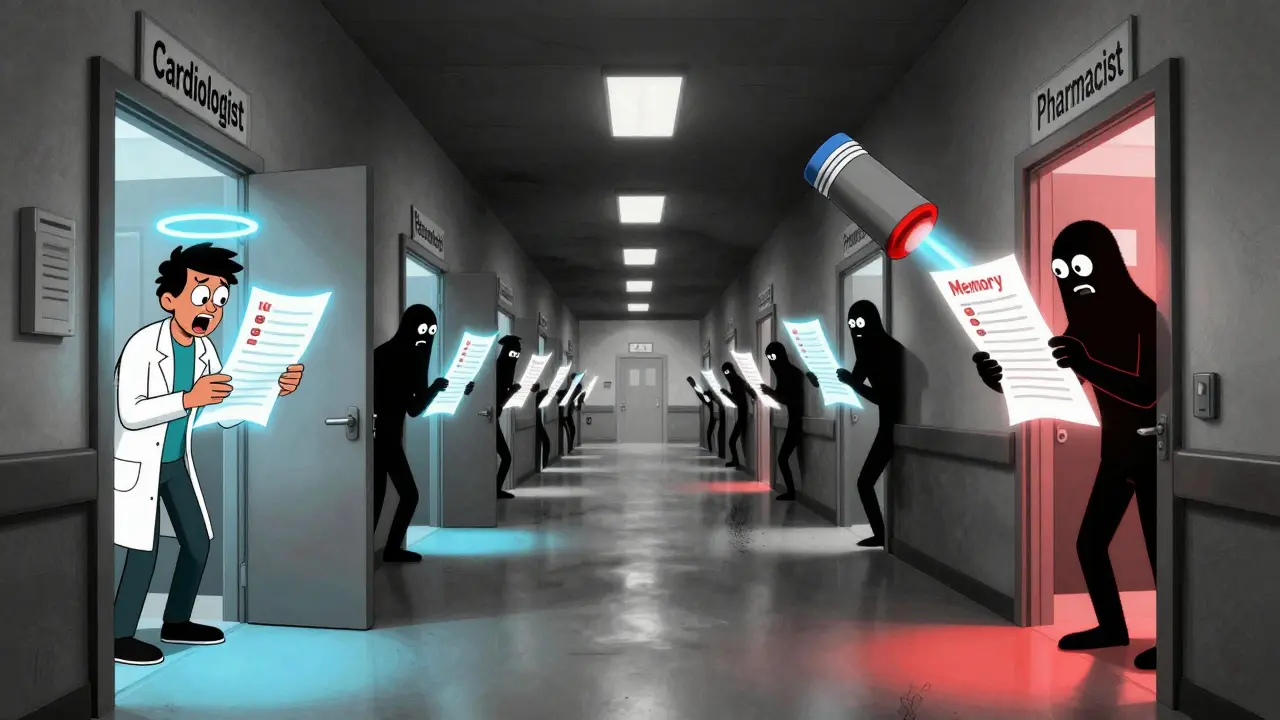
- “I updated it in my head.” Memory fails. Especially under stress. Write it down.
Real Impact: Stories from the Front Lines
A nurse in New York told a Reddit thread: “I caught three potentially fatal drug interactions this month just by checking patients’ lists.” One woman was prescribed a new antibiotic that clashed with her blood thinner. Another was about to get a hip replacement while still taking an herbal supplement that increased bleeding risk. Both were stopped before harm happened.
Kaiser Permanente reduced medication-related readmissions by 22% in 18 months just by making patients bring updated lists to every visit. That’s not magic - it’s consistency.
On the flip side, ECRI Institute documented a case where an elderly man died after a warfarin overdose. His list hadn’t been updated since his last hospital stay. He’d stopped taking the drug, but his doctors didn’t know. He was given a new prescription - and didn’t survive.
Your Next Steps
Don’t wait for a crisis. Start today:
- Grab a piece of paper or open a note on your phone.
- Write down every medicine, supplement, and OTC drug you’ve taken in the last 30 days.
- Fill in the details: dose, frequency, reason, prescriber.
- Add your allergies and reactions.
- Print it or save it. Keep a copy in your wallet, your purse, and with a trusted family member.
- Set a reminder: “Review meds” for the first Monday of next month.
You don’t need to be perfect. You just need to be consistent. A medication list isn’t just paperwork - it’s your safety net. And in a system that’s often fragmented, confusing, and rushed, it’s one of the few things you can control.
Do I need to list vitamins and supplements on my medication list?
Yes. Vitamins, herbal remedies, and dietary supplements can interact with prescription drugs, affect surgery outcomes, or mask symptoms. For example, St. John’s Wort can reduce the effectiveness of antidepressants, and high-dose vitamin K can make blood thinners like warfarin less effective. Always include them - even if you think they’re “harmless.”
How often should I update my medication list?
Update it every time you start, stop, or change the dose of any medication - including over-the-counter drugs. At a minimum, review it monthly and bring it to every doctor’s appointment. After a hospital stay, update it within 24 hours. Studies show 68% of patients forget to update their list after leaving the hospital, creating dangerous gaps in care.
Can I use a smartphone app instead of paper?
Yes, apps like Medisafe, MyTherapy, or CareZone are effective and can send reminders to take pills. They’re especially helpful if you take multiple medications. But don’t rely on them alone if you’re not comfortable with technology. Always have a printed copy or photo backup. Only 35% of adults over 65 regularly use medication apps, so paper remains a reliable fallback.
What if I see multiple doctors? Should I give each one a copy?
Yes. Each provider needs to know what you’re taking - especially if they’re not connected to the same health system. A cardiologist might prescribe a new beta-blocker without knowing your rheumatologist added a steroid. That combination could raise your blood pressure dangerously. Always bring your list to every appointment, even if you think it’s unrelated.
Is there a free template I can use?
Yes. The U.S. Food and Drug Administration (FDA) offers a free, printable “My Medicines” template that includes sections for prescriptions, OTC drugs, supplements, allergies, and emergency contacts. You can download it from the FDA’s website. Many pharmacies and hospitals also provide similar worksheets. Use one - it’s better than a napkin.
Gray Dedoiko
December 24, 2025 AT 03:43I’ve been keeping a medication list since my dad had that near-fatal interaction between his blood thinner and a new OTC sleep aid. I keep it on my phone and a printed copy in my wallet. It’s not glamorous, but it’s saved me from looking like an idiot at the ER twice now.
Just update it when you change anything. Seriously. Five minutes a month beats a week in the hospital.
Aurora Daisy
December 25, 2025 AT 09:44Oh great, another ‘just write it down’ lecture from the US healthcare propaganda machine. In the UK, we’ve got the NHS portal that auto-updates everything. No need for your little paper lists or apps. Just trust the system. But hey, if you need to feel in control, go ahead. I’ll be over here with my actual healthcare infrastructure.
Katie Taylor
December 26, 2025 AT 03:49You’re not alone if this feels overwhelming. I used to ignore my meds list until my mom had a stroke and the ER didn’t know she was on fish oil. Now? I update it every Sunday with my coffee. I even made a little checklist. It’s not perfect, but it’s mine. And that’s enough.
You’ve got this. Start small. One pill at a time.
Payson Mattes
December 27, 2025 AT 01:31Did you know the FDA doesn’t actually require pharmacies to cross-check supplement interactions? And that’s not an accident. Big Pharma hates when people realize turmeric can mess with chemo. Your ‘med list’ is just a bandaid. The real problem? Doctors get paid to prescribe, not to listen. I’ve seen patients get prescribed 12 new drugs after bringing a perfect list. They just ignore it.
Truth is, your list won’t save you. It’ll just make you feel safer while they keep selling you pills.
Also, if you use MyChart, your data’s probably sold to data brokers. Just saying.
Isaac Bonillo Alcaina
December 27, 2025 AT 09:10First, you misspelled ‘prescriber’ as ‘prescriber’ in the bulleted list. Second, you refer to ‘ibuprofen’ as an OTC drug - technically correct, but you fail to mention that it’s a non-selective COX inhibitor with renal and GI risks, especially in elderly patients on ACE inhibitors. Third, you cite a 2020 study but don’t provide a DOI or journal name. This is amateur hour. If you’re going to write about medication safety, at least get the basics right.
And yes, you absolutely must include topical corticosteroids. They’re systemic in high doses. I’ve seen it.
Bhargav Patel
December 27, 2025 AT 20:05The notion of a medication list as a ‘safety net’ is deeply humanistic, yet it reveals the fragmentation of modern medical systems. In a world where care is commodified, the burden of coordination falls not on institutions, but on the individual - often the elderly, the ill, the overwhelmed. To list one’s medicines is not merely an act of organization, but of resistance: a quiet assertion of agency in a system designed to render one passive.
Yet we must ask: why must the patient become the archivist of their own survival? Shouldn’t the system remember? Perhaps the list is not a solution, but a symptom - of a healthcare landscape that has forgotten its duty to hold memory.
Sidra Khan
December 29, 2025 AT 06:25So I’m supposed to track every vitamin, eye drop, and ‘natural’ thing I take… but my doctor still prescribes me something that clashes with it? 😒
Like, cool. I’ll just keep a list. And then ignore it. Because why bother if nobody reads it anyway? 🤷♀️
siddharth tiwari
December 29, 2025 AT 20:45my cousin died cause the hospital didnt know he was taking ginkgo biloba and they gave him a blood thinner. now i carry my meds list in my back pocket like a bible. and i dont trust no app. they can hack your phone. i use paper. and i write it in pen. not pencil. pencil can be erased. and then they lie and say u never said u took it. they are all out to get u.
Jeffrey Frye
December 30, 2025 AT 04:25Let’s be real - 80% of these lists are useless because patients write ‘as needed’ for everything. ‘As needed’ means nothing. Is that 1x/day? 3x/week? When you feel like it? That’s not data, that’s a prayer.
Also, why are we still using ‘dose’ and ‘frequency’? We’re in 2024. Use ‘amount per administration’ and ‘interval’. And don’t even get me started on people who list ‘vitamin D’ without the IU.
You think you’re being thorough? You’re just adding noise.
Andrea Di Candia
December 30, 2025 AT 08:45I love how this post doesn’t just tell you what to do - it shows you why it matters. My grandma used to say, ‘If you can’t explain it to your grandkid, you don’t understand it.’
So I started explaining my meds list to my 8-year-old. ‘This one’s for my heart, this one’s for my sleep, this one’s from the plant that makes you not feel sad.’
Turns out, she remembers it better than I do. Now she reminds me when I forget. And I don’t feel so alone doing this anymore.
Joseph Manuel
December 31, 2025 AT 12:00While the intent of this article is commendable, the methodology presented lacks empirical rigor. The cited statistics, while potentially accurate, are not contextualized within population demographics or comorbidities. Furthermore, the recommendation to utilize smartphone applications assumes universal digital literacy - a flawed assumption in an aging population. The reliance on patient self-reporting introduces significant recall bias, as evidenced by the 56% error rate cited. A more robust approach would involve integration with electronic prescribing systems and mandatory reconciliation protocols at point-of-care. Without systemic intervention, individual responsibility remains an inadequate safeguard.
Andy Grace
January 1, 2026 AT 02:50Been using the FDA template for years. Paper copy in my wallet, photo on my phone, and one with my sister. I don’t trust apps to last. My phone died once during a trip. I had the list. Saved me when I got sick overseas.
Simple. Low tech. Works.
Also, don’t forget to include the weird stuff - like that herbal tea your aunt swears by. Even if it’s ‘just for relaxation.’
Delilah Rose
January 2, 2026 AT 01:32I used to think this was overkill until I had a panic attack in the ER and the nurse asked if I was on anything. I said ‘just my antidepressants.’ She looked at me like I was lying. Turns out, I’d been taking that new magnesium supplement for anxiety - and it was interacting with my SSRI. I didn’t even think it counted because it was ‘natural.’ I felt so dumb.
Now I keep a little notebook in my purse. I write down every single thing I put in my body - even if it’s just a ginger chew for nausea. It’s not just about drugs. It’s about everything. And honestly? It’s kind of calming. Like I’m finally in charge of my own body. I didn’t realize how much I’d given that power away until I started writing it down.
It’s not about being perfect. It’s about being present.
Spencer Garcia
January 3, 2026 AT 06:51Start with the big ones: blood pressure, diabetes, heart meds. Then add the OTCs. Then the vitamins. Don’t try to do it all at once. Do one category a day. You’ve got this. And if you’re stuck, call your pharmacist - they’ll help you for free. Seriously. They’re the unsung heroes of medication safety.
Abby Polhill
January 4, 2026 AT 20:46Med list = your personal pharmacokinetic dashboard. If you’re not tracking bioavailability, route, and CYP450 interactions, you’re flying blind. I keep mine synced with my Apple Health + MyChart + a QR code I print and stick on my fridge. If you’re not leveraging interoperable systems, you’re operating in analog mode while the rest of the world has moved to cloud-native. Also, if you’re taking melatonin, check your CYP1A2 status. That shit can tank your clopidogrel efficacy.
Just saying.