
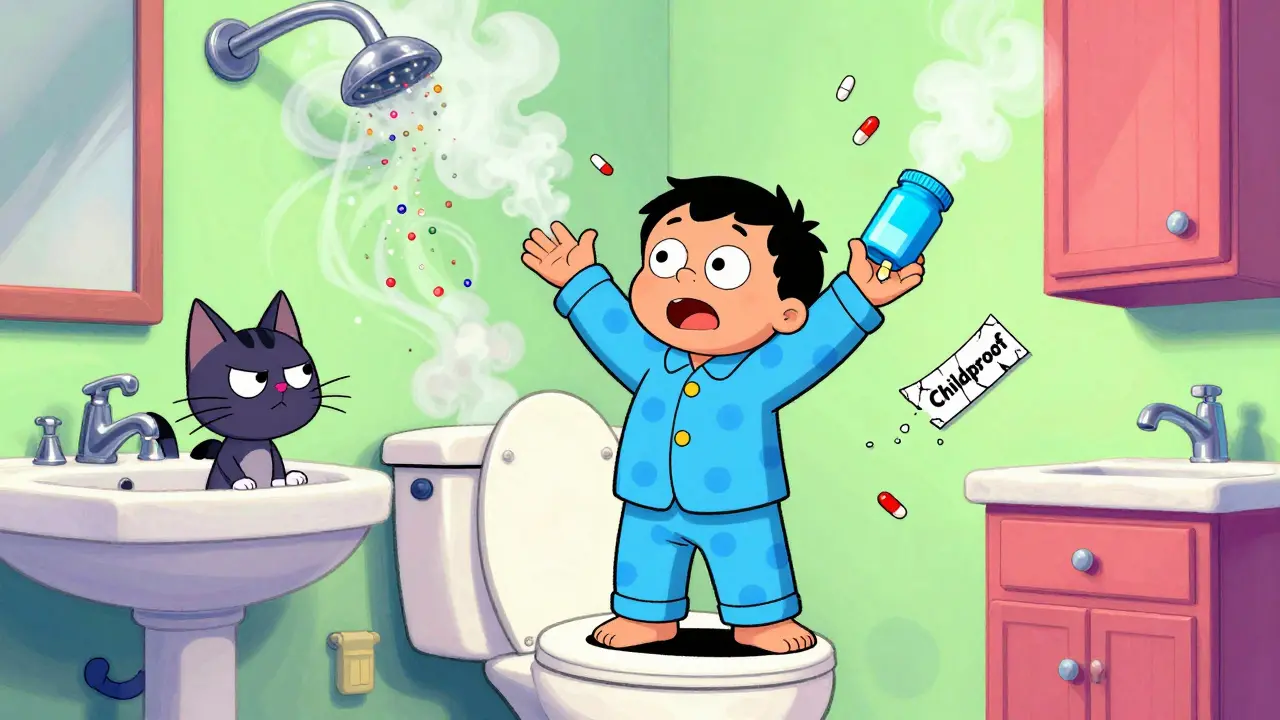
Every year, 60,000 children under five end up in emergency rooms because they accidentally swallowed a pill they found at home. Pets? Even more. Dogs alone make up nearly 80% of all pet poisoning cases from human meds. And it’s not just prescription drugs-gummy vitamins, painkillers, and even your dog’s arthritis tablet can be deadly if a curious toddler or a sniffing pup gets to them. The scary part? Most of these incidents happen in the home, in plain sight, because we think, "It’s just one pill," or "It’s in a childproof bottle." But childproof doesn’t mean child-resistant forever. And pets? They don’t care about labels.
Where You’re Probably Storing Medications (And Why It’s Dangerous)
Most people keep meds in the bathroom. It’s convenient. You brush your teeth there. You take your pills there. But here’s the problem: bathrooms are humid. Heat and moisture from showers can break down pills, making them less effective-or worse, toxic. And kids? They can reach the top shelf. We’ve all seen it: a 3-year-old standing on the toilet, pulling down a bottle. Pets? Cats and dogs can jump. They can climb. They can sniff out a pill hidden behind a toothpaste tube. Kitchen counters? Also common. You leave a pill on the counter while you’re making coffee. You grab your dog’s medicine while you’re feeding breakfast. One minute it’s there. The next, it’s gone. A 2023 study from Seattle Children’s Hospital found that 78% of childhood poisoning cases happened because meds were left out temporarily during use. That’s not a mistake-it’s a pattern. And pets don’t wait for you to finish. They act.The Right Place to Store Medications
The safest spot? High, locked, and away from food. Start by walking through your house. Look for places higher than 5 feet-where a child can’t reach without a chair or climbing. A bedroom closet with a lock. A high kitchen cabinet with a child safety latch. A locked medicine box on a shelf in the laundry room. These are the winners. Don’t forget humidity. Avoid bathrooms. Avoid windowsills. Avoid the kitchen near the stove. The ideal spot is dry, cool, and out of sight. A kitchen pantry, away from the sink and stove, is often the best bet. If you have refrigerated meds-like insulin or certain antibiotics-store them in a locked container inside the fridge, separate from food. Pets have been known to open fridge doors. And yes, they’ll eat your insulin vial if they find it.Separate Human and Pet Medications-Completely
This is non-negotiable. Human meds can kill pets. A single ibuprofen tablet can cause kidney failure in a dog. A cat can die from a dose of acetaminophen meant for a human. And pet meds? They’re often flavored to make them palatable. Chicken, beef, liver-dogs and cats think they’re treats. The FDA reports that 25% of pet medication incidents involve owners accidentally taking their own pet’s medicine. That’s not a joke. That’s a real, documented risk. Store human and pet meds in different rooms if you can. If that’s not possible, use separate locked containers. Label them clearly: "Human Meds - Do Not Touch" and "Dog Meds - Veterinary Use Only." Don’t mix them in the same drawer. Don’t store them side by side. Even the smell of a flavored pet pill can lure a curious animal.Gummy Medications and Supplements Are the Biggest Hidden Threat
Gummy vitamins, gummy melatonin, gummy pain relievers-they look like candy. And that’s exactly what kids and pets think they are. The CDC says gummy supplements make up 30% of all childhood supplement ingestions, even though they’re only 15% of the market. That’s a huge gap. Parents assume, "It’s just a vitamin." But gummy vitamins can contain iron, zinc, or even melatonin in doses high enough to cause seizures or coma in small children. Same with pets. Gummy dog treats with CBD or joint support? They’re irresistible. A dog that eats 10 gummies could need emergency treatment. Store gummies like you store drugs-locked up, high up, and out of reach. Don’t leave them on the nightstand. Don’t keep them in a purse. Don’t put them in a bowl on the counter. Treat them like they’re poison. Because they can be.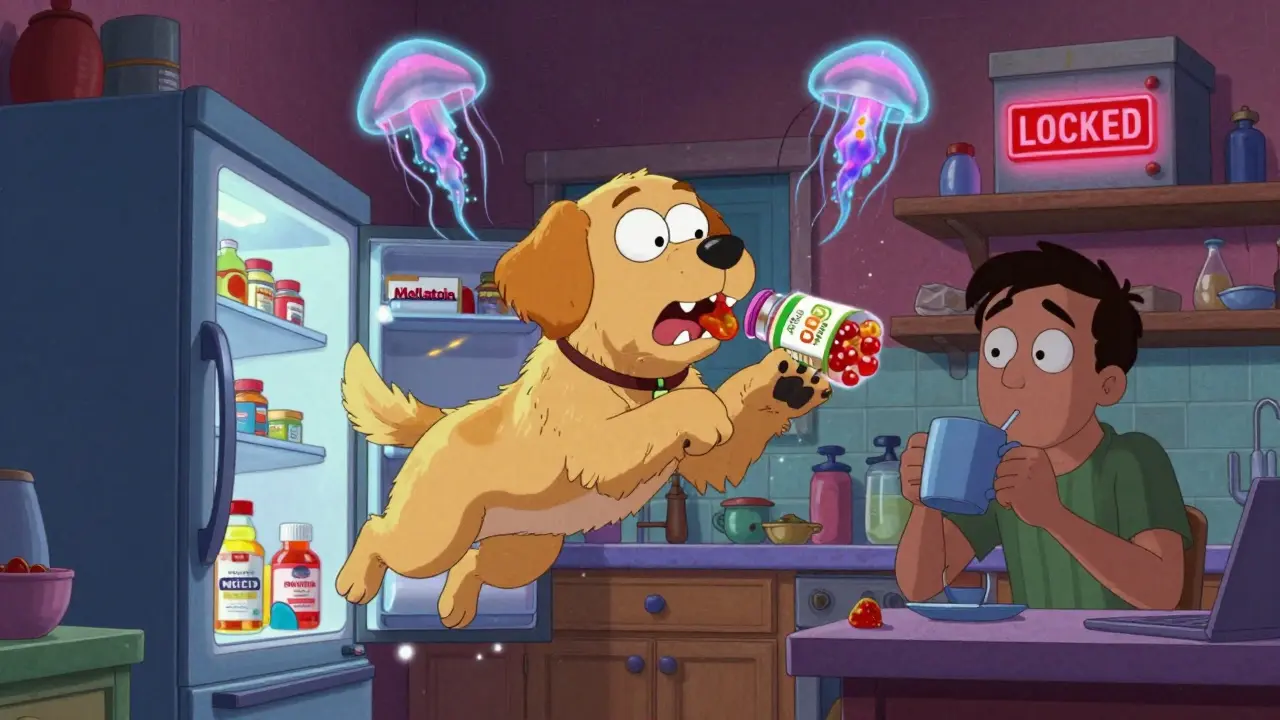
Use a Locked Storage Box-It’s Not Optional
Child-resistant caps are not enough. They’re designed to slow down a child for a few minutes-not stop them forever. A determined 4-year-old can open them. A dog with strong jaws can chew through plastic bottles. Buy a lockable medication box. Look for ones with combination locks or biometric fingerprint locks. The VADIC Safe Storage Bag (11" x 6") is one example used by health departments. It’s small, fits in a closet, and can hold a month’s supply of pills. Some newer models even send alerts to your phone if someone opens them. Use it for everything: prescriptions, OTC meds, supplements, pet meds. Even if you think you’re "only going to be gone for a minute," lock it. Make it a habit. One second of carelessness can change your life.The Two-Minute Rule: Secure It Immediately
After every dose-whether it’s for you, your child, or your dog-put it away. Right then. Don’t wait. Don’t set it on the counter. Don’t leave it on the table. Children’s Mercy Hospital calls this the two-minute rule. If you don’t lock it away within two minutes of using it, you’re increasing your risk. Why? Because 52% of childhood ingestions happen while the parent is distracted during administration. You turn your back for 30 seconds to answer the phone. Your toddler climbs up. Your dog jumps on the couch. And it’s gone. Make it automatic. After you pop a pill, lock it. After you give your cat its medicine, lock the bottle. After you open a new pack of gummies, put them in the safe. This isn’t about being obsessive. It’s about being smart.How to Dispose of Old or Expired Medications
Don’t flush them. Don’t throw them in the trash loose. Don’t pour them down the sink. The safest way? Mix them with something unappetizing-used coffee grounds, cat litter, or dirt. Use a 1:1 ratio by volume. Put the mixture in a sealed plastic bag. Then toss it in the regular trash. The EPA says this method is 92% effective at preventing reuse or accidental ingestion. If you’re unsure what to do with a specific drug, check the FDA’s take-back program. Many pharmacies and police stations have drop-off boxes. Some cities even host annual drug collection days. Use them. It’s free. It’s safe. And it keeps dangerous meds out of the hands of kids, pets, and even teens looking for a quick high.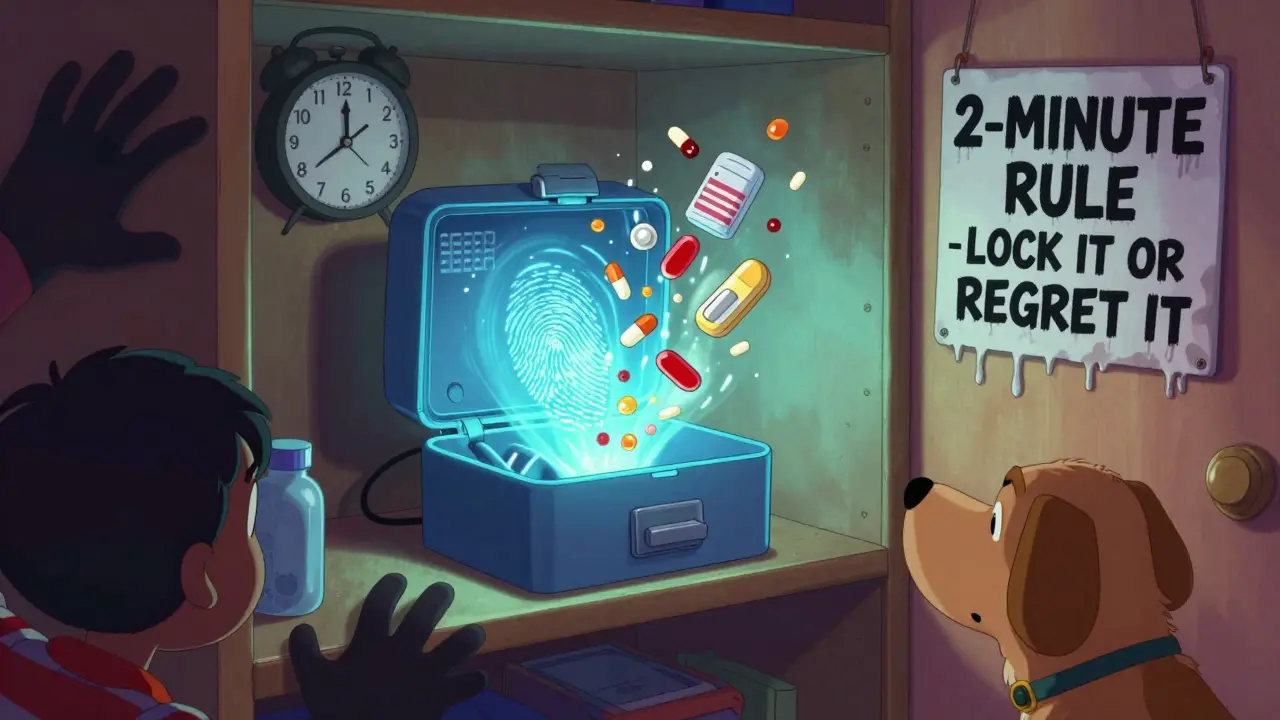
What to Do If Something Goes Wrong
If your child swallows a pill, call Poison Control immediately: 1-800-222-1222. Don’t wait for symptoms. Don’t try to make them throw up. Don’t give them milk or water unless told to. Just call. If your pet ingests medication, call your vet or the ASPCA Animal Poison Control Center: 888-426-4435. Have the pill bottle ready. Note the time. Note how much they ate. Write down the name of the drug. This saves critical minutes. Keep these numbers saved in your phone. Post them on the fridge. Tell your babysitter. Your neighbor. Your family. Everyone who spends time in your home needs to know what to do.Real Stories. Real Consequences.
One parent on Reddit shared how their 3-year-old opened a "childproof" cabinet and swallowed 12 melatonin gummies. They spent the night in the ER. The child was fine-but the parent hasn’t left a pill out since. Another user on the American Kennel Club forum described how their Labrador found a dropped pill between the couch cushions. It was a heart medication meant for a human. The dog collapsed. They rushed to the vet. The bill was $3,200. The dog survived. But the owner now keeps all meds in a biometric safe. These aren’t rare. They’re common. And they’re preventable.Final Checklist: Are You Doing Enough?
- [ ] All medications (human and pet) are stored above 5 feet? - [ ] All storage is locked? - [ ] Human and pet meds are kept in separate containers? - [ ] Gummy vitamins and supplements are locked away? - [ ] You follow the two-minute rule after every use? - [ ] Expired meds are mixed with coffee grounds or cat litter before disposal? - [ ] Poison Control numbers are saved in your phone and posted in the home? If you checked all seven, you’re doing better than most. If you missed even one, it’s time to change.Frequently Asked Questions
Can childproof caps really protect my kids?
No. Child-resistant caps are designed to slow down children for a few minutes-not stop them completely. Many kids under five can open them, especially if they’ve seen adults do it. Locks and height are the only reliable protections.
Is it safe to store pet meds in the kitchen?
Only if they’re in a locked container, away from food, and not on the counter. Kitchens are high-risk areas because pets are often fed there. If you store meds in the kitchen, use a locked cabinet or box at least 5 feet high. Never leave them on the counter, even for a minute.
What if I have both kids and pets? Where do I start?
Start with separation. Keep human and pet meds in different locked containers. Use the three-zone system: Zone 1 (current dose on flat surface), Zone 2 (locked container at 5+ feet), Zone 3 (separate storage for each species). Make sure all storage is out of sight and out of reach. A single biometric safe can hold everything if labeled clearly.
Are gummy vitamins really dangerous?
Yes. They’re the leading cause of supplement poisonings in kids under six. A single gummy can contain enough iron or melatonin to cause serious harm. Treat them like prescription drugs-lock them up, even if they’re labeled "natural" or "vitamin."
What’s the best way to dispose of old pills?
Mix them with used coffee grounds or cat litter in a sealed plastic bag, then throw them in the trash. This makes them unappealing and unusable. Never flush pills or toss them loose. Many pharmacies and police stations offer free drop-off programs-use them if you can.
How long does it take to set up safe storage?
About 15 to 30 minutes. Sort your meds, buy a lock box if you don’t have one, label everything, and pick a new storage spot. After that, it takes just 2-3 seconds to lock a pill away after each use. That tiny habit saves lives.
Damario Brown
January 13, 2026 AT 14:45sam abas
January 15, 2026 AT 05:39Clay .Haeber
January 16, 2026 AT 19:36Priyanka Kumari
January 17, 2026 AT 11:58Avneet Singh
January 17, 2026 AT 18:58Angel Tiestos lopez
January 19, 2026 AT 04:10Kimberly Mitchell
January 19, 2026 AT 14:18Randall Little
January 19, 2026 AT 19:42Trevor Davis
January 19, 2026 AT 21:43Lethabo Phalafala
January 20, 2026 AT 03:09Lance Nickie
January 21, 2026 AT 03:59Milla Masliy
January 23, 2026 AT 01:34