
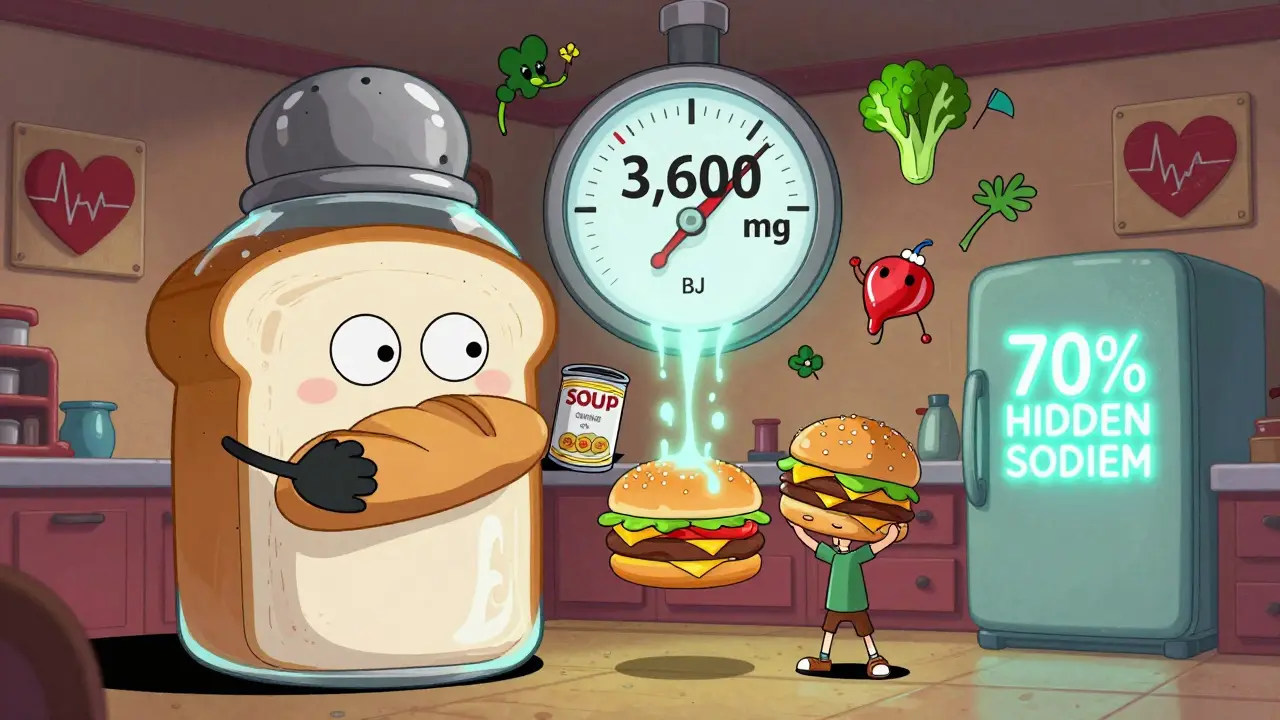
Most people don’t realize how much sodium is hiding in their food. You might think cutting back on the salt shaker is enough, but that’s only a small part of the story. In Australia, the average person eats about 3,600 mg of sodium a day - nearly double what health experts say is safe. And for people with high blood pressure, that extra salt isn’t just a nuisance - it’s a direct threat to their heart.
The science is clear: too much sodium raises blood pressure. When you eat too much salt, your body holds onto water to dilute it. That extra fluid increases the pressure inside your blood vessels, forcing your heart to work harder. Over time, this wears down your arteries, increases your risk of stroke, and makes heart failure more likely. The good news? Cutting back on sodium doesn’t require a miracle. You just need to know where the salt is hiding - and how to replace it.
Where Your Sodium Really Comes From
It’s not the salt you add at the table. It’s not even the salt you sprinkle while cooking. According to the CDC, 70 to 75% of the sodium in the average diet comes from packaged, processed, and restaurant foods. That means your bread, canned soup, deli meats, frozen meals, and even breakfast cereal are major culprits.
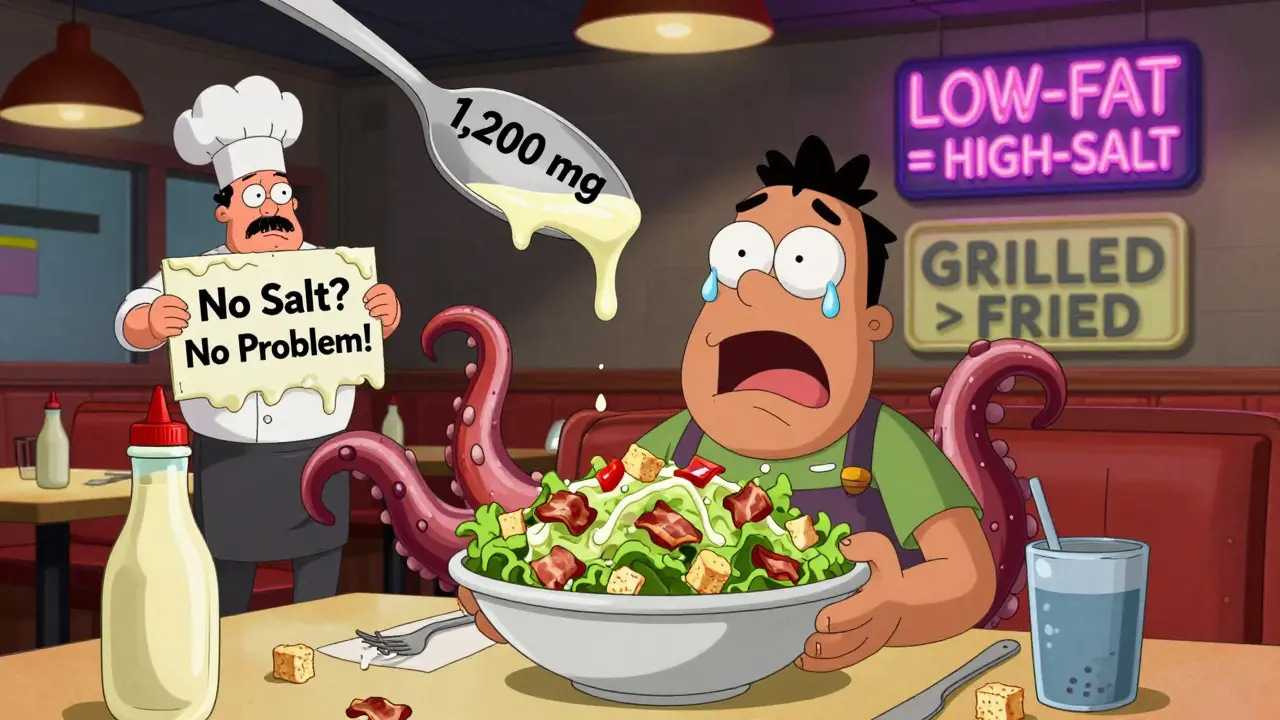
Think about this: a single fast-food burger can pack 1,500 mg of sodium. A bowl of canned tomato soup? Close to 900 mg. A restaurant salad with croutons, bacon bits, and bottled dressing? Easily 1,200 mg - more than half your daily limit. Meanwhile, a home-cooked meal with fresh chicken, brown rice, and steamed veggies? You’re looking at under 600 mg.
That’s the gap. And it’s why simply reducing salt at home won’t fix the problem. You have to change what you buy and what you order.
How Much Sodium Should You Actually Eat?
The World Health Organization says adults should aim for no more than 2,000 mg of sodium per day. The American Heart Association says 1,500 mg is ideal - especially if you already have high blood pressure. But here’s the thing: you don’t need to hit 1,500 right away. Even cutting 1,000 mg a day from your current intake can lower your systolic blood pressure by 5 to 8 mm Hg.
That’s not a small drop. It’s the same effect as some blood pressure medications. And the benefits kick in fast. In the CARDIA-SSBP study published in late 2023, participants who switched to a low-sodium diet for just one week saw an average 8 mm Hg drop in systolic pressure. That’s measurable, real, and immediate.
But there’s a catch. Not everyone responds the same way. About half of people with high blood pressure are “salt sensitive” - meaning their blood pressure drops noticeably when sodium comes down. The other half? Their numbers don’t budge as much. Still, even if you’re not salt sensitive, lowering sodium helps your arteries, your kidneys, and your heart overall. It’s not about one number - it’s about long-term protection.
Five Practical Ways to Cut Sodium Right Now
- Read labels like a detective. Look at the sodium content per serving - not just the whole package. Many products list “per 100g” or “per serving,” and one serving might be half the package. The FDA now requires sodium to be bolded on labels, making it easier to spot. Aim for foods with less than 120 mg of sodium per 100g. If it’s over 400 mg, think twice.
- Swap processed for fresh. Fresh chicken, fish, eggs, beans, lentils, and vegetables have almost no sodium. Frozen veggies without sauce? Fine. Canned beans? Rinse them under water for 30 seconds - that knocks off 30-40% of the salt. Same goes for canned tuna or corn. It’s a tiny step, but it adds up.
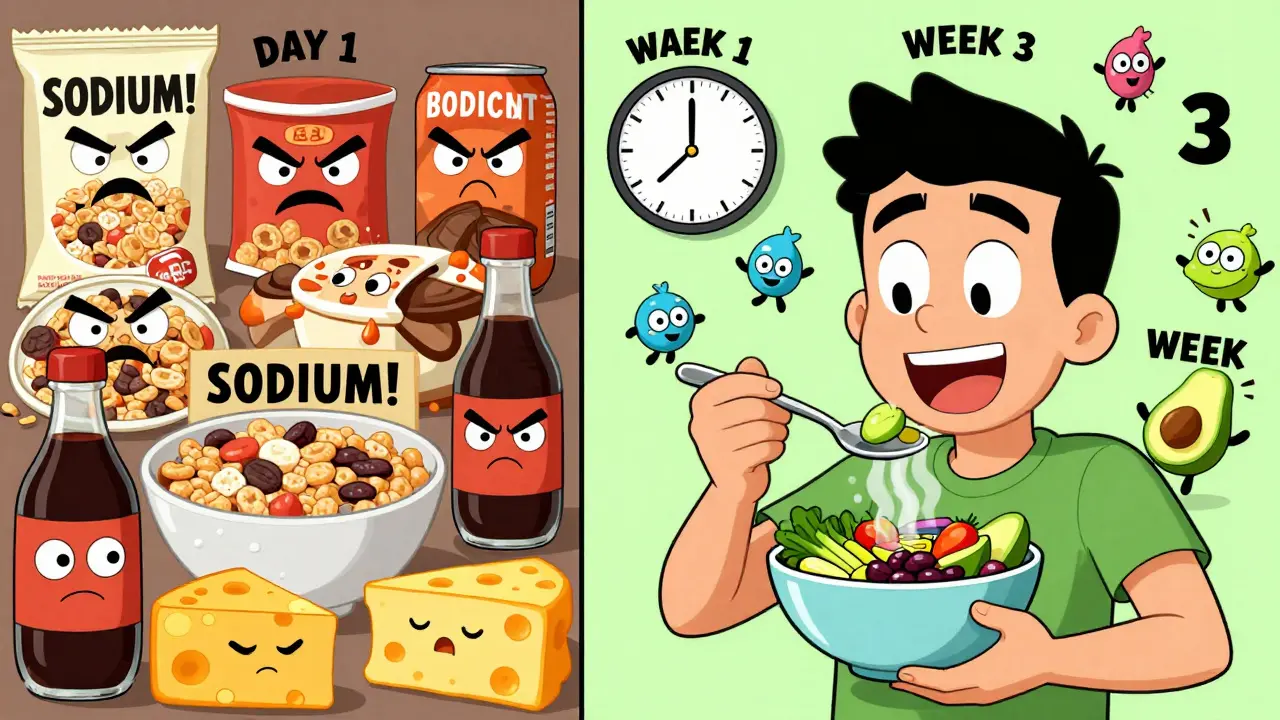
- Use herbs, citrus, and vinegar instead of salt. Your taste buds adapt - but it takes time. Start by adding lemon juice, garlic, black pepper, cumin, smoked paprika, or balsamic vinegar to your meals. One user on Reddit said it took three weeks before her taste buds adjusted. Now, she says store-bought soup tastes “way too salty.” That’s the goal.
- Choose low-sodium versions - but check the fine print. “Low sodium” means less than 140 mg per serving. “Reduced sodium” just means 25% less than the original - which might still be way too high. Always compare. A “reduced sodium” soy sauce might still have 600 mg per tablespoon.
- Follow the DASH diet. DASH stands for Dietary Approaches to Stop Hypertension. It’s not a fad. It’s a clinically proven eating plan that focuses on vegetables, fruits, whole grains, lean protein, and low-fat dairy. Studies show it can drop systolic blood pressure by 8 to 14 mm Hg - especially when paired with sodium reduction. You don’t need to go full DASH overnight. Start with adding one extra serving of veggies per day and swapping white bread for whole grain.
Restaurant Hacks That Actually Work
You’re not going to eat at home every night. So here’s how to survive dining out without wrecking your blood pressure:
- Ask for sauces, dressings, and gravies on the side. You can control how much you use - and often skip them entirely.
- Choose grilled, steamed, or baked over fried. Frying adds salt through breading and batter.
- Avoid “healthy” traps. A salad with packaged croutons, bacon bits, and cheese can have more sodium than a burger. Ask for plain greens and olive oil instead.
- Order appetizers as your main. A side of steamed veggies or a plain grilled chicken breast is often lower in sodium than the entree.
- Don’t be afraid to ask. Restaurants are used to requests. “Can you make this without added salt?” is a perfectly normal question.
Watch Out for Hidden Sodium Traps
Some foods trick you into thinking they’re healthy. They’re not.
- Breakfast cereals: Some have over 300 mg per bowl. Look for under 100 mg.
- Condiments: Ketchup, mustard, relish, and even low-fat salad dressings are loaded. A single tablespoon of ketchup can have 160 mg.
- Processed cheese: A slice can have 200-300 mg. Real cheese? About 50 mg per slice.
- Instant soups and noodles: One packet can hit 1,500 mg. Homemade broth? Zero.
- “Low-fat” or “diet” products: Often, when fat is removed, salt is added for flavor. Always check.
Why Potassium Matters Too
Sodium isn’t the only player. Potassium helps your body flush out excess sodium and relaxes your blood vessel walls. Yet most people get less than half the recommended amount.
Target 3,500 to 5,000 mg of potassium daily. Good sources: bananas, sweet potatoes, spinach, beans, yogurt, avocados, and white beans. One medium baked potato has nearly 900 mg. A cup of cooked spinach? 800 mg.
Research from the PREMIER trial shows that combining low sodium with high potassium cuts blood pressure more than sodium reduction alone. It’s not a magic combo - it’s balance. Your body needs both minerals to work right.
What About Salt Substitutes?
Products like Mrs. Dash or NoSalt are salt-free seasonings that use herbs and spices. They’re safe and effective for most people. But if you have kidney disease or take certain blood pressure meds (like ACE inhibitors or potassium-sparing diuretics), talk to your doctor first. Some salt substitutes replace sodium with potassium - and too much potassium can be dangerous if your kidneys can’t clear it.
Stick to herb blends without added potassium unless your doctor says otherwise.
It’s a Process - Not a Punishment
Lowering sodium isn’t about perfection. It’s about progress. You won’t go from 3,600 mg to 1,500 mg overnight. And you shouldn’t try.
Start by cutting out one high-sodium food this week. Swap canned soup for broth-based stew. Replace processed deli meat with sliced chicken breast. Choose unsalted nuts instead of salted.
Track your progress. Use a free app like MyFitnessPal or the American Heart Association’s Sodium Swap tool. You’ll be surprised how quickly you notice changes - not just in your blood pressure, but in how food tastes. After a few weeks, you’ll find you don’t miss the salt. You’ll start noticing how salty everything else is.
The biggest win? You’re not just lowering your blood pressure. You’re protecting your heart, your kidneys, and your future. And you don’t need a prescription for that.
Can cutting sodium really lower blood pressure without medication?
Yes. Studies show that reducing sodium intake by 1,000 mg per day can lower systolic blood pressure by 5 to 8 mm Hg - similar to the effect of some medications. The CARDIA-SSBP study found that just one week of low-sodium eating dropped systolic pressure by an average of 8 mm Hg in middle-aged and older adults, even those already taking blood pressure meds. The effect is strongest in people with existing hypertension, but everyone benefits.
Is it dangerous to eat too little sodium?
For most healthy people, no. The body needs only about 500 mg of sodium a day to function. The real concern is eating too much - not too little. However, people with certain conditions like advanced heart failure or kidney disease may experience negative effects from very low sodium intake. If you’re on diuretics or have kidney disease, talk to your doctor before making drastic changes. For the average person, aiming for 1,500-2,300 mg is safe and effective.
How long does it take for taste buds to adjust to less salt?
It usually takes 2 to 4 weeks. Your taste buds adapt to the new normal. After that, foods you once enjoyed - like pizza or chips - start tasting overly salty. Many people report that their food tastes more flavorful once they stop relying on salt. Herbs, citrus, and spices become more noticeable and satisfying.
Are salt substitutes safe?
Herb-based salt substitutes like Mrs. Dash are safe for nearly everyone. But potassium-based substitutes (like NoSalt or Nu-Salt) can be risky if you have kidney disease, diabetes, or take certain blood pressure medications. These products replace sodium with potassium, and too much potassium can build up in your blood. Always check with your doctor before switching to a potassium salt substitute.
Why do processed foods have so much sodium?
Salt is cheap, preserves food, enhances flavor, and masks off-tastes in processed products. It’s also used as a binder and texture enhancer. Food companies rely on it because consumers are used to salty flavors. But that’s changing. In the UK, a voluntary salt reduction program led to a 15% drop in population sodium intake and a 40% decline in stroke deaths over a decade. The FDA is now pushing food manufacturers to reduce sodium in 163 product categories by 20% over the next few years.
What to Do Next
Start today. Open your fridge. Look at your pantry. Pick one item - maybe the soy sauce, the canned soup, or the bread - and find a lower-sodium version. Swap it out. Don’t wait for Monday. Don’t wait until you “feel ready.”
Then, next week, add one more change. Rinse your beans. Cook a batch of plain rice. Use lemon on your fish. Walk into the grocery store with a list of low-sodium items. You’ll find it gets easier.
And if your blood pressure doesn’t drop right away? Don’t give up. Sodium reduction works best over time. It’s not a quick fix - it’s a long-term investment in your heart. And the best part? You’re not just doing it for your numbers. You’re doing it so you can keep enjoying meals with family, walking without getting winded, and living without worrying about your next doctor’s visit.
Jennifer Phelps
January 13, 2026 AT 11:05So like i read the bit about canned soup and just thought wow my whole pantry is basically sodium bombs
Jose Mecanico
January 14, 2026 AT 13:56I switched to rinsing canned beans last month and my BP dropped 6 points in 3 weeks. Small change, big difference. Also started using lemon juice instead of salt on fish. Tastes better now.
Monica Puglia
January 15, 2026 AT 21:22Yessss this is so real 🙌 I used to think low-sodium food was bland AF but after 3 weeks my taste buds reset and now store-bought soup tastes like salty regret 😅
Eileen Reilly
January 17, 2026 AT 14:22ok but why does every ‘healthy’ snack have more sodium than a bag of chips?? like i get it’s cheaper but also why are we being gaslit by food companies??
Faith Wright
January 18, 2026 AT 05:48So you’re telling me the ‘low-fat’ yogurt I’ve been eating for years is basically salt water with fruit flavor? 😑 I feel betrayed.
Rebekah Cobbson
January 19, 2026 AT 21:57Start with one swap. Don’t try to overhaul your whole diet overnight. I swapped white bread for whole grain and rinsed my beans. That’s it. Felt better in a week. You don’t need to be perfect, just consistent.
Abner San Diego
January 21, 2026 AT 13:29They’re not trying to help you. This whole sodium thing is just another way for Big Pharma to sell more meds. If we all ate less salt, they’d lose billions. Wake up.
George Bridges
January 23, 2026 AT 08:24I’m from Nigeria and we don’t have much processed food here, but when I moved to the US, I was shocked by how salty everything is. This post made me realize I’ve been eating like a stranger in my own country.
Prachi Chauhan
January 23, 2026 AT 11:32It’s not about control. It’s about harmony. The body doesn’t hate sodium. It hates imbalance. We’ve trained our palates to scream for salt because the system has drowned out the subtler flavors of life. Reducing sodium isn’t deprivation - it’s a return to listening. To the quiet hum of your own biology. The salt shaker isn’t the enemy. The noise is.
Craig Wright
January 24, 2026 AT 03:13As a British citizen, I find it appalling that the US food industry continues to ignore the success of the UK’s voluntary sodium reduction program. We cut salt by 15% and saw a 40% drop in stroke deaths. This isn’t science - it’s corporate negligence. Shameful.
jordan shiyangeni
January 25, 2026 AT 05:07You think this is hard? Try living with a kidney transplant and being told to eat less than 1,500 mg a day while your meds are making you crave salt like a drug. And don’t even get me started on how the FDA is just pretending to care while letting food giants lobby to keep their sodium levels high. This isn’t public health - it’s a rigged game where the sick pay the price while the corporations profit. I’ve spent 12 years reading every label, every ingredient, every hidden sodium trap. And no one listens. No one ever does.
steve ker
January 25, 2026 AT 12:11Just eat less processed food. Done. No need for 1000 word essays. You overthink everything.
Alex Fortwengler
January 27, 2026 AT 08:08They want you to think salt is the problem. But what if it’s the high fructose corn syrup? Or the emulsifiers? Or the fact that your water is full of fluoride and chlorine? They’re all working together to kill you slowly. And the FDA? They’re in bed with the food giants. You think this is about health? Nah. It’s about control. And if you’re not eating real food from the ground, you’re already dead inside.