
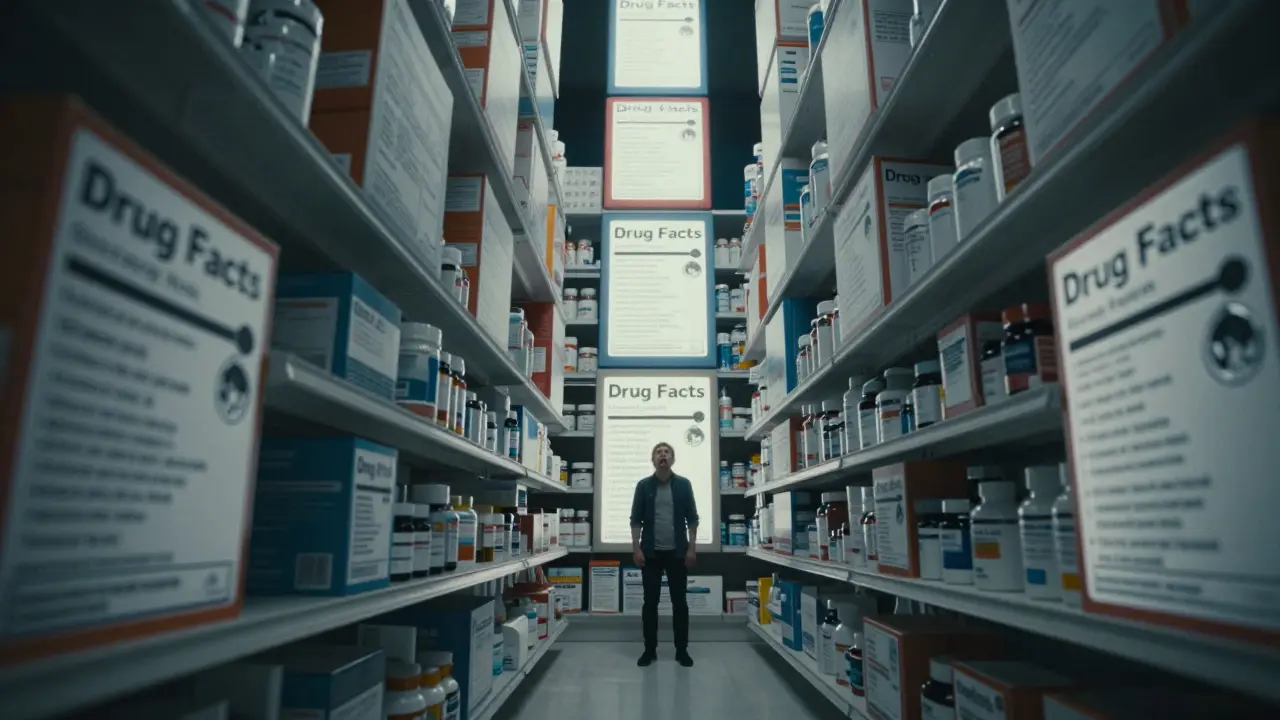
OTC Label Safety Simulator
(Pain reliever/fever reducer)
Stop and ask a doctor if: pain lasts more than 10 days.
Do not exceed 6 caplets in 24 hours.
Safety Challenge
Test your knowledge: Based on the label, which of these actions is UNSAFE?
The OTC Drug Facts labels is a standardized labeling system mandated by the FDA to ensure nonprescription medications provide clear and consistent information to consumers. This isn't just a suggestion; it's a federal requirement under 21 CFR § 201.66. The goal is simple: make sure you don't have to be a pharmacist to understand what you're putting into your body. This system covers everything from common cough syrups to things you might not even think of as drugs, like sunscreens, rubbing alcohol, and even your anti-cavity toothpaste.
The Blueprint of a Drug Facts Label
The beauty of these labels is that they are always in the same order. Once you know the sequence, you can find exactly what you need in seconds, regardless of the brand. The FDA requires the information to follow a strict hierarchy to prevent confusion.
| Section Heading | What it Tells You | Why it Matters |
|---|---|---|
| Active Ingredients | The actual medicine (and how much is in each dose). | Prevents accidental double-dosing. |
| Purpose | The drug category (e.g., antihistamine, analgesic). | Explains the general function of the drug. |
| Uses | Specific symptoms the drug is meant to treat. | Ensures you're using the right drug for your symptom. |
| Warnings | Side effects, risks, and who should avoid the drug. | Prevents dangerous interactions or allergic reactions. |
| Directions | How much to take, when, and how often. | Crucial for effectiveness and safety. |
| Other Information | Storage tips and sodium content. | Helps maintain drug potency and safety. |
| Inactive Ingredients | Fillers, dyes, and flavors. | Important for people with specific allergies. |
Spotting the Red Flags in the Warnings Section
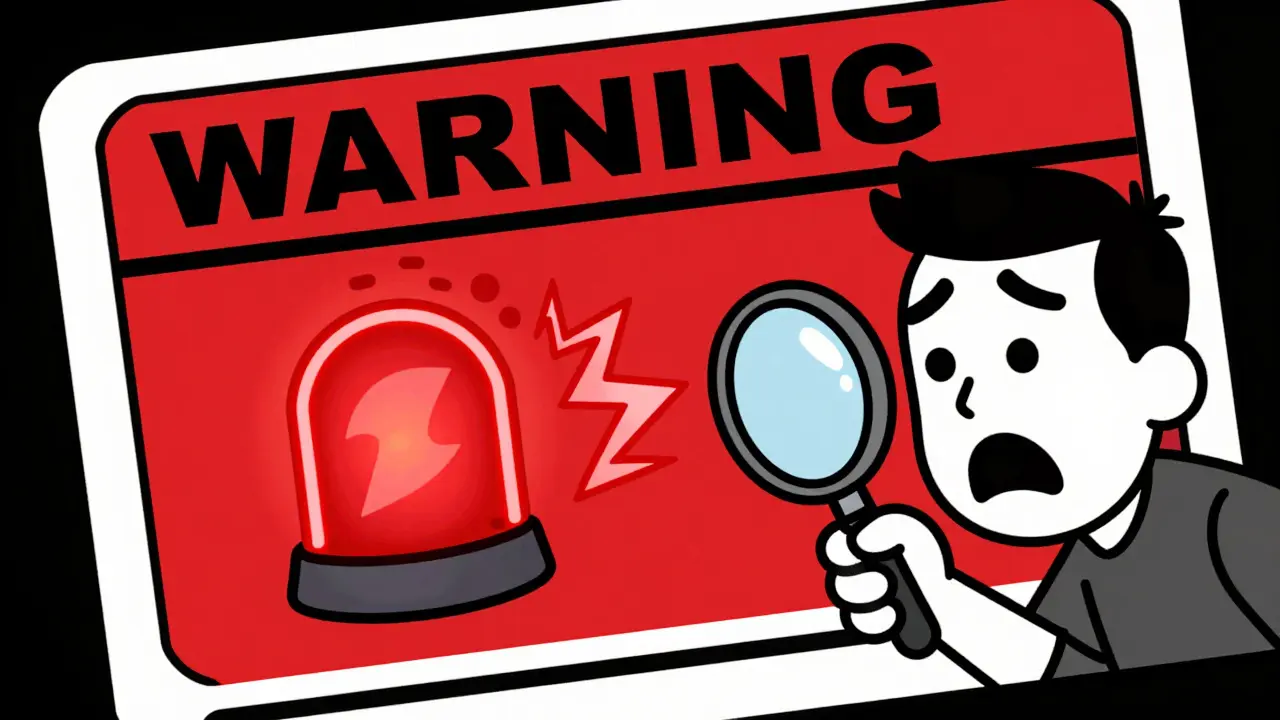
If there is one part of the label you cannot skip, it's the Warnings. This is where the FDA puts the "stop signs." Some warnings are so critical that the FDA requires them to be printed in red letters or inside a bold box-like liver warnings for acetaminophen or asthma alerts for certain cough medicines. If you see a red box, pay attention; it's there for a reason.
When you read the warnings, look for three specific triggers:
- "When using this product": This tells you about common side effects. For example, some antihistamines might make you drowsy, which means you shouldn't drive.
- "Stop and ask a doctor if": These are signs that the medicine isn't working or is causing a problem. If your symptoms get worse or a new one appears, this is your cue to call your physician.
- "Stop using if": This is for immediate danger. If you experience a severe allergic reaction or a sudden, intense side effect, stop the medication instantly.
A huge mistake many people make is ignoring drug interactions. Around 41% of medication error cases involve users ignoring warnings about how a drug interacts with other medications. Just because a drug is "over-the-counter" doesn't mean it's harmless when mixed with your prescription blood pressure meds or a daily supplement.
Mastering the Directions and Dosage
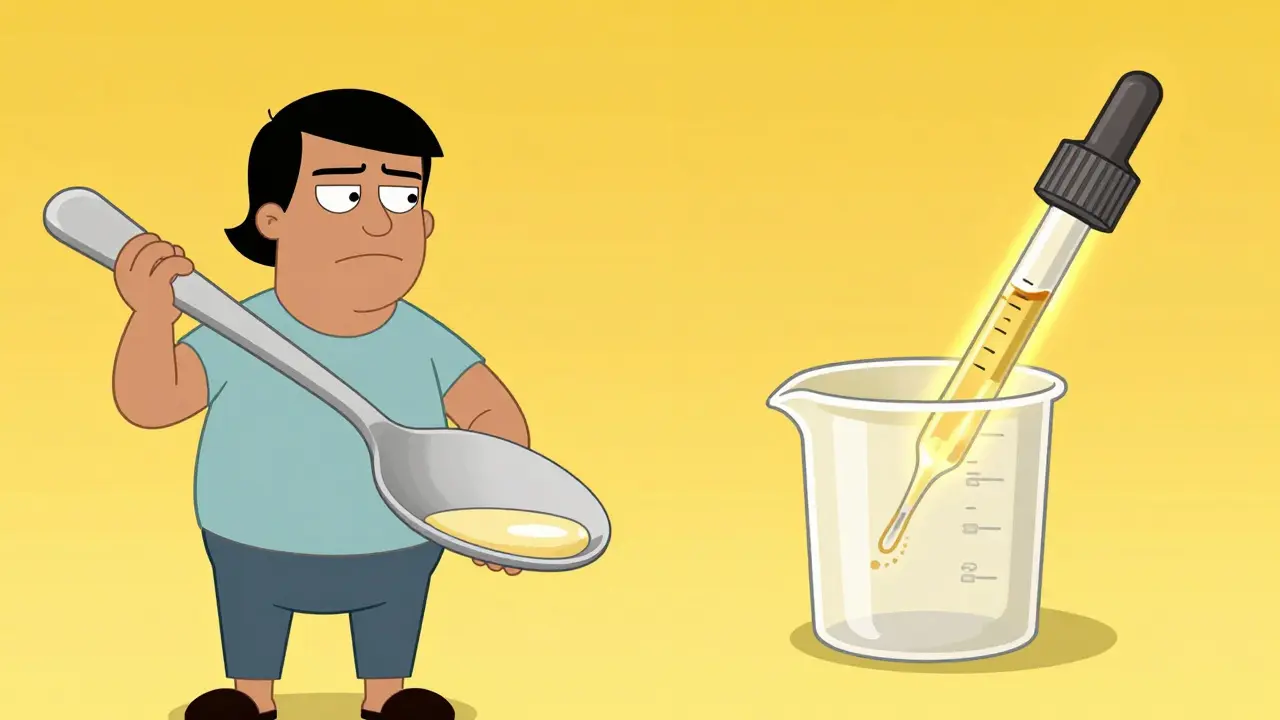
Taking "a little bit more" to feel better faster is a dangerous strategy. The Directions section provides the precise dose based on age and weight. For parents, this is the most critical area. Many errors happen because people use a kitchen spoon instead of a proper measuring device for liquid meds. A household tablespoon is not a medical measurement; always use the cup or dropper that comes with the product.
Check for these specific details in the directions:
- The Frequency: Does it say "every 4 to 6 hours" or "once daily"? Exceeding the daily limit can lead to toxicity, especially with pain relievers.
- The Timing: Should it be taken with food or on an empty stomach? Some drugs are absorbed better-or are less irritating to the stomach-when taken with a meal.
- The Duration: Is this for a one-time use, or is it safe for a week? Some OTC drugs, like nasal decongestants, can actually make your condition worse if used for more than three days (a phenomenon known as rebound congestion).
The Danger of Hidden Ingredients
This is where the Active Ingredients section becomes your best friend. Many different brands use the same active drug but give the product a different name. For example, you might buy a "multi-symptom cold medicine" and a "sleep aid" without realizing both contain Doxylamine. If you take both, you've just doubled your dose, which can lead to extreme sedation or other complications.
Then there are the Inactive Ingredients. While they don't treat your illness, they can cause problems. If you have a severe allergy to a specific dye (like Red 40) or a sensitivity to gluten, the inactive list is where you'll find that information. Since these aren't therapeutic, they don't go in the active list, but they can still cause a reaction.
A Pro Approach to Using Your Medicine
If you want to be as safe as possible, don't just read the label-follow a system. Healthcare professionals recommend a four-step check every time you open a new bottle:
- Step 1: Active Ingredients. Compare this to any other meds you're taking. Are there overlaps?
- Step 2: Warnings. Read the red boxes and the "Stop using if" sections. Do any of these apply to your current health status?
- Step 3: Uses. Confirm that your symptoms actually match what the drug is designed to treat.
- Step 4: Directions. Calculate exactly how much you need and how often, then set a timer or a reminder on your phone.
This systematic approach isn't just for the overly cautious. According to the FDA's "Check the Label" campaign, people who do this are 63% less likely to experience an adverse event. It takes an extra 60 seconds, but it can prevent a trip to the emergency room.
The Future of the Label
The way we get this information is evolving. The FDA is currently exploring digital labeling options and QR codes. Imagine scanning a box with your phone and instantly seeing the Drug Facts in a larger font or in your native language. This is a big deal because millions of people with limited English proficiency struggle with the current English-only labels. While the physical label will remain the gold standard for safety, these digital tools will likely make the information more accessible as the market grows.
What should I do if a Drug Facts label is missing or torn?
If the label is damaged or missing, do not guess the dosage. You can look up the medication using its National Drug Code (NDC) on the FDA website or call your pharmacist. They can provide you with the exact standardized labeling information for that specific product.
Are these labels the same for prescription drugs?
No. Prescription drug labeling is governed by different regulatory standards. While both fall under the Federal Food, Drug, and Cosmetic Act, OTC drugs use a standardized "Drug Facts" format designed for consumers, whereas prescription drugs have more detailed professional labeling and pharmacy-dispensed instructions.
Why are some warnings in red boxes?
The FDA requires certain high-risk warnings-such as those regarding liver damage or asthma alerts-to be highlighted in red or boxed to ensure they are immediately visible. This prevents users from overlooking critical safety risks that could lead to severe injury or death.
Does "natural" or "herbal" mean there is no Drug Facts label?
Not necessarily. If a product is marketed as a drug to treat a specific condition, it must follow FDA labeling rules. However, some "supplements" fall under different regulations (DSHEA). If it doesn't have a Drug Facts label but claims to cure a disease, be very cautious and consult a doctor.
How do I know if I'm taking too much of an active ingredient?
Check the "Active Ingredients" section of every medication you are taking. If you see the same ingredient listed in two different products (e.g., acetaminophen in a cold medicine and a pain reliever), add the amounts together. If the total exceeds the maximum daily dose listed in the "Directions" section, you are at risk of an overdose.