
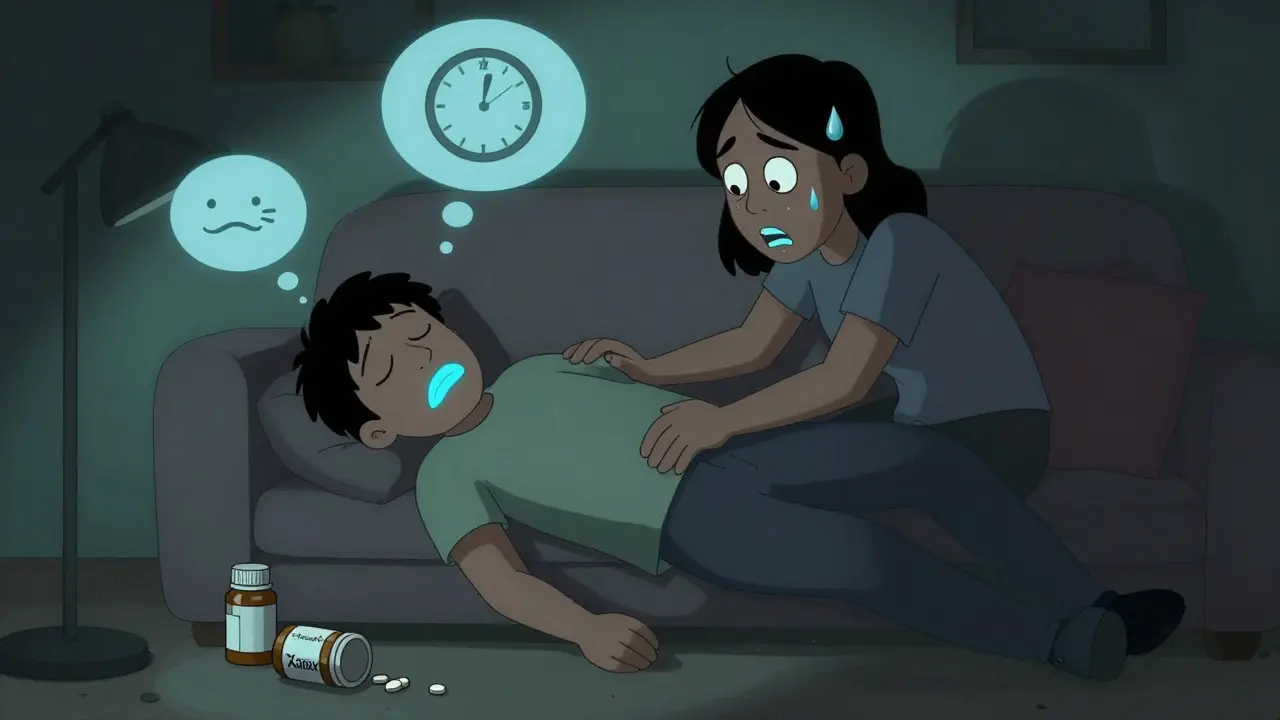
It’s 2 a.m. Your roommate is passed out on the couch. They’re breathing slow, their lips look blue, and you can’t wake them up no matter how hard you shake them. You think, They’re just really tired. But what if that’s not sleep? What if it’s an overdose?
Sedatives and sleep medications are meant to help you rest. But when taken in too much, or mixed with other drugs, they can shut down your breathing-and fast. In 2021, over 12,500 people in the U.S. died from benzodiazepine overdoses alone. Many of these deaths happened because someone didn’t recognize the signs until it was too late.
What Counts as an Overdose?
An overdose isn’t always about swallowing a whole bottle. It’s about how your body reacts. Even taking your prescribed dose of zolpidem (Ambien) or alprazolam (Xanax) can become dangerous if you drink alcohol, take another sedative, or have a health condition that slows how your body processes the drug.
Prescription sleep meds like temazepam, eszopiclone, and barbiturates aren’t the only culprits. Over-the-counter pills like Tylenol PM or Benadryl-filled with diphenhydramine-can also cause overdose at high doses. And while melatonin is often seen as safe, even it can cause dizziness or nausea at extreme levels. But only prescription sedatives carry the real risk of stopping your breathing.
The Clear Signs of Sedative Overdose
There’s a pattern to how sedatives kill. It doesn’t happen suddenly. It creeps in. You’ll see it in three stages: mental, physical, and then life-threatening.
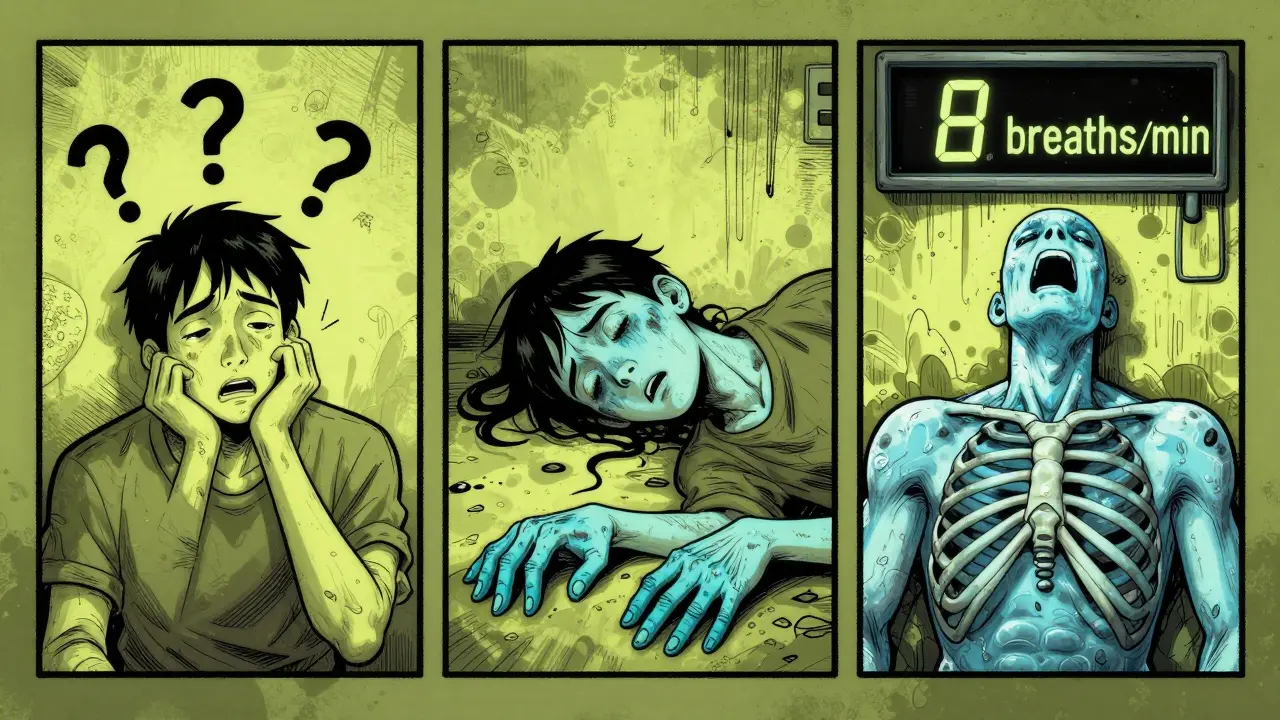
Stage 1: Mental confusion-The person can’t answer simple questions. They’re not just sleepy. They’re disoriented. They might mumble nonsense, forget where they are, or repeat the same thing over and over. Slurred speech is common-87% of cases show this symptom. They can’t follow instructions. If you ask them to squeeze your hand and they don’t respond, that’s a red flag.
Stage 2: Physical collapse-Their body starts shutting down. Their movements are clumsy, like they’re drunk but haven’t had a drink. They stumble. They can’t stand. Their hands shake or go limp. Their skin feels cold and clammy. Their lips, fingertips, or nails turn blue. That’s cyanosis-your body isn’t getting enough oxygen.
Stage 3: Breathing stops-This is the point of no return. Normal breathing is 12 to 20 breaths per minute. In overdose, it drops below 8. Sometimes, there are 10 seconds between breaths. Sometimes, there’s no breath at all. Their chest doesn’t rise. Their pulse slows to under 50 beats per minute. Their body temperature drops. They slip into a coma. Without help, they die.
One key thing to remember: sedative overdose doesn’t always look like an opioid overdose. You won’t see pinpoint pupils. You won’t see a person nodding off. It looks like deep, unbreakable sleep. That’s why people wait too long.
What Makes It Worse?
Most fatal overdoses aren’t from one drug alone. They’re from combinations.
Alcohol and sedatives? Deadly mix. Both depress the central nervous system. Together, they amplify each other. In 41% of fatal sedative overdoses, alcohol was involved.
Mixing sedatives with opioids like fentanyl? Even worse. In 2021, 23% of benzodiazepine-related deaths also involved fentanyl. That combination is the leading cause of overdose death in adults under 50.
Even if someone’s only taking their own prescription, it can still go wrong. Taking extra doses because they didn’t sleep well. Taking a second pill because they think the first didn’t work. Crushing pills to speed up the effect. These are common mistakes that turn safe meds into silent killers.
How to Check for Overdose-Right Now
Don’t wait. Don’t hope they’ll wake up. Use this simple checklist:
- Shout and shake-Call their name loudly. Shake their shoulders hard. If they don’t respond, move to step two.
- Check breathing-Look at their chest. Count how many times it rises in 30 seconds. Multiply by two. If it’s less than 12 breaths per minute, it’s an emergency.
- Look for blue lips or fingers-That’s oxygen failure. It’s happening now.
- Feel their skin-Cold, clammy skin means their body is shutting down.
- Look for pill bottles-Empty containers, multiple prescriptions, or bottles with different names? That’s a sign they’ve been taking more than one.
If you see even one of these signs, call emergency services immediately. Don’t wait. Don’t text a friend. Don’t try to make them walk it off. Every minute counts. Research shows survival drops 7-10% for every minute you delay help.
What NOT to Do
People try to help-but sometimes they make it worse.
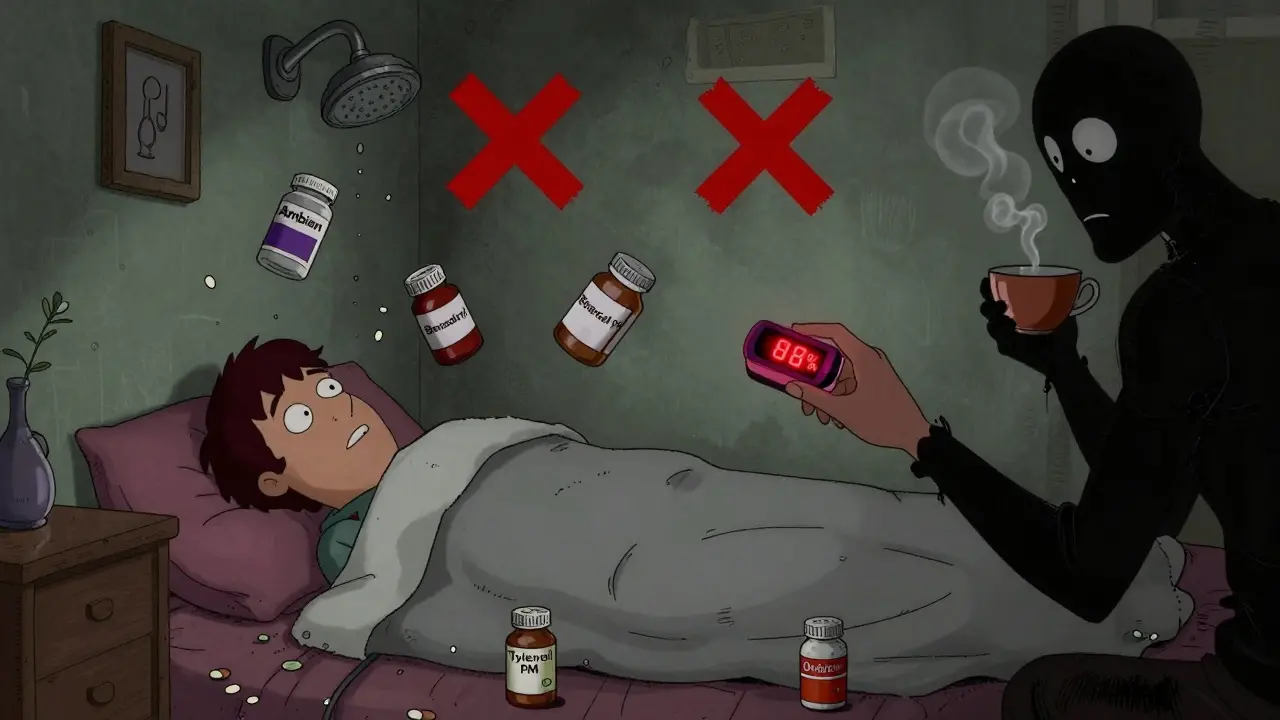
Don’t give them coffee. It won’t wake them up. It won’t reverse the overdose. It just adds stress to their system.
Don’t put them in a cold shower. Their body is already dropping temperature. Shocking them can trigger cardiac arrest.
Don’t try to give them flumazenil. That’s the only antidote for benzodiazepines. But it’s dangerous without medical supervision. It can cause seizures in people who’ve been using these drugs regularly. Only trained medics should use it.
Don’t leave them alone. Even if they’re breathing, they can stop at any moment. Stay with them. Keep them on their side so they don’t choke if they vomit.
Why People Miss the Signs
It’s not that people are careless. It’s that the signs are disguised.
A 2022 study found that 68% of bystanders thought someone overdosing was just “really tired.” One Reddit user wrote: “I thought my boyfriend was just exhausted from work. He was breathing so slow, but I figured he’d wake up when he was ready.” He didn’t wake up.
Another common mistake: blaming alcohol. If someone smells like booze, people assume they’re drunk. But if they’re taking Ambien and drinking, the combination is far more dangerous than alcohol alone.
And then there’s the myth that “they’ve taken these before, so they’re fine.” That’s false. Tolerance changes. Health changes. Sleep patterns change. One night, the same dose is safe. The next, it’s lethal.
What to Do After Calling 911
Emergency responders are trained for this. But while you wait:
- Keep them on their side in the recovery position. This keeps their airway open.
- Remove any pills or bottles from their reach. Don’t throw them away-give them to medics.
- Keep them warm with a blanket. Hypothermia makes things worse.
- If they stop breathing, start rescue breathing: pinch their nose, give one breath every 5 seconds. Don’t stop until help arrives.
Don’t worry about being wrong. If you’re unsure, call anyway. Emergency services have seen this hundreds of times. They’d rather come for a false alarm than miss a real one.
Prevention Starts With Awareness
Most overdoses happen at home. With people who are supposed to be safe. That’s why education matters.
Don’t mix sedatives with alcohol or opioids. Never take more than prescribed. Don’t crush pills. Don’t share medication. Store them locked up. Track how many are left. If you notice someone taking more than they should, say something.
There’s new tech helping too. Pulse oximeters-small clips that measure oxygen levels-are now affordable. If someone’s on long-term sedatives, keeping one nearby can give early warning: if oxygen drops below 92%, it’s time to act.
And if you’re worried about someone’s use, talk to a doctor. There are screening tools-like the 8-item Benzodiazepine Dependence Questionnaire-that clinics use to spot misuse before it turns deadly.
Sedatives aren’t evil. They help millions sleep. But they’re not harmless. They’re powerful. And when misused, they kill quietly-without warning, without noise, without drama. Just slow, shallow breaths… and then silence.
You can’t stop every overdose. But you can learn to see the signs. And if you do-you might save a life.
jeremy carroll
December 15, 2025 AT 05:37Thomas Anderson
December 17, 2025 AT 00:03Edward Stevens
December 17, 2025 AT 08:24Rulich Pretorius
December 17, 2025 AT 13:29Sinéad Griffin
December 18, 2025 AT 22:09Jonny Moran
December 19, 2025 AT 12:21Tim Bartik
December 21, 2025 AT 06:37Daniel Wevik
December 22, 2025 AT 07:49Daniel Thompson
December 24, 2025 AT 00:47Alexis Wright
December 24, 2025 AT 06:12Sarthak Jain
December 25, 2025 AT 20:28Rich Robertson
December 26, 2025 AT 00:13