
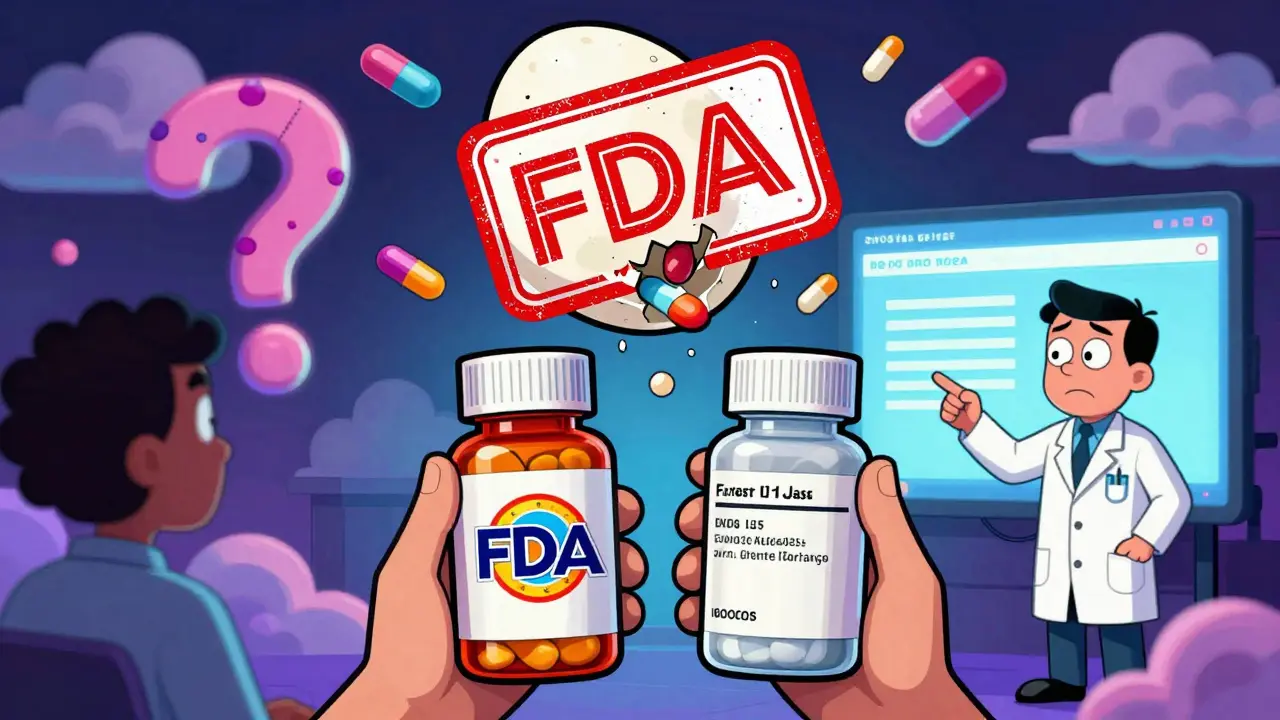
When you pick up a prescription, you might see a bottle labeled with a familiar brand name - or maybe a plain one with no name at all. Both could be cheaper than the original. But they’re not the same thing. One is a traditional generic. The other is an authorized generic. And the difference matters more than most people realize.
What Is an Authorized Generic?
An authorized generic is the exact same drug as the brand-name version - down to the last ingredient, manufacturing process, and pill shape. The only difference? It doesn’t have the brand name on the label. No logo. No fancy packaging. Just the active ingredient and basic info.The U.S. Food and Drug Administration (FDA) defines it clearly: an authorized generic is a brand-name drug sold without the brand name on the label. It’s made by the original manufacturer or under their direct control. Think of it like buying a Coca-Cola that’s packaged in a plain bottle with no logo - same soda, no branding.
Here’s the key: authorized generics don’t go through the usual generic approval process. They don’t need to prove they work the same way as the brand. Why? Because they are the brand. They use the original New Drug Application (NDA) that the brand company already got FDA approval for. That means no extra testing, no bioequivalence studies, no delays. As soon as the brand company decides to launch it, the authorized generic hits the shelves.
How Traditional Generics Work
Traditional generics are different. They’re made by other companies - not the original brand maker. These companies have to submit an Abbreviated New Drug Application (ANDA) to the FDA. To get approved, they must prove their version is bioequivalent to the brand-name drug. That means it delivers the same amount of active ingredient into your bloodstream at the same rate.But here’s where things get tricky. Traditional generics can have different inactive ingredients. These are the fillers, dyes, and binders that hold the pill together or give it color. The active ingredient must match, but the rest? Not always. For most people, this doesn’t matter. But for some - especially those with allergies, sensitivities, or conditions like epilepsy or thyroid disease - even small changes in inactive ingredients can cause issues.
Traditional generics are listed in the FDA’s Orange Book, which tells pharmacists which generics are considered interchangeable with the brand. Authorized generics? They’re not in there. Because they’re not generics under FDA rules - they’re the brand in disguise.
Why the Difference Matters
If you’ve ever switched from a brand to a generic and felt something off - nausea, dizziness, or just not quite right - it might not be your imagination. It could be the inactive ingredients. A 2022 survey by the National Community Pharmacists Association found that 67% of independent pharmacists reported patients specifically asking for authorized generics because they’d had bad reactions to traditional ones.Take a drug like Adderall. The brand version has a specific mix of inactive ingredients that some patients rely on. A traditional generic might use a different dye or binder. That’s allowed under FDA rules. But an authorized generic? Same exact formula. No changes. No guesswork.
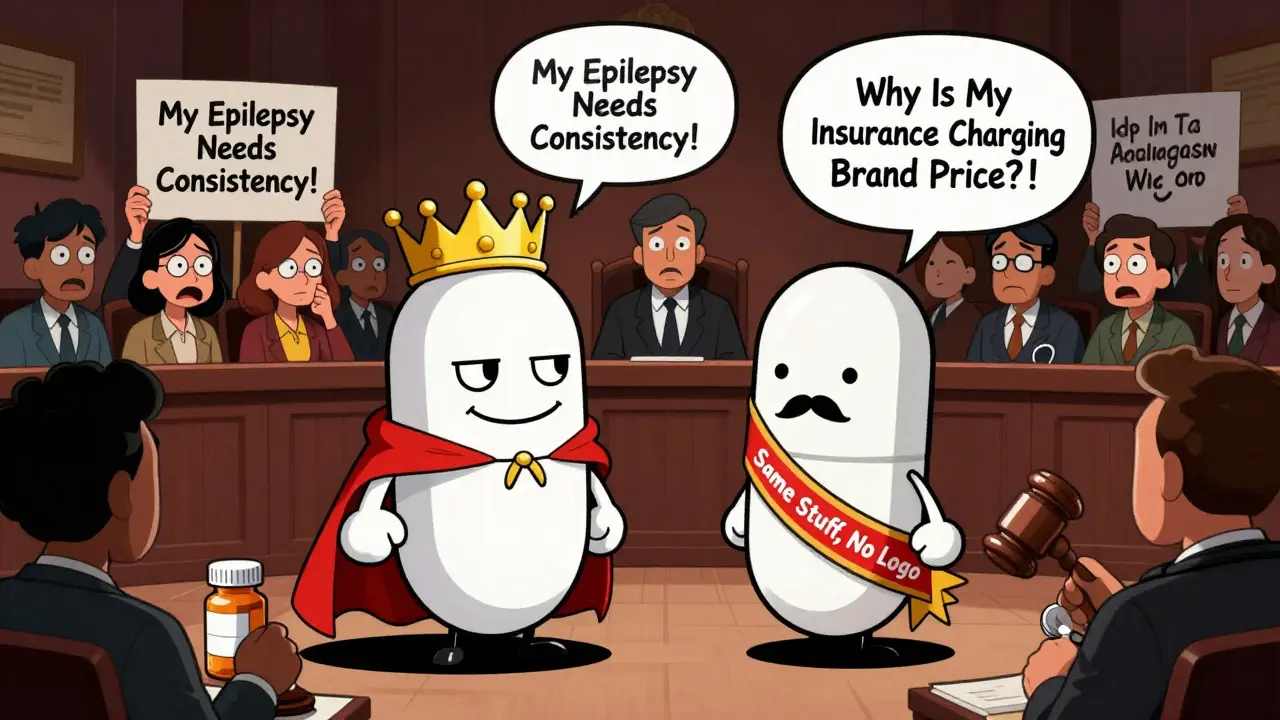
That’s why doctors and pharmacists often recommend authorized generics for patients who’ve had trouble with traditional versions. It’s not about cost - it’s about consistency. If your body responds to the brand, you want the exact same thing. Authorized generics give you that.
Who Makes Authorized Generics?
You might assume that only the brand company makes authorized generics. That’s mostly true. But they often partner with third-party distributors to handle sales and distribution. Three companies dominate this space: Greenstone LLC (a Pfizer subsidiary), Prasco Laboratories, and Patriot Pharmaceuticals. Together, they handle nearly 80% of all authorized generics in the U.S.Greenstone alone makes over 40% of them. You won’t see their name on the bottle. But if you look up the drug’s labeler code - the number printed on the pill - you can trace it back. The FDA keeps a public, updated list of all authorized generics on its website. It’s not easy to find, but it’s there.
Market Strategy and Controversy
Authorized generics aren’t just about patient care. They’re a business tool. When a brand drug’s patent expires, the original maker can launch an authorized generic at the same time as a traditional generic. This can crush the first generic company’s 180-day exclusivity period - the incentive the Hatch-Waxman Act gave them to challenge patents.A 2022 Health Affairs study found that 38.5% of brand-name drugs with expired patents had authorized generics launched right alongside traditional ones. Critics say this tactic reduces competition and keeps prices higher than they should be. The Congressional Research Service warned in 2021 that this practice may discourage generic companies from challenging patents at all.
On the flip side, brand companies argue they’re giving patients more affordable options. And they’re right - authorized generics often cost 15% to 30% less than the brand. Sometimes even more. But because they’re technically the same product, some insurance plans treat them like brand-name drugs. That means higher copays. A Kaiser Health News investigation in 2022 found patients were sometimes charged brand prices for authorized generics, even though they were chemically identical.
What Patients Should Know
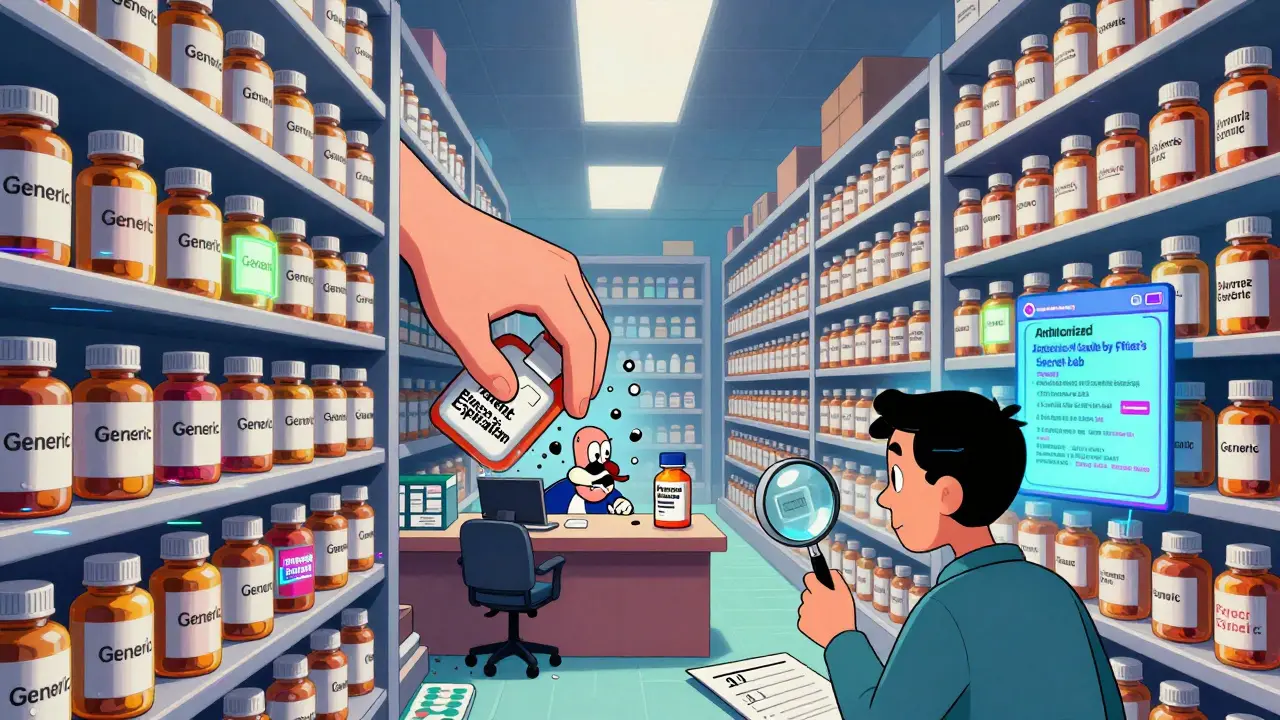
Most people can’t tell the difference between an authorized generic and a traditional one just by looking at the bottle. A GoodRx survey in 2022 showed 78% of patients couldn’t distinguish them. That’s a problem.If you’re switching from a brand to a generic, ask your pharmacist: Is this an authorized generic? If they don’t know, ask to see the labeler code. You can check it against the FDA’s list. If it’s an authorized generic, you’re getting the exact same drug - just cheaper.
Some patients are told by their insurance they have to take the cheapest generic. But if you’ve had side effects before, push back. Ask for the authorized version. Many pharmacists will accommodate you if you explain why.
Also, keep in mind: authorized generics aren’t always available. They’re not required. The brand company has to choose to make one. If they don’t, your only option is a traditional generic - or sticking with the brand.
How Pharmacists Handle Them
Pharmacists face a real challenge. Authorized generics aren’t in the Orange Book. So when they check for therapeutic equivalence, they won’t show up. That can cause confusion during medication reconciliation or when filling prescriptions.Some electronic health record systems don’t even distinguish between authorized and traditional generics. They just show “generic.” That means a patient’s history might not reflect whether they’ve had a reaction to a specific formulation.
Best practice? If you’re a pharmacist and a patient asks for an authorized generic, verify it using the FDA’s list. If you’re a prescriber, consider writing “Dispense as Written” or “No Substitution” on the prescription if you know the patient needs the exact formulation.
The Bigger Picture
As of September 2023, there were 1,872 authorized generic products available in the U.S., covering 467 different active ingredients. That’s more than ever before. And it’s growing. Evaluate Pharma predicts authorized generics will make up 15.3% of the U.S. generic drug market by 2027.Why? Because modern drugs are getting more complex. Specialty medications - for cancer, autoimmune diseases, rare conditions - often have tiny differences in formulation that can affect outcomes. Patients on these drugs need consistency. Authorized generics deliver that.
The FDA is watching closely. In 2022, Congress required the agency to study how authorized generics affect competition. Findings were due by December 2024. Changes might come. But for now, authorized generics remain a legal, approved, and valuable option for patients who need the real thing - without the brand price tag.
Final Thoughts
You don’t need to be a pharmacist to understand this: if you want the exact same drug you’ve been taking - no changes, no surprises - ask for the authorized generic. It’s not just cheaper. It’s identical. And in a world where small changes can have big effects, that’s worth knowing.Next time you refill a prescription, check the label. Look for the labeler code. Ask your pharmacist. You might be paying more than you need to - for a drug that’s not even the same as the one you started with.
Are authorized generics the same as brand-name drugs?
Yes. Authorized generics are identical to brand-name drugs in every way - same active and inactive ingredients, same manufacturing process, same quality control. The only difference is the label and packaging. They’re made by the brand company or under its direct supervision.
Are authorized generics cheaper than brand-name drugs?
Yes, usually. Authorized generics typically cost 15% to 30% less than the brand-name version. Sometimes more. But be careful - some insurance plans still treat them like brand drugs, so your copay might not reflect the lower price.
How do I know if my generic is an authorized generic?
Look at the labeler code on the pill bottle or box. That’s the number assigned by the FDA to the manufacturer. You can search it on the FDA’s official List of Authorized Generic Drugs. If it matches a known authorized generic manufacturer like Greenstone or Prasco, it’s an authorized generic. Ask your pharmacist if you’re unsure.
Can I get an authorized generic for any brand-name drug?
No. The brand company has to choose to make one. Many don’t, especially if they’re trying to protect profits. Authorized generics are most common for high-selling drugs that have recently lost patent protection. If it’s not listed on the FDA’s website, it doesn’t exist.
Why aren’t authorized generics listed in the FDA’s Orange Book?
Because they’re not approved as generics. They’re approved under the brand’s original New Drug Application (NDA). The Orange Book only lists drugs approved through the Abbreviated New Drug Application (ANDA) process. Authorized generics bypass that entirely - they’re the same product, just sold under a different label.
Do authorized generics have the same side effects as brand-name drugs?
Yes. Since they’re chemically and physically identical, they have the same side effect profile. If you had side effects from the brand, you’ll likely have them from the authorized generic too. But if you had side effects from a traditional generic, you might not have them with an authorized one - because the inactive ingredients are the same as the brand.
Can my pharmacist substitute an authorized generic without my permission?
It depends on your state’s laws. In most places, pharmacists can substitute traditional generics automatically. But authorized generics aren’t considered interchangeable under those laws because they’re not listed in the Orange Book. So if you want an authorized generic, you or your doctor may need to request it specifically.
Why do some people prefer authorized generics over traditional ones?
Because they contain the exact same inactive ingredients as the brand-name drug. Some patients are sensitive to dyes, fillers, or binders in traditional generics. Switching to an authorized generic eliminates that risk. Patients with epilepsy, thyroid disorders, or severe allergies often report better stability and fewer reactions with authorized generics.
Glendon Cone
December 30, 2025 AT 12:48Just got my Adderall refill and checked the labeler code - turns out it’s an authorized generic from Greenstone. No logo, same pill, half the price. 🤯 I’ve been switching between generics for years and always felt off. This one? Feels like the brand again. Pharma’s sneaky, but at least we can outsmart it.
Henry Ward
December 30, 2025 AT 14:45Stop pretending these are some kind of patient savior. This is just Big Pharma’s loophole to crush competition and keep profits high. Authorized generics aren’t about you - they’re about the brand company locking out the real generics who actually challenged the patent. You’re being played. 🤡
Aayush Khandelwal
December 30, 2025 AT 21:17Let me break this down with some spicy jargon - authorized generics are essentially NDA-anchored clones, bypassing ANDA’s bioequivalence theater. The inactive excipients? Identical. The bioavailability curve? Unaltered. The regulatory arbitrage? Brilliantly predatory. But for the patient with a 10-year history of seizure thresholds tied to a specific dye? It’s a lifeline. The system’s broken, but this is the least broken part.
Sandeep Mishra
December 31, 2025 AT 14:00It’s funny how we get so caught up in the labels, right? The real question isn’t whether it’s generic or authorized - it’s whether your body trusts it. I’ve seen folks with thyroid issues go from crashing to stable just by switching to an authorized version. No magic, just consistency. Maybe the system’s flawed, but if it helps someone feel like themselves again, isn’t that worth knowing? 🙏
Nadia Spira
December 31, 2025 AT 17:11Oh wow, another ‘patient empowerment’ fairy tale. You think pharmacists don’t know this is a corporate tactic? They’re forced to stock it because insurers won’t cover the brand, but they charge you brand copays. You’re not saving money - you’re being gaslit with placebo savings. Wake up.
Kunal Karakoti
January 1, 2026 AT 04:10It’s interesting how we assign moral weight to labels. Is a pill more ‘true’ because it carries the same inactive ingredients? Or is truth in medicine about outcomes, not origin? The authorized generic may be chemically identical, but the power dynamic - who controls access, who profits, who gets to decide - that’s the real medicine we’re not prescribed.
Kelly Gerrard
January 2, 2026 AT 12:45Thank you for this clear breakdown. I’ve been asking for authorized generics since my last reaction to a traditional generic. My pharmacist now keeps a printed list of labeler codes. It’s a small win. I’m not asking for special treatment - just the same drug I was on. Simple. Direct. Necessary.
Joseph Corry
January 2, 2026 AT 16:32Let’s be real - this is just intellectual property arbitrage dressed up as patient care. The FDA’s system is a mess. You’re being sold a myth that ‘identical’ means ‘safe’ - but if the brand’s formulation was flawed to begin with, you’re just getting the same flaw cheaper. And don’t get me started on how insurance manipulates this to maximize revenue. This isn’t transparency - it’s obfuscation with better packaging.
Colin L
January 2, 2026 AT 21:05You know, I spent three hours last night digging through the FDA’s database because my pharmacist didn’t know what I was talking about - and I’m not even a pharmacist, just someone who’s been on the same meds for 12 years and has had three different ‘generic’ versions that made me feel like a zombie, a ghost, and then finally - human again. The labeler code thing? Genius. But why isn’t this on the bottle? Why do we have to be detectives just to get the same damn pill we were prescribed? I’m not asking for luxury - I’m asking for dignity. And now I’ve got to explain all this to my sister who’s on a different drug with the same problem. And I’m exhausted. But at least now I know what to look for. Thank you for the list. I hope more people find this.