

Switching from a brand-name drug to a generic feels like a no-brainer-same active ingredient, same effectiveness, and a fraction of the price. But what if you start feeling off after the switch? Nausea. Fatigue. Headaches. Or worse-your condition seems to flare up again. You’re not imagining it. And you’re not alone.
Why Do Generics Feel Different Even When They’re Supposed to Be the Same?
The truth is, generics are required to deliver the same therapeutic effect as their brand-name counterparts. The FDA mandates that the active ingredient in a generic must be identical in strength, dosage form, and route of administration. But here’s what most people don’t realize: the rest of the pill-everything except the medicine itself-isn’t tightly controlled. That’s the inactive ingredients. Also called excipients, these are the fillers, binders, coatings, dyes, and preservatives that hold the pill together, help it dissolve, or make it easier to swallow. Think of them like the scaffolding around a building. The building (the active drug) is the same. But the scaffolding? That can change. A generic version of your blood pressure pill might use microcrystalline cellulose as a filler. The brand version might use lactose. One might have a coating that dissolves slowly. Another might use a dye that triggers a mild reaction in sensitive people. These differences are legal. They’re safe for most. But for some, they make all the difference.What’s Actually in Your Pills?
Inactive ingredients aren’t random. They serve real purposes:- Fillers (like starch, lactose, or cellulose) give the tablet the right size and weight. Without them, a pill with just 5mg of medicine would be too tiny to handle.
- Binders (like povidone or hydroxypropyl methylcellulose) keep the powder stuck together so the pill doesn’t crumble.
- Disintegrants (like croscarmellose sodium) help the pill break apart in your stomach so the medicine can get absorbed.
- Coatings can delay release, protect the drug from stomach acid, or just make it smoother to swallow.
- Dyes and flavorings are added for branding and to make the pill look and taste different from others.
- Preservatives (like sodium benzoate) stop mold and bacteria from growing, especially in liquid forms.
Who’s Most Likely to Notice a Difference?
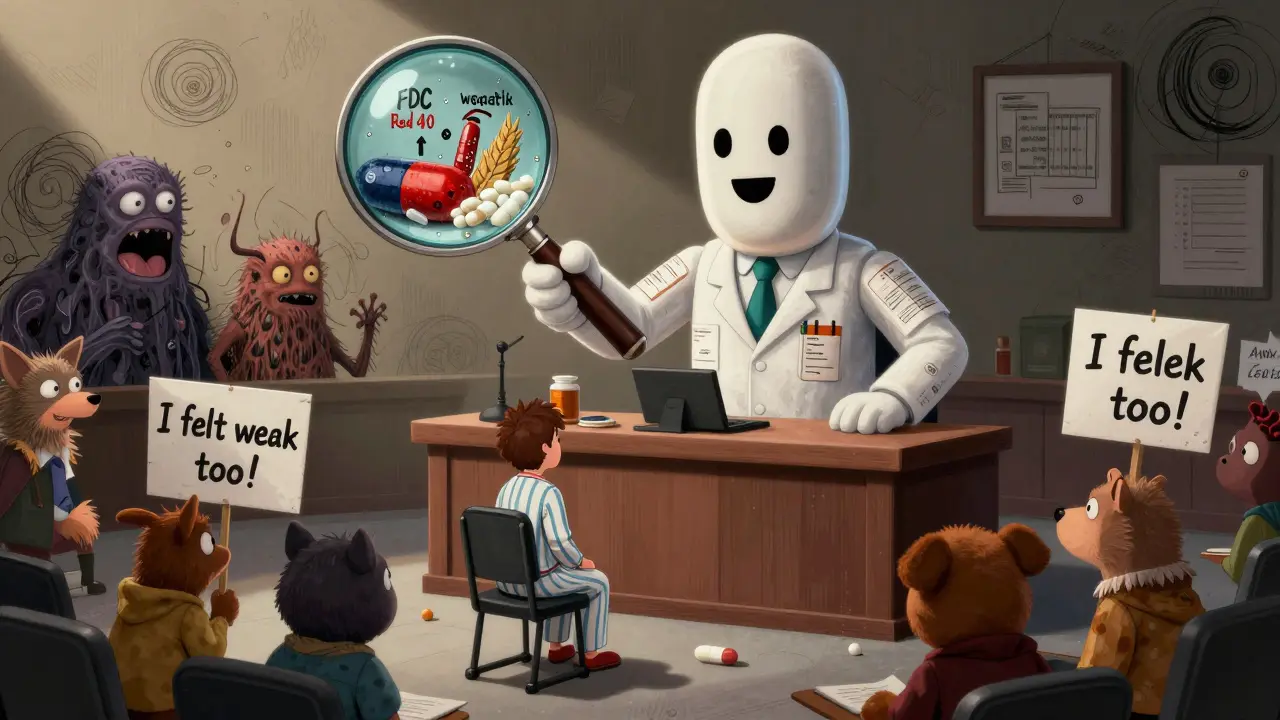
Most people-about 95%-switch to generics without any issues. But for the rest, small changes in excipients can trigger real reactions. Lactose intolerance affects about 36% of Americans. If your generic uses lactose as a filler and your brand didn’t, you might get bloating, gas, or diarrhea. It’s not the medicine-it’s the filler. Sulfites are used in some injectables and liquid medications. For people with asthma, even small amounts can trigger wheezing or breathing trouble. Food dyes like FD&C Red 40 or Yellow 5 are common in chewable tablets or liquids. Some people report headaches or mood changes after exposure. Gluten isn’t always labeled. While most pills are gluten-free, a few use wheat starch as a binder. If you have celiac disease, even trace amounts matter. And then there are the drugs with a narrow therapeutic index-medications where the difference between a helpful dose and a dangerous one is tiny. Think levothyroxine (for thyroid), warfarin (a blood thinner), or digoxin (for heart failure). For these, even a 3-5% difference in how fast the drug is absorbed can throw your levels off. That’s why some patients report their TSH levels going wild after switching generic levothyroxine brands.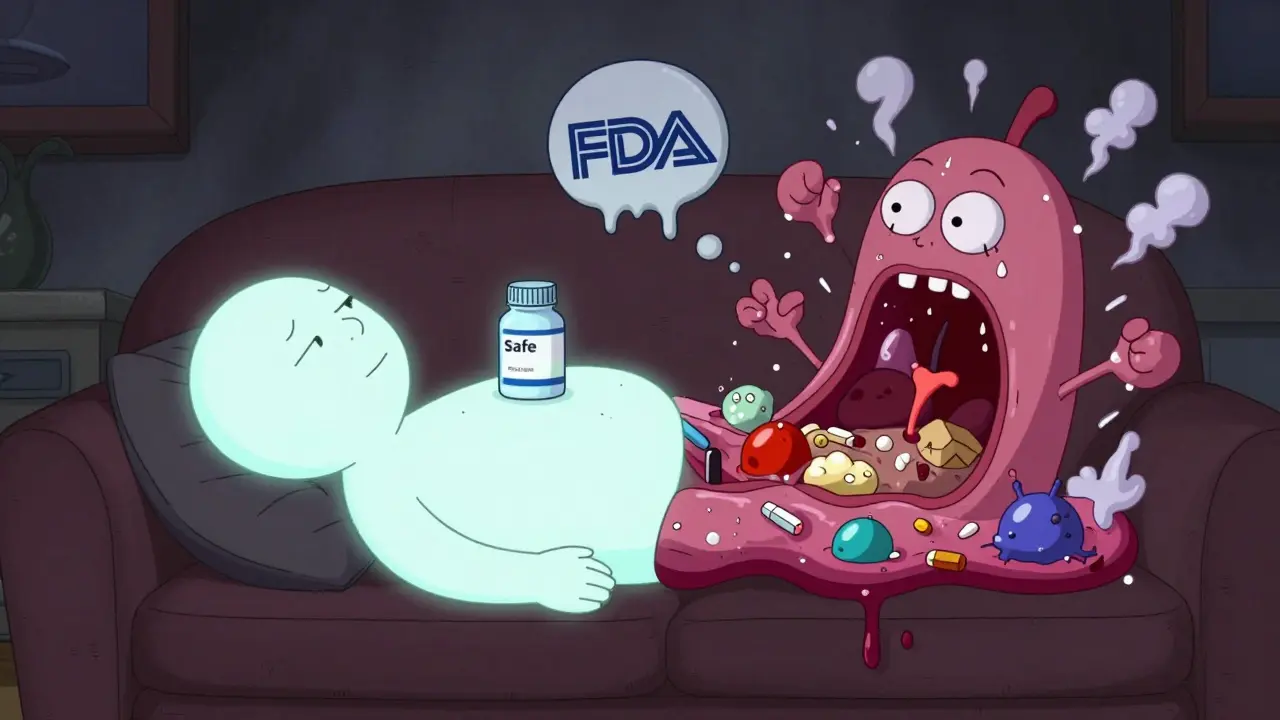
What the Data Really Shows
A 2021 study in JAMA Internal Medicine looked at 2,000 patients who switched from brand to generic drugs. Here’s what they found:- 94.7% had no noticeable difference in effectiveness or side effects.
- 4.3% reported minor side effects-mostly stomach upset or dizziness-that cleared up over time.
- Only 1% had issues serious enough to switch back to the brand.
What You Can Do If You Notice a Change
If you switch to a generic and feel different, don’t just assume it’s “all in your head.” Here’s what to do:- Track your symptoms. Write down what you’re feeling, when it started, and how bad it is. Do it for at least two weeks. Patterns matter.
- Check the ingredient list. The FDA requires manufacturers to list inactive ingredients on the packaging or in the patient information leaflet. If you don’t have it, ask your pharmacist. They can print it out for you.
- Compare the old and new. Look at the inactive ingredients side by side. Did the filler change? Was a dye added? Is there now a preservative you didn’t have before?
- Talk to your doctor and pharmacist. Don’t just say, “I don’t feel right.” Say, “I switched to a generic and started having nausea. I checked the ingredients-this one has lactose, and the old one didn’t.” That gives them a place to start.
- Ask for the same generic manufacturer. Generic drugs from the same company often have the same formulation. If you did well with one generic, stick with that brand. Pharmacists can usually accommodate this request.
What About “Authorized Generics”?
There’s another option you might not know about: authorized generics. These are made by the original brand-name company but sold under a generic label. They have the exact same active and inactive ingredients as the brand. The only difference? The price. They’re usually 30-50% cheaper. For example, the authorized generic of Lipitor (atorvastatin) is chemically identical to the brand. So if you had a bad reaction to a generic from a different manufacturer, the authorized version might be your fix. They’re not available for every drug yet, but they’re growing. In 2023, about 15% of the generic market was made up of authorized generics. Ask your pharmacist if one exists for your medication.The Bigger Picture: Why This Matters
Generics save the U.S. healthcare system over $2 trillion a decade. That’s huge. They’re not just affordable-they’re essential. But if we treat all patients as if they’re the same, we miss the ones who need more. The 1% who react. The 36% who are lactose intolerant. The people with allergies, sensitivities, or conditions where precision matters. The FDA is starting to pay attention. New guidelines in 2023 require stricter testing for generics of high-risk drugs like levothyroxine. And by 2025, many manufacturers plan to offer “allergen-free” versions of common meds. Until then, knowledge is your best tool. You have the right to know what’s in your pill. You have the right to ask for a specific generic. And you have the right to speak up if something doesn’t feel right.Bottom Line: Generics Work-But Not Always the Same Way
For most people, switching to a generic is a smart, safe move. You save money. You get the same medicine. No compromise. But if you notice a change-any change-don’t ignore it. It’s not weakness. It’s biology. Your body reacts to what’s in the pill, not just the active ingredient. And sometimes, that’s enough to make you feel worse. Ask questions. Check labels. Keep a journal. Talk to your pharmacist. You’re not being difficult. You’re being informed. Your health isn’t a statistic. It’s yours.Can inactive ingredients in generics cause side effects?
Yes. While inactive ingredients don’t treat your condition, they can cause reactions in sensitive people. Common culprits include lactose (which can cause bloating or diarrhea in those intolerant), dyes like Red 40 (linked to headaches in some), sulfites (which can trigger asthma), and gluten (for those with celiac disease). These ingredients are safe for most, but not everyone.
Why does my generic make me feel different than the brand?
Even though the active ingredient is the same, generics can use different fillers, coatings, or binders. These can change how quickly the medicine is absorbed or how your body reacts to it. For example, a coating that dissolves slower might delay the drug’s effect, or a filler like lactose might cause stomach upset. These differences are legal and common, but they can be noticeable.
Are generic drugs less effective than brand-name drugs?
No. Generic drugs must meet the same FDA standards for strength, purity, and effectiveness as brand-name drugs. Studies show that 95% of people experience no difference in how well the medicine works. The problem isn’t effectiveness-it’s individual sensitivity to inactive ingredients or, in rare cases, minor absorption differences in high-risk drugs like thyroid or blood thinners.
How can I find out what’s in my generic medication?
Check the patient information leaflet that comes with your prescription. If it’s not there, ask your pharmacist for the inactive ingredient list. You can also search the FDA’s Drug Database or use apps like Drugs.com to look up your medication by name and see its full formulation.
Should I avoid generics altogether if I’ve had a bad reaction before?
Not necessarily. The issue might be one specific generic manufacturer, not generics in general. Ask your pharmacist for the same generic brand you used before-or request an authorized generic, which is made by the original brand and has identical ingredients. Many people switch between generics successfully once they find one that works for them.
Are there generic medications with fewer or simpler inactive ingredients?
Yes. Some manufacturers are starting to offer “clean label” generics with fewer additives-no dyes, no lactose, no preservatives. These are often marketed as allergen-free or simplified formulations. They may cost a bit more than standard generics but are still cheaper than brand-name drugs. Ask your pharmacist if these options exist for your medication.
If you’ve switched generics and felt off, you’re not alone. And you’re not crazy. The science is clear: inactive ingredients matter. Your body notices them. Listen to it.
Shelby Marcel
January 24, 2026 AT 14:00i switched to generic lisinopril last month and suddenly felt like i was walking through molasses. no idea why, but i checked the label and it had lactose-my brand didn’t. now i’m paranoid about every pill i take. also, why do they even put dye in medicine? who’s enjoying the neon blue pill??
Sharon Biggins
January 25, 2026 AT 12:02you’re not crazy. i had the same thing with levothyroxine. switched generics and my heart started racing. turned out the new one had a different binder. took me 3 months to figure it out. now i only take the one with the green cap. ask your pharmacist for the manufacturer code-it’s not hard.
blackbelt security
January 26, 2026 AT 21:38stop blaming the pills. your body’s just weak. if you can’t handle a few harmless fillers, maybe you need to stop being so fragile. everyone else takes generics just fine. get stronger.
Patrick Gornik
January 27, 2026 AT 20:15ah yes, the grand illusion of pharmaceutical equivalence. we’ve been sold a fairy tale: ‘same active ingredient, same outcome.’ but the truth? The pill is a symphony, not a solo. The active compound is the violin. The excipients? The entire orchestra-timpani, bassoon, celesta. Change the conductor’s baton, and the music changes. The FDA doesn’t care about the harmony, only the notes. And yet, we’re shocked when the melody turns dissonant for some of us? Welcome to the capitalist pharmacopeia, where cost-efficiency trumps biocompatibility. We don’t need better drugs-we need better epistemologies.
asa MNG
January 29, 2026 AT 02:36OMG SAME 😭 i switched to generic sertraline and i swear i started seeing ghosts. like, i’d look in the mirror and my face looked different?? my roommate said i was just tired but nooo-i checked the ingredients and there was RED 40 and titanium dioxide. i bet they’re spying on us through the pills. #pharmaceuticalmindcontrol 🤫💊
Sushrita Chakraborty
January 31, 2026 AT 01:16While the article presents a compelling case regarding the variability of excipients in generic medications, it is imperative to acknowledge that the majority of patients experience no adverse effects. Regulatory agencies worldwide maintain stringent oversight, and the incidence of clinically significant reactions remains statistically negligible. Nevertheless, individualized care and patient advocacy remain essential pillars of pharmaceutical safety.
Tommy Sandri
January 31, 2026 AT 14:15As a pharmacist with over 18 years in community practice, I’ve seen patients react to everything from corn starch to gelatin capsules. The key isn’t avoiding generics-it’s tracking and communicating. We keep a binder of manufacturer codes for each patient who reports sensitivity. If you know your brand worked, ask for that specific generic. It’s not a burden-it’s standard practice.
Husain Atther
February 1, 2026 AT 16:00In India, generics are the only option for most people. We don’t have luxury of brand-name drugs. But I’ve noticed that some manufacturers-like Cipla or Sun Pharma-have more consistent formulations. If you can identify the maker, stick with them. Also, many Indian generics are now offering lactose-free and dye-free versions. It’s not perfect, but progress is happening.
Dolores Rider
February 3, 2026 AT 13:07they’re putting microchips in the pills. i read it on a forum. that’s why my anxiety got worse after switching. they’re tracking us. and the dye? it’s not for color-it’s to activate the chip when you swallow it. they know when you take your meds. they know when you skip them. and they’re watching.