
Blood Thinner Treatment Safety Checker
Check Safe Treatment Options
Enter your blood thinner to see which treatments are safe to use while managing heavy menstrual bleeding.
Treatment Safety
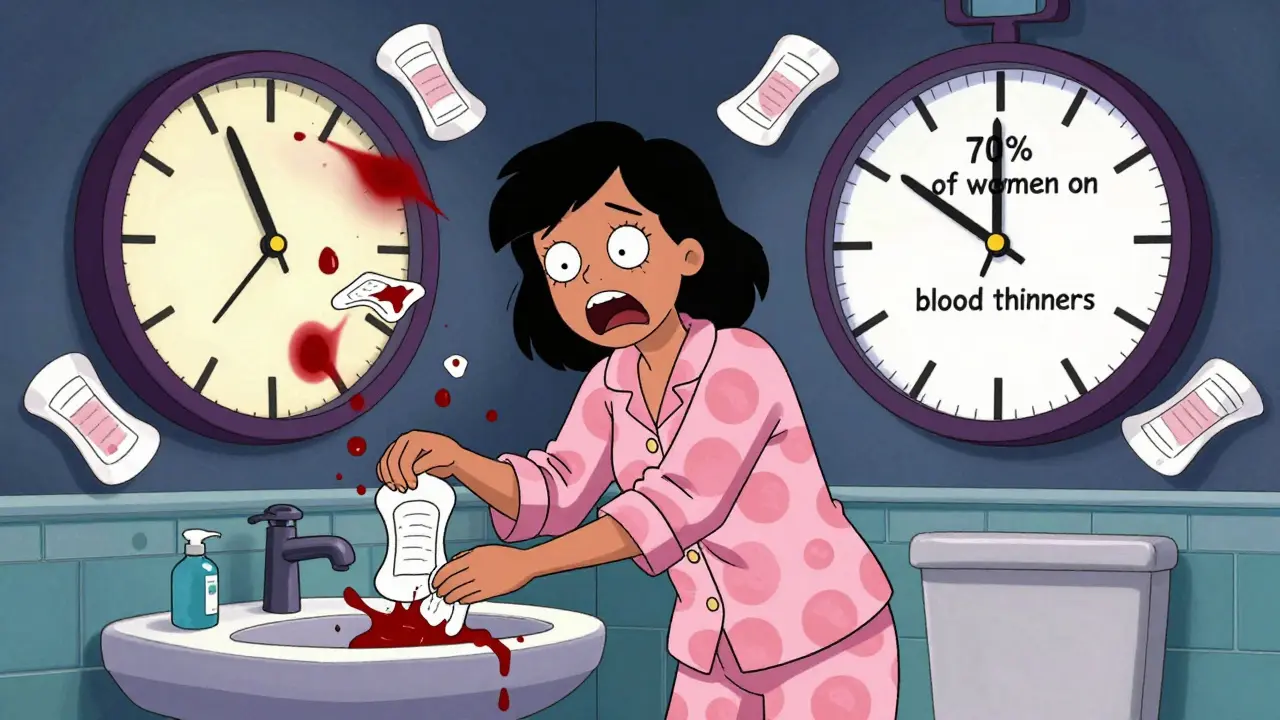
If you’re a woman taking blood thinners and your periods have suddenly become unbearable-soaking through pads every hour, leaking onto clothes, or leaving you exhausted and anemic-you’re not alone. And you’re not imagining it. About 70% of menstruating women on anticoagulants experience heavy menstrual bleeding (HMB) that’s severe enough to need medical help. Yet, most doctors never ask about it. This isn’t just inconvenient. It’s a real health issue that can make you miss work, avoid social events, and live in constant fear of public accidents. The good news? There are proven ways to manage it without stopping your blood thinner.
Why Blood Thinners Make Periods So Much Heavier
Blood thinners-like warfarin, apixaban, rivaroxaban, and dabigatran-work by slowing down your blood’s ability to clot. That’s great for preventing strokes or clots in your legs. But it also means your uterus can’t stop bleeding as efficiently during your period. Normally, 10-30% of women have heavy periods. On anticoagulants? That jumps to nearly 7 out of 10. A 2022 study in Blood found that two-thirds of women saw their bleeding get worse within months of starting these medications. And it’s not just a minor annoyance. Women report changing pads every 30 minutes, carrying emergency supplies everywhere, and skipping work for days at a time.The Hidden Risk: Skipping Your Blood Thinner
It’s tempting to cut your dose or skip pills when your period is awful. But that’s dangerous. Stopping or reducing your anticoagulant-even for a few days-can raise your risk of a life-threatening blood clot by up to five times. That’s not a guess. It’s from Dr. Bethany Samuelson Bannow’s research at Oregon Health & Science University. The goal isn’t to stop the bleeding by stopping the medication. It’s to manage the bleeding while keeping you protected from clots. That’s why treatment needs to be smart, not desperate.First-Line Treatment: Hormonal Options That Work
The most effective way to reduce heavy bleeding while staying on blood thinners is with hormonal therapy. These don’t interfere with your anticoagulant-they work alongside it.- Levonorgestrel IUD (Mirena, Kyleena): This small device releases progesterone directly into the uterus. Studies show it cuts menstrual blood loss by 70-90% within 3-6 months. Many women end up with light spotting or no periods at all. One woman on Eliquis posted on Reddit: “After getting Mirena, my ER visits stopped. My periods became nearly nonexistent.”
- Subdermal implant (Nexplanon): A tiny rod placed under the skin of your arm. It releases progestin and can reduce bleeding significantly, though some women have irregular spotting at first.
- Oral progestins: High-dose norethisterone (5 mg three times a day for 21 days) is recommended by the American Society of Hematology. It’s taken only during your period week and can cut bleeding by half in many cases.
- Combined hormonal birth control: Pills, patches, or rings with estrogen and progestin are safe to use with most blood thinners and can make periods lighter and more predictable.
Tranexamic Acid: A Non-Hormonal Option
Tranexamic acid is a pill you take only during your period. It helps your blood clot better locally in the uterus without affecting your overall clotting system. Clinical trials show it reduces menstrual bleeding by 30-50%. You start taking it when your period begins and keep it up for up to 5 days. It’s not a daily medication, so it doesn’t add long-term side effects. But it must be timed right-take it too early or too late, and it won’t help. Talk to your doctor about when to start it based on your anticoagulant schedule.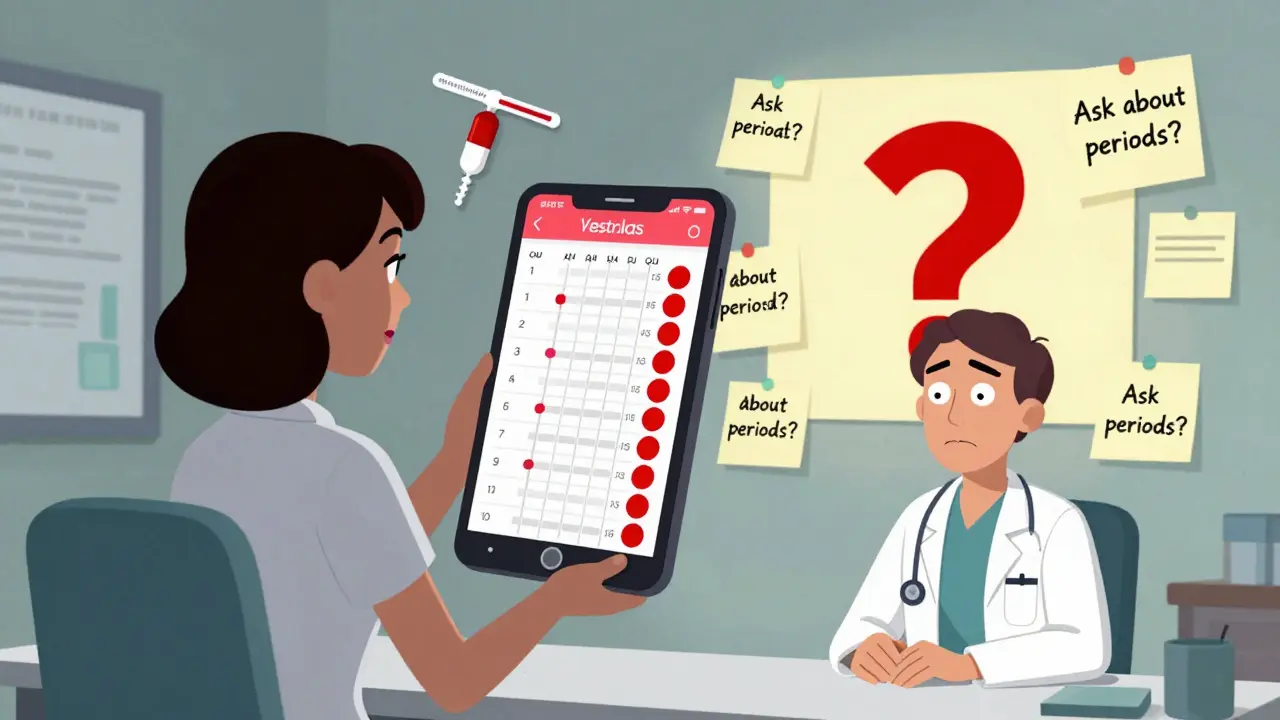
What About NSAIDs Like Ibuprofen?
Ibuprofen and other NSAIDs can reduce menstrual flow by 20-40% in some women. But here’s the catch: they also thin blood a little. Taking them with anticoagulants can increase your bleeding risk, especially if you’re already prone to heavy periods. It’s not off-limits, but it’s not a first choice. If you want to try it, use the lowest effective dose for the shortest time. Don’t combine it with aspirin unless your doctor says it’s safe. For most women on blood thinners, hormonal options are safer and more effective.When Surgery Might Be Considered
Endometrial ablation-a procedure that destroys the lining of the uterus-is highly effective for heavy periods in women not on anticoagulants. But for those taking blood thinners? It’s risky. You need to stop your anticoagulant before surgery, which raises your clot risk. Even with bridging therapy (temporary heparin injections), the chance of bleeding complications is higher. Most experts recommend saving this option only for women who’ve tried all other treatments and don’t plan to have children. ACOG advises that you must continue using birth control after ablation, because pregnancy after the procedure can be dangerous.Iron Deficiency Is Common-And Treatable
Heavy bleeding drains your iron. Many women don’t realize they’re anemic until they’re dizzy, pale, or out of breath climbing stairs. The National Blood Clot Alliance recommends all women on anticoagulants with HMB get tested for iron levels and anemia. If you’re low, iron supplements (oral or IV) can help restore energy and prevent long-term damage. Don’t wait for symptoms to get bad. Ask for a ferritin blood test-it’s the best way to see if your iron stores are running low.
Why So Many Women Are Left Behind
Here’s the frustrating part: most hematologists don’t ask about your periods. A 2023 survey by the National Blood Clot Alliance found that 68% of women said their hematologist never brought up menstrual changes after starting blood thinners. Meanwhile, 72% of those women had bleeding problems. This gap in care is systemic. There are no official guidelines yet requiring doctors to screen for HMB after starting anticoagulants. But that’s changing. The American Society of Hematology and ACOG are working on new joint guidelines expected in mid-2025. In the meantime, you need to speak up. If you’re on a blood thinner and your period is overwhelming, say so. Bring this article. Ask for a referral to a gynecologist who understands anticoagulation.Which Blood Thinners Carry the Least Risk?
Not all anticoagulants are equal when it comes to bleeding. Research shows apixaban and dabigatran are linked to lower rates of heavy menstrual bleeding than rivaroxaban. Warfarin has a higher risk than newer drugs too. If you’re newly starting anticoagulation and have a history of heavy periods, talk to your doctor about choosing the safest option for you. If you’re already on rivaroxaban and struggling, switching to apixaban might help. It’s not a guaranteed fix, but it’s a real possibility worth exploring.What to Do Next
1. Track your bleeding: Use a period app or journal. Note how often you change pads, if you pass clots, if you leak, and how tired you feel. 2. Ask for an iron test: Request a ferritin and hemoglobin blood test. Don’t wait until you’re faint. 3. Request a referral: Ask your hematologist for a gynecologist who works with anticoagulated patients. 4. Discuss hormonal options: Bring up the levonorgestrel IUD, implant, or oral progestins. These are safe and effective. 5. Don’t stop your blood thinner: Even if your period is awful, never skip or reduce your dose without medical advice.Real Talk: You’re Not Overreacting
If you’ve ever cried in a bathroom because you soaked through your pants, or canceled plans because you didn’t know if you’d make it home, you’re not being dramatic. This is a real, documented problem affecting hundreds of thousands of women. You deserve care that sees the whole picture-not just your clot risk, but your quality of life too. The tools to help you exist. You just have to ask for them.Can I still get pregnant while on a levonorgestrel IUD and blood thinners?
Yes, the levonorgestrel IUD is a highly effective form of birth control-it prevents pregnancy in over 99% of cases. It’s safe to use with all types of blood thinners. In fact, it’s often recommended because it reduces bleeding and prevents pregnancy, which is important since pregnancy can be risky for women on anticoagulants. You don’t need to stop the IUD if you want to get pregnant later-it can be removed easily.
Is tranexamic acid safe with apixaban or Eliquis?
Yes, tranexamic acid is generally safe to use with direct oral anticoagulants like apixaban, rivaroxaban, and dabigatran. It works locally in the uterus to help blood clot during your period, without affecting your overall clotting system. It’s taken only during your period (usually 4-5 days), so it doesn’t interfere with your daily medication. Always confirm the timing and dosage with your doctor.
Will switching from rivaroxaban to apixaban stop my heavy bleeding?
It can help. Studies show that apixaban is associated with lower rates of heavy menstrual bleeding compared to rivaroxaban. While it won’t eliminate the problem for everyone, many women notice a significant improvement after switching. If you’re struggling with bleeding on rivaroxaban, talk to your hematologist about switching. It’s a simple change with potential big benefits.
Can I use ibuprofen for cramps while on blood thinners?
It’s possible, but proceed with caution. Ibuprofen can help with cramps and slightly reduce bleeding, but it also increases bleeding risk when combined with anticoagulants. Use the lowest dose for the shortest time-no more than a few days per cycle. Avoid aspirin entirely unless your doctor says it’s safe. Hormonal treatments like the IUD are safer and more effective long-term.
Why don’t doctors talk about this more?
Because until recently, it wasn’t on the radar. Most guidelines focused on life-threatening bleeding, not menstrual bleeding. But research since 2020 has shown how common and impactful it is. Now, groups like the American Society of Hematology and ACOG are updating their guidelines to include menstrual bleeding as a key outcome. The problem is that change takes time. Until then, you have to be your own advocate. Bring the data. Ask for help. You’re not asking for too much-you’re asking for what you need to live well.
Erika Putri Aldana
December 21, 2025 AT 22:23Ugh finally someone says it. I was gonna quit my job bc I was leaking through my pants at the printer. Mirena saved me. No more ER trips. No more panic attacks before meetings. 🙌
Cameron Hoover
December 22, 2025 AT 13:10This is the kind of article that makes me believe in humanity again. So many women suffer in silence, thinking it's just 'how it is.' But it's not. You're not weak for needing help. You're brave for seeking it. Keep speaking up.
Thank you for writing this.
Stacey Smith
December 22, 2025 AT 21:31Stop coddling women. If you can't handle your period, get a hysterectomy. Blood thinners aren't a free pass to be dramatic. Take responsibility.
Also, why are we even talking about this? It's not a public health crisis.
Ben Warren
December 24, 2025 AT 02:22It is imperative to underscore the clinical imperative of this discourse. The confluence of anticoagulant therapy and menorrhagia represents a significant intersection of hematological and gynecological medicine, yet remains grossly under-addressed within contemporary medical curricula. The data presented herein, particularly the 70% prevalence statistic derived from peer-reviewed hematology journals, necessitates a paradigmatic shift in physician screening protocols. Moreover, the recommendation of hormonal interventions-particularly the levonorgestrel IUD-constitutes not merely a therapeutic option, but a standard of care that ought to be codified in institutional guidelines. Failure to implement such protocols constitutes a form of iatrogenic neglect, and potentially exposes practitioners to liability under evolving standards of informed consent. The absence of formalized screening, as cited in the 2023 National Blood Clot Alliance survey, is not merely an oversight-it is a systemic failure of medical ethics.
Teya Derksen Friesen
December 25, 2025 AT 10:29I'm so glad this exists. I'm a nurse in Vancouver and I see this all the time. Women come in exhausted, pale, terrified. No one asks. No one checks ferritin. We need more doctors who listen, not just prescribe. Thank you for giving us the language to push back.
Sandy Crux
December 25, 2025 AT 23:13...And yet, the author conveniently omits the fact that tranexamic acid has been shown in some cases to increase thrombotic risk in women with underlying hypercoagulable states-especially when combined with estrogen-containing contraceptives... which, of course, are 'recommended' here... and... well... perhaps the real issue is not the bleeding, but the medical establishment's willingness to treat symptoms without addressing root causes?... I mean, really... is it so hard to consider that perhaps the body is signaling something?... Not everything needs a pill, a rod, or a device...
Just saying.
Sarah Williams
December 27, 2025 AT 00:30I was scared to ask my hematologist about my bleeding. I thought he’d think I was being dramatic. He didn’t. He gave me a referral the same day. This isn’t just about periods-it’s about being seen. You’re not alone.
Grace Rehman
December 27, 2025 AT 01:00So we're supposed to be grateful that doctors are finally catching up to what women have been screaming about for decades? That's not progress. That's just damage control. We didn't need a 2025 guideline-we needed a 2015 conversation. But hey, at least now there's a Reddit post to save us from ourselves. 🤷♀️
Still, thanks for the info. I'll take it. Because why wait for the system to fix itself when you can fix it yourself?
John Hay
December 28, 2025 AT 04:25My wife started apixaban last year and her bleeding got worse. We asked about Mirena. Doctor said yes. Two months later, she's back to normal. No more panic. No more pads in the car. Just peace. This article saved our lives. Thank you.