
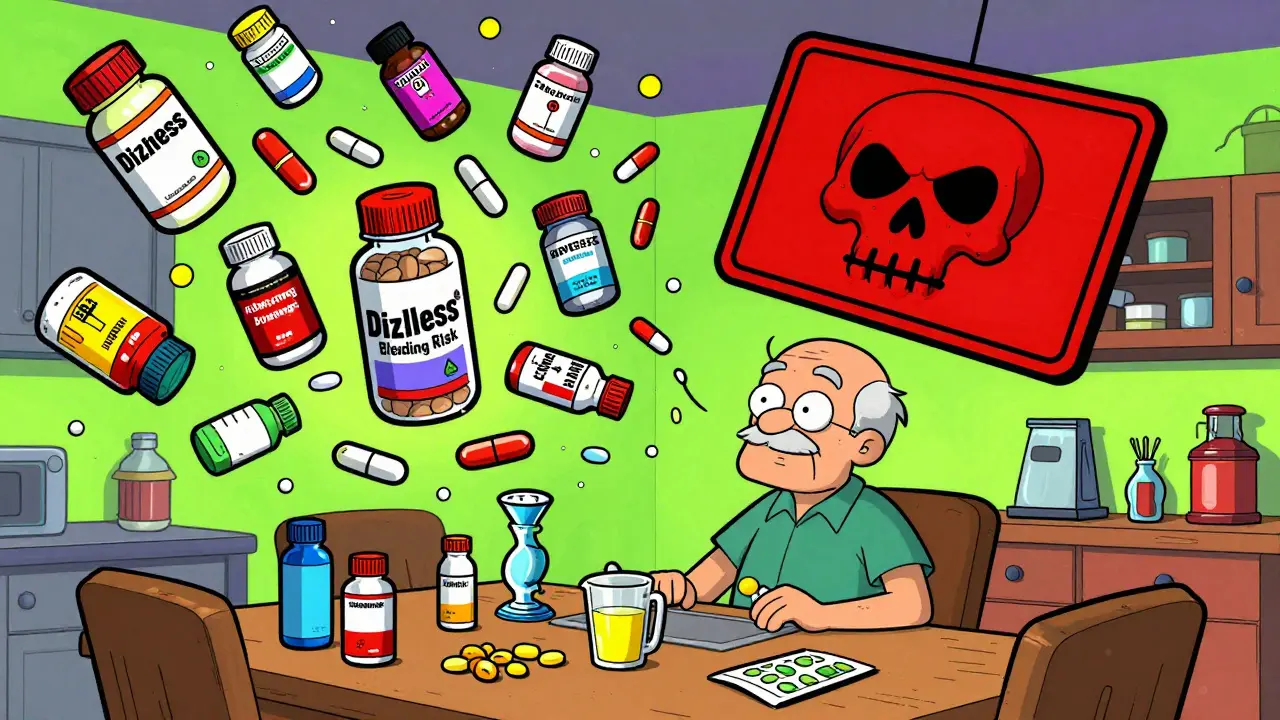
Taking five or more medications every day isn’t uncommon-especially if you’re over 65 or managing several long-term health conditions. But the more pills you take, the higher your risk of dangerous drug interactions. These aren’t just theoretical risks. They cause hospitalizations, falls, confusion, kidney damage, and even death. The good news? You don’t have to accept this as normal. With the right approach, you can cut down on unnecessary meds, avoid harmful overlaps, and take only what truly helps you.
What Exactly Is Polypharmacy?
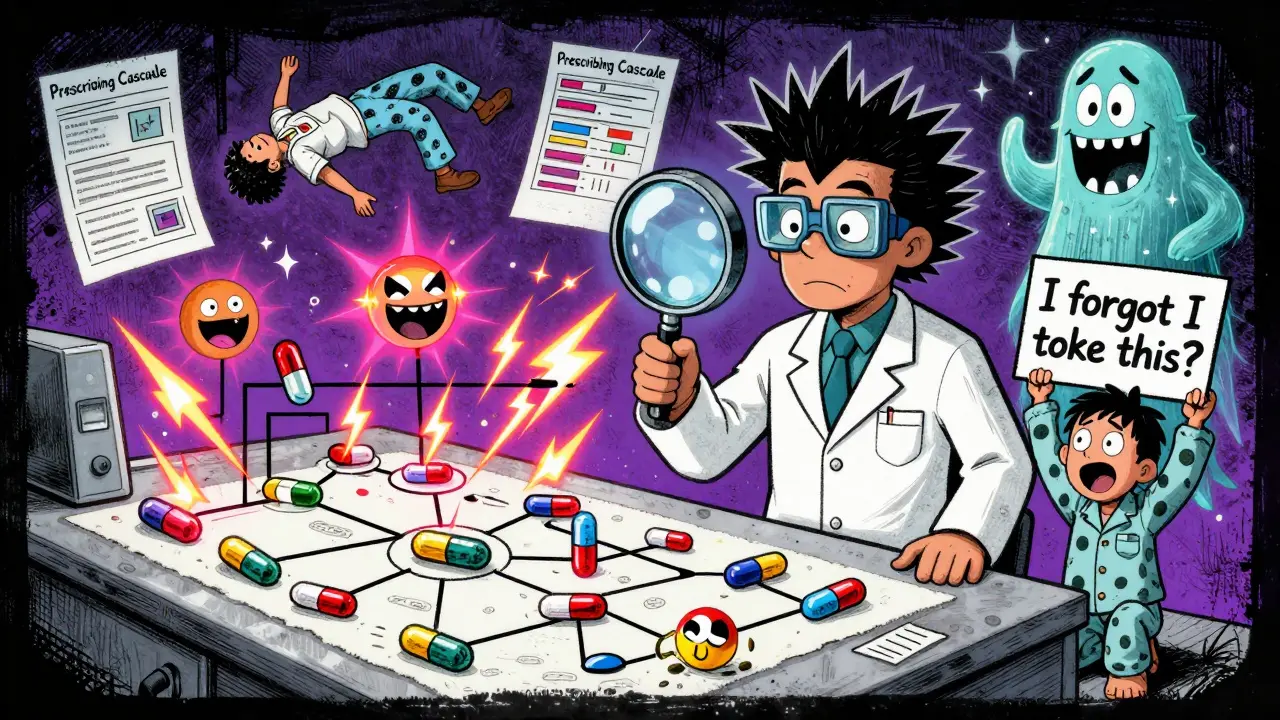
Polypharmacy means taking five or more medications at the same time. It’s not always bad-sometimes you need all of them. But when medications are prescribed without clear purpose, or when side effects lead to more prescriptions, it becomes risky. This is called inappropriate polypharmacy. The World Health Organization says it’s one of the biggest patient safety issues today.Here’s the reality: 44% of older adults in the U.S. take five or more prescription drugs. One in five take ten or more. Many are on medications that no longer help, or that were prescribed to fix problems caused by other drugs. That’s called a prescribing cascade. For example, a blood pressure pill causes dizziness, so a doctor prescribes a balance medication. That new drug causes dry mouth, so now you get a saliva spray. It’s a chain reaction-and it’s avoidable.
Why Drug Interactions Happen
Drug interactions don’t just happen between prescriptions. They can occur between:- Two or more prescription drugs
- A prescription and an over-the-counter (OTC) medicine like ibuprofen or antacids
- A medication and a supplement like fish oil, vitamin E, or St. John’s Wort
- A drug and a food-like grapefruit and statins
These interactions can make a drug too strong, too weak, or cause side effects you didn’t expect. For instance, mixing blood thinners like warfarin with certain antibiotics can spike your bleeding risk. Taking too many painkillers with kidney issues can damage your kidneys over time. And some meds-like benzodiazepines for anxiety-can make you dizzy or confused, increasing fall risk in older adults.
The biggest problem? Most people don’t tell their doctors about everything they take. They think OTC meds and supplements are “safe.” They’re not. A 2023 review found that nearly 60% of patients on multiple medications weren’t even asked about their supplements during a doctor’s visit.
The Five-Step Safety Plan
The World Health Organization and major medical groups agree on a clear, five-step plan to manage polypharmacy safely:- Review every medication-Ask your doctor: “Why am I taking this? Is it still needed?” Don’t assume it’s still useful just because you’ve taken it for years.
- Use the Beers Criteria-This is a list of medications that are risky for older adults. Your pharmacist can check your list against it. Common offenders include certain sleep aids, antihistamines, and muscle relaxants.
- Deprescribe wisely-Stopping a drug isn’t always simple. Some meds need to be tapered slowly. Stopping an antidepressant or blood pressure pill suddenly can cause rebound effects. Never quit cold turkey.
- Keep a master list-Write down every pill, patch, inhaler, and supplement. Include the dose, why you take it, and who prescribed it. Bring this to every appointment-even if you think you’ve told them before.
- Use one pharmacy-If you get prescriptions from multiple doctors, use the same pharmacy every time. Pharmacists can spot dangerous overlaps you might miss.
Deprescribing: When Less Is More
Deprescribing isn’t about cutting meds just to reduce numbers. It’s about removing what doesn’t help-and may hurt. A 2024 study found that when patients and doctors worked together to stop unnecessary drugs, falls dropped by 27%, confusion improved, and quality of life went up.Here’s how to start:
- Ask: “If I stopped this, what would happen?” If the answer is “I’d be fine,” it might be a candidate.
- Look for meds prescribed to treat side effects of another drug. These are prime targets.
- Check if your health goals have changed. If you’re no longer aiming for aggressive blood sugar control because of age or other conditions, some diabetes meds may no longer be needed.
- Start with one. Don’t try to stop five at once. Pick the one with the lowest benefit and highest risk.
Some people worry that stopping meds means giving up on their health. But the opposite is true. You’re choosing to focus on what actually improves your day-to-day life-like staying active, sleeping well, or avoiding hospital trips.
Your Role: Be the Boss of Your Meds
Doctors and pharmacists can’t do this alone. You’re the only one who knows how you feel after taking each pill. Here’s how to take charge:- Bring all your meds to every appointment-bottles, pills, patches, even the ones you haven’t taken in months.
- Use a pill organizer with alarms. But don’t just fill it blindly. Double-check the labels each week.
- Link taking meds to daily habits: “I take my heart pill after brushing my teeth.”
- Report any new symptom-dizziness, nausea, confusion, rash, sleep changes-immediately. Don’t wait for your next appointment.
- Ask: “Can we try going off this for a few weeks to see how I feel?” Many doctors will agree if you’re monitored.
And never, ever stop or change a dose based on advice from a friend, online forum, or social media. Even “natural” supplements can interact dangerously. St. John’s Wort, for example, can make antidepressants, birth control, and blood thinners useless-or dangerous.

Teamwork Makes It Work
Managing multiple meds isn’t a solo job. It takes a team:- Your doctor-reviews your goals and diagnoses
- Your pharmacist-spots interactions and simplifies regimens
- Your nurse-helps with education and follow-up
- Your caregiver or family member-helps track pills and report changes
Studies show that when pharmacists are part of the care team, hospitalizations from drug problems drop by up to 30%. That’s not magic-it’s because pharmacists know what’s in each pill and how they react together.
Ask your doctor if you can schedule a medication review with a clinical pharmacist. Many clinics now offer this as a free service. If you’re on Medicare or private insurance, ask if it’s covered.
What to Do After Your Appointment
After your meds are reviewed:- Get a written update-list of what to keep, what to stop, and what to change.
- Ask for a timeline: “When should I start reducing this? How will I know it’s working?”
- Set a follow-up date-three weeks after a change, or sooner if you feel off.
- Update your pill organizer and your master list right away.
Don’t wait for the next annual checkup. If you’re on five or more meds, schedule a review every six months. That’s not overkill-it’s essential.
Real-Life Example
Margaret, 78, from Melbourne, was taking 11 medications: for high blood pressure, arthritis, sleep, acid reflux, cholesterol, anxiety, and more. She felt foggy all day and was falling once a month. Her doctor didn’t know about the melatonin and turmeric she took daily. After a pharmacist-led review, they stopped three meds: a sleep aid that made her dizzy, a reflux drug that wasn’t helping, and a cholesterol pill that didn’t match her current heart risk. They lowered the dose of her blood pressure med and added a walking plan. Within six weeks, her dizziness was gone. She hadn’t fallen in three months. Her energy improved. She went from 11 pills to 7-and felt better than she had in years.Her story isn’t rare. It’s the result of asking the right questions-and being heard.
Kayleigh Campbell
December 16, 2025 AT 05:57Man, I wish my grandma had this guide five years ago. She was on 14 pills and thought the dizziness was just ‘getting old.’ Turned out two of them were making her fall, and another one was just for a condition she’d outgrown. We cut five, and suddenly she was baking cookies again instead of napping in the recliner. Sometimes less really is more-and it’s not giving up, it’s reclaiming your life.
Also, St. John’s Wort? Please. That stuff’s like a silent saboteur. My uncle took it with his antidepressant and ended up in the ER thinking he was ‘seeing angels.’ Turns out it was just serotonin overload. Natural doesn’t mean safe.
Pharmacists are the real MVPs here. Why do we treat them like pill dispensers when they’re basically drug detectives?
Josias Ariel Mahlangu
December 16, 2025 AT 21:41This is precisely why society has lost its sense of personal responsibility. People don’t want to fix their lifestyle-they want a pill for every symptom. Obesity? Take a pill. Insomnia? Take a pill. Stress? Take a pill. And then they’re shocked when the pills start fighting each other. The system enables this. Doctors are overworked. Patients are entitled. Everyone loses.
Deprescribing? It’s not a plan-it’s damage control for a culture that refuses to move, eat right, or sleep enough.
Billy Poling
December 17, 2025 AT 00:27It is imperative to underscore that the phenomenon of polypharmacy, particularly in the geriatric demographic, constitutes a systemic failure in both clinical governance and pharmacovigilance infrastructure. The confluence of fragmented care delivery, inadequate interprofessional communication, and the commodification of pharmaceutical interventions has precipitated a public health crisis of alarming proportions. The WHO’s identification of inappropriate polypharmacy as a leading patient safety concern is not merely an observation-it is a clarion call for structural reform.
Furthermore, the prescribing cascade, as delineated herein, exemplifies a pathological feedback loop wherein iatrogenic harm is perpetuated through institutionalized diagnostic substitution. The absence of longitudinal, patient-centered medication reconciliation protocols is not an oversight-it is a betrayal of the Hippocratic mandate. One must question the ethical validity of a medical model that rewards volume over virtue, prescription counts over patient outcomes.
It is incumbent upon clinicians to adopt a de-escalatory mindset, wherein the default assumption is not ‘add another’ but ‘can this be removed?’ The Beers Criteria are not suggestions-they are ethical benchmarks. And the notion that OTC agents and supplements are benign is not ignorance-it is negligence. The onus lies not solely with the patient, but with the entire ecosystem of care. Without accountability at every tier, this crisis will only metastasize.
Joanna Ebizie
December 18, 2025 AT 22:15So you’re telling me people are still taking melatonin and turmeric like they’re vitamins? LMAO. You know what else is ‘natural’? Poison ivy. Doesn’t mean you rub it on your face.
My aunt took 12 pills and thought she was ‘being proactive.’ She was just a walking pharmacy. One day she stopped her blood pressure med because ‘it made her pee too much.’ Guess what? She ended up in the hospital with a stroke. You don’t play doctor with your meds. Period.
Elizabeth Bauman
December 19, 2025 AT 05:59Did you know that Big Pharma spends $6 billion a year lobbying Congress to keep doctors prescribing like crazy? And they’re the ones pushing supplements too-because why sell a $100 pill when you can sell a $30 ‘natural’ one that doesn’t work and causes 300 side effects?
This whole ‘deprescribing’ thing? It’s not about safety-it’s about control. They want you dependent on their system. But here’s the truth: if you’re over 65 and still on 10 pills, you’re not being cared for-you’re being exploited. And don’t even get me started on how Medicare’s reimbursement structure rewards quantity over quality.
My cousin got off six meds after a pharmacist review. She’s hiking now. That’s not luck. That’s resistance.
Ron Williams
December 20, 2025 AT 03:01I’ve seen this play out in my community-elderly folks from all backgrounds, all incomes, all cultures. What ties them together? They’re all tired. Not just sleepy-tired of the system. Tired of being treated like a list of conditions instead of a person.
The beauty of this five-step plan is that it doesn’t ask you to be perfect. It just asks you to be curious. ‘Why am I taking this?’ is the most powerful question in medicine. It’s not rebellious. It’s respectful-to yourself.
And yes, one pharmacy? Huge. My dad used to go to three different ones because of insurance. The pharmacist at the corner store finally sat down with him, pulled up his full list, and said, ‘You don’t need two blood pressure pills that do the same thing.’ He cried. Not because he was sad-he was relieved.
We need more of these conversations. Not just in clinics. In kitchens, in churches, in barber shops. Health isn’t just a prescription. It’s a story. And we’re all writing it together.
Aditya Kumar
December 20, 2025 AT 19:39Too much reading. Just take the pills.
Souhardya Paul
December 22, 2025 AT 14:53I really appreciate how this breaks it down. I work with seniors, and honestly, the biggest hurdle isn’t the meds-it’s the fear. Fear of stopping something ‘they’ve always taken.’ Fear of being told they’re ‘too old’ for something. Fear that their doctor will think they’re ‘difficult.’
But when you frame it as ‘Let’s see how you feel without this,’ it shifts from loss to exploration. My mom was on a muscle relaxant for years because of back pain. We stopped it, started physical therapy, and now she’s gardening again. No more drowsiness. No more confusion.
And yes-use one pharmacy. I can’t tell you how many times I’ve seen the same drug prescribed twice under different names. Pharmacists see it. Doctors don’t always.
anthony epps
December 23, 2025 AT 16:12I didn’t know grapefruit could mess with statins. I eat grapefruit every morning. Guess I’m stopping that.
Also, why do doctors never ask about supplements? I told mine about my omega-3s and he just nodded. Like it didn’t matter. Turns out it was making my blood thinner than it should be. Scary stuff.
Andrew Sychev
December 25, 2025 AT 10:30They’re lying to you. They’re all lying. The pills? They’re not for you-they’re for the insurance companies. The ‘review’? A box-ticking exercise. The pharmacist? A cog in the machine.
My uncle was taken off his dementia meds ‘for safety.’ Two weeks later he was dead. They said it was ‘natural causes.’ But I know. They wanted to stop paying for his care.
And don’t even get me started on the ‘walk more’ advice. Like walking fixes everything. Like we’re all just lazy. We’re not lazy-we’re poisoned by the system.
They don’t want you healthy. They want you compliant. And if you die quietly? Well, that’s just statistics.
Dan Padgett
December 26, 2025 AT 00:11Back home in Nigeria, we say: ‘A man who carries too many bags cannot run.’ This is the same truth. Too many pills? You’re not healing-you’re drowning.
I’ve seen grandmothers in Lagos carry six herbal teas, three pills, and a root paste all at once, just because ‘someone said it helps.’ No one checks. No one asks. But here? At least you have a list. At least you have a chance to ask ‘why.’
That’s power. Not the pill. The question.
And if your doctor doesn’t like it? Find one who does. Your body is not a puzzle to be solved with more pieces. It’s a garden. Sometimes you need to pull weeds, not plant more flowers.