
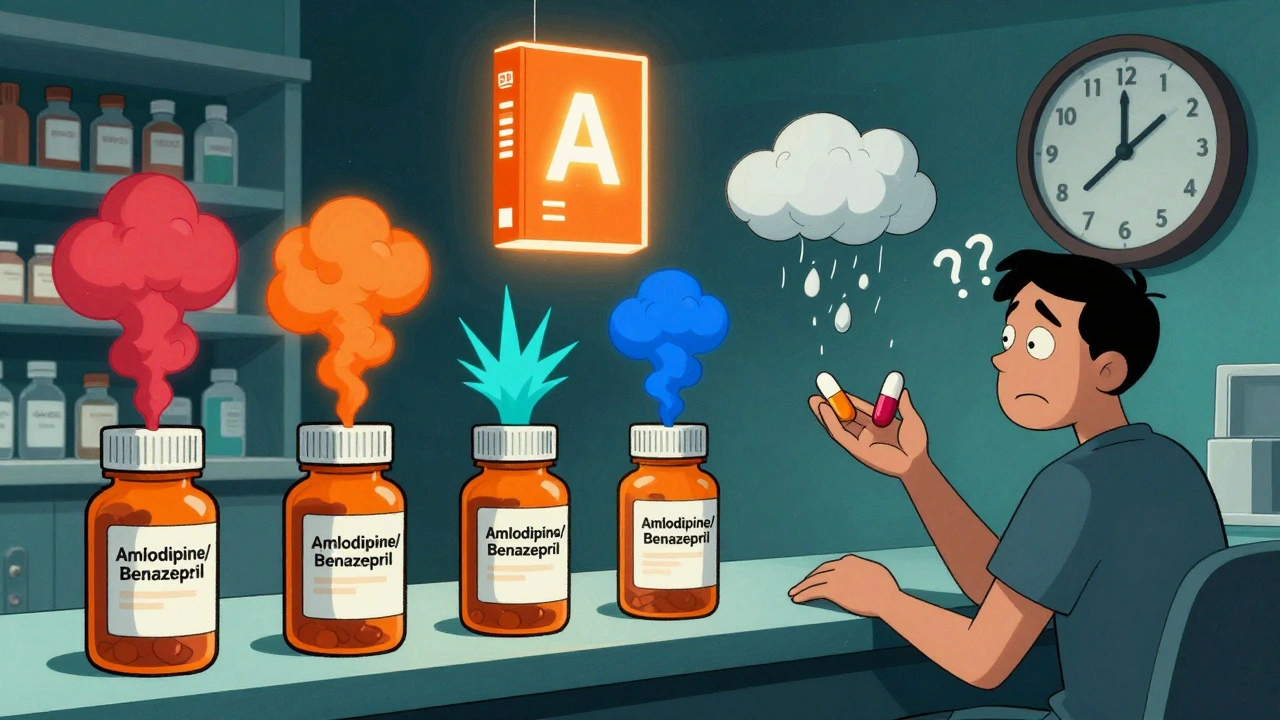
When two or more drugs are combined into a single pill or formulation, the goal is simple: better results with fewer pills. But what happens when you swap one brand for another, or switch from brand to generic? That’s where therapeutic equivalence becomes critical. It’s not enough for two combination products to have the same active ingredients. They must deliver the same clinical effect at the same dose - and that’s harder than it sounds.
What Therapeutic Equivalence Really Means
Therapeutic equivalence isn’t just about matching ingredients. The U.S. FDA defines it strictly: two products are therapeutically equivalent if they contain the same active ingredients, in the same strength, dosage form, and route of administration, and they meet the same quality standards. That’s it. No more, no less.The FDA tracks this in the Orange Book, a public database updated monthly. As of 2023, over 14,000 drug products have been rated. About 95% of them carry an 'A' rating - meaning they’re considered interchangeable without risk. But that 5%? That’s where things get messy.
Take a common combination like amlodipine/benazepril for high blood pressure. Two different generics might both be rated 'A'. But one uses croscarmellose sodium as a filler, and the other uses sodium starch glycolate. Sounds harmless, right? Not always. In patients with slow digestion or absorption issues, that tiny difference can change how fast the drug hits the bloodstream. For a drug with a narrow therapeutic index - like warfarin or levothyroxine - even a 5% shift in absorption can mean a stroke or a thyroid crisis.
Dose Equivalence Isn’t Additive
Many assume that if Drug A and Drug B are each 50% effective on their own, combining them gives you 100% effectiveness. That’s wrong. Drug interactions don’t work like math. Sometimes they’re additive. Sometimes they’re synergistic - meaning together they do more than the sum of their parts. Other times, one drug blocks the other.Take tramadol and acetaminophen. Tramadol alone reduces pain by about 40%. Acetaminophen alone? Around 30%. Together, patients report up to 75% pain relief. That’s not 70%. It’s more. That’s synergy. But if you switch from one brand of this combo to another, and the doses are labeled the same, you might not get the same result. Why? Because the release profiles can differ. One might release tramadol slowly over 8 hours. Another might spike it in 2. That changes how the body processes both drugs.
Researchers use complex formulas like beq(a) = CBγ(1+CAa)−1 to calculate dose equivalence in combinations. Don’t panic - you don’t need to memorize it. But you do need to know: equal labels don’t mean equal effects. A 10/325 mg tramadol/acetaminophen tablet from Manufacturer X isn’t guaranteed to behave like the same dose from Manufacturer Y. The FDA allows a 20% variation in bioavailability for most drugs. For NTI drugs - those with a narrow therapeutic index - that window shrinks to just 11%.
Why Generic Switches Go Wrong
Generic drugs save the U.S. healthcare system over $1.7 trillion a decade. That’s huge. But savings shouldn’t come at the cost of safety.A 2018 study in the Journal of Clinical Endocrinology & Metabolism found that 12% of patients on levothyroxine had abnormal thyroid levels after switching between generic brands - even though all met FDA bioequivalence standards. Why? Because the inactive ingredients affected how the thyroid hormone was absorbed. In combination products, that problem gets worse. If you’re on a combo like ezetimibe/simvastatin (Vytorin), and you switch to a generic, subtle differences in how the two drugs are released can throw off lipid control. One nurse practitioner reported a patient’s LDL jumped 15% after the switch. The doctor didn’t catch it for weeks.
Another common issue: different manufacturers use different strengths in their combo products. Amlodipine/benazepril comes in 5/10, 5/20, 10/10, and 10/20 mg versions. A pharmacist might substitute a 5/20 for a 10/10 because they’re both labeled “equivalent.” But 5 mg of amlodipine isn’t the same as 10 mg. The patient ends up with too little blood pressure control - or too much, leading to dizziness and falls.
According to the FDA’s Adverse Event Reporting System, 247 incidents in 2022 involved dose conversion errors in combination products. Nearly 40% involved cardiovascular drugs. Another 30% were psychiatric combos like sertraline/olanzapine. These aren’t theoretical risks. These are real patients getting sicker because someone assumed “same name = same effect.”

How to Manage This Safely
There’s no magic bullet. But there are proven steps to reduce risk.- Check the Orange Book. Don’t rely on pharmacy software alone. Verify the TE code. If it’s an 'A' rating, you’re good - but only if the strength and formulation match exactly.
- Don’t swap NTI combos without monitoring. If the patient is on warfarin + amiodarone, or levothyroxine + a calcium blocker, switch only with lab follow-up. Wait 6 weeks. Recheck INR or TSH. Don’t assume.
- Use barcode scanning. Many hospitals now require scanning the exact product before dispensing. This prevents substitution errors between similar-looking packages.
- Keep a 72-hour watch. After switching any combination product, especially in elderly or frail patients, monitor for changes in symptoms, labs, or side effects. A 10% drop in kidney function or a rise in anxiety might mean the new version isn’t working the same way.
- Document the switch. If you switch a patient from Brand X to Generic Y, write it down. Include the manufacturer name and lot number. If something goes wrong, that paper trail matters.
One hospital in California cut substitution errors by 65% after requiring a 40-hour training program for all pharmacy staff. That’s not just about rules. It’s about mindset. You’re not just filling a prescription. You’re managing a complex biological system.
The Bigger Picture: Where This Is Headed
The FDA is working on new tools to predict when a generic combo might fail. Early AI models have 89% accuracy in flagging risky substitutions based on filler differences and release profiles. By 2030, the NIH predicts that 30% of therapeutic equivalence decisions will include genetic data - like whether a patient is a slow or fast metabolizer of certain drugs. That’s personalization.But until then, we’re stuck with imperfect systems. The European Medicines Agency requires extra testing for combos where components absorb at different rates. The U.S. doesn’t yet. That’s a gap.
And then there’s the rise of combination biologics - drugs made from living cells, not chemicals. These are harder to copy. As of 2023, only 3 of 47 approved combination biologics have any therapeutic equivalence framework at all. That’s a ticking time bomb.

Bottom Line: Trust, But Verify
Therapeutic equivalence is a powerful tool. It lets patients afford life-saving meds. But it’s not a guarantee. Two pills with the same name can behave differently in your body. That’s why pharmacists and prescribers need to treat combination products with extra caution.Don’t assume. Don’t guess. Don’t let cost savings override safety. When in doubt, stick with the original. Or, if you must switch, monitor closely. Because in combination therapy, the whole is more than the sum of its parts - and sometimes, that means the whole can break.
What does an 'A' rating mean in the FDA Orange Book?
An 'A' rating means the drug product has been evaluated by the FDA and found to be therapeutically equivalent to the reference listed drug. This means it has the same active ingredients, strength, dosage form, route of administration, and meets the same quality standards. It can be substituted without clinical concern - as long as the strength matches exactly.
Can two generic combination products with the same TE code be different?
Yes. Two generics can have the same 'A' rating but contain different inactive ingredients - like fillers, binders, or coatings. These don’t affect the active drug, but they can change how quickly the drug is absorbed, especially in patients with gastrointestinal issues or those on multiple meds. For drugs with a narrow therapeutic index, this can matter.
Why are NTI drugs riskier in combination products?
Narrow therapeutic index (NTI) drugs have a very small window between an effective dose and a toxic one. Examples include warfarin, levothyroxine, and phenytoin. Even a 10% change in blood levels can cause serious harm. When combined with another drug, absorption or metabolism can shift unpredictably. The FDA requires a tighter bioequivalence range (90-111%) for NTI drugs, but switching between generics still carries risk.
Is it safe to switch between brand-name and generic combination products?
For most patients, yes - if the product has an 'A' rating and the strength matches. But for patients with chronic conditions, the elderly, or those on multiple medications, switching can cause unexpected changes in response. Always monitor labs or symptoms after a switch. If the patient feels worse, don’t assume it’s “just in their head.” It might be the formulation.
How can pharmacies reduce errors with combination products?
Pharmacies can reduce errors by: using barcode scanning to confirm exact product and strength, maintaining a list of high-risk combinations (like NTI combos), training staff on therapeutic equivalence nuances, requiring prescriber approval for substitutions on sensitive drugs, and documenting every switch with manufacturer and lot number. A 72-hour follow-up protocol for high-risk patients also helps catch issues early.
What to Do Next
If you’re a clinician: Review your patients on combination products. Are they on generics? When did they last switch? Are they on an NTI drug? If yes, schedule a follow-up. Check labs. Ask how they’re feeling.If you’re a pharmacist: Don’t auto-substitute without checking the Orange Book and the patient’s history. Flag high-risk combos in your system. Talk to the prescriber before switching.
If you’re a patient: Know what you’re taking. If your pill looks different, ask why. Don’t assume it’s the same. If you feel different after a switch - dizzy, anxious, weak - tell your provider. It might not be you. It might be the pill.
Bee Floyd
December 2, 2025 AT 08:03Been there. Switched my grandma’s levothyroxine generic last year - she started zoning out at breakfast. Turned out the new brand used a different binder. Took three weeks and three labs to catch it. Now I check the manufacturer like it’s a wine label. "A" rating doesn’t mean "same soul".
Jeremy Butler
December 2, 2025 AT 18:36It is axiomatic that pharmaceutical equivalence, as codified by the Food and Drug Administration, constitutes a necessary but insufficient condition for therapeutic interchangeability. The ontological gap between molecular identity and physiological outcome remains unaddressed by regulatory frameworks predicated upon quantifiable bioavailability metrics alone. One must therefore entertain the epistemological uncertainty inherent in substitution protocols.
Shashank Vira
December 2, 2025 AT 22:02Oh please. You think this is new? In Mumbai, we’ve been seeing this since 2010 - patients on the same generic, same dose, same ‘A’ rating, but one brand makes them feel like they’ve been hit by a truck, the other lets them run marathons. The FDA doesn’t care about the *feel*. They care about the numbers. But the body? It remembers the ghost in the machine. The filler. The coating. The silent saboteur.
Eric Vlach
December 3, 2025 AT 22:19My pharmacy techs used to swap combos like it was a game of poker. Then one guy’s dad had a seizure after switching his seizure med combo. Now we scan every single pill. Lot numbers. Manufacturer. Even if it’s "same thing." It’s not. And yeah I’m lazy but this isn’t optional. Don’t gamble with brains.
Souvik Datta
December 5, 2025 AT 03:12This is why I always tell my patients: Don’t just take the pill - know the pill. Ask your pharmacist: Who made it? What’s in the shell? Is this the one that worked before? You’re not just a patient - you’re the CEO of your own body. And CEOs don’t accept random upgrades without testing the new version first. Track your symptoms. Keep a journal. Your life isn’t a batch test.
Irving Steinberg
December 5, 2025 AT 09:59so like… if i switch from one generic to another and suddenly i feel like i’m slowly turning into a zombie… is that just my imagination? 😅 maybe i just need more coffee? 🤔
Matt Dean
December 6, 2025 AT 15:34Anyone who gets mad about generic switches is just scared of saving money. You think your body’s that special? If the FDA says it’s equivalent, it’s equivalent. Stop being a hypochondriac and trust the system. People have been taking generics for 30 years and we’re still here. Also, your anxiety is probably just caffeine.
Walker Alvey
December 7, 2025 AT 05:05Wow. A whole article about how pills aren’t magic. Who knew? 🙄 The FDA’s 20% bioavailability window? That’s not a loophole. It’s a goddamn invitation for chaos. And we wonder why people get sicker after switching. We treat medicine like IKEA furniture - same box, different instructions. And then we’re shocked when the shelf collapses.