
What’s the Difference Between Neoadjuvant and Adjuvant Therapy?
When you’re facing cancer that can be removed with surgery, timing matters. Neoadjuvant therapy is treatment given before surgery. Adjuvant therapy is treatment given after surgery. Both aim to kill cancer cells that might still be hiding in your body. But how you sequence them changes what you learn, how you feel, and even your chances of staying cancer-free.
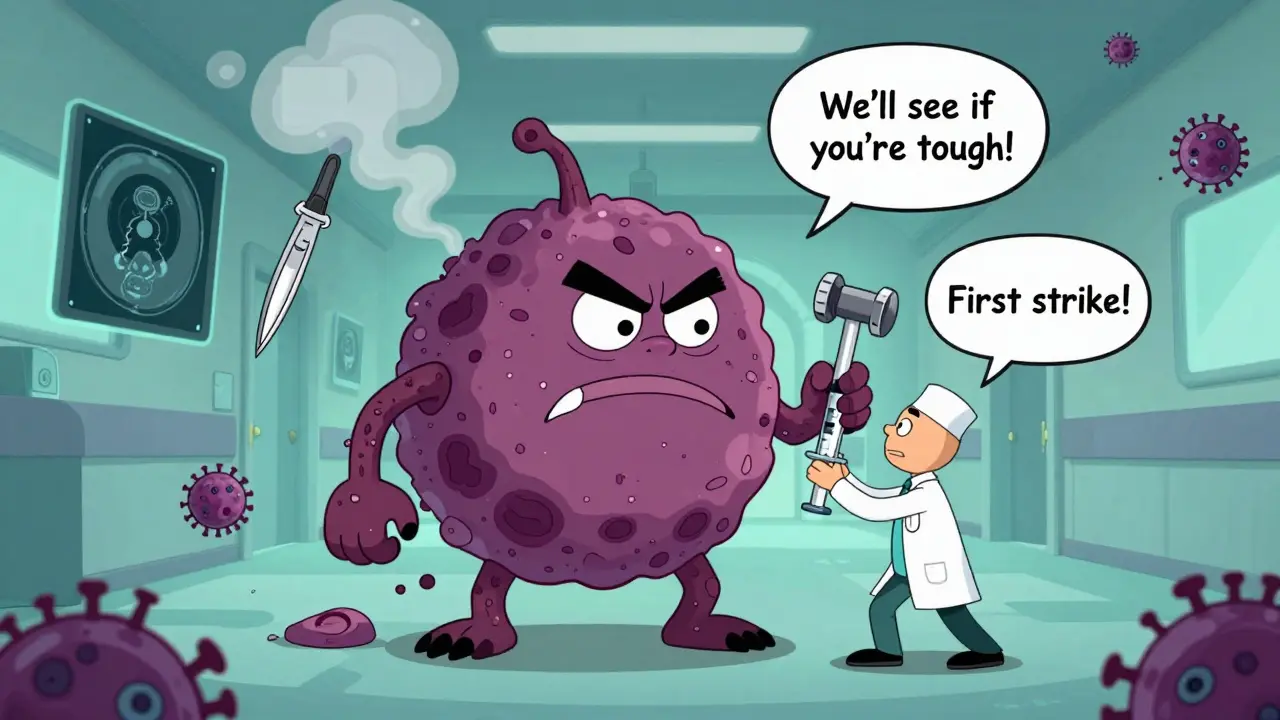
Neoadjuvant therapy shrinks tumors before the scalpel comes out. It’s not just about making surgery easier-it’s about seeing how your cancer reacts to drugs in real time. If the tumor dies off during treatment, that’s a good sign. If it doesn’t? That tells your doctors something important: this cancer might be tougher to treat. Adjuvant therapy, on the other hand, is like cleaning up after the fact. You’ve already had surgery, and now you’re hitting any leftover cells with chemo, immunotherapy, or radiation.
Why Do Doctors Choose Neoadjuvant Therapy?
Imagine you’re trying a new medicine. You wouldn’t just take it blindly and hope for the best. You’d want to know if it’s working. That’s the core idea behind neoadjuvant therapy. For cancers like non-small cell lung cancer (NSCLC) and triple-negative breast cancer (TNBC), giving treatment before surgery lets doctors see the tumor’s response.
In the CheckMate 816 trial, patients with stage IB to IIIA NSCLC got either chemotherapy alone or chemo plus the immunotherapy drug nivolumab. Those who got the combo had a 24% rate of pathologic complete response (pCR)-meaning no live cancer cells were found in the removed tumor. That’s compared to just 2.2% in the chemo-only group. And those who achieved pCR lived longer without the cancer coming back.
It’s not just about survival. Neoadjuvant therapy can make surgery less invasive. A tumor that was too big to remove safely might shrink enough to allow a less radical operation. For breast cancer patients, that could mean avoiding a full mastectomy and keeping the breast. In lung cancer, it might mean preserving more lung tissue.
And here’s the hidden benefit: treating cancer early means hitting it before it adapts. Tumors that are exposed to drugs before surgery are less likely to develop resistance. That’s why some oncologists call neoadjuvant therapy the “first strike.”
When Is Adjuvant Therapy the Better Choice?
Adjuvant therapy has its place-especially when surgery goes smoothly and there’s no time to wait. Some patients don’t want to delay surgery. Others have tumors that respond poorly to drugs, so their doctors skip neoadjuvant and go straight to post-op treatment.
For early-stage breast cancer, especially hormone receptor-positive types, adjuvant therapy has been the standard for decades. It’s proven. It’s predictable. And for many, it works.
But here’s the catch: with adjuvant therapy, you never know if the drugs were truly needed. You can’t see how the cancer reacted. You’re treating based on risk, not real-time evidence. If the cancer was already gone after surgery, you’ve exposed yourself to side effects for nothing. If it was still growing, you might have waited too long.
That’s why the tide is turning. In the last five years, more doctors are starting with neoadjuvant therapy-even for cancers where it wasn’t common before.
The Big Shift: Neoadjuvant-Only Is Gaining Ground
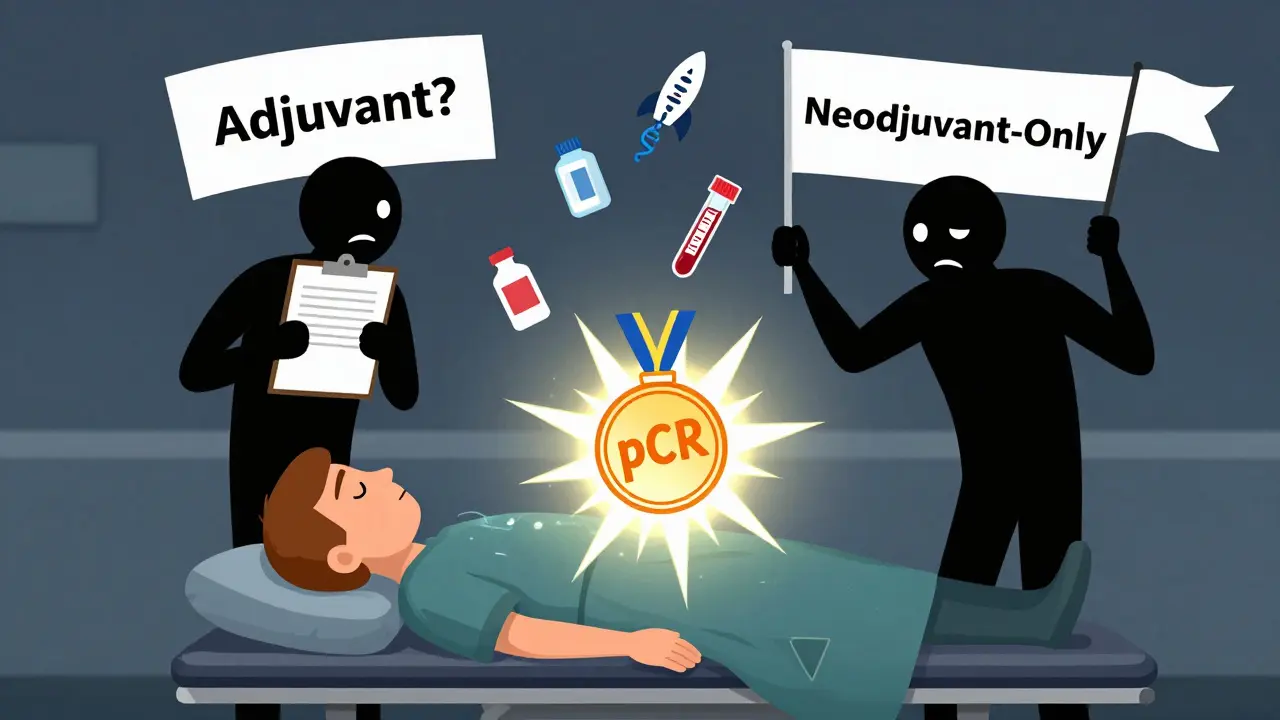
For years, the standard was neoadjuvant therapy plus adjuvant therapy. Give drugs before surgery, then give more after. But new data is challenging that.
A January 2024 analysis of four major trials-KEYNOTE-671, Neotorch, AEGEAN, and NADIM II-found that adding adjuvant immunotherapy didn’t improve survival compared to stopping after neoadjuvant treatment. The patients who got extra treatment after surgery had more side effects: nearly 30% had severe reactions, compared to 18% in the group that stopped after neoadjuvant.
Dr. Mark Awad from Dana-Farber Cancer Institute put it plainly: “The neoadjuvant-only approach may represent the optimal sequencing strategy for early-stage NSCLC.”
For lung cancer patients, this is huge. Immunotherapy drugs like nivolumab and pembrolizumab can cause fatigue, rash, and in rare cases, serious immune-related inflammation of the lungs, liver, or colon. If you don’t need the second round, why risk it?
The FDA approved nivolumab with chemo for neoadjuvant use in NSCLC in 2022, and then added approval for adjuvant nivolumab after surgery. But now, many experts are asking: do we really need both?
What About Breast Cancer?
In breast cancer, neoadjuvant therapy has been used longer-especially for aggressive subtypes like triple-negative and HER2-positive. About 35% of breast cancer patients in the U.S. now get treatment before surgery, up from just 8% in 2005.
For TNBC, achieving pCR after neoadjuvant chemo is a strong predictor of long-term survival. Patients who reach pCR have a 60-70% chance of surviving five years without recurrence. Those who don’t? Their risk is much higher.
That’s why doctors use neoadjuvant therapy as a test. If the tumor disappears, you know the drugs worked. If it doesn’t, you can switch to a different treatment after surgery-maybe a newer drug or a clinical trial.
One study of over 1,000 women with early-stage TNBC found no big difference in survival between those who got neoadjuvant therapy and those who got adjuvant. But here’s the twist: the women who achieved pCR with neoadjuvant therapy lived longer than those who didn’t. So it’s not that neoadjuvant is better overall-it’s that it helps you find out who needs more help.
Who Gets Which Treatment?
It’s not one-size-fits-all. Your cancer type, stage, and biology matter more than your preference.
- NSCLC (non-small cell lung cancer): Neoadjuvant chemoimmunotherapy is now standard for stage IB (tumor ≥4 cm) to IIIA. PD-L1 expression ≥1% makes you a better candidate for immunotherapy.
- Triple-negative breast cancer: Neoadjuvant chemo is recommended for stage II and III. If you achieve pCR, you may not need extra treatment.
- HER2-positive breast cancer: Neoadjuvant therapy with chemo and HER2-targeted drugs (like trastuzumab) is common. pCR rates are high-up to 60% in some cases.
- Hormone receptor-positive breast cancer: Usually treated with adjuvant hormone therapy. Neoadjuvant is considered only if the tumor is large or fast-growing.
Doctors also look at your overall health. Neoadjuvant therapy takes 9 to 12 weeks before surgery. If you’re too sick to wait, or if your cancer is growing fast, adjuvant might be safer.
What Are the Risks?
Neoadjuvant therapy isn’t risk-free. About 10-15% of patients experience side effects severe enough to delay surgery. That means more time with cancer in your body-and anxiety.
A 2023 survey found that 62% of NSCLC patients on neoadjuvant therapy worried their cancer would spread while waiting. That’s a lot of stress. And while rare, some tumors don’t respond at all. In 5-10% of NSCLC cases, the cancer keeps growing during neoadjuvant treatment, making surgery harder or impossible.
Adjuvant therapy has its own risks: you’re treating after surgery, when your body is still healing. Chemo can delay wound healing. Radiation can cause fatigue and skin damage. And if the cancer was already gone, you’ve gone through all that for nothing.
The key? Balance. Weigh the chance of a better outcome against the chance of unnecessary side effects.
How Do Doctors Decide?
It’s a team effort. Your oncologist, surgeon, radiologist, and pathologist all weigh in. They look at:
- Imaging scans (CT, PET, MRI) to measure tumor size
- Biomarker tests (PD-L1, HER2, BRCA, EGFR)
- How aggressive the cancer looks under the microscope
- Your age, overall health, and personal goals
Pathology after surgery is critical. If you had neoadjuvant therapy, the pathologist checks for pCR using standardized systems like the Miller-Payne scale for breast cancer or the CAP system for lung cancer. That result shapes everything that comes next.
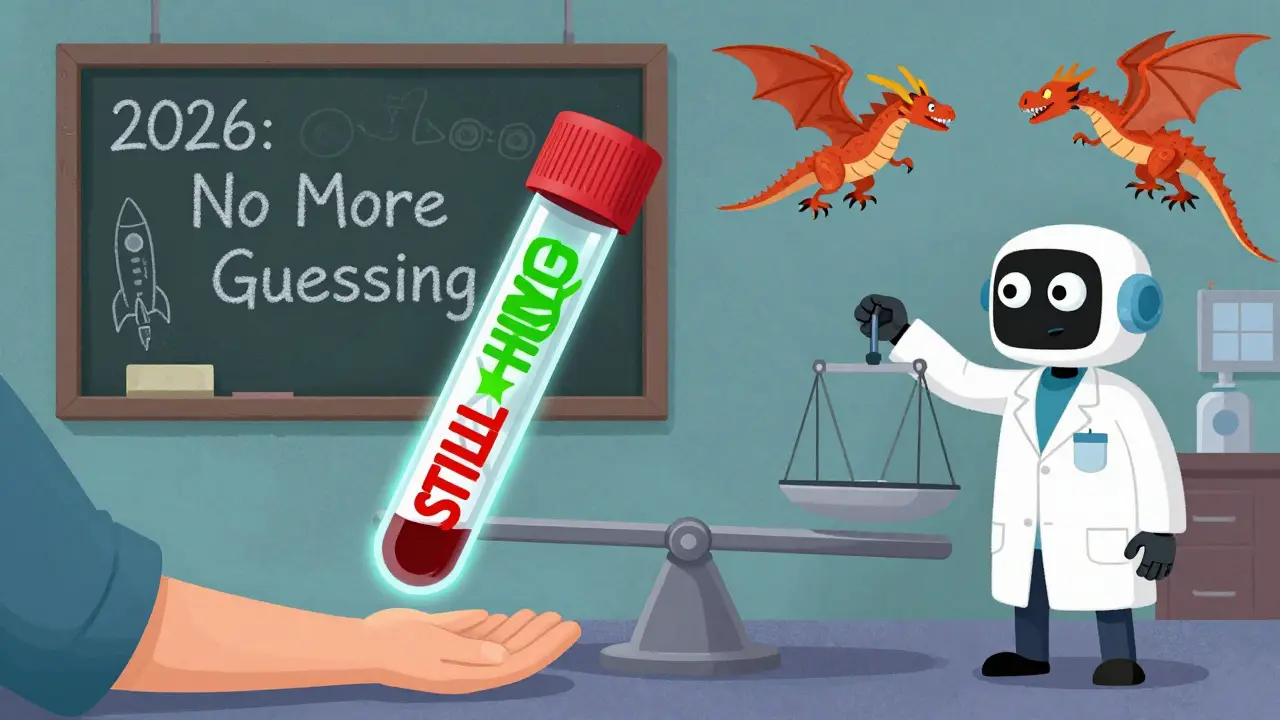
And now, a new tool is emerging: circulating tumor DNA (ctDNA). After surgery, doctors can test your blood for traces of cancer DNA. If it’s still there, you likely need more treatment. If it’s gone, you might be able to skip adjuvant therapy entirely. Twelve clinical trials are testing this right now.
What’s Changing in 2026?
Five years ago, neoadjuvant therapy was experimental for lung cancer. Now, it’s standard. The global market for neoadjuvant treatments is growing at nearly 10% a year. In the U.S., 78% of community oncologists now offer neoadjuvant chemoimmunotherapy for NSCLC-up from 42% in 2021.
Trials like KEYNOTE-867 and NeoADAURA are testing whether stopping after neoadjuvant is enough-or if we still need adjuvant for some. The NeoADAURA trial is looking at osimertinib for EGFR-mutant lung cancer. If it works, we could see neoadjuvant targeted therapy become routine.
By 2030, experts predict optimized sequencing could boost 5-year survival for early-stage NSCLC from 60-68% to 75-80%. That’s tens of thousands of lives saved every year.
The future isn’t about choosing neoadjuvant or adjuvant. It’s about using both smartly-starting with neoadjuvant to learn, then using biomarkers to decide if you need more.
What Should You Ask Your Doctor?
If you’re facing cancer surgery, here are five questions to ask:
- Is neoadjuvant therapy an option for my cancer type and stage?
- What’s my chance of achieving a pathologic complete response?
- Will we test for biomarkers like PD-L1 or EGFR before deciding?
- What happens if the tumor doesn’t shrink during neoadjuvant treatment?
- Will I need more treatment after surgery-and why?
Your treatment plan isn’t set in stone. It’s a conversation. And the more you know, the better you can work with your team to make the right call for you.
JUNE OHM
January 1, 2026 AT 14:44Philip Leth
January 2, 2026 AT 01:54Angela Goree
January 2, 2026 AT 04:06veronica guillen giles
January 2, 2026 AT 08:26Vincent Sunio
January 3, 2026 AT 06:00Sarah Little
January 4, 2026 AT 19:31innocent massawe
January 6, 2026 AT 19:29erica yabut
January 7, 2026 AT 06:05Tru Vista
January 8, 2026 AT 19:18