
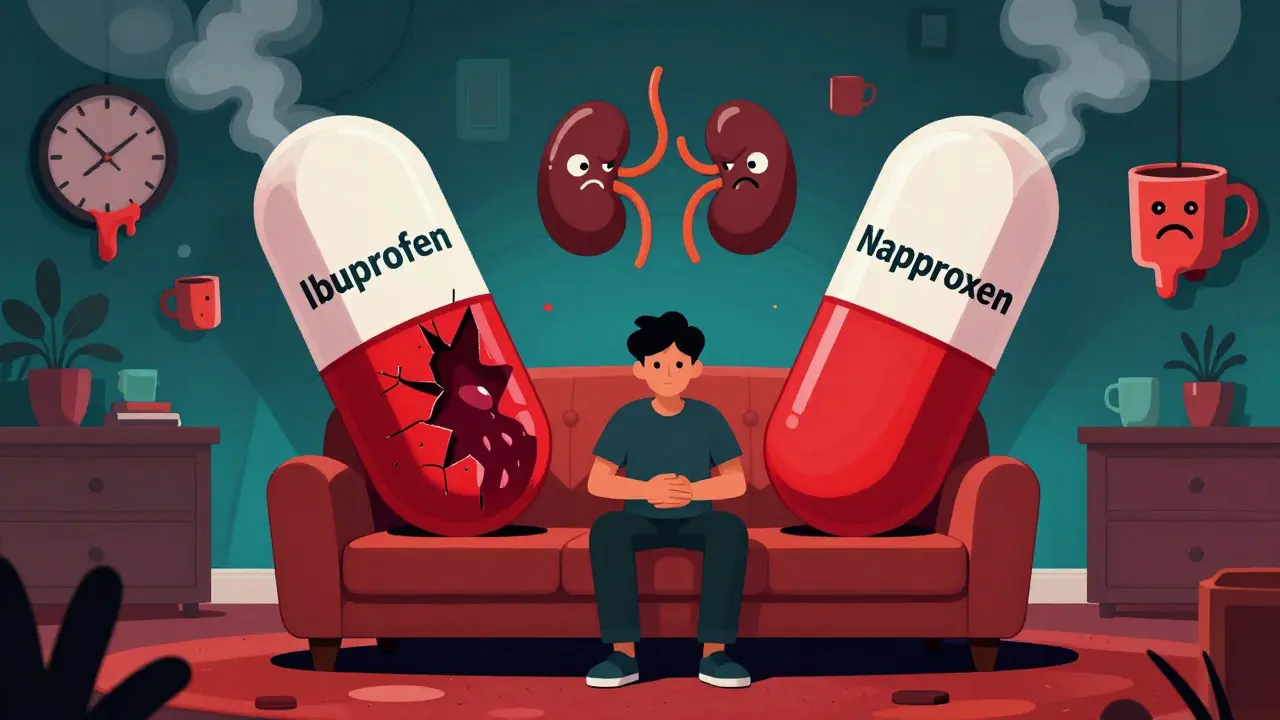
Every year, millions of people reach for ibuprofen, naproxen, or celecoxib to ease a headache, sore knee, or back pain. It’s quick, it’s easy, and it works. But what most people don’t realize is that these common painkillers carry hidden risks that can quietly damage your stomach, intestines, and kidneys-sometimes without warning.
How NSAIDs Hurt Your Stomach (Even When You Feel Fine)
NSAIDs work by blocking enzymes called COX-1 and COX-2. COX-2 causes inflammation and pain, so blocking it helps. But COX-1 protects your stomach lining by making prostaglandins that keep mucus and blood flow steady. When you take an NSAID, you’re not just turning off pain-you’re turning off your stomach’s natural defense system.This isn’t theoretical. About 1 in 5 long-term NSAID users develop a peptic ulcer. And here’s the scary part: half of those ulcers show no symptoms until they bleed. You might feel fine one day, then wake up with black, tarry stools-or end up in the ER with low iron from slow, unnoticed bleeding.
It’s not just ulcers. About 20%-40% of users get persistent indigestion, bloating, or nausea. Lower down, NSAIDs can damage the small intestine, causing inflammation, leaks, and even perforations. Unlike stomach ulcers, there’s no reliable way to prevent or heal this lower GI damage. No magic pill. No easy fix.
Your Kidneys Aren’t Immune Either
Your kidneys rely on prostaglandins to keep blood flowing through them, especially when you’re dehydrated, sick, or have high blood pressure. NSAIDs block those prostaglandins. That means less blood reaches your kidneys, which can cause sudden kidney injury-even in people who’ve never had kidney problems before.Studies show 1%-5% of NSAID users develop acute kidney injury. That number jumps to 15%-20% in people over 65, those with heart failure, diabetes, or existing kidney disease. Chronic use can lead to interstitial nephritis, high blood pressure, or even permanent damage called papillary necrosis.
The FDA now requires all prescription NSAIDs to carry a boxed warning about kidney risks in patients over 65. But many people still don’t know this. And even fewer get their kidney function checked after starting an NSAID.
Not All NSAIDs Are Created Equal
If you’re taking NSAIDs long-term, the type matters. Naproxen carries a 4.2 times higher risk of upper GI bleeding than not taking any. Celecoxib, a COX-2 inhibitor, is safer for the stomach-only 1.9 times higher risk. But here’s the trade-off: celecoxib may raise your risk of heart attack or stroke, especially if you already have heart disease.Ibuprofen, the most common OTC NSAID, is 2.7 times more likely to cause stomach bleeding than celecoxib. That’s not a small difference. And if you’re on blood thinners like warfarin or aspirin, your bleeding risk doubles.
There’s no perfect NSAID. The goal isn’t to find the safest one-it’s to use the lowest dose for the shortest time possible.
Monitoring: What You Need to Check and When
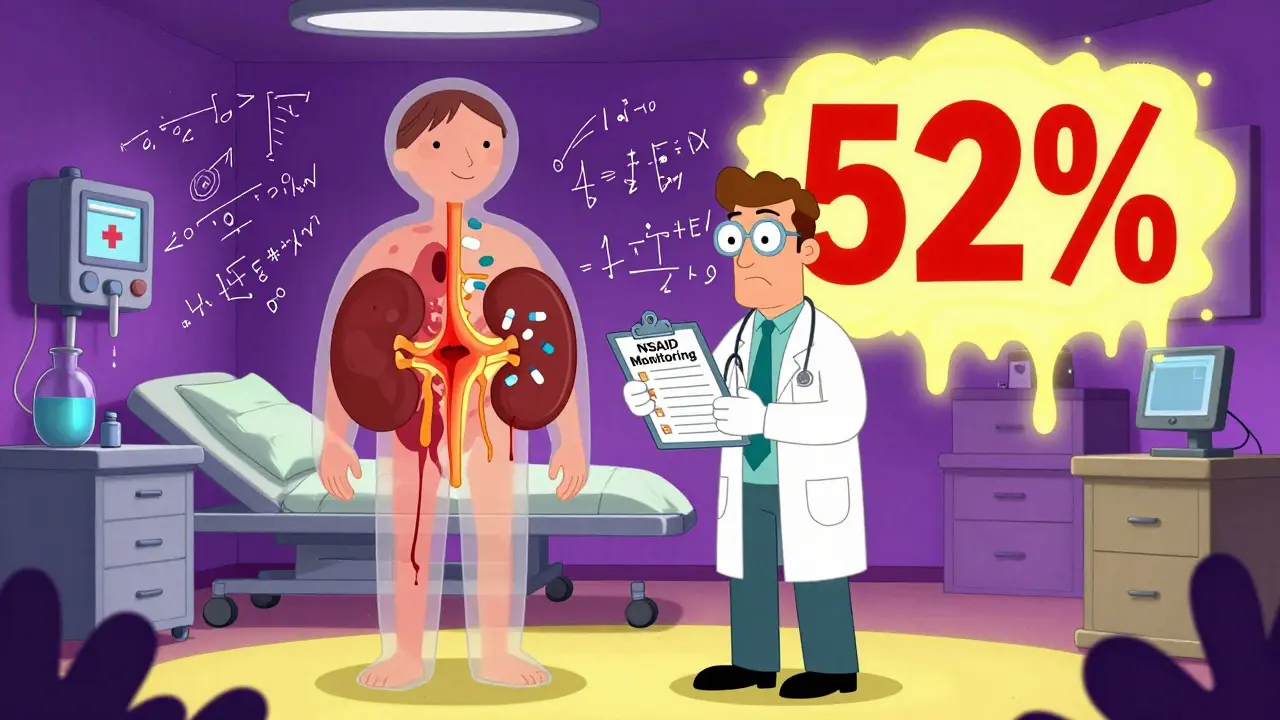
If you’re on NSAIDs for more than a few weeks, you need monitoring. Not optional. Not nice-to-have. Essential.- Serum creatinine: Get it checked within 30 days of starting, then every 3-6 months if you’re on it long-term. A rise of 0.3 mg/dL or more means your kidneys are under stress.
- Blood urea nitrogen (BUN): Often checked with creatinine. High levels suggest dehydration or kidney strain.
- Complete blood count (CBC): Looks for low hemoglobin-signs of slow, internal bleeding.
- Fecal occult blood test: Recommended every 6 months for high-risk users. Detects hidden blood in stool before you feel symptoms.
Doctors often skip these tests. A 2023 Medicare analysis found only 52% of NSAID users had creatinine checked within 90 days of starting. That’s a gap. A dangerous one.
Who’s at Highest Risk?
Not everyone needs the same level of caution. Use this simple risk calculator:- Age 65 or older: +2 points
- History of stomach ulcer or GI bleed: +3 points
- Taking blood thinners (warfarin, apixaban, etc.): +2 points
- Taking steroids (prednisone): +1 point
If your score is 4 or higher, you’re high risk. You shouldn’t be on NSAIDs without a proton pump inhibitor (PPI) like omeprazole. And even then, it’s not foolproof.
Here’s the twist: PPIs reduce ulcer risk by 70%-90%. But they come with their own dangers. Long-term use with NSAIDs increases your risk of microscopic colitis-chronic inflammation of the colon-by 6.24 times. That means you might trade a stomach ulcer for constant diarrhea.
What to Do Instead
The best strategy? Avoid NSAIDs when you can.- Try acetaminophen for pain-it’s gentler on the stomach and kidneys (but don’t exceed 3,000 mg/day).
- Use topical NSAIDs (gels or patches) for joint pain. They deliver less drug into your system.
- Physical therapy, heat, or braces can help with chronic pain like osteoarthritis.
- For inflammation, consider low-dose colchicine or corticosteroid injections under supervision.
If you must use NSAIDs:
- Use the smallest effective dose.
- Take it with food.
- Avoid alcohol.
- Stay hydrated.
- Never combine with other NSAIDs (e.g., ibuprofen + naproxen).
- Avoid SSRIs (like sertraline) if possible-they raise bleeding risk by over 3 times.

The Real Problem: We’re Using Them Too Long
Most people take NSAIDs for a few days. But 17% of adults over 45 use them chronically-often for osteoarthritis, back pain, or headaches. That’s where the damage builds.Each extra week of use increases complication risk by 3%-5%. That’s not a typo. A year of daily ibuprofen? That’s a 156%-260% higher risk of serious side effects compared to just a week.
And it’s not just patients. Doctors miss it too. A 2023 survey found only 1 in 3 primary care physicians consistently screen for NSAID risks. That’s why pharmacist-led monitoring programs in the VA system cut complications by 31%.
What’s New in 2025?
There’s some hope on the horizon. Naproxcinod, a new NSAID that releases nitric oxide (which protects blood vessels), showed 58% fewer ulcers than naproxen in trials. It’s not yet widely available, but it’s a sign the field is moving.Also, a new point-of-care fecal test (FIT) for NSAID users launched in 2024. It detects hidden bleeding with 92% accuracy. Soon, your pharmacist might be able to do this test in 10 minutes during a refill.
But the biggest change? The patent for celecoxib expires in 2025. Generic versions will become cheaper. That could make safer NSAIDs more accessible-if doctors and patients actually choose them.
Bottom Line: Don’t Assume It’s Safe
NSAIDs are not harmless. They’re powerful drugs with real, documented risks. Your stomach and kidneys don’t scream before they break. That’s why you need to be proactive.If you’ve been on NSAIDs for more than 3 months:
- Ask your doctor for a creatinine test.
- Ask if you need a CBC or stool test.
- Ask if you really still need the NSAID-or if there’s a safer alternative.
Don’t wait for pain to turn into bleeding. Don’t wait for swelling in your legs to signal kidney trouble. The safest NSAID is the one you don’t take.
Can I take NSAIDs if I have high blood pressure?
NSAIDs can raise blood pressure and interfere with blood pressure medications like ACE inhibitors or diuretics. If you have hypertension, avoid long-term NSAID use. Acetaminophen is a safer pain option. If you must use an NSAID, monitor your blood pressure closely and talk to your doctor about alternatives.
Is it safe to take ibuprofen every day for arthritis?
Daily ibuprofen for arthritis increases your risk of stomach ulcers, kidney damage, and heart problems. The American College of Rheumatology recommends using the lowest dose possible and only for short periods. Consider physical therapy, weight management, or topical treatments first. If pain persists, ask about COX-2 inhibitors with a stomach-protecting drug like omeprazole.
Do I need a stomach pill if I take NSAIDs occasionally?
If you take NSAIDs less than twice a week and have no risk factors (like age over 65, past ulcers, or other medications), you likely don’t need a stomach pill. But if you take them more than 2-3 times a week, or have any risk factors, a proton pump inhibitor (PPI) is strongly recommended-even if you feel fine.
Can NSAIDs cause kidney damage in young people?
Yes. While older adults are at higher risk, young people can develop acute kidney injury from NSAIDs-especially if they’re dehydrated, exercising intensely, or taking them with other medications like antibiotics or diuretics. One case study showed a 28-year-old athlete developed kidney failure after 10 days of daily ibuprofen for a sports injury.
What are the signs of NSAID-related kidney problems?
Early signs are subtle: reduced urine output, swelling in ankles or legs, unexplained fatigue, or nausea. Later signs include confusion, shortness of breath, or chest pain. But often, there are no symptoms until damage is advanced. That’s why regular blood tests are critical-don’t wait for symptoms.
Are natural remedies like turmeric safer than NSAIDs?
Turmeric (curcumin) has mild anti-inflammatory effects and is generally safer for the stomach and kidneys than NSAIDs. But it’s not a direct replacement. Studies show it’s less effective for moderate to severe pain. If you’re switching from NSAIDs, do it gradually under medical supervision. Also, turmeric can interact with blood thinners, so talk to your doctor first.
Kelly Beck
January 6, 2026 AT 23:57Just wanted to say THANK YOU for this post 😊 I’ve been on naproxen for my arthritis for 2 years and had no idea my kidneys were silently screaming. I just got my creatinine checked last week-thankfully normal, but I’m switching to topical gel now. You’re a lifesaver!
Wesley Pereira
January 7, 2026 AT 22:37So let me get this straight-we’re being told to avoid NSAIDs because they’re ‘dangerous’ but the FDA still lets them sit next to gummy vitamins on pharmacy shelves? 🤔 Meanwhile, my doc prescribes them like they’re Advil gum. The system is broken. And yes, I’m on celecoxib with omeprazole. No, I don’t feel safe. But I can’t walk without it. Welcome to modern medicine.
Rachel Wermager
January 8, 2026 AT 11:10Actually, the COX-2 inhibition mechanism is oversimplified here. The real issue is the downstream reduction in PGE2, which modulates both gastric mucosal integrity and renal afferent arteriole tone. You’re conflating correlation with causation when you imply all NSAIDs are equally nephrotoxic-naproxen has a longer half-life and higher AUC, hence higher risk. Also, the 15-20% AKI stat in elderly is misleading without context of polypharmacy. This article reads like a pharma-funded scare piece.
Ashley S
January 9, 2026 AT 20:14Of course the doctors don’t check your labs. They’re paid by Big Pharma to keep you addicted to pills. I’ve been off NSAIDs for 3 years. I use ice packs, acupuncture, and prayer. My pain? Gone. My kidneys? Perfect. Why? Because I refused to be a lab rat. Wake up, sheeple.
Melanie Clark
January 11, 2026 AT 12:13So if I take ibuprofen once a week for my headache I’m basically signing a death warrant? I’m 42 and I’ve never had a stomach issue. Why are you scaring people with numbers? I don’t need a blood test every 3 months to take a pill that helps me work. This feels like medical gaslighting. You’re turning a simple painkiller into a horror movie.
Isaac Jules
January 13, 2026 AT 08:41LOL. You’re telling me celecoxib is ‘safer’? It’s literally a heart attack waiting to happen. And you want me to take PPIs? Those cause C. diff, osteoporosis, and dementia. You’re playing whack-a-mole with side effects. The real answer? Stop being a lazy human. Move. Stretch. Lose weight. Or accept that your body is breaking down because you sit on a couch 12 hours a day. NSAIDs are just the Band-Aid on a bullet wound.
Dana Termini
January 13, 2026 AT 18:25I appreciate the depth here. I’ve been on low-dose naproxen for 8 years after a car accident. My doctor never mentioned monitoring until I brought it up. I started doing fecal occult tests and found microscopic blood-turned out to be NSAID-induced enteropathy. I switched to acetaminophen and physical therapy. It’s not perfect, but I’m alive. Thank you for validating what I’ve been quietly fighting.
Indra Triawan
January 13, 2026 AT 22:30Is it not the same as asking why we drink water when we know it can drown us? Pain is a signal. NSAIDs silence the signal, not the source. We are not meant to live in a state of chemical neutrality. The body remembers. The soul remembers. The pills… just pretend.
Tom Swinton
January 15, 2026 AT 00:29I just want to say-I’m a 58-year-old with degenerative disc disease, and I’ve been reading this entire post with tears in my eyes. I’ve been taking ibuprofen daily since 2018. My last bloodwork showed creatinine at 1.4. I didn’t think it was a big deal. Now I’m scheduling a follow-up. I’m also starting yoga. I’m scared, but I’m ready. Thank you for not sugarcoating this. You gave me the nudge I needed.
Joann Absi
January 16, 2026 AT 10:48AMERICA IS BEING POISONED BY BIG PHARMA!!! 🇺🇸💊 This isn’t medicine-it’s a corporate assassination! They want you dependent! They want you weak! They want you paying for tests instead of healing! I’ve been using turmeric, cold showers, and chanting mantras since 2021. My pain? Reduced. My blood? Clean. My soul? Free. The system hates people like me. But I’m winning.
Jeane Hendrix
January 17, 2026 AT 16:07Wait-so if I’m on sertraline and take ibuprofen, my bleeding risk triples? I didn’t know that. I’ve been on both for years. Should I stop one? Both? I’m confused. I don’t want to be the person who ends up in the ER because I didn’t read the fine print. Can someone just tell me what to do without the jargon?
Kelly Beck
January 19, 2026 AT 05:53Jeane, I feel you 😊 I was on sertraline + naproxen too! My doc didn’t mention the interaction until I asked about stomach burning. We switched me to acetaminophen and added a low-dose PPI just in case. You’re not alone. It’s okay to ask for help. You’re doing great just by reading this. 💪❤️
Tom Swinton
January 20, 2026 AT 17:06To everyone who says ‘just stop taking NSAIDs’-have you ever tried to get out of bed at 6 a.m. with a spine that feels like shattered glass? It’s not laziness. It’s not weakness. It’s chronic pain. We’re not choosing pills over movement-we’re choosing movement over screaming. I’m not ‘addicted.’ I’m surviving. And if I need a creatinine test to do it safely? Then I’ll get it. Every 6 months. No shame. Just responsibility.