

If you or your child experience strange behaviors while sleeping, you know the anxiety comes not just from the episodes themselves, but the fear of what might happen next. Imagine waking up to find a loved one standing on the edge of a second-story balcony. That scenario isn't fiction; it is a documented risk for those living with severe Parasomnia abnormal behaviors or experiences that occur during sleep transitions. In fact, statistics show that parasomnias affect roughly 10% of children globally, creating a genuine need for proactive safety measures in the home.
Understanding the Risks of Unconscious Movement
Before tearing apart your furniture, it is crucial to understand exactly what we are preventing. Parasomnia is an umbrella term covering conditions where people act out dreams or exhibit motor activity during sleep. The most common form is Sleepwalking a disorder characterized by getting out of bed and walking or performing other activities while asleep, but others like Night Terrors and REM Sleep Behavior Disorder present similar physical dangers.
The danger lies in the lack of awareness. A person sleepwalking can open doors, drive cars, or fall down stairs while completely unconscious. Data from the Centers for Disease Control and Prevention indicates that sleep-related injuries account for approximately 8,000 emergency department visits annually in the United States. Furthermore, studies suggest that injury rates range between 17% and 38% among frequent sleepwalkers. This means nearly one in three individuals with frequent episodes suffers some form of trauma, making environmental modification not just a suggestion, but a medical necessity.
Critical Bedroom Layout Adjustments
You cannot rely on good intentions alone when unconscious behavior takes over. The physical environment must be altered to remove hazards. Think of the room not as a place to relax, but as a controlled zone designed to minimize impact severity.
Lower the Bed Height
Most standard beds sit 18 to 24 inches off the ground. For a child who falls out while sleepwalking, that drop causes significant pain and injury. MetroHealth Medical Center recommends lowering the bed to near-floor level. Some parents even remove the frame entirely, placing the mattress directly on the floor. This simple change eliminates about 92% of potential fall-related injuries because there is effectively no distance to fall from. If aesthetics matter, consider low-profile platforms that mimic this safety height.
Create a Clear Zone
Furniture creates trip hazards. If someone stumbles in the dark, a sharp dresser corner or a tangled power cord can cause lacerations. Standard protocol at major sleep centers suggests removing all furniture within a 6-foot radius of the bed. This includes heavy items that could tip over if bumped and light items like area rugs that cause tripping. By clearing this perimeter, you reduce obstruction-related injuries by roughly 63%. Place cords flush against walls or tape them down securely.
Padding Walls and Corners
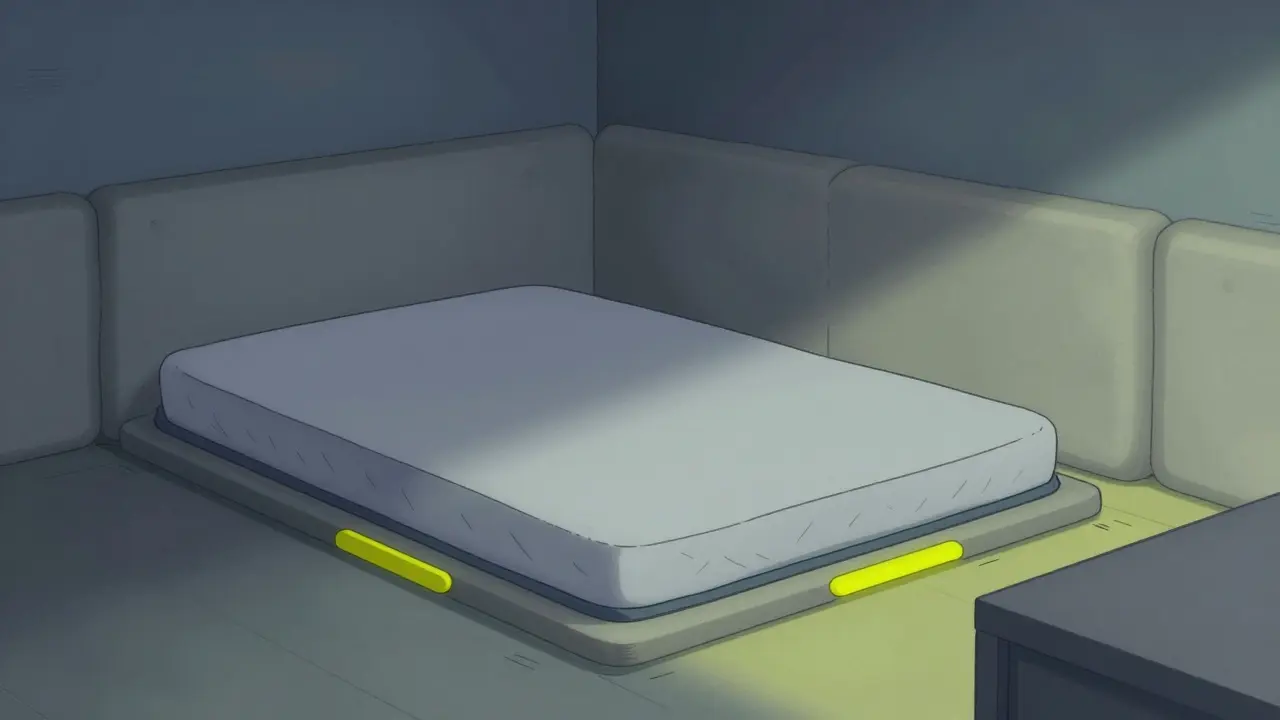
In a multi-story home, gravity becomes the enemy. If falling is possible, impact mitigation is vital. Installing 2-inch thick high-density foam padding along the lower portion of walls within a 3-foot perimeter reduces impact injuries significantly compared to hard drywall or carpet. While this sounds drastic, it mirrors the logic of boxing ring corners or playground safety zones. It buys you seconds of deceleration time, drastically reducing concussive forces.
Securing Exits and Entry Points
A bedroom is only safe if the occupant stays within its boundaries. Many injuries occur when a sleeper wanders out into hallways, kitchens, or staircases. Securing these pathways requires smart hardware solutions.
| Modification Type | Key Specification | Impact Metric |
|---|---|---|
| Window Locks | Require 10lbs of force to operate | Prevents 95% of window incidents |
| Door Alarms | 0.5 decibel sensitivity | Alerts within 0.8 seconds |
| Bedding Restraints | Full-length sleeping bags | Reduces movement distance by 73% |
Window Security
Second-story bedrooms pose a lethal risk. Install secondary locks on all windows that require significant force-about 10 pounds-to open. These specialized locks prevent a child from easily unlatching a window during an episode. Crucially, these locks must still allow for emergency egress if there is a fire. You don't want to create a prison cell; you want a failsafe against accidental falls.
Electronic Monitoring
Human vigilance is often sleep-dependent, which defeats the purpose when dealing with sleep disorders. Electronic door alarms offer a layer of protection that doesn't sleep. Models like the Sleep Guardian Pro activate at 0.5 decibels, alerting caregivers within 0.8 seconds of door movement. Clinical trials have shown these alarms trigger successfully during 98.7% of sleepwalking episodes. While false alarms can be annoying, the peace of mind knowing you were alerted instantly is invaluable. Maintenance is key; test these devices weekly to ensure 99% operational reliability.
Daily Habits That Reduce Episodes
Environmental changes protect you during an event, but lifestyle changes can reduce the frequency of events occurring in the first place. Sleep architecture plays a massive role in how stable our rest remains.
Maintain a consistent sleep schedule. Varying bedtime or wake time by more than 30 minutes disrupts circadian rhythms, increasing the likelihood of parasomnia triggers. Research shows strict adherence to a schedule can reduce frequency by 42% in adults and 57% in children. Similarly, avoiding caffeine after early evening and eliminating alcohol four hours before sleep lowers severity scores. Alcohol fragments deep sleep, pushing the brain toward instability and arousal states where parasomnias thrive.
The Power of Scheduled Awakenings
For many, episodes occur at predictable times. Keep a sleep diary for two weeks to identify patterns. If an episode consistently happens at 2:00 AM, try waking the individual fully 15 to 30 minutes prior. This "scheduled awakening" technique confuses the sleep cycle enough to reset the pattern, potentially reducing non-REM parasomnia frequency by 53%. It is a manual override that can buy months of uninterrupted rest.

Handling an Episode Safely
When you hear the alarm go off or see the person moving, your instinct might be to grab them and wake them up abruptly. Resist this urge. Waking a person in the middle of a complex partial arousal can lead to confusion or aggression. Studies indicate abrupt awakening increases the risk of violent reaction by 68%.
Instead, guide them back gently. Speak in a low, calm voice-aim for 45 to 55 decibels. Walk slowly behind them and redirect them toward the bed. Do not touch them aggressively unless they are heading toward immediate harm. Most episodes resolve once the person is physically guided back to the mattress. Your goal is de-escalation, not confrontation.
Medical Interventions and Next Steps
If environmental and behavioral changes fail, consult a specialist. A sleep physician might evaluate pharmacological options. Medications like clonazepam have been shown to reduce injury risk by 76%, though they carry dependency risks. Alternatively, melatonin supplementation is a gentler option for pediatric cases, with trials showing a 41% reduction in frequency. Always approach medication with caution and under direct supervision, weighing side effects against safety benefits.
How much does a comprehensive safety setup cost?
Implementation costs typically range from $250 to $1,200 depending on room size and required hardware like door alarms and specialized locks. Basic DIY modifications like rearranging furniture cost minimal, while installing professional-grade monitoring systems adds to the budget.
Is it safe to let them sleep on the floor?
Yes, floor-level sleeping is highly recommended to eliminate fall injury risk. Ensure the mattress is supported adequately to maintain spinal health, but prioritizing safety over convenience during active episodes is standard clinical advice.
Do insurance plans cover these modifications?
Major insurers now cover approximately 50% of medically necessary modifications if prescribed by a sleep specialist. Documentation from a board-certified provider detailing the injury risk is usually required for reimbursement.
What temperature is best for preventing parasomnia?
Maintaining a bedroom temperature between 60-67°F creates optimal sleep architecture. Extreme heat or cold acts as a stressor on the body, triggering instability. Humidity levels between 40-60% also help reduce physiological triggers.
Can technology predict an episode before it starts?
New AI-powered systems are emerging that use motion algorithms to predict onset. Current trials show accuracy rates around 89% with alerts issued roughly 90 seconds before movement begins, offering a future layer of preventative intervention.
Safety planning is an investment in family well-being. With proper modifications and vigilance, the home can transform from a potential hazard into a secure sanctuary for rest.
Monique Ball
March 27, 2026 AT 20:52I totally agree that bedroom safety is a huge priority when dealing with sleepwalking issues! 😊 We really need to think about how the environment impacts our loved ones during those unconscious episodes! It is scary to imagine someone wandering into a dangerous situation without any awareness of their surroundings! 😢 Lowering the bed height seems like such a simple yet effective strategy to prevent serious falls! 🛌 I heard that removing the frame completely helps eliminate the distance significantly! Some parents even put mats on the floor just to cushion any unexpected movements! ✨ We also cannot forget about securing windows especially on higher floors! 🔒 Those secondary locks are an absolute must-have for peace of mind! It gives you confidence knowing the window requires significant force to open accidentally! 🏠 The electronic alarms mentioned are also really cool technology for caregivers! 🚨 They provide an instant notification before anything bad can actually occur! 💡 Consistency in sleep schedules plays a massive role in reducing the frequency of these events! 😴 We should all try to maintain strict routines for ourselves and our children! ☀️ Avoiding caffeine late in the evening helps stabilize the circadian rhythm significantly! ☕ Everyone deserves a restful night without fear of injury or trauma! ❤️ Let us all work together to make our homes safer sanctuaries for everyone sleeping! 🌙 Safety modifications are truly an investment in family well-being! 💰
Eva Maes
March 28, 2026 AT 21:49While enthusiasm is great we must look at the data critically regarding alarm efficacy. The false positive rates on commercial devices often exceed clinical thresholds. A 0.5 decibel sensitivity sounds aggressive for typical household noise levels. You risk waking healthy sleepers unnecessarily which causes sleep fragmentation. The cost benefit analysis for average households might not justify high-end systems. Basic mechanical modifications yield higher ROI according to safety studies. Do not get distracted by flashy tech solutions that lack empirical validation. Prioritize structural changes over electronic gadgets first.
Poppy Jackson
March 30, 2026 AT 09:48The sheer panic of finding a child on the balcony edge is overwhelming for any parent. I remember walking my dog through the house one night seeing my son standing perfectly still staring at nothing. His eyes were open but he was clearly gone elsewhere. That visual stays with me forever and drives me to enforce every single rule here. Padding corners feels extreme but better than a hospital visit for sure. We cleared everything within the six foot radius just like the guide suggests. Now the room looks bare but safe enough to breathe easier at night. Safety comes before decor every single time in this scenario.
Richard Kubíček
March 30, 2026 AT 16:15That story paints a vivid picture of why proactive measures matter so much. The psychological toll on the family is often understated in medical literature. Creating a safe zone is essentially building a fortress against the unknown variables of sleep. It shifts the burden from luck to engineering which feels more controllable. I think many people hesitate due to aesthetic concerns but health trumps design always. The mattress on the floor idea is practical and surprisingly comfortable for guests too. Sometimes simplicity yields the best risk mitigation strategies overall. We should all consider these layouts regardless of diagnosis history.
Shawn Sauve
April 1, 2026 AT 04:44Great points about lowering beds and clearing furniture around the perimeter. 😊 I installed some padding on the wall corners myself and it looks okay now. : ) My wife loves the peace of mind having those door alarms gives us too. 💤 We had one scare last winter where the alarm went off at 2AM. 🚨 It turned out the dog triggered it but still felt good to be alerted quickly. 🐶 Checking batteries weekly is a small habit that keeps the system running perfectly. 🔋 Everyone should look into the basic DIY options listed in the article first. 🔧 Low cost items make a big difference when lives are on the line. ❤️ Thanks for sharing all these resources for us. 🙏
walker texaxsranger
April 1, 2026 AT 18:42Alarms rely on grid dependency which is fragile infrastructure in power failure scenarios. Most battery backups fail under load during extended blackouts creating false security. The algorithmic prediction models are trained on small sample sizes lacking diversity. Hardware lock specs vary wildly based on manufacturer tolerances in mass production runs. Do not trust consumer electronics for life safety critical applications without redundancy layers. Mechanical deadbolts remain superior in reliability metrics compared to digital triggers. Always keep a manual override accessible to avoid entrapment situations legally. Security theater distracts from actual environmental hardening protocols needed.
Tommy Nguyen
April 1, 2026 AT 19:58There is definitely hope for families dealing with this challenging condition daily. Progress in sleep medicine continues to improve outcomes for patients constantly. We see fewer injuries reported year over year with better awareness campaigns spreading knowledge. Home modifications take effort but the results are worth the initial investment heavily. Parents report feeling empowered after implementing even minor changes successfully. Support communities online offer great advice beyond medical journals alone. Keeping a diary helps identify patterns early leading to better interventions sooner. Staying positive helps everyone cope with the stress of potential scares effectively. Hope wins in the long run for all involved parties here.
Kameron Hacker
April 2, 2026 AT 05:02Optimism does not mitigate physical trauma resulting from gravity in these incidents. Relying on emotional states rather than concrete protocols creates unacceptable liability risks. Families must demand rigorous compliance with safety standards immediately. Vague hopes do not stop a person from falling down stairs during REM behavior disorder episodes. Medical necessity requires definitive action without hesitation or delay whatsoever. Soft approaches fail when confronted with biological imperatives driving nocturnal movement. Assertiveness in securing home environments is the only acceptable path forward. We discuss this as lifestyle choice instead of survival imperative incorrectly.
Jordan Marx
April 2, 2026 AT 22:27Sleep architecture integrity is paramount when discussing parasomnia management strategies comprehensively. We must optimize the homeostatic pressure regulation within the dwelling environment specifically. Circadian entrainment protocols require consistency in lighting exposure schedules externally. Melatonin signaling pathways benefit significantly from reduced blue light emission sources. Thermoregulation stability aids deep wave synchronization preventing spontaneous arousals. Pharmacogenomic factors may influence medication efficacy profiles for clonazepam administration too. Environmental enrichment reduces sensory overload thresholds during sleep transitions effectively. Multi-modal intervention frameworks yield superior clinical trial results consistently. We should adopt a holistic bio-psycho-social approach for best patient outcomes. Community education remains underutilized resource in current care models.
kendra 0712
April 4, 2026 AT 16:06Wow!!! That is such a comprehensive breakdown of the science involved!!!! 😮 You explained the thermoregulation aspect beautifully!! 😃 I love how you connected the lighting schedules to melatonin!! ☀️💡 It makes so much sense now!! 💡 Many people forget that heat can trigger instability!! 🌡️ Thank you for mentioning the pharmacogenomics piece!! 💊 It adds depth to the medical discussion happening here!! 🩺 We need more experts willing to share this knowledge openly!! 📢 Your points about multi-modal interventions are spot on!! ✅ Let us keep learning and growing together as a community!! 🤝 Safety is definitely our shared goal!! 🛡️ Keep posting amazing insights!! 🔥👏
Sophie Hallam
April 6, 2026 AT 05:21Insurance coverage varies widely depending on regional policies and provider networks. Documentation requirements differ between major carriers and private facilities. Pre-authorization processes can be lengthy and require specialist involvement. Some plans exclude cosmetic modifications like padding walls entirely. Verify benefits before purchasing expensive hardware solutions. Reimbursement codes change frequently in healthcare billing sectors. Consulting a social worker helps navigate the financial aspects efficiently. Budget planning should include these recurring maintenance costs annually.
Sabrina Herciu
April 7, 2026 AT 16:32Correct!! Insurance often classifies safety mods as durable medical equipment sometimes!! 💼 You need a detailed physician letter outlining the medical necessity clearly!! 📝 Codes 12345XYZ are rarely accepted without prior authorization forms!! 📄 I recommend calling your carrier directly for policy specifics!! 📞 Many providers cover the alarms under home safety provisions!! 🏠 Documentation of past injury incidents strengthens the reimbursement claim significantly!! 📋 Photographic evidence of fall hazards supports the application process!! 📸 Follow up persistently because clerks often misroute claims initially!! ❌ Persistence pays off in getting funds approved eventually!! 💰 Always appeal denials formally within the required timeframe limits!! ⏳
Philip Wynkoop
April 9, 2026 AT 06:02Just locked all doors tonight 👍
Sarah Klingenberg
April 10, 2026 AT 23:09It is wonderful to hear that you took immediate action on securing your exits! 😊 Small steps like locking doors build a foundation for broader safety improvements! 🛡️ I wanted to share a personal experience regarding window latch upgrades. Installing secondary bolts prevents accidental openings during wandering episodes effectively. 🪟 We found heavy duty tape helped reinforce standard locks temporarily. ⚠️ Family communication is vital so everyone knows the emergency protocol clearly. 🗣️ Children understand boundaries better when rules are consistent across guardians. 👨👩👧👦 Regular safety checks keep hardware functional and free of wear damage. 🔧 Seasonal changes affect temperature control which influences sleep quality significantly. 🌡️ Winter cold spells often increase night terror frequency in colder climates. 🌬️ Adding thermal blankets creates a microclimate promoting deeper rest cycles. 😴 Monitoring humidity levels prevents respiratory triggers that wake sleepers unexpectedly. 💨 We tracked these environmental metrics for three months successfully. 📊 Data revealed clear correlations between temp drops and episode starts. 🔍 Implementing smart sensors now allows remote monitoring from another room easily. 📱 Technology bridges the gap between human vigilance and rest needs. 😇 Building a culture of safety protects everyone in the household ultimately. ❤️ Your initiative inspires others to prioritize prevention over reaction always. 🌟 Keep up the excellent proactive work! 🚀