

Imagine taking a pill that does absolutely nothing - no active ingredient, no chemical reaction in your body - yet you feel better. That’s the placebo effect. Now imagine that same pill, identical in every way, but labeled as a generic instead of a brand name. Suddenly, it doesn’t work as well. You don’t feel the same relief. You might even start noticing side effects you didn’t have before. This isn’t imagination. It’s science.
Identical Pills, Different Results
A 2014 study at the University of Auckland gave 87 students headache pills. Half got real ibuprofen. The other half got sugar pills. But here’s the twist: some sugar pills were labeled with a well-known brand name. Others were labeled as generic. The brand-labeled placebos reduced pain almost as much as the real drug. The generic-labeled ones? Barely any effect at all. The pills were chemically identical. The active ingredient? None. Yet the difference in pain relief was real - and measurable. Patients who thought they were taking a brand-name drug reported a 2.3-point drop on a 10-point pain scale. Those who thought they were taking a generic? Only 1.1 points. That’s not a small difference. That’s the difference between needing to lie down and being able to keep working. This isn’t just about headaches. Similar results showed up in Parkinson’s patients, people with chronic pain, and those on antidepressants. In one study, Parkinson’s patients given a placebo injection labeled as a $1,500 drug improved 28% more than those given the exact same injection labeled as a $100 drug. Their brains literally released more dopamine - the chemical tied to movement and motivation - because they believed the expensive pill was better.Why Price Tells Your Brain What to Expect
Your brain doesn’t evaluate medicine the way a chemist does. It doesn’t check bioequivalence percentages or absorption rates. It uses shortcuts. One of the biggest? Price. A 2008 Harvard study gave volunteers electric shocks and told them they were getting a painkiller. One group was told the pill cost $2.50. The other was told it cost $0.10. The $2.50 pill reduced pain by 37% more. Not because it had anything in it. Just because it cost more. This is called price conditioning. Your brain has learned, over years of consumer experience, that expensive things are better. That’s true for phones, shoes, coffee - and medicine. When you see a generic pill that costs a fraction of the brand name, your brain assumes it’s weaker. Even if you know, intellectually, that it’s the same drug, your subconscious still reacts. And it gets worse. The same mental shortcut that makes you expect more from expensive pills makes you expect worse side effects from cheap ones. This is the nocebo effect - the dark twin of the placebo effect. In one study, patients on statins were given identical placebo pills. One group was told they were a brand-name drug. The other was told they were generic. The generic-labeled group reported more muscle pain - even though the pills were sugar. The brand-labeled group? Almost no side effects.Generics Are Just as Effective - But Your Brain Doesn’t Believe It
The FDA requires generic drugs to be bioequivalent to brand names. That means they must deliver the same amount of active ingredient into your bloodstream within a narrow range - 80% to 125% of the brand. Over 2,000 studies back this up. In 98.5% of cases, generics work just as well. So why do so many people swear their generic blood pressure pill doesn’t work? Or their antidepressant makes them feel worse? Because the problem isn’t the pill. It’s the label. A 2017 study of 38,000 Medicare patients found people taking generics had 12-15% higher hospitalization rates than those on brand-name versions. But when researchers controlled for the psychological factors - like whether patients believed the generic was inferior - the difference vanished. The pills weren’t less effective. The patients’ beliefs made them less likely to take them consistently. They stopped. They skipped doses. They blamed the medicine. It wasn’t the drug. It was the doubt. This is especially true for conditions where the mind plays a big role: migraines, depression, anxiety, chronic pain. In antidepressant trials, generic-labeled pills had 11% lower response rates than brand-labeled ones - even when the pills were identical. For conditions like bacterial infections, where the drug directly kills bacteria, the effect is tiny. But for conditions tied to brain chemistry? Perception changes outcomes.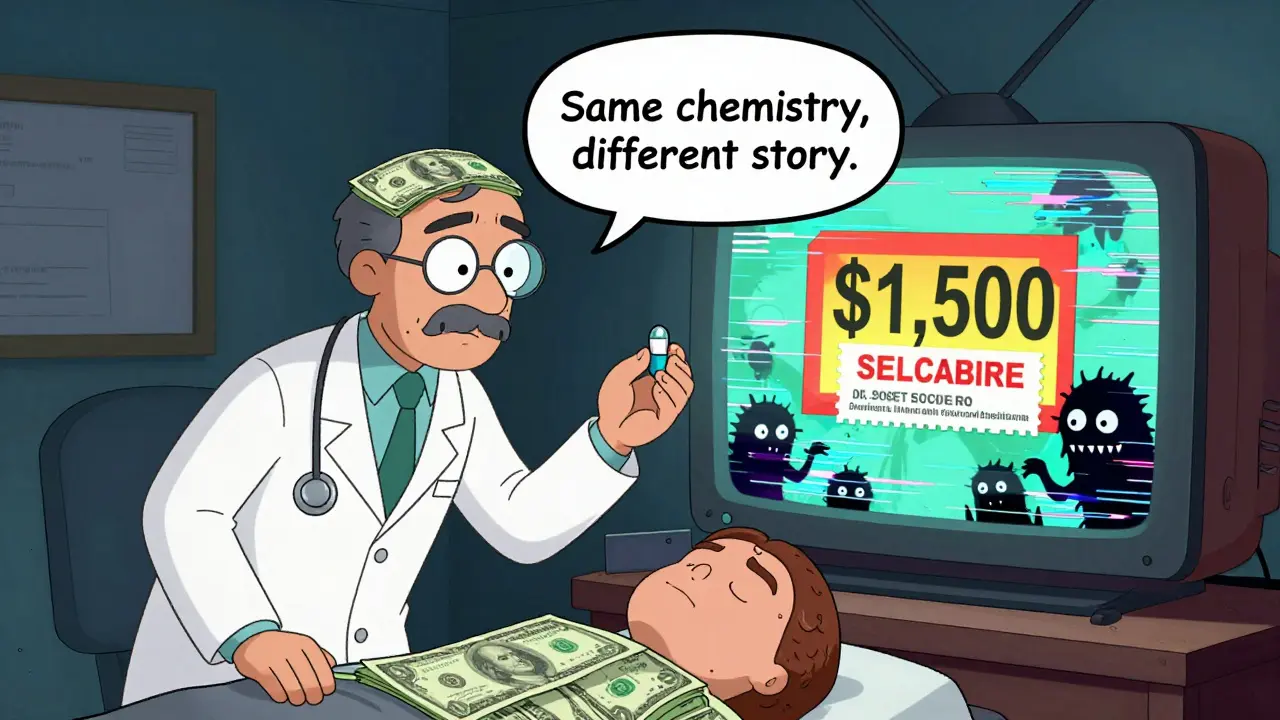
Real People, Real Stories
On Reddit, a user named u/MedStudent2025 wrote: “I switched from brand Nexium to generic. My GERD symptoms came back. My doctor said it’s probably nocebo.” Another person on Drugs.com said: “I took generic Zoloft for six months. Felt like I was floating. Couldn’t focus. Switched back to brand - instantly better.” But here’s the twist: when researchers asked patients who reported these problems to switch back to the generic - and told them it was the same drug - 70% of them reported no difference. Their symptoms didn’t return. Their brain just needed to know it was okay to trust the pill. A 2022 survey of over 8,000 people found that 67% said generics worked just as well. But when patients were given a simple explanation about bioequivalence - “This is the same medicine, just cheaper” - that number jumped to 82%. It’s not about the pill. It’s about the story.How Doctors Can Fix This
This isn’t just a patient problem. It’s a communication problem. Most doctors don’t talk about this. They write the prescription, hand it over, and move on. But a 2018 study at the University of Chicago showed that a simple 7-minute conversation changed everything. Patients who heard, “This generic is exactly the same as the brand. It’s been tested in thousands of people. The only difference is the price,” were 89% more likely to stick with it. Six months later, 72% were still taking it. In the group that got no explanation? Only 44% stayed on track. Some doctors now use what’s called “active placebo framing.” Instead of saying, “I’m switching you to a generic because your insurance requires it,” they say, “This version works just as well, saves you $1,200 a year, and has helped thousands of people just like you.” The tone matters. The language matters. The belief matters. The American Academy of Family Physicians now offers a 3-hour training course for doctors on how to talk about generics. After taking it, doctors’ confidence in explaining the science jumped from 4.2 to 8.7 on a 10-point scale. And their patients? More adherent. Fewer side effect complaints. Better outcomes.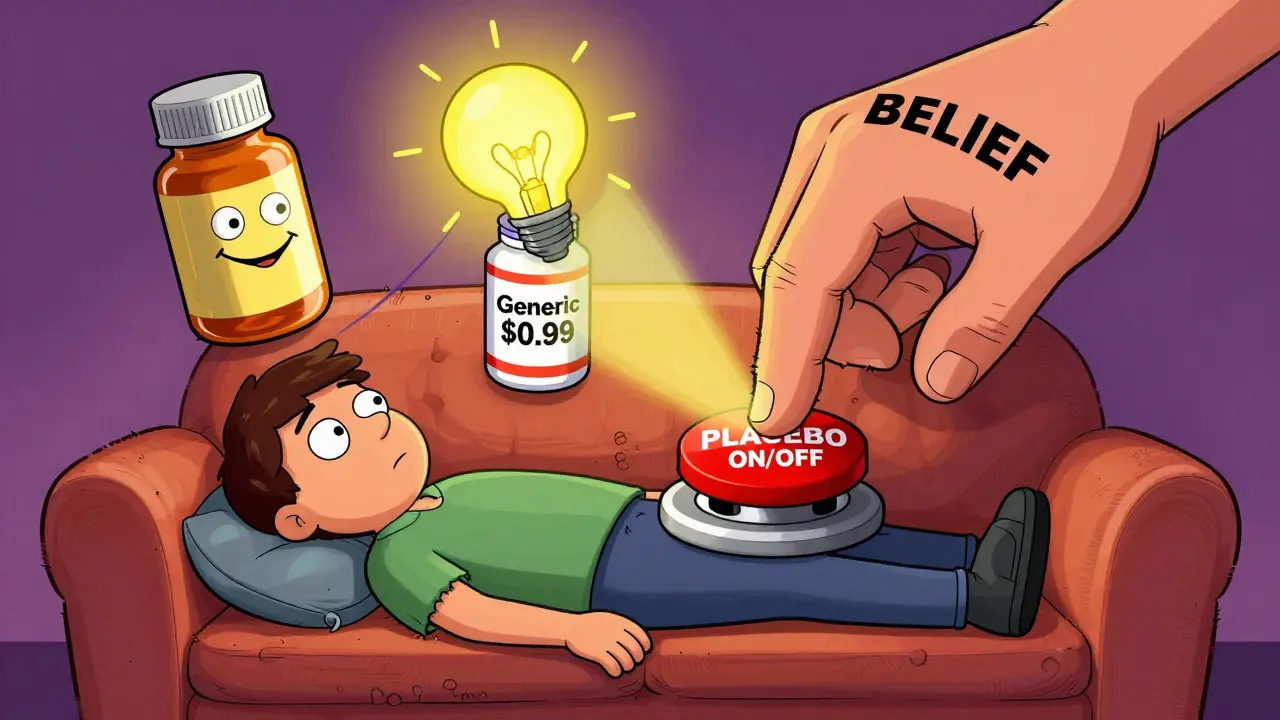
What You Can Do
If you’ve ever thought your generic medicine isn’t working:- Ask your doctor: “Is this the same as the brand?”
- Ask: “Can you show me the bioequivalence data?”
- Don’t assume side effects are from the drug. Ask if they could be from your expectations.
- If you switch from brand to generic and feel worse, wait two weeks. Then ask to switch back - but tell your doctor you want to test if it’s the pill or your mind.
- Don’t just write “generic.” Say: “This is the same active ingredient as [brand name]. It’s cheaper, but just as effective.”
- Use phrases like “proven to work just as well” and “used by millions.”
- Don’t assume patients know the science. Most don’t.
Chris Buchanan
December 23, 2025 AT 09:22So let me get this straight - we’re paying extra for a pill that’s chemically identical just because the label looks fancy? 🤦♂️ I once bought a $12 generic painkiller and felt like a Greek god. The brand version? Same damn thing in a prettier box. Pharma’s selling fairy tales and we’re buying them with our co-pays.
Wilton Holliday
December 23, 2025 AT 13:15This is wild but makes total sense. 🤯 I had the exact same thing with my anxiety med - switched to generic, felt like I was drowning. Then my therapist said, ‘What if it’s not the pill?’ I switched back, told myself it was the same, and boom - felt fine. Our brains are weird, beautiful machines.
Also, shoutout to doctors who actually explain this stuff. Most just scribble ‘generic’ and walk away like it’s a grocery list.
Raja P
December 25, 2025 AT 09:54Man, this hits different in India. We use generics because we have to - but even here, people think branded meds are stronger. My aunt refused her blood pressure generic because ‘it’s not the red pill.’ She cried when I showed her the FDA data. Sometimes science needs storytelling more than studies.
Joseph Manuel
December 25, 2025 AT 19:04The methodology in these studies is deeply flawed. Placebo-controlled trials with self-reported pain scales are not rigorous clinical evidence. The 2.3-point difference on a 10-point scale has a standard error of ±1.8. This is anecdotal noise dressed up as neurobiology. The FDA’s bioequivalence standards are not negotiable - and they work. Stop conflating perception with pharmacology.
Harsh Khandelwal
December 27, 2025 AT 11:49Wait… so you’re telling me Big Pharma is secretly running a mind-control scheme through pill packaging? 🤔 I knew it. That’s why my generic Adderall made me feel like a zombie - they swapped the active ingredient for ‘compliance chemicals’ to keep us docile. The ‘premium’ generics? Those are the ones with the real stuff. They just hide it under ‘bioequivalent’ jargon. I’m switching to black market pills. At least they don’t lie about the price.
Andy Grace
December 29, 2025 AT 07:23Interesting. I’ve never thought about it this way. I’ve taken generics for years - never had an issue. But now that you mention it… I did feel weird when I first switched to generic Zoloft. Took me weeks to realize I was expecting to feel worse. Once I stopped expecting it, the ‘side effects’ vanished. Kinda humbling, really.
Delilah Rose
December 29, 2025 AT 11:29Okay, but let’s go deeper - if our brains are this suggestible, what does that mean for the entire healthcare system? Like, if someone believes they’re allergic to penicillin because their mom said so in 1987, and they’ve never been tested, are we just treating belief systems instead of biology? And if we’re using packaging and branding to manipulate placebo responses, are we crossing an ethical line? And what about people who don’t have access to ‘premium’ packaging? Are they being denied effective treatment because of socioeconomic design? And what if the placebo effect is the only thing keeping people alive in underfunded clinics? Is it wrong to use psychology as medicine when the science says it works? And why aren’t we teaching this in med school? And why do we still think biology is the only real thing? And…
Spencer Garcia
December 30, 2025 AT 05:46Same pill. Different label. Same results if you believe it. Simple as that.
Abby Polhill
December 30, 2025 AT 12:32Y’all are underestimating the neurophenomenological impact of pharmaceutical semiotics. The placebo response isn’t just cognitive - it’s a top-down modulation of endogenous opioid and dopaminergic pathways, mediated by prior conditioning and cultural capital. The generic label triggers a ‘low-value stimulus’ schema in the anterior cingulate, which dampens the descending pain inhibition network. It’s not ‘in your head’ - it’s in your neurocircuitry. The pill’s just a vessel. The meaning is the medicine.
Bret Freeman
December 31, 2025 AT 16:36THIS IS WHY AMERICA IS BROKE. People are dying because they’re too lazy to pay for the REAL medicine. I’ve seen it - my cousin switched to generic insulin and ended up in the ER. You think your brain is ‘tricking’ you? Nah. Your brain is telling you the truth: cheap stuff is garbage. You don’t get to outsmart evolution with a 7-minute lecture from your doctor. The brand name is there for a reason - because it works. And if you’re too cheap to pay for it, stop complaining when your body fails you.
Lindsey Kidd
January 1, 2026 AT 03:40OMG this is SO true 😭 I switched to generic Lexapro and felt like my brain was wrapped in cotton. Then my therapist said, ‘What if it’s not the pill?’ I switched back and told myself it was the same - and guess what? I cried because I felt like myself again. 🤍 It’s not magic. It’s my brain finally trusting the process. Doctors - please just SAY it’s the same. It matters more than you know.
Austin LeBlanc
January 1, 2026 AT 04:37So let me get this straight - you’re saying people who think generics don’t work are just ‘weak-minded’? Wow. So if I feel worse on a generic, I’m just delusional? What about the 15% of people who actually have different absorption rates? You think the FDA’s 80-125% range is a magic number? Nah. It’s a loophole. And you’re just here to shame people for being real about their bodies. I’ve been on 7 different generics. Four of them made me sick. Coincidence? Or is your brain just too comfortable pretending everything’s fine?