
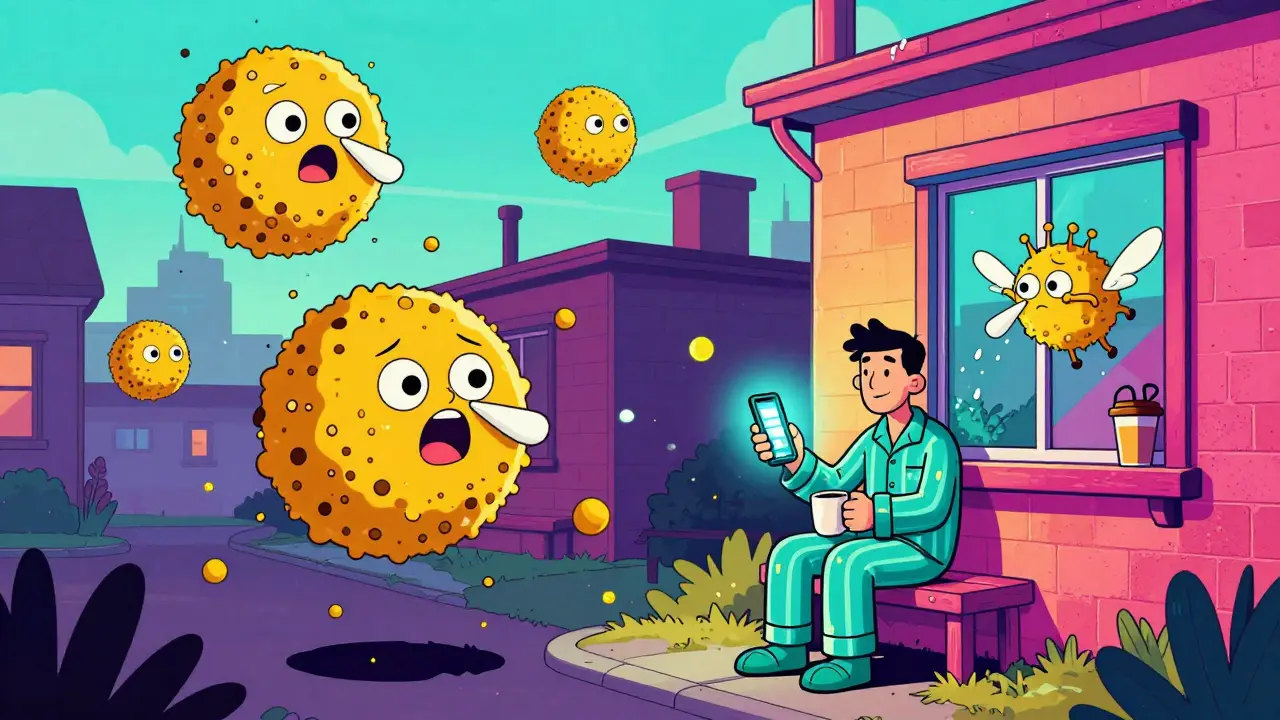
Know Your Pollen Days Before You Step Outside
If you’ve ever sneezed through a sunny afternoon walk or woke up with itchy eyes after a spring morning run, you’re not alone. In Melbourne and across Australia, pollen forecast data is no longer just for doctors-it’s a daily tool for anyone who wants to enjoy the outdoors without paying the price in sneezes, congestion, or fatigue. The good news? You don’t have to guess when pollen is high. You can plan around it.
Pollen isn’t just a nuisance. It’s a measurable airborne particle, counted in grains per cubic meter of air. When levels hit 50 or more, most people with allergies start feeling it. At 150+, symptoms become hard to ignore. And on windy, dry days, those numbers can spike past 500-enough to trigger asthma attacks in sensitive individuals. The key isn’t avoiding the outdoors entirely. It’s knowing when to go out-and when to stay in.
How Pollen Forecasts Actually Work
Pollen forecasts aren’t magic. They’re science built on decades of data. Monitoring stations across Australia and globally use sticky rods or air samplers to collect pollen grains over 24 hours. These samples are analyzed under microscopes to identify types: grass, tree, or weed. That data gets fed into weather models that track temperature, humidity, wind speed, and rainfall.
Here’s what matters most in the forecast:
- Temperature: A 2-3°C rise can push pollen counts up by 15-20%. Warm days = more pollen released.
- Wind: Winds over 10 mph spread pollen farther. A gusty afternoon in spring? Expect high counts even if the forecast says “moderate.”
- Rain: Rain clears pollen from the air. After even a light shower, counts drop 30-50% within two hours. But don’t rush outside right after it stops-pollen can spike again as things dry.
- Humidity: Low humidity (below 40%) keeps pollen airborne longer. High humidity? Pollen gets heavier and falls faster.
Modern systems like BreezoMeter and the Copernicus Atmosphere Monitoring Service use machine learning to predict daily levels with 80-85% accuracy. They factor in satellite data, land use, traffic patterns, and even historical pollen behavior for your exact location. In Melbourne, this means you can see if the pollen blowing in from the Dandenongs will hit your suburb-something older apps couldn’t do.
When Pollen Hits Its Peak (Melbourne’s Calendar)
Not all pollen is the same. And it doesn’t arrive at the same time. Here’s what to expect in Melbourne and similar temperate climates:
- Tree pollen (late winter to early spring): February to April. The big culprits: birch, oak, and cypress. Peak around mid-March. Early morning (5-10 AM) is worst.
- Grass pollen (spring to early summer): April to June. Ryegrass is the main offender. It peaks in May and early June. Midday to late afternoon (10 AM-4 PM) is the danger zone.
- Weed pollen (late summer to autumn): August to May. Ragweed and plantain dominate. Peak in late February and March, but can linger through autumn. Late afternoon to evening (4-8 PM) is worst.
Here’s the trick: pollen doesn’t just come from your backyard. Wind carries it from parks, golf courses, and even farms. So even if your garden looks clean, the air might be full of allergens.
How to Use Forecasts to Plan Your Day
Don’t just check the forecast-use it to make decisions. Here’s how:
- Check two sources. Don’t rely on one app. Use BreezoMeter (hyperlocal, 1.5km accuracy) and the Australian Bureau of Meteorology’s allergy page. Cross-check them.
- Plan outdoor time for early morning or evening. Pollen counts are lowest between 5-7 AM and 7-9 PM. That’s your sweet spot for walks, runs, or gardening.
- Wait 2-4 hours after rain. Rain clears pollen, but once the ground dries, it can kick up again. Avoid going out right after a shower unless you’re sure the wind’s calm.
- Avoid windy days. If the forecast says wind over 15 km/h, postpone yard work, bike rides, or outdoor sports.
- Track your symptoms. Use a simple journal or app to note when you feel bad. Over time, you’ll see patterns. Maybe your nose acts up every time the grass pollen hits 120, even if the forecast says “high.” That’s your personal threshold.
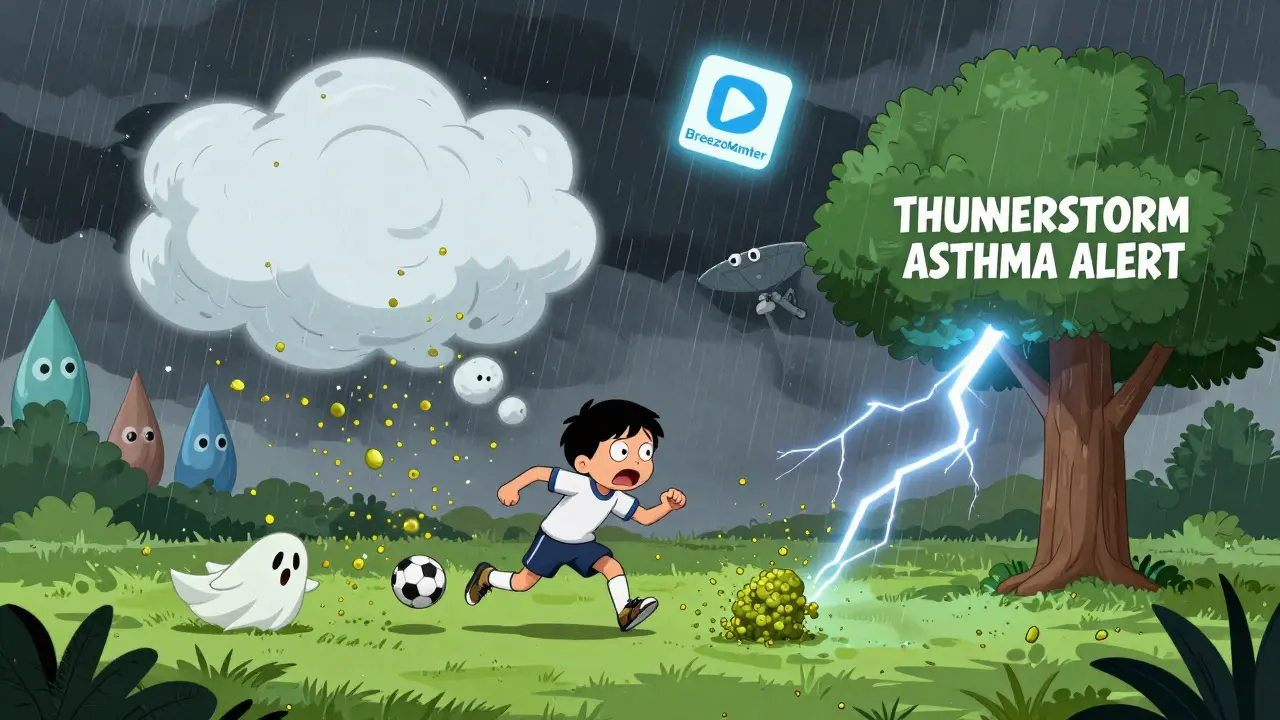
One Melbourne dad, Mark, started using pollen forecasts after his daughter had a severe reaction during a school soccer game in October. He now checks BreezoMeter every morning before letting her play outside. “We moved her training to 6:30 AM. Her coughing stopped. We stopped needing the inhaler so often.”
What the Forecasts Don’t Tell You
Even the best systems have blind spots.
- Thunderstorm asthma: This is the silent killer. In Melbourne’s 2016 outbreak, pollen counts were “moderate,” but a storm broke apart grass pollen grains into tiny particles that got deep into lungs. Over 10,000 people sought emergency care. No forecast predicts this yet. If the weather looks stormy and you have asthma or severe allergies, stay indoors-even if the pollen count looks okay.
- Urban microclimates: Pollen levels can be 300% higher in a park than on your balcony. Forecasts give you a neighborhood average, not your exact spot. If you live near a field or river, assume higher exposure.
- Weed pollen is underreported: Many systems still don’t track plantain or ragweed accurately. If you’re sensitive to weeds, assume the worst during late summer.
Also, forecasts assume normal weather. Climate change is messing with the rules. In Melbourne, the grass pollen season now starts two weeks earlier than it did in 2000. And it lasts longer. That means you can’t rely on old patterns.
What Works Better Than Guessing
People who plan around pollen forecasts don’t just feel better-they use less medication. A 2023 survey found that 63% of users reduced their antihistamine use by half or more. Athletes, parents, and older adults are the most consistent users.
Here’s what successful users do:
- Link forecasts to your calendar. Block out “low pollen” times for outdoor time. Treat it like a doctor’s appointment.
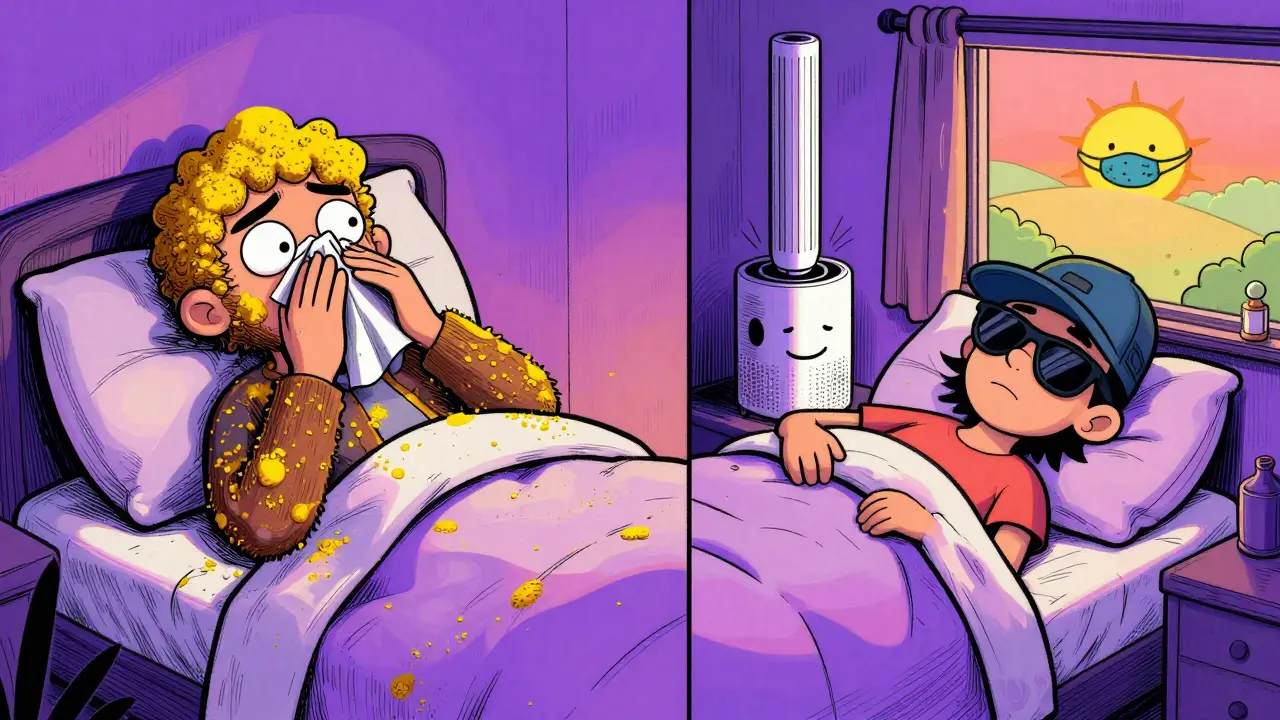
- Wear sunglasses and a hat. They reduce pollen contact with eyes and hair.
- Shower and change clothes after being outside. Pollen sticks to skin and fabric. Don’t bring it into bed.
- Use air purifiers indoors. Especially in bedrooms. Keep windows closed on high-pollen days.
One runner in Hawthorn started checking the forecast before every training session. She shifted her long runs from Saturday afternoon to Sunday morning. Her asthma flare-ups dropped from 4 a month to 1. “It’s not about avoiding the outdoors,” she says. “It’s about enjoying them without the cost.”
What’s Next for Pollen Forecasting
The future is getting smarter. In 2025, the European Space Agency is launching PollenSat-a satellite that will map global pollen types from space. Apple and BreezoMeter are now linking pollen data with heart rate and breathing patterns from smartwatches. Imagine your watch warning you: “Pollen is spiking. Your breathing rate just increased. Go inside.”
For now, the tools we have are good enough. You don’t need perfect accuracy. You just need to be a little smarter than the pollen.
Frequently Asked Questions
What time of day has the lowest pollen count?
Pollen counts are usually lowest between 5-7 AM and 7-9 PM. Tree pollen peaks early morning, grass pollen peaks midday, and weed pollen peaks late afternoon. Early morning before dew dries and early evening after the heat drops are your safest windows for outdoor activity.
Can rain really reduce pollen?
Yes. A light rain (even 0.1 inch) can wash pollen out of the air and reduce counts by 30-50% within two hours. But avoid going out right after the rain stops-wind and drying ground can stir up pollen again. Wait until the air feels still and damp.
Should I trust free pollen apps?
Free apps like Pollen.com give a general idea but lack precision. They use 10km resolution, meaning your suburb might be misclassified. Paid services like BreezoMeter offer 1.5km accuracy and real-time updates. For serious allergy sufferers, the difference matters. Use free apps as a starting point, but verify with local data or a paid service if symptoms persist.
Why do I still have symptoms when the forecast says ‘low’?
Forecasts show average levels across a broad area. Your exact location might have a hotspot-like a nearby park, riverbank, or construction site. Also, some pollen types (like ragweed) aren’t tracked well by all systems. If you’re sensitive, track your own symptoms. Your body knows more than the app.
Is pollen forecasting useful in Melbourne?
Absolutely. Melbourne has one of the highest rates of allergic rhinitis in Australia, with grass pollen dominating spring. The city’s weather patterns-dry, windy springs and sudden thunderstorms-make forecasting especially valuable. Many locals use it to time walks, school sports, and weekend outings. It’s not optional anymore-it’s essential.
What should I do during thunderstorm asthma alerts?
Stay indoors. Close windows and doors. Turn on your air conditioner in recirculate mode. Thunderstorm asthma can happen even when pollen counts are only moderate. The storm breaks pollen into tiny particles that trigger severe asthma attacks. Don’t wait for symptoms-act before the storm hits.
Next Steps: Start Planning Today
Don’t wait for the next sneezing fit to act. Pick one day this week to check your local pollen forecast. Note the time of day and your symptoms. Do it again tomorrow. In three days, you’ll start seeing patterns. Then, adjust one activity-maybe move your walk from 4 PM to 6 AM. That’s it. No medication change. No big expense. Just smarter timing.
Pollen isn’t going away. But you don’t have to let it control your days. With a few minutes of planning, you can still run, garden, play with your kids, and enjoy the fresh air-without the allergy crash.
Matthew Hekmatniaz
January 1, 2026 AT 12:12Also, switching to a hat and sunglasses made a bigger difference than I expected. Pollen sticks to hair like glitter.
Liam George
January 2, 2026 AT 06:12Check the satellite imagery-look at the persistent contrail patterns. Then look at the allergy maps. Coincidence? Or calibrated bioweapon deployment? The data’s there if you know how to read it.
sharad vyas
January 2, 2026 AT 19:58Technology helps, but wisdom lasts longer.
Dusty Weeks
January 3, 2026 AT 16:22Austin Mac-Anabraba
January 4, 2026 AT 11:08Fix the ecosystem. Don’t just tell people to check BreezoMeter.
Phoebe McKenzie
January 5, 2026 AT 17:07And don’t get me started on how they downplay thunderstorm asthma. It’s not an accident. It’s a profit model.
gerard najera
January 7, 2026 AT 09:50Stephen Gikuma
January 8, 2026 AT 05:56Stop importing exotic grasses. Grow native. Simple solution. But no-political correctness wins again.
Bobby Collins
January 9, 2026 AT 16:37Layla Anna
January 10, 2026 AT 18:55also i love that you mentioned showering after being outside i never thought about pollen on my clothes but now i change right away 😊
Heather Josey
January 10, 2026 AT 20:11One addition: consider using HEPA filters in your car cabin. Many people overlook that. It’s made a measurable difference for my elderly mother.
Olukayode Oguntulu
January 11, 2026 AT 14:16And yet-you still reach for your phone before your eyes open. How poetic. How tragic. How… bourgeois.
The real question isn’t when to go outside. It’s why you feel the need to ‘optimize’ your exposure to the natural world at all.