

Pregnancy Medication Safety Checker
Is your blood pressure medication safe during pregnancy?
Select your current medication to check pregnancy safety status. All information is based on current medical guidelines from ACOG, AHA, and WHO.
is considered
What to do next
When you’re pregnant and managing high blood pressure, the last thing you want is to accidentally harm your baby. Yet, some common blood pressure medications - ACE inhibitors and ARBs - are known to cause serious, sometimes fatal, damage to a developing fetus. These drugs aren’t just risky; they’re strictly forbidden during pregnancy. But if you’re on one of them and find out you’re pregnant, or you’re planning to conceive, what do you do next? The answer isn’t to panic - it’s to act fast, with clear guidance.
Why ACE Inhibitors and ARBs Are Dangerous in Pregnancy
ACE inhibitors (like lisinopril, enalapril, and captopril) and ARBs (like losartan and candesartan) work by blocking the renin-angiotensin-aldosterone system, or RAAS. That’s fine for adults - it lowers blood pressure. But in a growing baby, RAAS is critical for kidney development and amniotic fluid production. When this system gets shut down, the baby’s kidneys can’t function properly. That leads to low amniotic fluid (oligohydramnios), which can cause lung underdevelopment, limb deformities, and skull defects. The baby’s blood pressure can also crash, leading to poor circulation and organ failure. Studies show these drugs don’t just cause rare birth defects - they’re linked to higher rates of miscarriage, premature birth, and stillbirth. One large study found that women taking ACE inhibitors or ARBs during pregnancy had a 25% chance of miscarriage, compared to just 12% in women with similar health conditions who weren’t on these drugs. Birth weights were, on average, 350 grams lower. Gestation was nearly two weeks shorter. And while early studies thought first-trimester exposure might be safe, newer data from 2020 proves that’s not true. Even exposure in the first 12 weeks increases the risk of serious problems.ARBs May Be Even Worse Than ACE Inhibitors
You might think all RAAS blockers are equally dangerous. They’re not. While both classes are absolutely off-limits in pregnancy, research shows ARBs carry a higher risk than ACE inhibitors. The American Heart Association noted that babies exposed to ARBs had worse outcomes - more severe kidney damage, longer hospital stays, and higher chances of neonatal death. Losartan, one of the most commonly prescribed ARBs, has been tied to multiple cases of fetal death and irreversible kidney failure. Candesartan has shown similar patterns. Even though ACE inhibitors like lisinopril and enalapril are dangerous too, the damage from ARBs tends to be more severe and harder to reverse.What Happens If You’re Already Taking One?
If you’re on an ACE inhibitor or ARB and just found out you’re pregnant, stop taking it immediately. Don’t wait for your next appointment. Don’t try to taper off. Just stop. Then call your doctor or OB-GYN right away. They’ll need to switch you to a safer medication as soon as possible - ideally within days. Delaying the switch increases the risk to your baby. Doctors don’t just pull you off these drugs and leave you with uncontrolled blood pressure. They replace them with medications that have been used safely for decades in pregnant women. The two most trusted options are labetalol and methyldopa.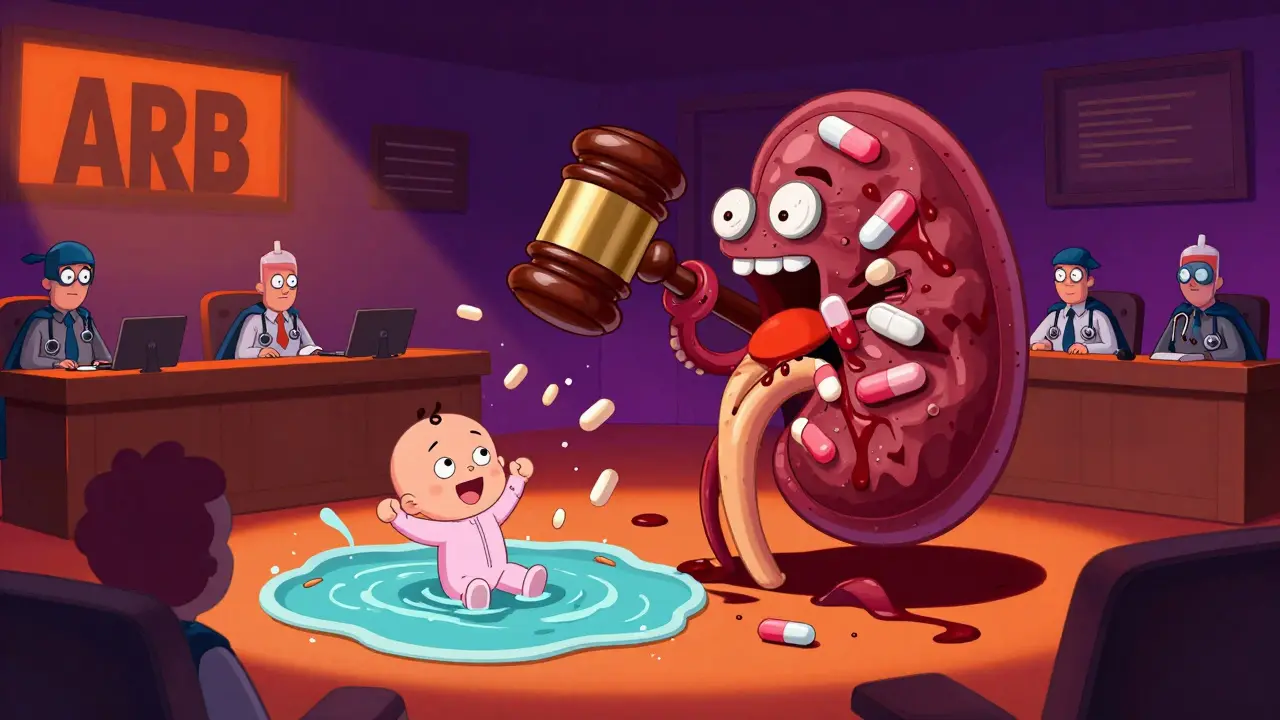
Safe Alternatives: Labetalol and Methyldopa
Labetalol is a beta-blocker that also blocks alpha receptors. It’s become the go-to first-line treatment for high blood pressure during pregnancy. It works quickly, crosses the placenta minimally, and has been studied in thousands of pregnancies with no clear link to birth defects or long-term harm. Most women start at 100 mg twice a day and can go up to 2,400 mg daily if needed. It’s well-tolerated, and side effects like dizziness or fatigue are usually mild. Methyldopa has been used since the 1970s - longer than any other blood pressure drug in pregnancy. It’s a centrally acting agent that reduces nerve signals to blood vessels. It’s not flashy, but it’s proven. Over 100,000 pregnancies have been tracked, and it remains the gold standard for safety. Dosing starts at 250 mg twice daily and can be increased up to 3,000 mg per day. Some women report drowsiness or dry mouth, but these usually fade after a few weeks. If those two don’t work well enough, nifedipine (a calcium channel blocker) is the next option. It’s effective and generally safe, but it’s not used as a first choice because it can lower blood pressure too fast or weaken heart muscle in women with pre-existing heart conditions. It’s reserved for cases where labetalol and methyldopa aren’t enough.What About Other Blood Pressure Drugs?
Not all blood pressure medications are safe in pregnancy. Diuretics like hydrochlorothiazide can reduce blood volume too much, which hurts placental flow. Beta-blockers like atenolol have been linked to small-for-gestational-age babies and should be avoided. Angiotensin receptor-neprilysin inhibitors (ARNIs) like sacubitril/valsartan are even more dangerous than ARBs - they’re completely off-limits. The key is to stick with the drugs that have decades of real-world use in pregnant women. That means labetalol, methyldopa, and sometimes nifedipine. Everything else carries unknown or unacceptable risks.Prevention Is the Best Strategy
The most important step isn’t what you do after you get pregnant - it’s what you do before. If you’re a woman of childbearing age and you’re on an ACE inhibitor or ARB, talk to your doctor now. Don’t wait for a positive pregnancy test. Ask: “Is this drug safe if I get pregnant?” If it’s not, switch to a safer alternative before you try to conceive. Major medical groups - the American College of Obstetricians and Gynecologists, the American Heart Association, the World Health Organization - all agree on this. You should be counseled about these risks before you even start the medication. If you’re planning a pregnancy, your blood pressure meds should be reviewed as part of your preconception care - just like folic acid and vaccines.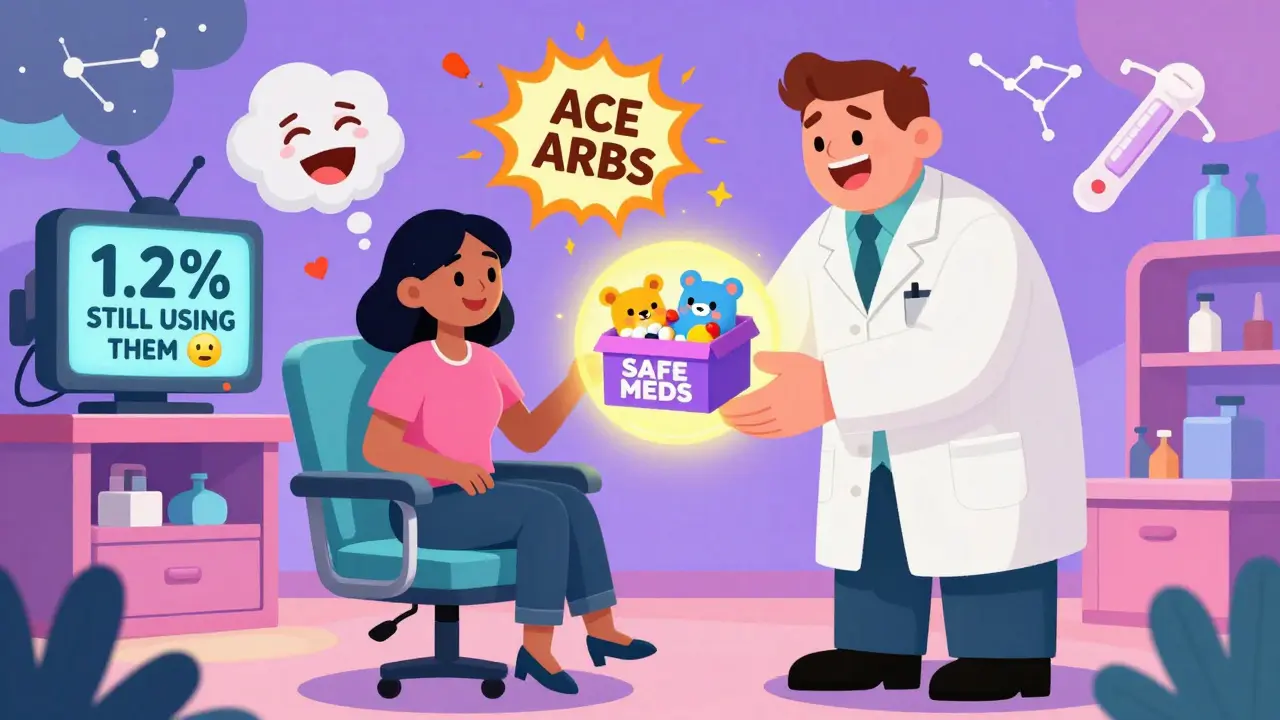
What If You’re Not Planning to Get Pregnant?
Even if you’re not trying to conceive, you still need to be careful. ACE inhibitors and ARBs can cause harm if you get pregnant without realizing it. That’s why doctors are required to ask: “Are you pregnant?” and “Are you planning to become pregnant?” before prescribing these drugs. If you’re sexually active and not using reliable birth control, your doctor should not give you an ACE inhibitor or ARB. Effective contraception isn’t optional here. If you’re on one of these drugs, you need a backup plan - like an IUD, implant, or consistent use of oral contraceptives. Don’t rely on withdrawal or condoms alone. The stakes are too high.Real-World Problems Still Happen
Despite all the warnings, mistakes still happen. FDA data from 2021 shows that 1.2% of pregnant women with chronic high blood pressure were still taking ACE inhibitors or ARBs. That’s not a lot - but it’s 1.2% too many. Some women don’t know their meds are risky. Others get prescribed them by a primary care doctor who doesn’t know they’re trying to conceive. Others stop taking them because they feel fine - only to have their blood pressure spike dangerously. That’s why clear communication matters. If your OB-GYN doesn’t ask about your meds, ask them. If your pharmacist doesn’t warn you, ask them. If you’re switching doctors, bring your full medication list. Don’t assume someone else is checking.Bottom Line: Stop, Switch, Stay Safe
ACE inhibitors and ARBs are not just “not recommended” during pregnancy - they’re dangerous. They can cause kidney failure, low amniotic fluid, miscarriage, and death. There is no safe trimester. No exception. No “it’s probably fine.” If you’re pregnant and taking one: stop immediately. Call your doctor. Get switched to labetalol or methyldopa. You and your baby will be far safer. If you’re planning to get pregnant: talk to your doctor now. Switch your meds before conception. Don’t risk it. If you’re not planning to get pregnant: use reliable birth control. Don’t assume you’re safe just because you’re not trying. High blood pressure during pregnancy is serious - but it’s manageable. With the right drugs, you can protect both your health and your baby’s. You don’t need to guess. You don’t need to hope. You just need to act.Can I take ACE inhibitors or ARBs if I’m in my first trimester?
No. Even first-trimester exposure carries risks. While early studies suggested ACE inhibitors might not cause major birth defects in the first 12 weeks, more recent data from 2020 shows they still increase the risk of miscarriage, low birth weight, and premature delivery. There is no safe time to take these drugs during pregnancy. Stop them immediately if you’re pregnant or planning to be.
What’s the safest blood pressure medicine during pregnancy?
Labetalol is the most commonly used and best-studied first-line option. It’s effective, has minimal side effects on the baby, and has been used safely for decades. Methyldopa is a close second - it’s the oldest drug with the longest safety record in pregnancy. Both are preferred over all other options. Nifedipine may be added if blood pressure isn’t controlled, but it’s not a first choice.
Do ARBs cause more harm than ACE inhibitors?
Yes. Research from the American Heart Association and multiple clinical reviews show that ARBs like losartan and candesartan are linked to more severe fetal complications than ACE inhibitors. Babies exposed to ARBs have higher rates of kidney failure, prolonged hospital stays, and neonatal death. While both are dangerous, ARBs should be avoided even more strictly.
What should I do if I’m on an ACE inhibitor and just found out I’m pregnant?
Stop taking the medication right away. Do not wait for your next appointment. Contact your OB-GYN or primary care provider immediately. They will switch you to a safer drug like labetalol or methyldopa within 24-48 hours. Do not try to manage your blood pressure on your own - uncontrolled high blood pressure is also dangerous during pregnancy. The goal is to switch safely and quickly.
Can I use over-the-counter blood pressure remedies during pregnancy?
No. There are no safe over-the-counter medications for high blood pressure during pregnancy. Herbal supplements, salt substitutes, or “natural” remedies can be just as dangerous as prescription drugs. Some contain ingredients that constrict blood vessels or harm fetal development. Always talk to your doctor before taking anything - even vitamins or supplements - if you’re pregnant and have high blood pressure.
Is it safe to breastfeed while taking labetalol or methyldopa?
Yes. Both labetalol and methyldopa are considered safe during breastfeeding. Very little of the drug passes into breast milk, and studies show no negative effects on infant growth or development. If you’re switching to one of these after pregnancy, you can usually continue it while nursing. Always check with your doctor, but these are the preferred options for postpartum blood pressure management too.
Monte Pareek
December 20, 2025 AT 02:17Stop taking ACEi/ARBs the second you see two lines. No exceptions. No "maybe it's okay". I've seen too many OBs delay switching meds because they "want to see how things go". That's not medicine, that's Russian roulette with a fetus. Labetalol and methyldopa have been used safely for 50 years. If your doctor doesn't know this, find a new one. Your baby's kidneys aren't negotiable.
Connie Zehner
December 21, 2025 AT 07:04OMG I just found out I'm pregnant and I've been on losartan for 3 years 😭 I thought it was fine because I didn't have swelling?!?!?! What do I do?? I'm so scared!!
Monte Pareek
December 22, 2025 AT 22:40Call your OB right now. Not tomorrow. Not after coffee. Now. Tell them you're on an ARB and need labetalol stat. If they hesitate, go to urgent care. This isn't a "wait for Monday" situation. You're not alone. Thousands of women have been in your exact spot and switched safely. Your baby still has a fighting chance if you act fast.
Vicki Belcher
December 24, 2025 AT 16:35Thank you for this post 💖 I'm a nurse and I see so many women get prescribed these meds without any warning. I always ask about birth control plans before writing any script for ACEi/ARBs now. Prevention is everything. Folic acid + safe BP meds = best start for baby 🤰✨
Mahammad Muradov
December 25, 2025 AT 15:18People who get pregnant while on ARBs are just being irresponsible. If you're sexually active and on a teratogenic drug, you're not just risking your child-you're wasting medical resources. Contraception isn't optional. It's basic adulting.
Lynsey Tyson
December 26, 2025 AT 11:37I get where you're coming from but not everyone has access to reliable birth control or knows the risks. Some women are on these meds for years and never think about pregnancy until it happens. Blaming them doesn't help. We need better education, not shame.
holly Sinclair
December 27, 2025 AT 11:26It's fascinating how the RAAS system, evolved over millions of years to regulate fluid balance in adults, becomes a lethal vulnerability in fetal development. The irony is profound: a mechanism designed for survival becomes a weapon against nascent life when pharmacologically suppressed. This isn't just a pharmacological issue-it's a biological paradox. The fetus, entirely dependent on maternal RAAS modulation, is caught in a crossfire between maternal homeostasis and ontogenetic necessity. And yet, we've managed to identify safe alternatives that respect both. That's not luck. That's science.
Jedidiah Massey
December 28, 2025 AT 12:40ARBs are a class 4 teratogen. Full stop. ACEi are class D. The difference isn't semantics-it's clinical trajectory. Losartan exposure = higher incidence of anuria, oligohydramnios, pulmonary hypoplasia. The fetal renin-angiotensin axis isn't just "important"-it's the primary regulator of renal tubulogenesis and ureteric branching. Shutting it down isn't a side effect-it's a developmental catastrophe. And yes, the data from 2020 is definitive. Stop arguing.
Kelly Mulder
December 29, 2025 AT 02:27It's astonishing how many laypersons still believe "first trimester exposure" is somehow benign. The notion that fetal organogenesis is a discrete window is archaic. The RAAS is active from week 4. By week 8, the fetal kidneys are already producing urine. No trimester is safe. This isn't a suggestion. It's a clinical imperative. If your provider doesn't treat this with the gravity it deserves, they're not fit to practice.
Alex Curran
December 30, 2025 AT 04:38Just had a patient on candesartan who didn't know she was pregnant till 14 weeks. We switched to labetalol same day. BP came down, amniotic fluid normalized by 18 weeks. Baby's fine now. 3.2kg at birth. Point is: it's not a death sentence. Act fast. Don't panic. Switch. Monitor. You're not alone
Emily P
December 30, 2025 AT 21:28Is there any data on long-term neurodevelopmental outcomes for kids exposed to labetalol or methyldopa? I'm not saying they're unsafe, but I wonder if we're just avoiding the known risks without looking at the bigger picture.
Allison Pannabekcer
January 1, 2026 AT 16:53Great question. There's actually a 2023 cohort study tracking over 8,000 children exposed to labetalol in utero. No difference in IQ, motor skills, or behavioral outcomes at age 5 compared to controls. Methyldopa data goes back even further-same results. The real risk isn't the safe meds. It's uncontrolled hypertension. Preeclampsia kills more babies than these drugs ever have.
Sarah McQuillan
January 3, 2026 AT 00:43Why are we only talking about labetalol and methyldopa? In Europe they use nifedipine as first-line. And in some places they use hydralazine. Is this just American bias? Or are we ignoring better options because of pharmaceutical lobbying?
Aboobakar Muhammedali
January 4, 2026 AT 18:45I am from India and many women here take blood pressure pills without knowing they are pregnant. Doctor not always ask. Family not always tell. This post is very important. I will share with my sister who is on losartan. Thank you for writing this. Please speak more about this in India