
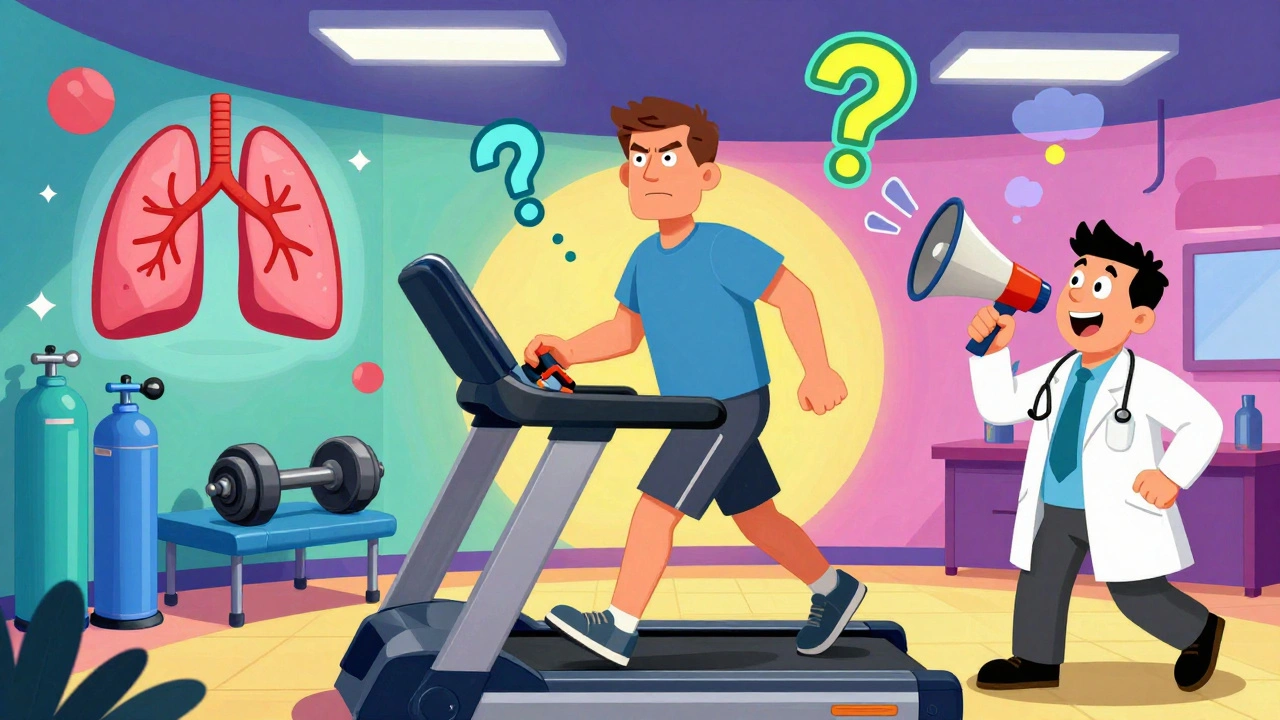
When you have a chronic lung disease like COPD, interstitial lung disease, or bronchiectasis, breathing isn't just hard-it becomes the thing you think about every single day. You stop walking to the mailbox. You skip grocery trips. You avoid stairs. And no matter how many inhalers you use, the fatigue and breathlessness keep coming. That’s where pulmonary rehabilitation comes in-not as a magic cure, but as the most effective, science-backed way to take back control of your daily life.
What Exactly Is Pulmonary Rehabilitation?
Pulmonary rehabilitation (PR) isn’t just another name for breathing exercises or a gym membership. It’s a structured, medically supervised program built around four core parts: exercise training, education, psychological support, and ongoing monitoring. Developed by experts from the American Thoracic Society and European Respiratory Society in 2023, PR is now the standard of care for anyone with a chronic lung condition who’s struggling with symptoms.
It’s not just for people with severe COPD. PR helps those with pulmonary hypertension, cystic fibrosis, and even people preparing for or recovering from lung transplants. The goal? To reduce breathlessness, increase stamina, and help you do the things you love again-like playing with grandkids, walking to the corner store, or sleeping through the night without waking up gasping.
How It Works: The Four Pillars
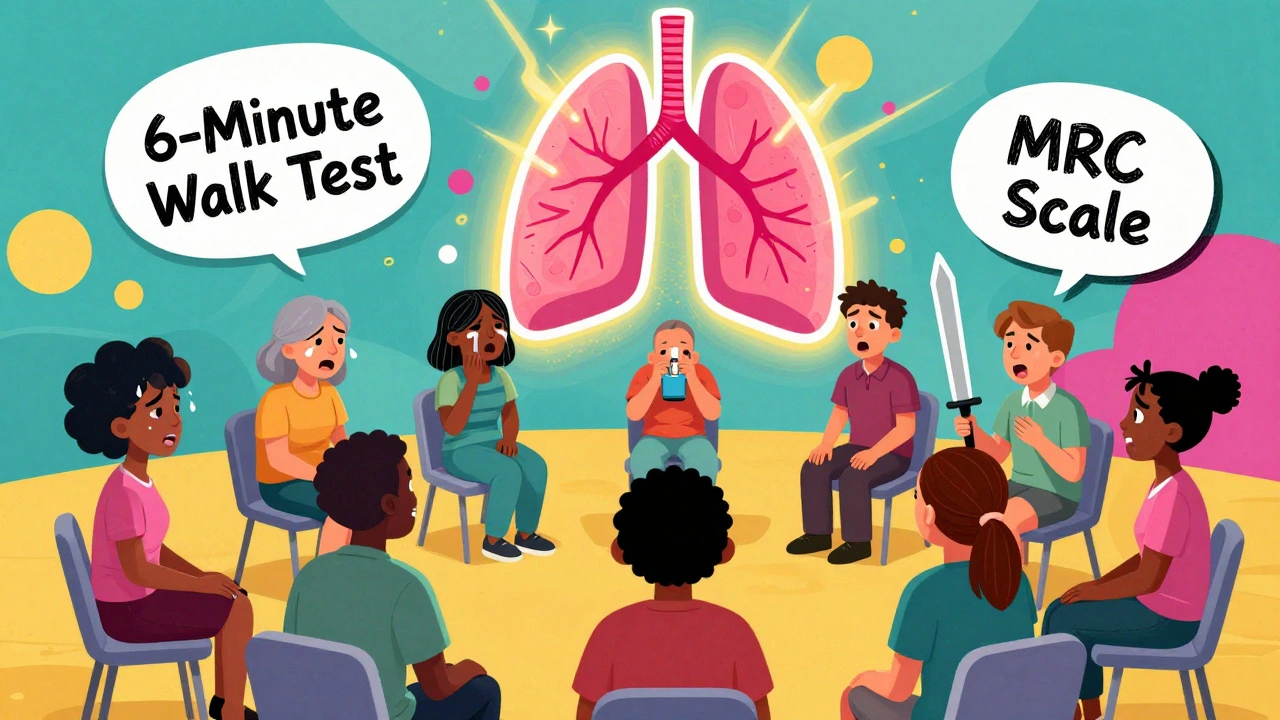
Every PR program starts with a full assessment. That means spirometry tests, a 6-minute walk test to measure how far you can go before needing to stop, and questionnaires about your quality of life. From there, your team-doctors, nurses, physical therapists, dietitians, and sometimes psychologists-builds a plan just for you.
1. Exercise Training
This is the engine of PR. It’s not about running marathons. It’s about rebuilding strength and endurance safely. Most programs include:
- Aerobic workouts like walking on a treadmill or using a stationary bike at 60-80% of your max effort, 20-30 minutes at a time
- Strength training with light weights or resistance bands, targeting arms and legs, 2-3 times a week
- Neuromuscular electrical stimulation for those too weak to move on their own
After 6-12 weeks, people typically improve their 6-minute walk distance by nearly 40 meters-enough to go from needing to rest halfway to the mailbox to making the whole trip without stopping.
2. Education
Knowing what’s happening in your lungs takes away fear. PR teaches you how your disease works, how your medications really help (and when they don’t), how to spot an exacerbation before it lands you in the hospital, and how to use oxygen properly-if you need it. Many patients say this part is life-changing. One Reddit user wrote, “After PR, I went from needing oxygen at 1L to being off it completely during daily activities.”
3. Psychological Support
Chronic lung disease doesn’t just hurt your body-it wears you down mentally. Anxiety and depression are common. PR programs include counseling or group sessions where you talk with others who get it. The social connection alone helps people feel less alone.
4. Outcomes Tracking
Progress is measured using tools like the St. George’s Respiratory Questionnaire and the Medical Research Council breathlessness scale. Improvements aren’t small: patients report an 8.7-point boost in quality of life scores and a 0.8-point drop in breathlessness severity. These aren’t numbers on a chart-they mean real changes in how you live.
Who Should Consider Pulmonary Rehabilitation?
PR isn’t just for advanced COPD. The 2023 guidelines say it’s recommended for anyone with a chronic lung disease who feels limited by symptoms-no matter how mild or severe your lung function test results are.
Here’s who benefits most:
- People with COPD (all stages, but especially GOLD 2-4)
- Those with interstitial lung disease (ILD)
- Patients with pulmonary hypertension
- People with bronchiectasis or cystic fibrosis
- Those preparing for or recovering from lung transplant
Even if you’re not “sick enough” for oxygen or hospital visits, if you’re avoiding activities because you’re out of breath, PR can help. A 2023 Cleveland Clinic case study showed a 68-year-old man with GOLD stage 3 COPD increased his walking distance from 182 meters to 327 meters after PR-enabling him to shop for groceries independently for the first time in five years.
Where and How Is PR Delivered?
Most programs (78%) are based in outpatient clinics or hospitals. But that’s changing. Telehealth PR is growing fast-12% of programs now offer virtual sessions, and studies show they work just as well as in-person ones for improving walking distance and reducing breathlessness.
Home-based programs are also available, though they’re less common and usually only for people who can’t travel. The key difference? Supervised programs have trained staff monitoring your heart rate, oxygen levels, and form during exercise. That safety net makes a huge difference in results.
Programs typically run 2-3 times a week for 6-12 weeks. Each session lasts about 60-90 minutes. Some programs extend to 6 months or longer for maintenance, but the biggest gains happen in the first few months.
Why PR Beats Pills Alone
Medications help. Bronchodilators open your airways. Steroids reduce inflammation. But when you compare them to PR, the numbers tell a clear story.
For exercise capacity, PR improves performance by 38.5 meters on average-nearly double the effect of long-acting inhalers. For breathlessness, PR reduces symptoms by 0.8 points on the MRC scale, while inhalers only drop it by 0.3. And for quality of life? PR scores jump 8.7 points; drugs barely move the needle.
One landmark study showed PR increased endurance time by 152%-while tiotropium, a common COPD drug, only boosted it by 26%. PR doesn’t replace medications. It makes them work better by strengthening your body’s ability to use oxygen.
The Real-World Challenges
PR works. But too few people get it.
Only 3.2% of eligible COPD patients in the U.S. complete a full program. Why? Three big reasons:
- Access: Only 57% of U.S. counties have a certified PR program. If you live in a rural area, you might need to drive 100 miles or more.
- Referral: Many doctors don’t know to refer patients. A 2021 study found only 10-15% of eligible patients are even offered PR.
- Cost and coverage: Medicare covers 36 sessions per year, but you need a doctor’s note proving medical necessity. Some private insurers are slower to cover it. And while Medicare pays $125 per session, the actual cost to run the program is closer to $185-meaning many clinics lose money.
Patients who tried but couldn’t join often cite travel distance (63%) or fear of cost (28%) as the main barriers-even though Medicare covers most of it.

What to Expect If You Start
Week 1-2: You’ll be assessed. You might feel tired. That’s normal. You’ll meet your team and learn the basics of your disease.
Week 3-6: Exercise gets harder. You’ll start noticing you don’t get winded as quickly. You’ll ask more questions. You’ll connect with others in the group.
Week 7-12: You’ll walk farther. You’ll climb stairs without stopping. You might even stop using oxygen during the day. You’ll feel more confident managing flare-ups. And you’ll realize you’re not just surviving-you’re living again.
One participant in a 2022 study said, “The ability to walk to the mailbox without stopping” was the most meaningful change. That’s not a statistic. That’s a life restored.
How to Get Started
Step 1: Ask your doctor. Say, “I’m still struggling with breathing even with my meds. Is pulmonary rehab right for me?”
Step 2: Check if your insurance covers it. Medicare does. Most private plans do too, but you’ll need a referral and documentation.
Step 3: Find a program. The American Lung Association’s Lung HelpLine (1-800-LUNGUSA) can help you locate certified programs nearby. The Pulmonary Wellness Foundation also has an online directory.
Step 4: Commit to the first 6 weeks. The hardest part is starting. But if you stick with it, the results are real.
What Happens After the Program Ends?
PR isn’t a one-time fix. It’s a foundation. The best outcomes happen when people keep exercising, keep learning, and keep connecting.
Many programs offer maintenance classes or home exercise plans. Some patients join community walking groups. Others use telehealth apps that track progress and send reminders.
Long-term data shows people who continue physical activity after PR have fewer hospital visits, better mood, and longer lives. One 2023 analysis found PR reduces all-cause mortality by 18.2% in COPD patients after a hospital stay.
You don’t need to go back to a clinic every week. But you do need to keep moving. Your lungs won’t get stronger on their own. Your muscles will weaken without use. PR gives you the tools. You just have to keep using them.
Jamie Clark
December 14, 2025 AT 00:51Pulmonary rehab is just capitalism’s way of making you pay to do what your lungs used to do for free. They sell you a program so you can walk to the mailbox, but they won’t fix the air you’re breathing or the factories poisoning your neighborhood. This isn’t medicine-it’s damage control for a broken system.
Keasha Trawick
December 15, 2025 AT 11:31OMG I just had the most epiphany reading this-PR is like a full-spectrum neuroplastic reboot for your respiratory system. The exercise isn’t just building muscle-it’s rewiring your autonomic nervous system to stop screaming ‘HYPERCAPNIA’ at every breath. And the psych support? That’s the serotonin serotonin serotonin you didn’t know you were metabolically starved of. I’m crying. I’m so done with being a breathing casualty.
Bruno Janssen
December 16, 2025 AT 18:51I tried PR. It was exhausting. The guy next to me was wheezing so loud I couldn’t focus. And the instructor kept saying ‘you got this’ like I was a puppy learning to sit. I left after week two. My lungs don’t need pep talks. They need silence.
Deborah Andrich
December 17, 2025 AT 03:17I’ve been doing PR for 8 months now and I can finally carry my laundry upstairs without stopping. I used to cry just putting on socks. This isn’t about numbers on a chart-it’s about being able to hug your grandkid without gasping. If you’re hesitating? Just show up. The people there? They’re your people now. You’re not alone anymore.
Tommy Watson
December 18, 2025 AT 18:24PR? Sounds like a scam to me. My cousin did it and he still died last year. Also why are they always talking about walking to the mailbox? That’s so petty. My lungs are fine, I just don’t wanna go outside. Also the grammer in this post is sus.
Sheldon Bird
December 20, 2025 AT 00:32You got this 💪 Seriously-every single person who says ‘I can’t do it’ ends up saying ‘I wish I started sooner.’ It’s not about being strong. It’s about showing up. Even if you only walk 5 feet that day. That’s a win. I’m rooting for you.
Karen Mccullouch
December 21, 2025 AT 20:50Why are we letting foreigners run our healthcare? This PR stuff sounds like a European socialist fantasy. In America, we don’t need group therapy to walk to the fridge. Just take your inhaler and shut up. Also, I’m not paying for some lady to hold my hand while I breathe.
nithin Kuntumadugu
December 22, 2025 AT 13:16PR is just a front. Big Pharma owns the clinics. The real cure? They don’t want you to know about the 787Hz frequency that heals lungs. Google it. Also, your oxygen tank is probably a surveillance device. I stopped using mine after I found the hidden mic. #WakeUp
sharon soila
December 24, 2025 AT 10:11It is my sincere belief that pulmonary rehabilitation is not merely a medical intervention, but a profound human act of reclaiming dignity. The courage required to begin is immense. The reward-of being able to breathe without fear-is the most sacred gift we can give ourselves. Please, if you are reading this, do not delay. Start today.