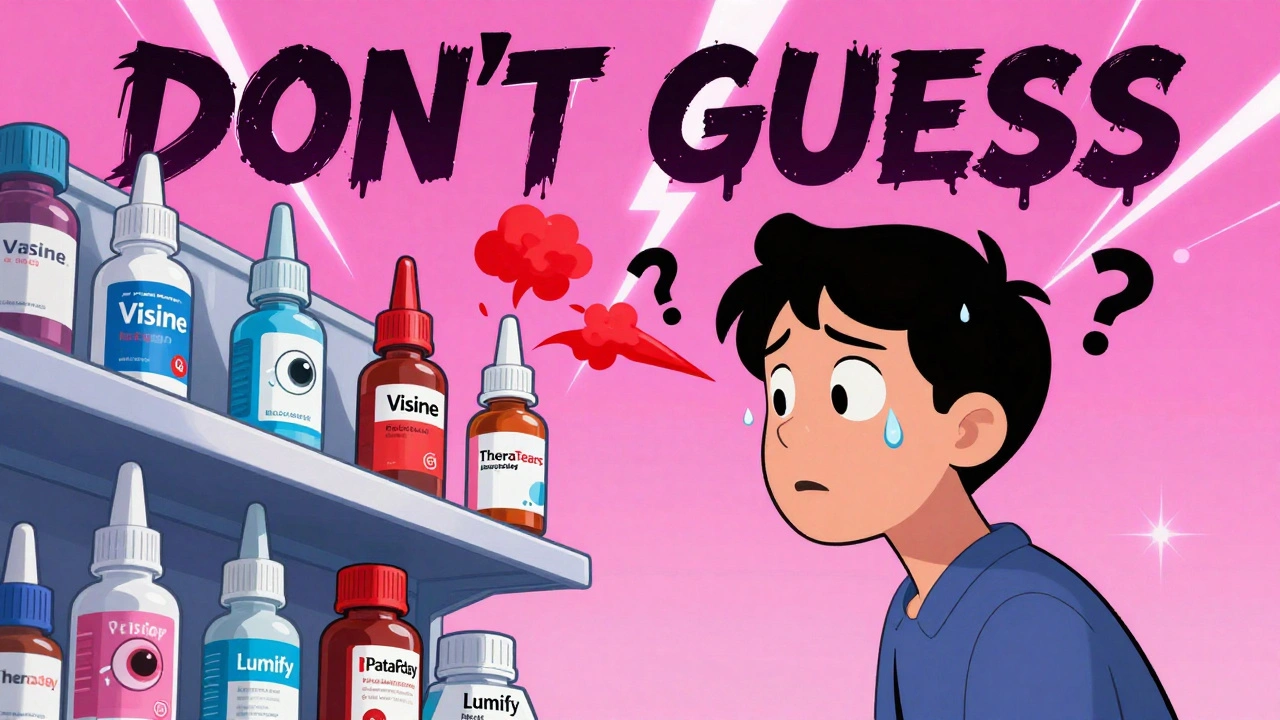
Artificial Tears: What They Are, How They Work, and What to Watch For
When your eyes feel gritty, burning, or like they’re full of sand, artificial tears, over-the-counter eye drops designed to mimic natural tear film and relieve dryness. Also known as eye lubricants, they’re one of the most common remedies for dry eye syndrome, a condition where eyes don’t produce enough tears or the tears evaporate too quickly. Millions use them daily, but most don’t know the difference between a basic moisturizer and a true repair solution.
Not all artificial tears are created equal. Some contain preservatives like benzalkonium chloride, a common disinfectant that can irritate sensitive eyes with long-term use, while others are preservative-free and meant for multiple uses per day. The type you need depends on your symptoms. If your eyes water but still feel dry, you might have evaporative dry eye from blocked oil glands—those need lipid-replenishing drops. If you’re on medications like antihistamines or antidepressants, you may need thicker gels at night. Even the bottle design matters: single-dose vials reduce contamination risk, especially if you wear contacts or have allergies.
Artificial tears don’t cure the root cause of dry eyes, but they can buy you time while you figure out what’s triggering it. Are you staring at screens too long? Is your environment too dry? Are you using the wrong kind of drops? Some people use them daily for years without realizing their drops are making things worse. The right formula can reduce redness, improve comfort, and even help your eyes heal their surface. But if you’re using them more than four times a day without relief, it’s not a tear problem—it’s a sign something else is going on.
Below, you’ll find real-world insights on what works, what doesn’t, and how to avoid common mistakes with eye drops. From ingredient breakdowns to how they interact with other medications, these posts give you the facts—not the marketing.