CYP3A4 Inhibitors: What They Are, How They Affect Your Meds, and What to Watch For
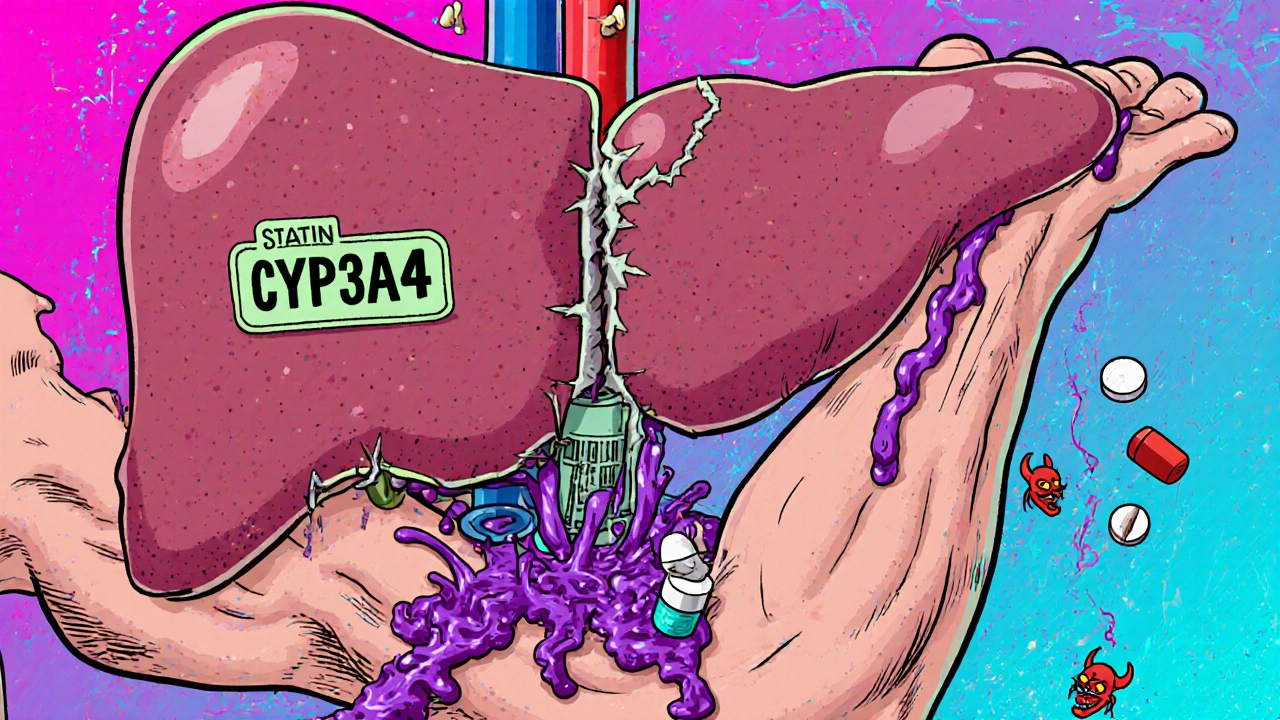
When you take a medication, your body doesn’t just absorb it and call it a day. It breaks it down—mostly in the liver—using enzymes like CYP3A4, a key liver enzyme responsible for metabolizing over half of all prescription drugs. Also known as cytochrome P450 3A4, it’s the workhorse that clears drugs like statins, blood thinners, and even some antidepressants from your system. But when something blocks CYP3A4, that cleanup slows down. That’s where CYP3A4 inhibitors come in. These aren’t drugs you take on purpose—they’re substances that accidentally interfere with your body’s natural drug-processing system.
Common CYP3A4 inhibitors include grapefruit juice, certain antibiotics like clarithromycin, antifungals like ketoconazole, and even some heart medications like diltiazem. If you’re taking a drug that CYP3A4 normally breaks down—say, simvastatin for cholesterol—and you add one of these inhibitors, your body can’t clear the statin fast enough. That means the statin builds up. And too much of it? That can lead to muscle damage, kidney problems, or worse. It’s not just about pills, either. Some herbal supplements like St. John’s wort can also mess with this enzyme, but in the opposite way—by speeding things up. That’s why knowing what you’re mixing matters.
People on multiple medications are especially at risk. Older adults managing heart disease, diabetes, and high blood pressure often take five or more drugs a day. Add a common CYP3A4 inhibitor like erythromycin for a sinus infection, and suddenly their blood pressure med or cholesterol pill becomes too strong. Pharmacists see this all the time—patients wondering why they feel dizzy or weak after starting a new drug, not realizing it’s not the new drug itself, but how it’s interacting with the old ones.
This isn’t theoretical. Studies show CYP3A4-related interactions are behind a huge chunk of hospital admissions from medication errors. The good news? You don’t need to be a scientist to avoid them. You just need to know the signs: unexplained side effects, sudden changes in how you feel after starting a new medicine or even a new food, or if your doctor suddenly changes your dose without explaining why. If you’re on a statin, a blood thinner, or any chronic medication, ask your pharmacist: "Is this affected by grapefruit or any common antibiotics?" That one question could save you from a serious reaction.
The posts below dive into real-world cases where enzyme interactions changed lives—like how digoxin affects blood sugar, why some blood thinners are riskier than others, and how even something as simple as a pill organizer can hide hidden dangers when meds interact. You’ll find practical advice from people who’ve been there, and clear explanations from professionals who’ve seen the fallout. No jargon. No fluff. Just what you need to know to stay safe.