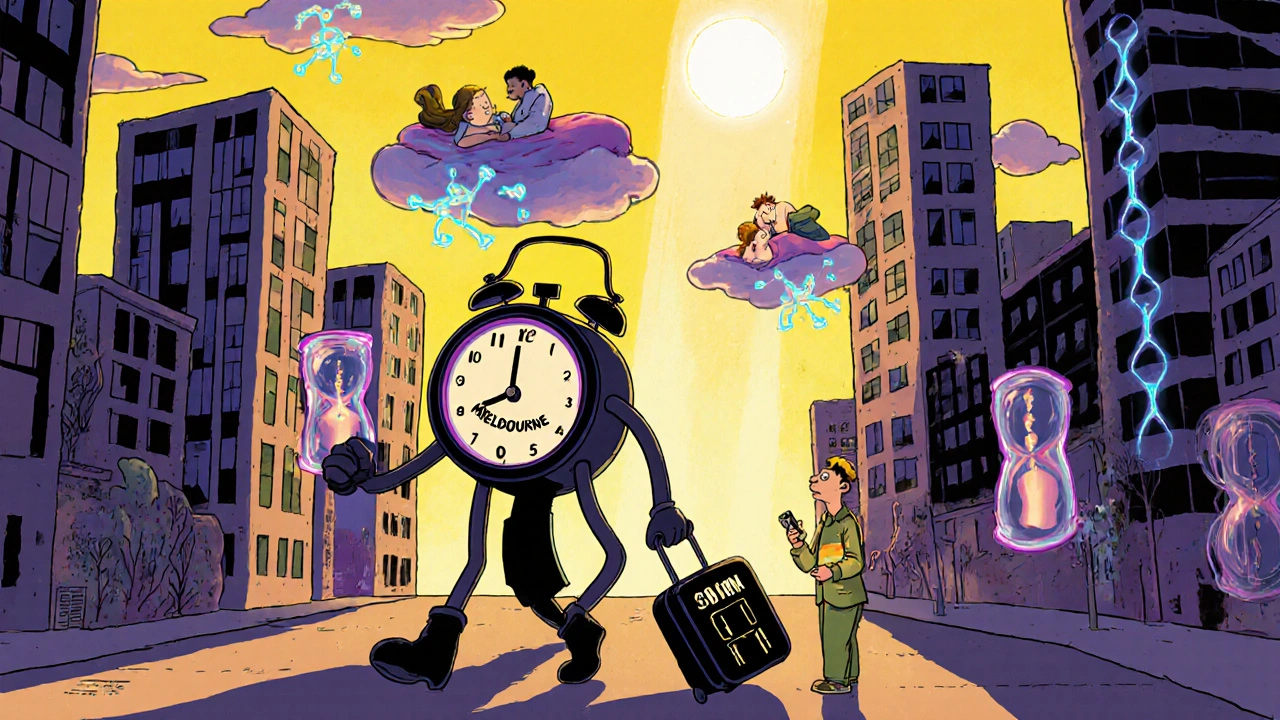
Delayed Sleep Phase Disorder: What It Is and How It Affects Your Life
When you delayed sleep phase disorder, a circadian rhythm disorder where the body’s internal clock is shifted later than typical. Also known as delayed sleep-wake phase disorder, it’s not just being a night owl—it’s a biological mismatch that makes waking up for work, school, or family routines feel like fighting gravity. People with this condition naturally fall asleep between 2 a.m. and 6 a.m. and wake up between 10 a.m. and 1 p.m., no matter how hard they try to adjust. It’s not laziness. It’s not poor discipline. It’s a neurological pattern that’s been documented in studies and recognized by sleep specialists worldwide.
This disorder often shows up in teens and young adults, but it can stick around into middle age. It’s more common in people with a family history of similar sleep patterns, suggesting a strong genetic link. The body’s circadian rhythm, the internal 24-hour clock that regulates sleep, hormones, and body temperature runs on light cues, and for those with delayed sleep phase disorder, those cues aren’t syncing properly. Bright screens at night make it worse, but even avoiding phones won’t fix it if the internal clock is set too late. It’s not about willpower—it’s about biology. And when you’re forced to wake up at 6 a.m. but your body thinks it’s still midnight, you’re not just tired—you’re running on chronic sleep debt, which affects mood, focus, and even long-term health.
Many people with this condition are misdiagnosed with insomnia, difficulty falling or staying asleep despite having the opportunity, but the difference is key. People with insomnia lie awake worrying, counting sheep, or stressing over sleep. People with delayed sleep phase disorder fall asleep easily—just hours after everyone else. They sleep just fine, if they’re allowed to follow their natural rhythm. The real problem isn’t sleep quality—it’s social time. Missing school, showing up late to work, or skipping family dinners isn’t a choice. It’s a consequence of a body that runs on a different schedule.
There’s no one-size-fits-all fix, but real strategies exist. Light therapy in the morning, melatonin taken at the right time, and strict sleep scheduling can help reset the clock—slowly. Some people find relief by switching to night-shift jobs or remote work that lets them align with their natural rhythm. Others use chronotype-based tools to track sleep patterns and adjust light exposure. The goal isn’t to become an early riser—it’s to find a life that works with your biology, not against it.
Below, you’ll find real stories and practical advice from people who live with this condition every day. You’ll see how medications, lifestyle changes, and even workplace policies can make a difference. Whether you’re struggling with this yourself or trying to understand someone who is, these posts give you the facts—not myths—about what works, what doesn’t, and how to take back control of your sleep without guilt or shame.