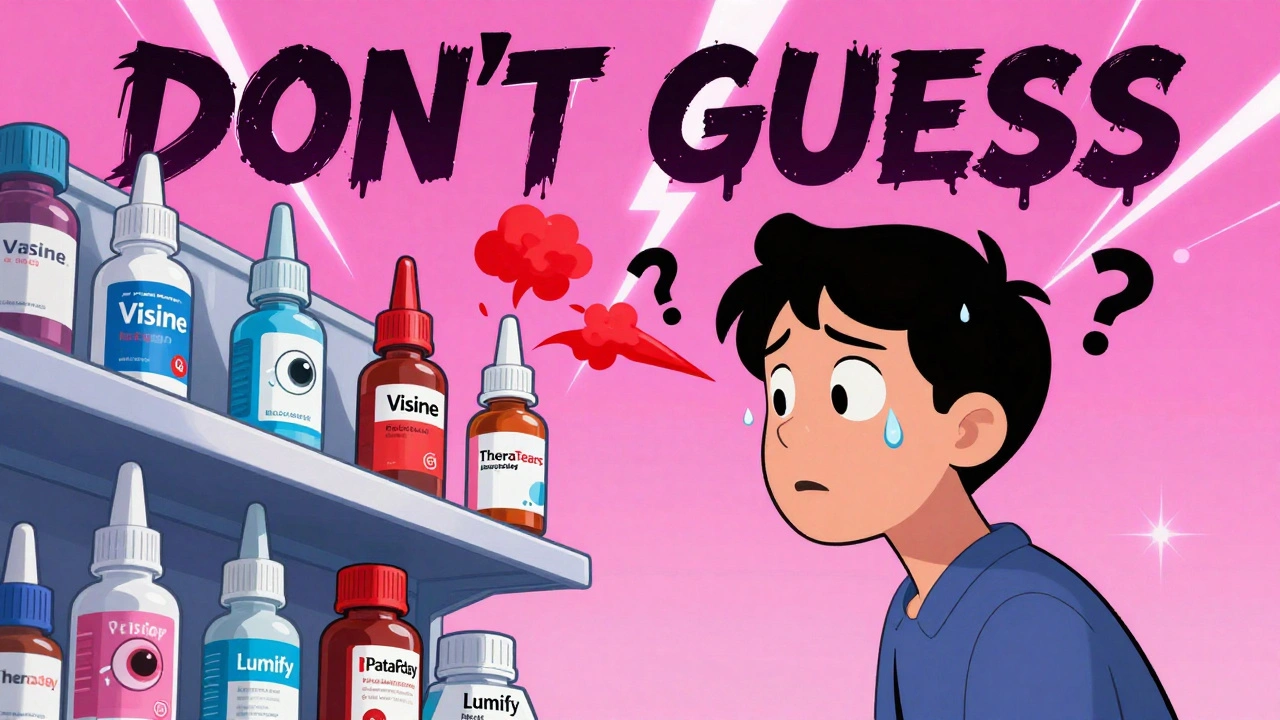
Dry Eye Relief: Common Causes, Effective Treatments, and What You Need to Know
When your eyes feel scratchy, tired, or like they’re full of sand, you’re not just uncomfortable—you might have dry eye syndrome, a condition where your eyes don’t make enough tears or the tears evaporate too fast. Also known as keratoconjunctivitis sicca, it affects over 30 million people in the U.S. alone, and it’s not just an old-person problem. Many people blame screens or wind, but the real culprits are often medications, aging, or underlying health issues.
One of the most common hidden causes? anticholinergics, a class of drugs that block nerve signals involved in tear production. These include common meds like diphenhydramine (Benadryl), oxybutynin for overactive bladder, and even some antidepressants. If you’re on one of these and your eyes feel dry, it’s not in your head—it’s the drug. Other triggers include long-term contact lens wear, autoimmune diseases like Sjögren’s, and living in dry or windy climates. Even air conditioning and heating systems can suck moisture right out of your eyes.
Not all dry eye relief, treatments aimed at restoring comfort and protecting the eye surface are created equal. Over-the-counter artificial tears help, but only if they’re preservative-free and used correctly. Many people use them too often or pick the wrong kind—some contain chemicals that irritate eyes more than they help. Prescription options like cyclosporine (Restasis) or lifitegrast (Xiidra) work by reducing inflammation, not just adding moisture. And for some, simple changes—like using a humidifier, taking screen breaks, or applying warm compresses—make a bigger difference than any drop.
If you’ve tried everything and still feel like your eyes are on fire, you’re not alone. The problem often goes deeper than surface symptoms. That’s why the posts below dig into what really matters: which medications make dry eye worse, how to spot fake relief products, what new treatments are working in 2025, and how to tell if your dry eyes are a side effect—or a sign of something bigger.