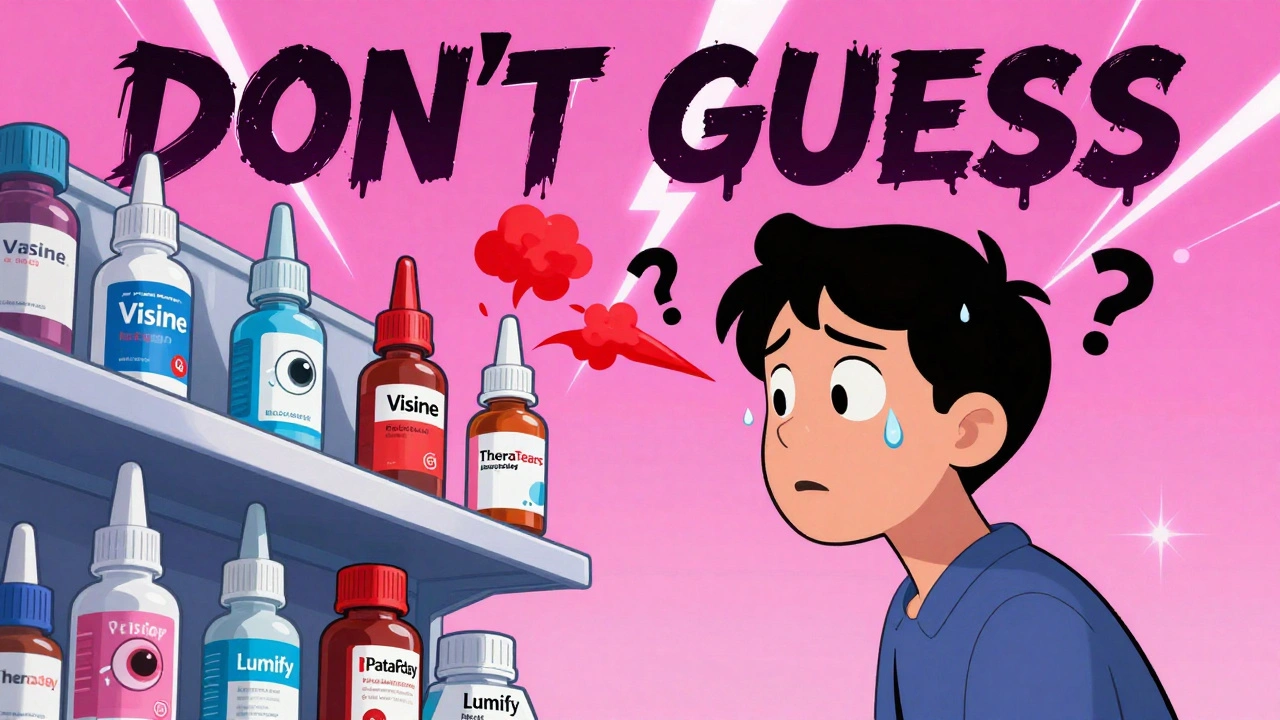
OTC Eye Drops: What Works, What to Avoid, and How to Use Them Safely
When your eyes feel dry, red, or gritty, OTC eye drops, over-the-counter eye lubricants used to relieve temporary discomfort without a prescription. Also known as artificial tears, they’re one of the most common self-treatments for eye irritation. But using them wrong—or picking the wrong kind—can make things worse. Many people reach for the first bottle on the shelf, thinking all eye drops are the same. They’re not. Some contain preservatives that irritate sensitive eyes. Others promise to "get the red out" but only mask the problem. And if you use them too often, you might end up relying on them just to feel normal.
The real issue isn’t just dryness—it’s what’s in the bottle. Benzalkonium chloride, a common preservative in multi-dose eye drops that can damage the eye’s surface over time shows up in nearly half of OTC products. It’s cheap and effective at keeping bacteria out, but it’s also a known irritant. If you use drops daily, you’re better off with preservative-free single-use vials. Then there’s the redness relievers—drops with tetrahydrozoline or naphazoline. They shrink blood vessels to make eyes look whiter, but they cause rebound redness. Your eyes get used to them, and when you stop, they turn redder than before. It’s a cycle, not a cure.
Not all OTC eye drops are created equal, and not all eye problems need them. Allergies? Try antihistamine drops like ketotifen. Digital eye strain? Look for lubricants with hyaluronic acid. Dust or wind exposure? A simple saline solution might be enough. The key is matching the drop to the cause. And if you’re using drops more than four times a day for over a week, it’s time to check in with a professional. Chronic dry eyes, persistent redness, or blurred vision aren’t normal. They could signal something deeper—like Sjögren’s syndrome, blepharitis, or even an early sign of autoimmune disease.
What you’ll find in the posts below are real-world breakdowns of what’s actually happening when you use these products. You’ll learn how manufacturing flaws can lead to unsafe batches, why some people feel worse after switching brands, and how preservatives like benzalkonium chloride quietly damage eye health over time. You’ll also see how pharmacy systems try to catch these issues before they reach you—and why sometimes, they don’t. This isn’t just about buying the right bottle. It’s about understanding what’s in it, how it affects you, and when to stop using it altogether.