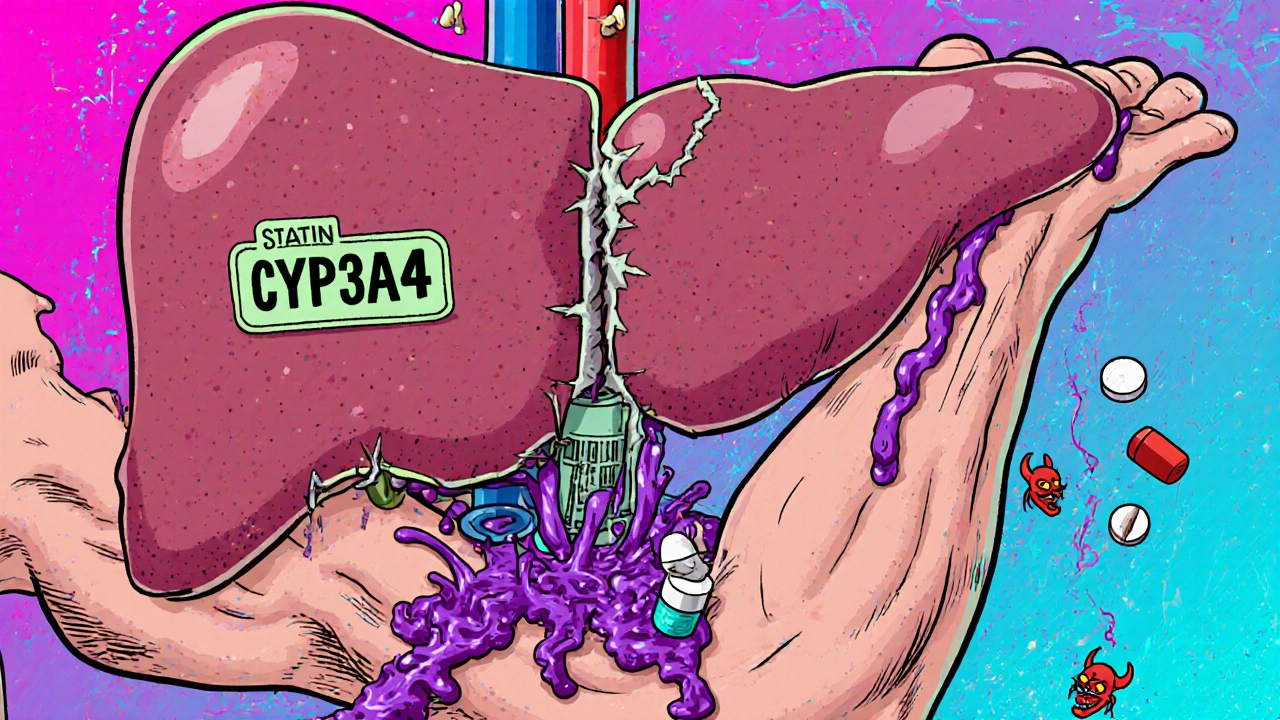
Statin Interactions: What You Need to Know About Drug Conflicts
When you take a statin, a class of drugs used to lower cholesterol by blocking liver enzymes that make it. Also known as HMG-CoA reductase inhibitors, these medications include atorvastatin, simvastatin, rosuvastatin, and others. They work well—but only if they don’t clash with what else you’re taking. Many people don’t realize that statin interactions can turn a safe drug into a risk. Even something as simple as grapefruit juice can boost statin levels in your blood, raising your chance of muscle damage or liver stress.
One of the biggest concerns is how statins interact with other drugs, medications that can change how your body processes statins. Antibiotics like clarithromycin, antifungals like itraconazole, and even some HIV meds can slow down the liver’s ability to break down statins. That means more of the drug stays in your system longer than it should. The same goes for liver enzymes, the proteins in your liver that metabolize drugs. If you’re on a statin and your liver enzyme system gets blocked by another drug, you’re at higher risk for side effects like muscle pain, weakness, or even a rare but serious condition called rhabdomyolysis.
It’s not just prescription drugs. Over-the-counter supplements like red yeast rice, which naturally contains a statin-like compound, can double your statin dose without you knowing. St. John’s wort, often taken for mood, can actually make statins less effective by speeding up how fast your body gets rid of them. And then there’s grapefruit—yes, that sweet breakfast fruit. One glass can interfere with simvastatin and lovastatin for days. Even if you only drink it once a week, it’s not worth the gamble.
What makes this even trickier is that many people take statins because they have other conditions—diabetes, high blood pressure, heart disease—and they’re on multiple pills. That’s where geriatric polypharmacy, the use of multiple medications in older adults comes in. Older patients are more likely to experience harmful interactions because their bodies process drugs differently. That’s why medication reviews and pharmacist-led checkups are so important. You don’t need to stop your statin—but you do need to know what’s safe to take with it.
Some statins are safer than others when it comes to interactions. Rosuvastatin and pravastatin are less likely to clash with other drugs because they’re processed differently in the body. If you’ve had side effects before, switching might help. But don’t change anything on your own. Talk to your doctor or pharmacist. They can check your full list of meds—even the vitamins and herbal stuff—and spot risks you might miss.
Below, you’ll find real-world guides on how other medications affect your health—from how digoxin changes blood sugar to why anticholinergics can blur your memory. These aren’t just theory. They’re stories from people managing complex drug regimens, learning what works, what doesn’t, and how to stay safe. You’re not alone in this. The right info can keep you healthy without unnecessary risks.