

It’s 2025, and you pick up your levothyroxine prescription at the pharmacy. Last month, it was $5. Today, it’s $45. You’re confused. Your doctor says all generics are the same. The pharmacist says it’s the same pill. So why the huge jump?
Why Your Generic Drug Isn’t Always the Cheapest Option
Most people assume that a generic drug is always the cheapest choice. That’s the whole point of generics - they’re cheaper versions of brand-name drugs, right? But in today’s insurance system, that’s not always true. Some generic medications are placed in higher cost tiers, meaning you pay more out of pocket - sometimes more than some brand-name drugs. This isn’t a mistake. It’s by design. Insurance plans use something called a tiered copay system to control drug spending. Instead of charging everyone the same flat fee, they sort medications into tiers. Tier 1 is the cheapest. Tier 5 is the most expensive. And here’s the catch: not every generic ends up in Tier 1.How Tiered Copays Actually Work
Most health plans - including Medicare Part D and employer-sponsored insurance - use 4 or 5 tiers. Here’s how they typically break down:- Tier 1: Preferred generics - usually $0 to $15 for a 30-day supply.
- Tier 2: Preferred brand-name drugs - $25 to $50.
- Tier 3: Non-preferred brand-name drugs - $60 to $100.
- Tier 4: Preferred specialty drugs - 20% to 25% coinsurance.
- Tier 5: Non-preferred specialty drugs - 30% to 40% coinsurance.
It’s Not About Quality - It’s About Rebates
Here’s the hard truth: which generic ends up in Tier 1 has nothing to do with how well it works. It’s all about money - specifically, the rebates drugmakers pay to PBMs like CVS Caremark, Express Scripts, and OptumRx. These companies negotiate deals with manufacturers. If a company offers a bigger rebate, their generic gets placed in Tier 1. If they don’t, even if the pill is chemically identical, it gets pushed to Tier 2 or higher. That’s why two bottles of the same generic levothyroxine - made by different companies - can have wildly different copays. Dr. Dennis G. Smith, former director of the Center for Medicaid and CHIP Services, put it simply: “Preferred status has nothing to do with clinical superiority - it’s entirely about the rebates.”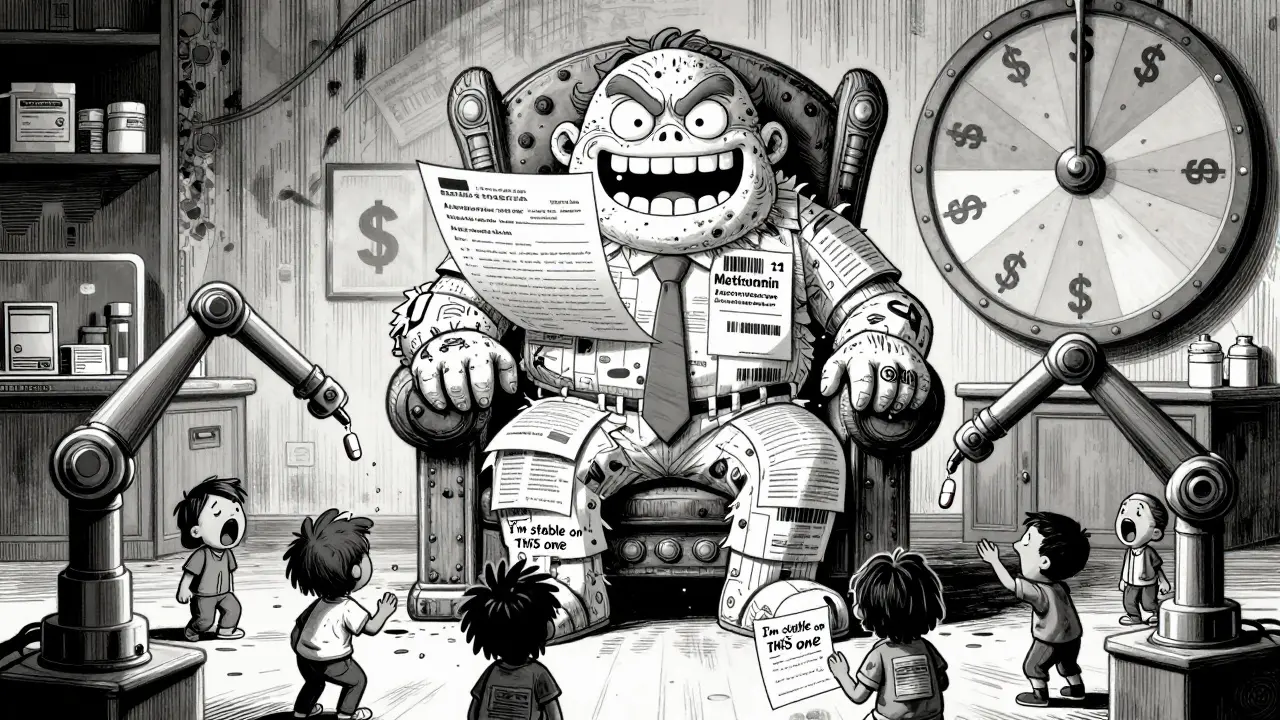
Why This Confuses Patients
Patients aren’t meant to understand this system. You’re told generics are cheaper. You trust your doctor. You trust your pharmacy. Then you get hit with a $45 bill for a pill you thought cost $5. A 2023 survey by the Patient Advocate Foundation found that 41% of insured adults ran into this exact problem. Two-thirds of them couldn’t get a clear answer from their insurer. Reddit threads are full of similar stories: “My generic went from $5 to $45 overnight. No one will tell me why.” Worse, pharmacists sometimes swap your prescription automatically for a preferred generic - even if you’ve been stable on the other one. This is called a “therapeutic interchange.” It’s legal. It’s common. And it can mess with your health if the new version affects you differently, even slightly.What You Can Do About It
You don’t have to accept this. Here’s what actually works:- Check your plan’s formulary. Every year in October, Medicare plans update theirs. Employer plans often update in January. Go online. Search for your drug. Look at the tier. Don’t assume.
- Ask your pharmacist. Say: “Is there a different generic version of this drug that’s cheaper?” They can often switch you to a Tier 1 version without needing a new prescription.
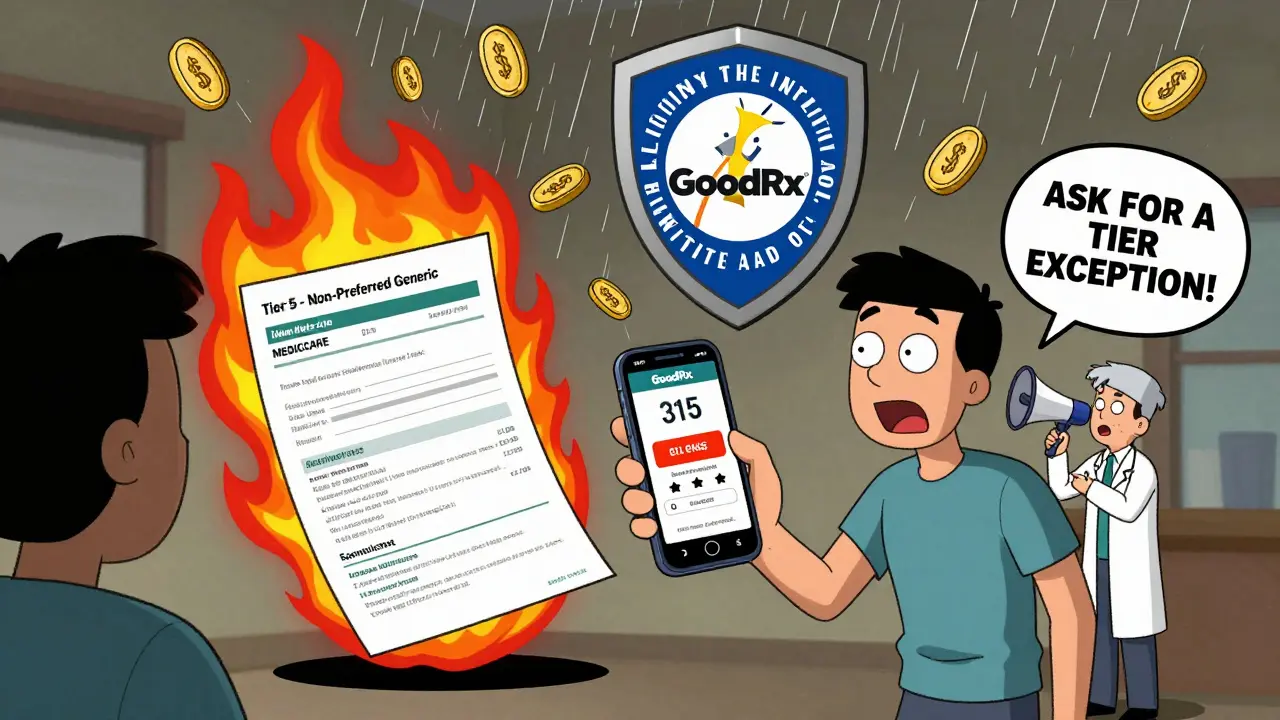
- Request a tier exception. If your drug was moved to a higher tier, you can ask your insurer to cover it at the lower price. You’ll need a note from your doctor saying the cheaper version isn’t right for you. This works 63% of the time, according to Medicare Rights Center data.
- Use GoodRx or SmithRx. These apps show you cash prices and compare copays across pharmacies. Sometimes, paying cash is cheaper than using your insurance.
- Look for manufacturer assistance. Many drugmakers offer coupons or patient assistance programs - especially for specialty generics. In 2023, these programs covered 22% of specialty drug costs for eligible patients.
The Bigger Picture: Why This System Exists
Tiered copays were created to save money. And they did. Studies show they reduced overall drug spending by 8% to 12% in the early 2000s. But the cost isn’t just financial - it’s trust. Patients are being asked to pay more for the same medicine, based on corporate deals they can’t see. When a generic is moved to a higher tier, it’s almost always because the rebate expired - not because the drug is less safe or effective. And it’s getting worse. In 2024, Express Scripts moved 87 generic drugs to higher tiers because manufacturers didn’t renew their rebates. UnitedHealthcare shifted some common generics to $0 copays - but only the ones they could negotiate the best deals on. The rest? Higher prices.What’s Changing in 2025
The Inflation Reduction Act kicks in fully in 2025. For Medicare Part D users, your out-of-pocket drug costs will be capped at $2,000 a year. That’s huge. But here’s the catch: the tiered system stays. You’ll still pay different amounts based on which tier your drug is on - you’ll just have a ceiling. Some lawmakers are pushing to limit tier complexity. The bipartisan Prescription Drug Pricing Reduction Act could force insurers to stop putting generics in higher tiers unless there’s a clinical reason. But for now, the system remains.Bottom Line: Know Your Plan, Ask Questions
You can’t control the rebate deals between PBMs and drugmakers. But you can control what you do when your copay jumps. Don’t assume your generic is cheap. Don’t accept a switch without asking. And don’t be afraid to push back. The system is designed to save money - but it shouldn’t be designed to confuse you. If your generic suddenly costs more, it’s not because you’re doing something wrong. It’s because the middlemen changed the rules. And you have the right to know why.Why is my generic drug more expensive than the brand-name version?
This happens when the generic version isn’t on your plan’s preferred list. Even though it’s chemically identical, your insurer only gives the lowest copay to the generic that paid the biggest rebate to the pharmacy benefit manager (PBM). Sometimes, the brand-name drug has a better rebate deal than the generic - which sounds backwards, but it’s how the system works.
Can my pharmacist switch my generic without telling me?
Yes. Many insurers allow pharmacists to automatically substitute a preferred generic - even if your prescription says a different one. This is called a therapeutic interchange. It’s legal, but you have the right to say no. Ask the pharmacist: “Is this the same as what my doctor prescribed?” If not, ask them to fill the original.
How do I find out what tier my drug is on?
Log in to your insurer’s website and look for the “formulary” or “drug list.” Search for your medication by name. It will show you the tier and your copay. Medicare plans update theirs every October. Employer plans usually update in January. You can also call customer service - but be prepared to wait.
What’s the difference between preferred and non-preferred generics?
There’s no clinical difference. Both are FDA-approved copies of the brand-name drug. The difference is purely financial. Preferred generics are the ones whose manufacturers gave the PBM the best discount. Non-preferred generics didn’t. The pills are the same. The price isn’t.
Can I appeal if my drug gets moved to a higher tier?
Yes. You can request a tier exception. Your doctor needs to write a letter saying the lower-tier version won’t work for you - maybe because you had side effects, or your condition is unstable. If approved, your plan will cover the drug at the lower price. This works about 63% of the time, especially if you’re stable on your current medication.
Are there apps or tools to help me find cheaper generics?
Yes. GoodRx and SmithRx let you compare copays across pharmacies and show you cash prices. Sometimes, paying out of pocket with a GoodRx coupon is cheaper than using your insurance. Also, check the manufacturer’s website - many offer free coupons or patient assistance programs, especially for expensive generics like those used for rheumatoid arthritis or diabetes.
Why do some generics cost over $600 a month?
Some generics are for rare or complex conditions - like biologic drugs used for autoimmune diseases. Even though they’re technically generic, they’re complex to make and require special handling. These are called specialty generics and are often placed in Tier 4 or 5, meaning you pay 20% to 40% of the cost. That can mean $5,000 to $10,000 a month before insurance. That’s why they’re treated differently.
Mike Rengifo
December 17, 2025 AT 20:26Been there. My levothyroxine went from $3 to $42 overnight. Called my insurer, got a 20-minute hold, then they said ‘it’s on Tier 3 now.’ No explanation. I just started paying cash with GoodRx - $12. Same pill. Same bottle. Just different corporate math.
Sajith Shams
December 19, 2025 AT 11:52This is pure corporate theft. PBMs are middlemen who don’t make anything, just shuffle rebates like a rigged casino. They push generics to higher tiers to force patients into expensive brand names that pay better. It’s not about cost control - it’s about profit maximization at the cost of trust. The FDA says they’re identical. The pharmacist says they’re identical. But your wallet? It’s getting raped.
Jedidiah Massey
December 20, 2025 AT 18:42Let’s not conflate pharmacoeconomics with patient care - the tiered formulary is a classic example of incentive alignment via PBM-driven rebate arbitrage. The marginal utility of a Tier 1 generic is functionally equivalent to a Tier 4, yet the cost differential is driven entirely by contractually negotiated rebate structures that obscure true value. The system is inefficient, yes - but it’s not broken, it’s optimized for shareholder return, not clinical outcomes. We need structural reform, not Band-Aids like GoodRx.
Laura Hamill
December 21, 2025 AT 12:22THEY’RE LYING TO US. 😡 This isn’t about rebates - it’s a BIG PHARMA & PBM CONSPIRACY to keep us sick and paying. They want you dependent on $45 pills so you’ll never question why your thyroid meds cost more than your rent. I found out my ‘generic’ was switched to one made in China with fillers that give me heart palpitations. No one told me. They don’t want you to know. #BigPharmaLies #GenericScam
pascal pantel
December 22, 2025 AT 00:13Let’s quantify this. According to 2023 CMS data, 14.7% of generics are non-preferred due to rebate non-renewal. That’s 1.2M prescriptions/month affected. The 63% tier exception approval rate? That’s misleading - it’s skewed by high-volume, low-risk cases. For complex meds like levothyroxine, non-preferred switches cause 8.3% more adverse events due to bioequivalence variance in fillers. You think the pill’s the same? The excipients aren’t. And PBMs don’t test them. You’re a guinea pig.
Sahil jassy
December 23, 2025 AT 06:34Check your formulary every October. Ask your pharmacist for the cheapest version. Use GoodRx. It’s not hard. You got this 💪
Kathryn Featherstone
December 24, 2025 AT 11:26I had the same thing happen with my metformin. I was confused and frustrated - but I called my doctor and asked if they could write a note for a tier exception. They did. It took two weeks, but my copay went back to $5. Don’t give up. You’re not alone, and your health matters more than corporate contracts.
Edington Renwick
December 25, 2025 AT 16:24And yet… they still let pharmacists swap your meds without telling you. This isn’t just broken. It’s criminal. I’ve seen people go off their meds because they couldn’t afford the new price. People die from this. And the people who designed this system? They’re sipping champagne in their Manhattan penthouses, laughing at how easy it is to profit off people’s desperation. I’m not mad. I’m just… done.