
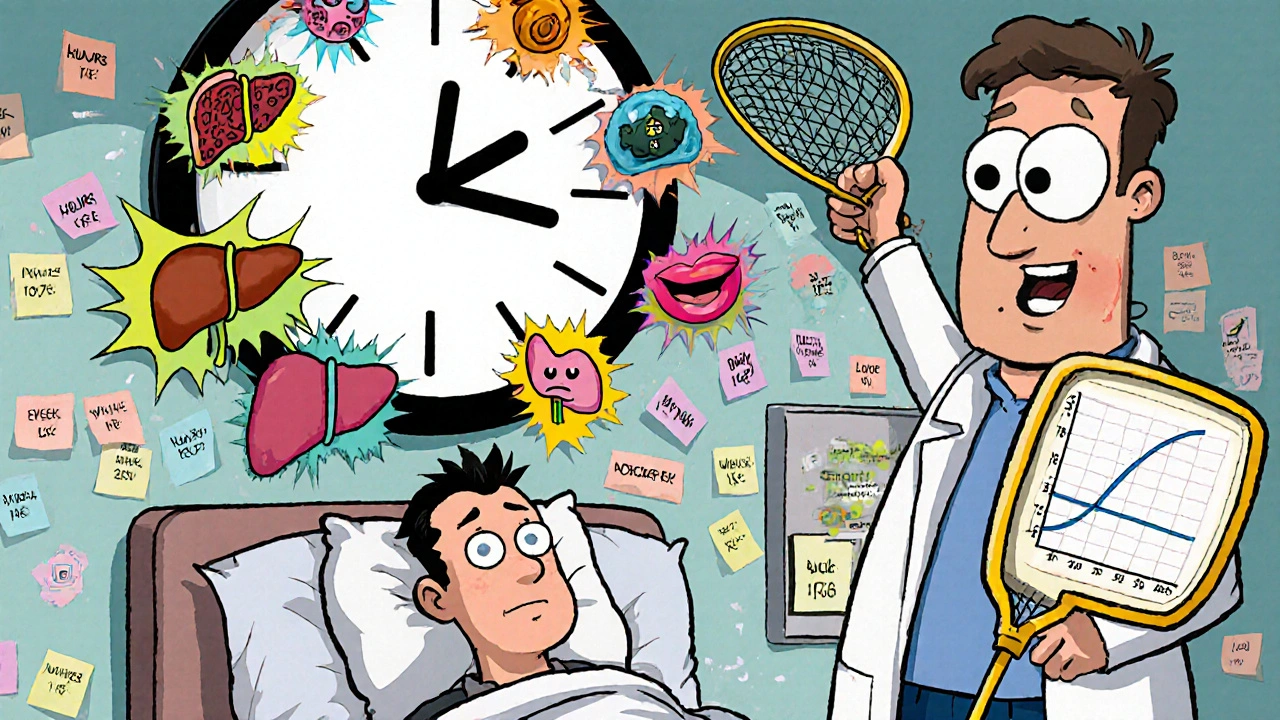
Ever started a new medication and wondered, is this side effect really from the drug, or just bad luck? You take a pill, and a few days later, your muscles ache, your stomach churns, or your face swells up. It’s natural to panic. But here’s the thing: not all side effects show up the same way. Some hit fast-within hours. Others creep in weeks or even months later. Knowing when side effects typically appear for each drug class can save you from misdiagnosis, unnecessary tests, or even stopping a medicine that’s actually helping you.
Why Timing Matters More Than You Think
Doctors don’t just look at what symptoms you have-they look at when they started. A headache two hours after taking a new antibiotic? That’s a red flag. A muscle ache three weeks into statins? That’s common. But if that same ache shows up six months later? Probably not the drug. This isn’t guesswork. It’s science. Researchers use statistical models like the Weibull distribution to map out how likely a side effect is to appear at different times after you start a drug. The shape of that curve tells you if the risk drops quickly, builds slowly, or stays steady.Turns out, most side effects show up early. In fact, 78% of adverse reactions happen soon after you begin treatment. That’s why the FDA says to pay close attention to the first 30 days. But that doesn’t mean later reactions are rare-or harmless. Some of the most dangerous ones, like liver damage or angioedema from ACE inhibitors, can sneak in months later. If your doctor doesn’t know this, you might be dismissed as ‘anxious’ or told your condition is ‘just getting worse.’
Fast-Onset Side Effects: Hours to Days
Some drugs act like a light switch. You flip it on, and symptoms appear fast. Antibiotics like ciprofloxacin are classic examples. Peripheral nerve pain-tingling, burning, numbness-hits hard and fast. Studies show the median time for this side effect is just 2 days. Women experience it even sooner than men, on average. That’s not a fluke. It’s tied to how the drug interacts with nerve cells right after absorption.Angioedema-swelling of the lips, tongue, or throat-is another early responder. If it’s caused by histamine release (like from an allergic reaction to penicillin), it usually happens within minutes to hours. But if it’s from an ACE inhibitor like lisinopril or enalapril? That’s a different story. Those reactions can appear anytime from the first week to six months later. That’s why so many patients get misdiagnosed. One review on Drugs.com told the story: ‘Developed severe angioedema 4 months after starting. My doctor didn’t connect it until I found the research.’
Acetaminophen overdose is another fast hitter. Liver damage can show up within 24 hours. That’s why you’re told not to take more than 4,000 mg a day. But here’s the twist: people who take it regularly for pain often don’t realize they’ve crossed that line until it’s too late.
Mid-Term Reactions: Weeks to a Month
This is where most people get confused. You’ve been on your medication for a few weeks. You feel off. Tired. Dizzy. Nauseous. You assume it’s ‘just adjusting.’ But is it?Antiepileptic drugs like pregabalin and gabapentin fall here. The median time for dizziness or fatigue to appear is 19 days for pregabalin and 31 days for gabapentin. Yet, 58% of patients on Drugs.com reported these symptoms within the first week. Why the gap? Because some people are more sensitive. Their bodies react faster. Others take longer to build up enough of the drug in their system. That’s why doctors often start low and go slow.
Statins are a big one. Many people blame muscle pain on statins. But here’s what the research shows: in a controlled crossover trial, 55% of people who thought they couldn’t tolerate statins felt better within 3 days of stopping-whether they were taking the real drug or a placebo. That’s the nocebo effect in action. The brain expects side effects, so it creates them. Still, true statin-induced myopathy does happen. It usually shows up between 1 and 4 weeks after starting. If your pain is worse after exercise or you notice dark urine, don’t ignore it. Get your CK levels checked.
Delayed Reactions: Months to Over a Year
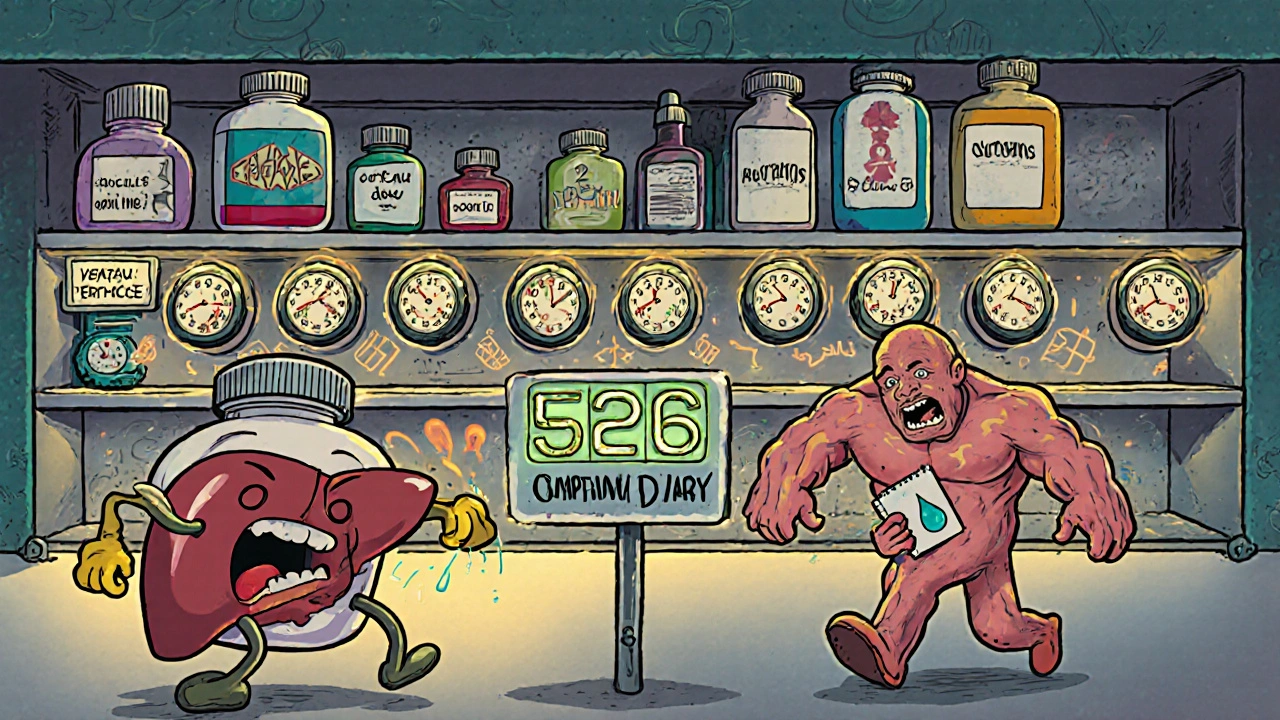
This is the scary stuff. Side effects that show up so late, no one connects them to the drug. But they’re real-and they’re more common than you think.Natalizumab, used for multiple sclerosis, causes peripheral neuropathy with a median time-to-onset of 141.5 days. That’s nearly five months. Interferon beta-1a? That one can take over a year-526.5 days, to be exact. And liver damage from drugs like methotrexate or isoniazid? Median onset is 42 days, but it can range from 20 to 117 days. If you’re on long-term meds, especially immune-modulators or antivirals, you need to stay alert.
One study found that adverse events are 37% less likely to be reported after you stop the drug. Why? Because the connection gets lost. Your doctor thinks, ‘She’s off the medicine now, so it can’t be that.’ But the damage might still be happening. Or worse-it might have already started before you stopped.
Sex, Genetics, and Individual Differences
Not everyone reacts the same way. Women are more likely to experience side effects from ciprofloxacin than men-and they feel them sooner. Why? Differences in metabolism, body fat, and hormone levels. A 2025 study showed women had a median onset of 2 days; men, 4 days. That’s not small. It’s clinically significant.Genetics play a role too. Some people have a variant in the SLCO1B1 gene that makes them more prone to statin muscle pain. Others have slow metabolizer variants for antidepressants, leading to buildup and side effects like drowsiness or nausea. This is why personalized medicine is growing. The NIH’s All of Us program is starting to build TTO models that include genetic data-so in the future, your doctor might say, ‘Based on your genes, you’re likely to feel dizziness from this drug around day 14.’
How Clinicians Use This Info
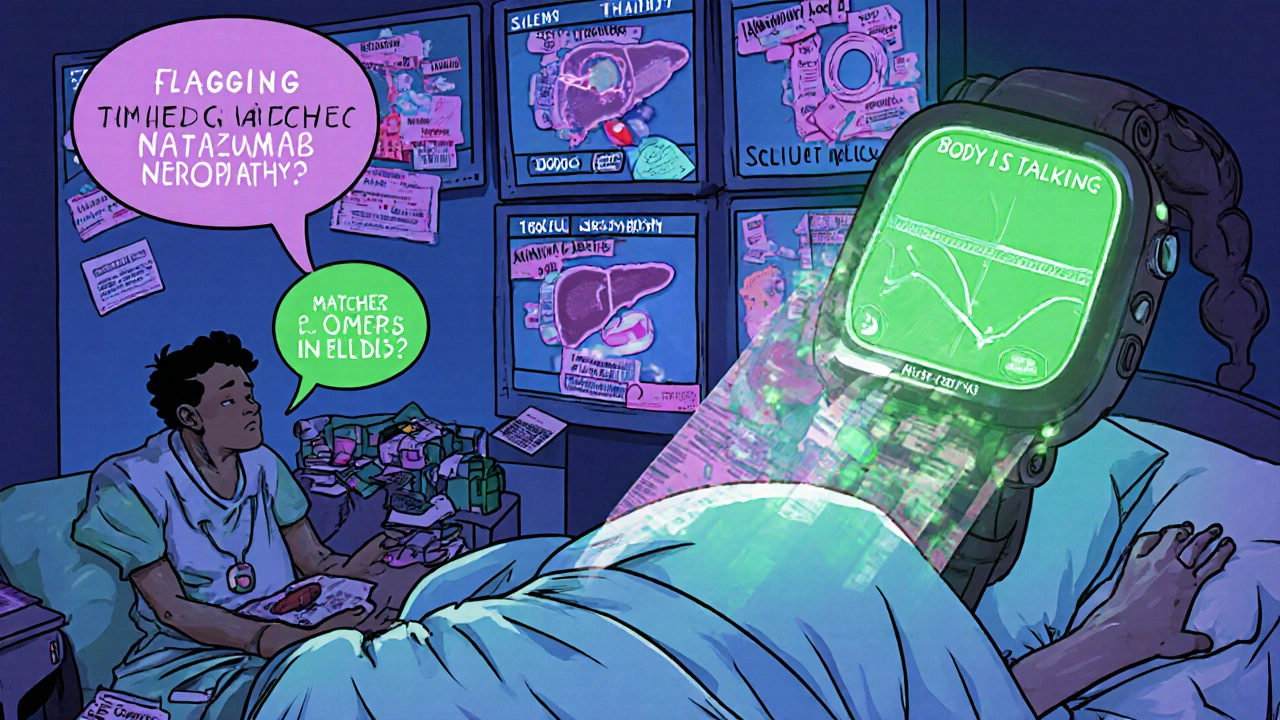
Hospitals aren’t just guessing anymore. Mayo Clinic rolled out an algorithm in their electronic health records that flags potential drug reactions based on timing. Since January 2022, they’ve seen a 22% increase in correctly identified side effects. Epic and other major EHR systems now have similar tools.Regulators are catching up too. Since 2020, the European Medicines Agency requires Weibull distribution analysis for every new drug application. In the U.S., the FDA’s Sentinel Initiative has analyzed over 47 million patient records to build baseline TTO patterns for common drugs. That means drug labels will soon include more precise timing info-not just ‘may cause headache,’ but ‘headache most commonly occurs within 48 hours, peaks at day 7, and resolves by day 14.’
But here’s the catch: most doctors haven’t been trained in this. A 2022 ASHP report says it takes 6-8 months of focused study to use TTO analysis effectively. That’s why so many patients fall through the cracks. You need to be your own advocate. Keep a symptom diary. Note the date you started the drug. Track when things got worse-or better.
What You Can Do Right Now
You don’t need to be a scientist to use this knowledge. Here’s how to protect yourself:- Ask your doctor: ‘What are the common side effects of this drug, and when do they usually start?’
- Track symptoms: Use a simple notes app or paper log. Write down the date you started the drug and any new symptoms.
- Know the window: If you’re on an antibiotic, watch for tingling or pain in the first week. If you’re on an ACE inhibitor, stay alert for swelling-even months later.
- Don’t assume it’s ‘just aging’: Fatigue, brain fog, or joint pain after starting a new drug? It might not be your body wearing out. It might be the medicine.
- Speak up if it’s late: If a side effect shows up after 6 weeks, don’t let your doctor brush it off. Say: ‘I read this can happen later. Could it be related?’
Side effects aren’t random. They follow patterns. And when you know those patterns, you stop being a passive patient. You become a partner in your care.
Can side effects appear years after starting a medication?
Yes. While most side effects show up within days or weeks, some can appear months or even years later. Interferon beta-1a can cause peripheral neuropathy after more than a year. ACE inhibitors can trigger angioedema up to 6 months after starting. Immune-modulating drugs like natalizumab may cause nerve damage after 4-5 months. These delayed reactions are often missed because they’re not expected. Always consider medication as a possible cause, no matter how long you’ve been taking it.
Why do some people get side effects right away and others don’t?
It comes down to biology. Genetics affect how fast your body processes drugs. Women often react faster than men due to differences in metabolism and body composition. Age, liver and kidney function, and other medications you’re taking also play a role. Some people have a genetic variant that makes them more sensitive to statins, for example. Others metabolize drugs slowly, leading to buildup and delayed reactions. It’s not about being ‘weak’-it’s about your unique biology.
Are side effects from statins real, or just in people’s heads?
Both. Research shows that about half of people who report statin-related muscle pain improve just as much when switched to a placebo. That’s the nocebo effect-expecting side effects makes you feel them. But real statin-induced myopathy does happen. It usually appears between 1 and 4 weeks after starting. If you have unexplained muscle weakness, dark urine, or elevated CK levels, it’s not just in your head. Talk to your doctor. Don’t assume it’s all psychological.
How do I know if my symptom is from the drug or my illness?
Timing is key. If you started the drug and symptoms began shortly after, it’s likely related. But if your illness already causes similar symptoms-like fatigue in multiple sclerosis or joint pain in lupus-it’s harder. Look for changes: Did the symptom get worse after starting the drug? Did it improve after stopping? Did it return when you restarted? A symptom that appears suddenly after a new drug is more likely drug-induced. Keep a log and share it with your doctor.
Do drug labels tell me when side effects usually start?
Not usually-not yet. Most labels say ‘may cause headache’ or ‘dizziness reported in clinical trials.’ But that’s changing. Since 2020, European regulators require time-to-onset data in drug applications. The FDA is building databases to support this too. In the next few years, you’ll see labels like: ‘Dizziness typically begins within 3-7 days, peaks at day 14, and resolves by day 28.’ Until then, rely on research and patient reports. Ask your pharmacist for the latest safety data.
Can wearable tech help track side effect timing?
Yes. Companies like Johnson & Johnson are testing wearables that link continuous glucose readings with insulin timing to spot delayed reactions. Heart rate variability, sleep disruption, and activity levels can all signal early side effects before you even notice them. In the near future, your smartwatch might alert you: ‘Your resting heart rate has increased 15% since starting this drug-could be a sign of early thyroid reaction.’ This isn’t science fiction-it’s coming fast.
Karandeep Singh
November 29, 2025 AT 17:05Kelly Essenpreis
November 30, 2025 AT 07:16ariel nicholas
December 1, 2025 AT 10:52Amber-Lynn Quinata
December 2, 2025 AT 12:34Bonnie Youn
December 3, 2025 AT 08:36Debbie Naquin
December 4, 2025 AT 05:29elizabeth muzichuk
December 5, 2025 AT 07:52Rachel Stanton
December 7, 2025 AT 02:36Lauryn Smith
December 8, 2025 AT 21:37Charlotte Collins
December 9, 2025 AT 14:41Margaret Stearns
December 11, 2025 AT 14:39Alexander Williams
December 13, 2025 AT 13:47amit kuamr
December 14, 2025 AT 09:00Suzanne Mollaneda Padin
December 14, 2025 AT 12:08Scotia Corley
December 14, 2025 AT 17:21