
Medication Side Effect Timeline Calculator
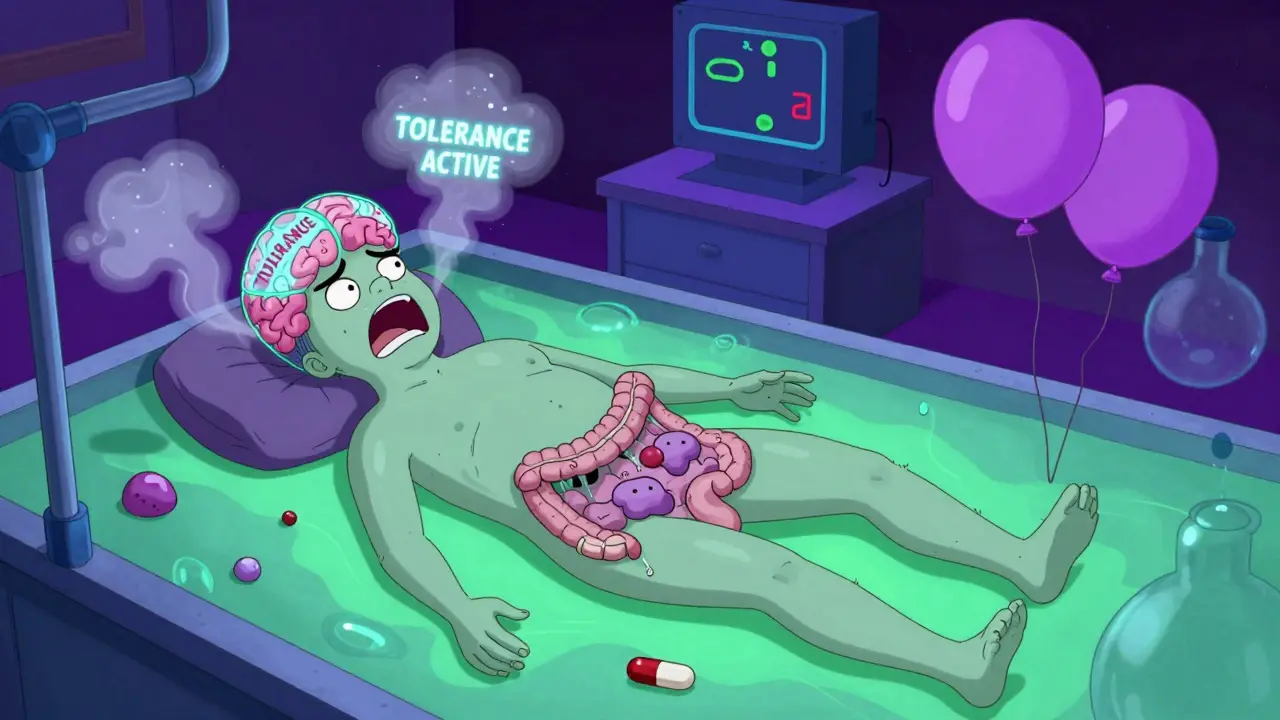
Have you ever started a new medication and felt awful at first-nauseous, dizzy, exhausted-only to wake up a week later and wonder what all the fuss was about? That’s not just you getting used to it. It’s your body changing how it responds to the drug. This isn’t magic. It’s tolerance, a well-documented biological process that explains why some side effects disappear while others stick around.
What Exactly Is Medication Tolerance?
Tolerance happens when your body adapts to a drug after repeated use, so it doesn’t affect you the same way anymore. You might need more of the drug to feel the same effect, or you might stop feeling certain side effects entirely. This isn’t addiction. It’s not weakness. It’s pharmacology.The World Health Organization defines it clearly: tolerance is a reduced reaction to a medication after ongoing use. It’s not just about feeling less high or less pain relief-it’s about how your cells, enzymes, and receptors physically change over time. Some systems adapt fast. Others don’t adapt at all.
Why Do Some Side Effects Vanish, But Others Don’t?
This is the real puzzle. Why does dizziness from an antidepressant disappear in two weeks, but sexual dysfunction lasts for months-or never goes away? Why does nausea from opioids vanish after a few days, but constipation sticks around like an unwanted guest?The answer lies in something called differential tolerance. Different parts of your body develop tolerance at different speeds, using different tools. Think of it like a team: some members get trained quickly, others don’t bother.
There are three main ways this happens:
- Pharmacokinetic tolerance: Your liver gets better at breaking down the drug. Enzymes like CYP450 get turned up like a faucet. For example, chronic alcohol use can boost CYP2E1 enzyme activity by up to 300%. That means the drug leaves your system faster, so you feel less of it.
- Pharmacodynamic tolerance: Your brain cells change how they respond. Receptors (the spots where drugs lock in) get fewer in number, or they stop responding as strongly. Opioid receptors, for example, can drop by 20-50% after regular use. Less lock-in means less effect.
- Cellular adaptation: Your neurons rewire themselves. Proteins in cell membranes shift their makeup. Alcohol, for instance, causes GABA-A receptors to lose certain subunits, making them less sensitive to sedation-but not to other effects.
These changes don’t happen evenly. The brain regions that control nausea and dizziness adapt quickly. The ones controlling bowel movement? Not so much.
Real-World Examples: What Tolerance Looks Like
Let’s look at actual medications and what patients report:
- Opioids (like oxycodone or morphine): Sedation and nausea fade within 3-7 days for most people. Constipation? Still there at 90% intensity after weeks. That’s why doctors prescribe laxatives from day one.
- Benzodiazepines (like Xanax or Valium): The drowsiness drops by 60-70% in two weeks. But the anxiety relief? Still strong. That’s why these drugs stay useful for panic disorders even after long-term use.
- SSRIs (like sertraline or fluoxetine): Nausea and dizziness usually clear up in 2-3 weeks. But sexual side effects-low libido, trouble getting or keeping an erection-persist in over half of users. No tolerance there.
- Beta-blockers (like metoprolol): Initial fatigue fades in 3 months. Blood pressure stays lowered. Your body adapts to the fatigue, not the treatment.
- Antipsychotics: Tremors and stiffness (extrapyramidal side effects) improve in 4-6 weeks for 50-60% of people. The drug still blocks dopamine to treat psychosis-just without the muscle problems.
These aren’t random. They follow patterns. The side effects tied to brain circuits that regulate mood, alertness, or nausea adapt fast because those systems are highly plastic. The ones tied to gut function, hormone balance, or sexual response? Slower to change-or not at all.
Why Your Body Doesn’t Just “Get Used to Everything”
It’s tempting to think your body should just learn to ignore all side effects. But biology doesn’t work that way. Some systems are designed to protect you. Constipation from opioids? That’s the drug slowing down your gut-a direct effect on smooth muscle. Your body can’t adapt to that without risking dangerous bowel blockages.
Sexual side effects from SSRIs? Those come from serotonin’s role in sexual arousal pathways. Those pathways aren’t meant to be flexible. Mess with them too much, and you risk long-term dysfunction. So your body doesn’t adapt-it just lives with it.
And here’s the kicker: some side effects never go away because they’re not side effects at all. They’re the drug’s intended action, just in the wrong place. For example, opioids are meant to block pain signals in the brain. But they also bind to receptors in your gut. That’s not a side effect-it’s the same mechanism working where it shouldn’t.
What This Means for You
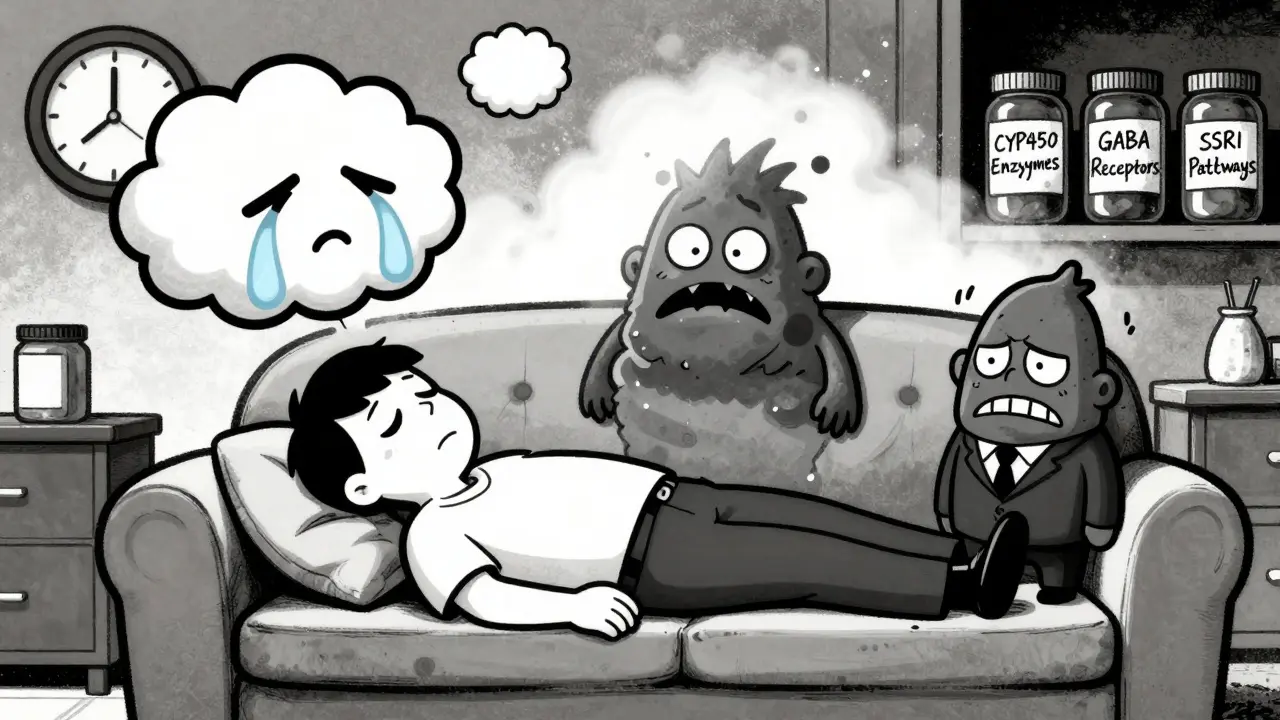
If you’re starting a new medication and feel awful, don’t panic. Give it time. For many drugs, the worst side effects fade within days to weeks. But don’t assume everything will disappear. Track what changes and what doesn’t.
Here’s what to do:
- Don’t stop cold. If nausea fades after a week, that’s normal. Stopping because you feel better might make you miss out on real benefits.
- Don’t increase your dose just because side effects are gone. That’s how tolerance spirals. You might end up needing more just to feel normal.
- Speak up about persistent side effects. If constipation, sexual dysfunction, or fatigue lasts beyond 4-6 weeks, talk to your doctor. There might be alternatives, adjunct treatments, or dose adjustments.
- Know your timeline. For SSRIs: nausea fades in 2-3 weeks. For opioids: dizziness fades in 3-7 days. For beta-blockers: fatigue fades in 6-12 weeks. Knowing this helps you separate normal adaptation from real problems.
What Doctors Are Doing Differently Now
Back in the 1990s, many doctors assumed side effects meant the drug wasn’t working. Now, they know better. Leading pain clinics, psychiatric units, and pharmacogenetic labs track tolerance patterns like a weather map.
Electronic health records now include tolerance alerts. If you’re on an opioid, the system might prompt your doctor: “Nausea resolved. Constipation persists. Consider laxative.” Some hospitals even use AI models trained on 10,000+ patient records to predict who’s likely to develop tolerance to sedation versus who’ll struggle with constipation.
And new drugs are being designed with this in mind. In 2023, the FDA approved a combo pill-naltrexone and bupropion-that specifically blocks opioid-induced nausea without reducing pain relief. Early trials showed a 45% drop in persistent nausea compared to standard opioids.
The Big Catch: Not Everyone Tolerates the Same Way
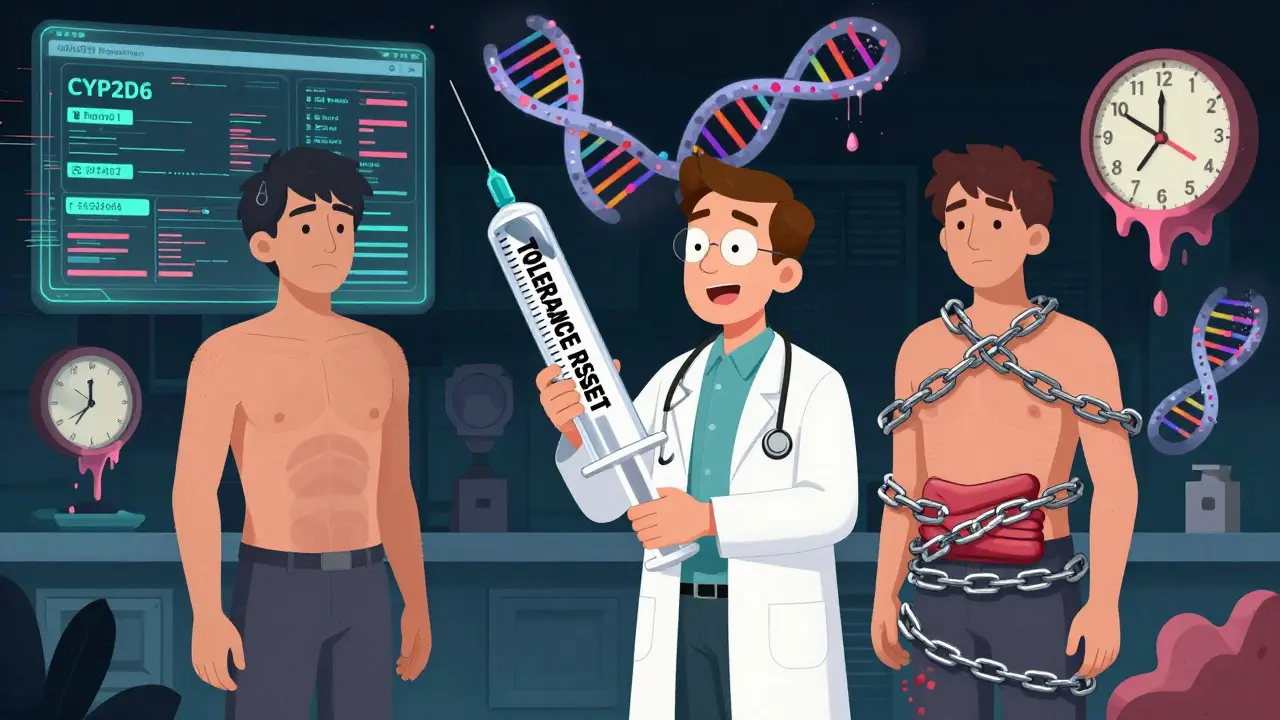
Here’s the thing: your genes matter. About 7-10% of white people have a variation in the CYP2D6 gene that makes them slow metabolizers of codeine and tramadol. For them, the drug builds up-more side effects, not less. Meanwhile, 1-2% of Asians have the same issue. So what’s normal for one person might be dangerous for another.
That’s why blanket advice like “just wait it out” can be risky. If you’re a poor metabolizer, your dizziness might not fade. It might get worse. That’s why pharmacogenetic testing is becoming more common-especially for antidepressants, pain meds, and antipsychotics.
When Tolerance Isn’t Tolerance
Not every change in how you feel is tolerance. Sometimes, your condition is getting worse. A patient on an antidepressant might think their anxiety is returning because they’ve developed tolerance. But it could be stress, sleep loss, or a new life event. Doctors miss this 25-30% of the time.
That’s why monitoring matters. If your symptoms return after improvement, don’t assume it’s tolerance. Check in with your provider. Blood tests, symptom logs, and dose reviews help separate true tolerance from other causes.
Can You Reverse Tolerance?
Yes-sometimes. If you take a break, your body can reset. This is called a “drug holiday.”
Studies on nitroglycerin (used for heart angina) show that after 10-14 days off the drug, tolerance reverses by 40-60%. That’s why doctors sometimes prescribe it with a daily 10-12 hour break.
For opioids or benzodiazepines, a short break can help too-but only under medical supervision. Stopping suddenly can cause withdrawal. The goal isn’t to quit. It’s to reset sensitivity so lower doses can work again.
And yes, some side effects can come back if you stop and restart. That’s why many people on SSRIs feel nauseous again if they miss a dose for a few days.
What’s Next?
The future of medication use is personal. By 2030, most new brain-targeting drugs will be designed with tolerance in mind from day one. Some will come with built-in “tolerance blockers.” Others will be paired with genetic tests to predict who will adapt-and who won’t.
For now, the best tool you have is awareness. Know that side effects fading doesn’t mean the drug isn’t working. Know that some side effects won’t fade-and that’s okay, as long as you’re managing them. And know that your body isn’t broken. It’s just doing what it’s designed to do: adapt.
Do all side effects eventually go away with long-term medication use?
No. Some side effects fade because your body adapts-like dizziness or nausea. Others don’t, because they’re tied to systems your body can’t easily change, like sexual function or bowel motility. For example, constipation from opioids rarely improves, and sexual side effects from SSRIs often last indefinitely. It depends on the drug and the biological pathway it affects.
Is tolerance the same as addiction?
No. Tolerance means your body needs more of the drug to get the same effect. Addiction involves compulsive use despite harm, cravings, and loss of control. You can have tolerance without addiction-like someone on long-term pain meds who takes their dose as prescribed and feels fine. Addiction is about behavior. Tolerance is about biology.
Can I speed up tolerance to reduce side effects?
No. Increasing your dose won’t make side effects disappear faster-it can make them worse or lead to dependence. Tolerance develops through biological changes over time, not by taking more. Trying to rush it can cause overdose, organ stress, or long-term health risks. Always follow your doctor’s dosing schedule.
Why do some people develop tolerance faster than others?
Genetics play a big role. Variations in liver enzymes like CYP2D6 affect how quickly drugs are broken down. Some people metabolize drugs fast, so tolerance builds quicker. Others are slow metabolizers and feel stronger effects longer. Age, liver health, and other medications also influence how fast tolerance develops.
Should I stop my medication if side effects go away?
No. Side effects fading often means the drug is working as intended. For example, if nausea from an antidepressant disappears after two weeks, that’s a sign your body is adapting-not that you no longer need the drug. Stopping abruptly can cause withdrawal or relapse. Always consult your doctor before making changes.
Annie Choi
January 15, 2026 AT 05:46Sarah Mailloux
January 15, 2026 AT 08:51Jami Reynolds
January 15, 2026 AT 15:33Amy Ehinger
January 17, 2026 AT 00:53Frank Geurts
January 17, 2026 AT 08:52Amy Vickberg
January 17, 2026 AT 09:18Nilesh Khedekar
January 18, 2026 AT 11:12Crystel Ann
January 18, 2026 AT 17:41Dan Mack
January 19, 2026 AT 17:37Nicholas Urmaza
January 20, 2026 AT 04:04RUTH DE OLIVEIRA ALVES
January 21, 2026 AT 17:09