
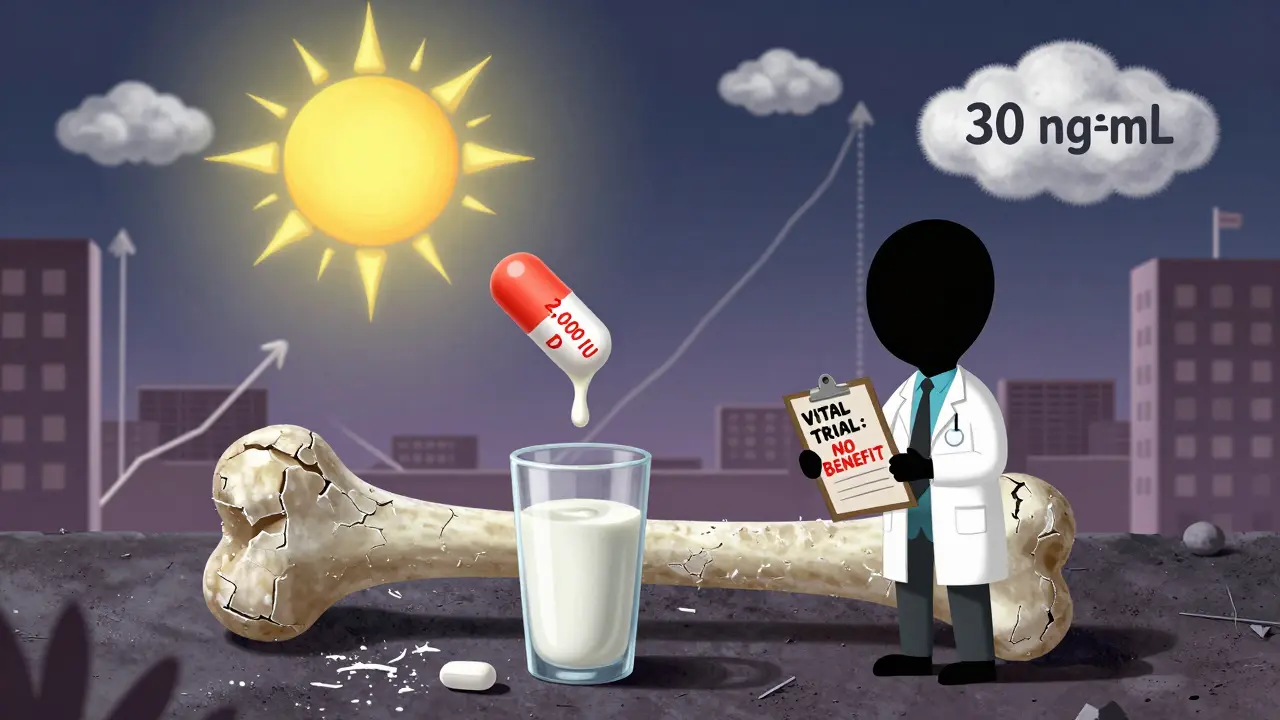
For decades, doctors told us: take vitamin D to protect your bones. But what if the advice was wrong? Or at least, oversimplified? If you're over 50, you've probably been handed a bottle of vitamin D pills with a note saying, "Take one daily." But recent science is flipping the script. High doses might not help - and could even hurt. This isn't about fear. It's about clarity. Let’s cut through the noise and show you exactly what vitamin D does for your bones, who needs it, and how to actually use supplements without making things worse.
What Vitamin D Actually Does for Your Bones
Vitamin D isn’t just a supplement. It’s a hormone your body makes from sunlight. Its main job? Making sure your gut absorbs calcium from food. Without enough vitamin D, you absorb maybe 10-15% of the calcium you eat. With enough? That jumps to 60-80%. That’s the difference between your bones staying strong and slowly crumbling over time.
It’s not just about calcium, though. Vitamin D also helps your body rebuild bone tissue properly. If you’re low, your bones get weak and porous. That’s how osteoporosis starts. And here’s something most people miss: vitamin D keeps your muscles strong. Weak muscles mean more falls. And falls? That’s how broken hips happen. So vitamin D isn’t just about bone density - it’s about keeping you upright.
The Numbers That Matter: What’s Deficient? What’s Enough?
Doctors measure vitamin D with a blood test: 25-hydroxyvitamin D. The old standard said you need at least 30 ng/mL (75 nmol/L). But that number is being challenged.
The VITAL trial, led by Harvard researchers and tracking over 25,000 people for five years, found no reduction in fractures among healthy adults taking 2,000 IU daily. That’s huge. It means if you’re not deficient, extra vitamin D doesn’t protect your bones.
So what’s the real cutoff? Here’s what the data shows:
- Below 20 ng/mL (50 nmol/L): Deficient. You’re at real risk for bone loss.
- 21-29 ng/mL (52.5-72.5 nmol/L): Insufficient. You’re not thriving, but you’re not in crisis.
- 30 ng/mL (75 nmol/L) and above: Sufficient for most. But not necessarily better.
Here’s the twist: once you’re above 30, more doesn’t mean more protection. In fact, the JAMA 2020 study found that people taking 4,000 IU or 10,000 IU daily for three years had lower bone density than those taking 400 IU. Yes - more vitamin D led to weaker bones.
Supplements: More Isn’t Better
The supplement industry wants you to believe bigger doses = better bones. But science says otherwise.
A 2023 meta-analysis in Nutrients looked at 15 studies involving over 50,000 people. The results? Calcium and vitamin D together reduced hip fracture risk by 30% - but only if vitamin D was under 400 IU per day. At higher doses? No benefit. Zero. And in some cases, bone density dipped.
Why? We don’t fully know. But one theory is that too much vitamin D overstimulates bone remodeling. Your bones get broken down and rebuilt too fast, and the new bone doesn’t have time to mineralize properly. Think of it like painting a wall: if you keep scraping off the old coat before the new one dries, you’ll never get a solid finish.
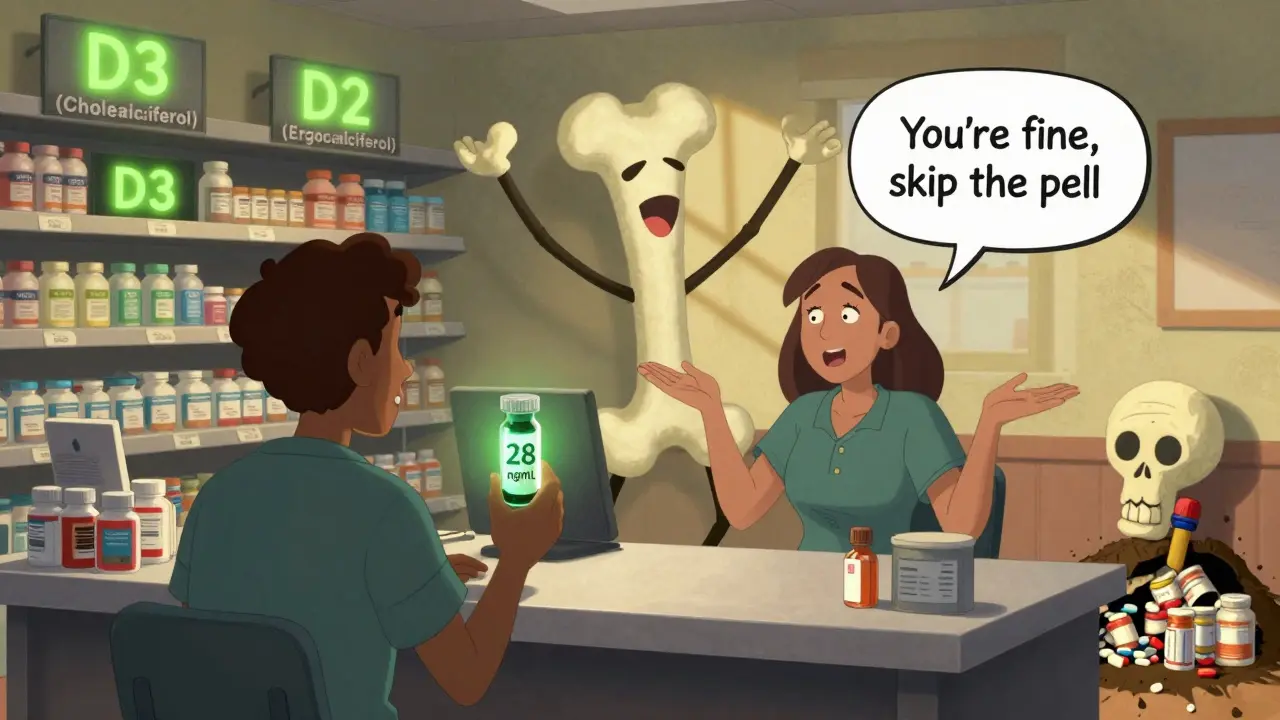
And here’s something most people don’t realize: vitamin D3 is far better than D2. D3 (from animal sources or sunlight) raises blood levels 87% more effectively than D2 (from plants or fungi). If you’re taking a supplement, make sure it says cholecalciferol - not ergocalciferol.
Who Actually Needs Supplements?
Not everyone. And that’s the key.
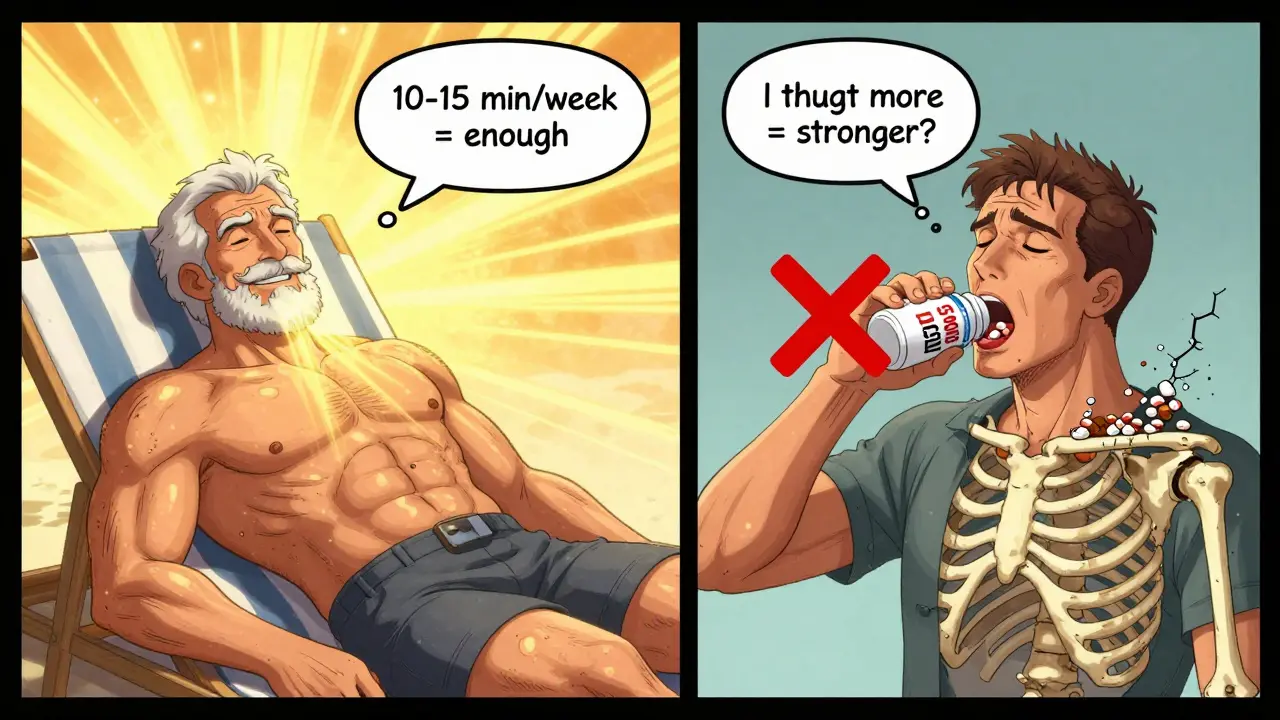
If you’re healthy, eat fish occasionally, get some sun, and aren’t overweight - you likely don’t need a daily pill. The U.S. Preventive Services Task Force gave vitamin D a Grade D recommendation for fracture prevention in healthy adults. That means: "The harms likely outweigh the benefits."
But here’s who does need it:
- People with blood levels under 20 ng/mL: If your test says you’re deficient, a short-term boost (1,000-2,000 IU/day for 3 months) can help.
- Those over 60 with low sun exposure: Especially in places like Melbourne, where winter sun is weak.
- People with obesity (BMI ≥30): Fat cells trap vitamin D. You may need double the dose.
- People with osteoporosis or a history of fractures: For these cases, vitamin D is part of a treatment plan - but it’s paired with medication, not a standalone fix.
One Reddit user, "BoneHealthWarrior," said their DEXA scan improved 2.1% after going from 1,000 IU to 5,000 IU. But another, "FractureFear," saw their bone density drop 3.7% after 10,000 IU daily. These aren’t outliers. They’re signals.
How to Take Vitamin D Right
It’s not just about the dose. Timing and form matter.
Take it with your biggest meal. Vitamin D is fat-soluble. A 2015 study showed absorption jumped 56.7% when taken with dinner versus on an empty stomach. No need to overcomplicate - just take it with your main meal of the day.
Choose quality. ConsumerLab’s 2022 review found 15% of supplements contained less than 90% of the labeled vitamin D. One brand had only 72% of what it claimed. Another had 128%. Stick to trusted brands. Look for third-party testing (USP, NSF, or ConsumerLab verified).
Don’t pair it with high-dose calcium. The combination works - but only if both are moderate. Too much calcium (over 1,200 mg/day) with high-dose vitamin D may increase kidney stone risk and even harm bone structure. If you’re supplementing calcium, keep it under 1,000 mg/day unless you’re diagnosed with severe deficiency.
What About Sunlight?
In Melbourne, even in winter, 10-15 minutes of midday sun on your arms and face, 3-4 times a week, can produce enough vitamin D for most people. Darker skin? You need more time - up to 3-6 times longer. But sunscreen doesn’t block all vitamin D production. You don’t need to bake in the sun. Just get out there.
And don’t forget: vitamin D is stored in fat. If you’re getting sun regularly, you’re building a reserve. That’s why levels often stay stable through winter - if you’ve been active in spring and summer.
The Bottom Line: Less Is More
Here’s what the science says now:
- If your vitamin D level is below 20 ng/mL - fix it. Start with 1,000-2,000 IU/day for 3 months, then retest.
- If you’re between 20-30 ng/mL - you’re okay. No need to rush to 5,000 IU.
- If you’re above 30 ng/mL - you likely don’t need more. Stop taking high-dose supplements.
- Don’t take more than 4,000 IU/day unless you’re under medical supervision.
- Get your blood tested before you start. Don’t guess.
The days of blanket vitamin D recommendations are over. This isn’t about taking pills to feel safe. It’s about using the right tool for the right job. For most healthy people, sunlight and food are enough. For those with real deficiency, a short, targeted boost makes all the difference. But more? That’s not healing. It’s noise.
How do I know if I’m deficient in vitamin D?
The only reliable way is a blood test for 25-hydroxyvitamin D. Symptoms like fatigue, muscle weakness, or bone pain are vague and can mean many things. Don’t self-diagnose. If you’re over 50, live in a northern climate, have dark skin, or are overweight, ask your doctor for a test. It’s simple, affordable, and tells you exactly what you need.
Is 5,000 IU of vitamin D daily safe?
For most people, 5,000 IU daily is not necessary and may be harmful. Studies show no extra benefit for bone health at this dose. In fact, higher doses have been linked to lower bone density. The tolerable upper limit is 4,000 IU/day for adults. Only take 5,000 IU or more if you have severe deficiency and are under medical supervision.
Should I take vitamin D with calcium?
Only if you’re deficient in both. For most people, getting calcium from food (dairy, leafy greens, tofu) is enough. If you take supplements, keep calcium under 1,000 mg/day. High-dose calcium with high-dose vitamin D has no proven benefit and may increase kidney stone risk or worsen bone structure. The combo works best when both are modest.
What’s the best form of vitamin D to take?
Vitamin D3 (cholecalciferol). It’s more effective than D2 (ergocalciferol) at raising and maintaining blood levels. Look for supplements labeled "D3" and choose brands with third-party testing (USP, NSF, or ConsumerLab). Avoid gummies or cheap store brands - they often underdeliver on dosage.
Can I get enough vitamin D from food alone?
It’s very hard. Fatty fish like salmon have about 570 IU per 3 oz. Fortified milk has 100 IU per cup. Egg yolks have 44 IU. Even a great diet won’t get you to 600-800 IU without sunlight or supplements. For most people, especially in winter or with limited sun exposure, supplementation is necessary - but only if you’re deficient or at risk.
Sam Pearlman
February 18, 2026 AT 12:04Carrie Schluckbier
February 19, 2026 AT 23:00guy greenfeld
February 21, 2026 AT 03:39Adam Short
February 22, 2026 AT 23:11Steph Carr
February 23, 2026 AT 17:23Agnes Miller
February 24, 2026 AT 15:09Liam Earney
February 26, 2026 AT 05:37Brenda K. Wolfgram Moore
February 26, 2026 AT 14:02Linda Franchock
February 26, 2026 AT 19:00