
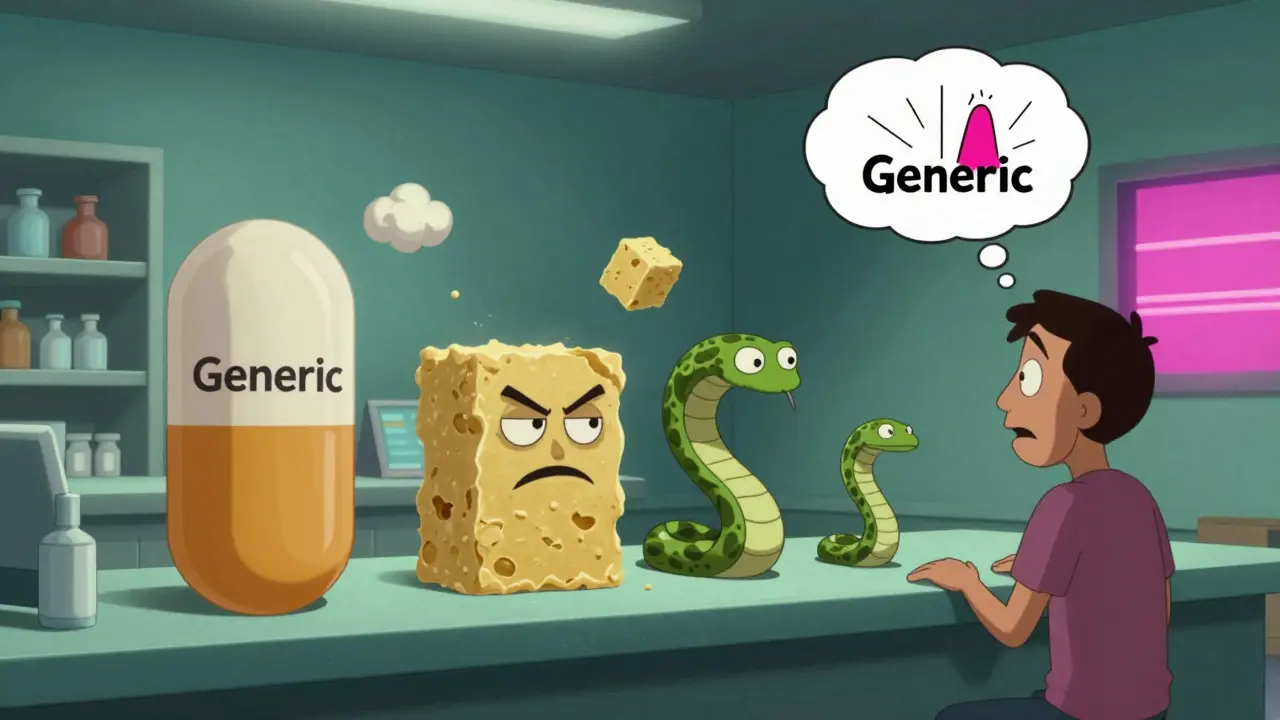
When you pick up a prescription, you might not think twice about whether it’s the brand-name drug or the cheaper generic version. After all, the FDA says they’re the same. But for some people, switching to a generic isn’t just a cost-saving move-it’s a health risk. Why do some patients feel worse after switching? And why do others never notice a difference? The answer lies in what’s inside the pill, not just what’s on the label.
Same Active Ingredient, Different Pills
Generic drugs are required by law to contain the exact same active ingredient as the brand-name version. That part is non-negotiable. But here’s the catch: the rest of the pill? It’s wide open for variation. Fillers, binders, dyes, coatings, preservatives-these are called inactive ingredients, or excipients. And they make up 80% to 99% of the pill’s total weight.One generic version of levothyroxine might use cornstarch and talc as fillers. Another might use lactose and cellulose. One might have a film coating that dissolves quickly. Another might be enteric-coated to delay absorption. These differences sound small, but for certain drugs, they can change how your body absorbs the medicine-sometimes enough to cause real problems.
When Small Changes Cause Big Problems
Not all medications are created equal when it comes to tolerance for variation. Some drugs have what’s called a narrow therapeutic index (NTI). That means the difference between a dose that works and a dose that’s toxic is tiny. A 10% to 15% change in blood levels can trigger serious side effects-or make the drug stop working entirely.Drugs in this high-risk category include:
- Levothyroxine (for hypothyroidism)
- Warfarin (a blood thinner)
- Phenytoin and carbamazepine (for seizures)
- Digoxin (for heart rhythm)
For example, a 2019 study in JAMA Internal Medicine followed over 2,000 people who switched from brand-name Synthroid to generic levothyroxine. Nearly 24% had thyroid hormone levels swing out of the safe range within six months. That’s more than double the rate of those who stayed on the brand. Patients reported fatigue, weight gain, brain fog, and mood swings-all classic signs of under- or over-treated hypothyroidism.
Another study in Epilepsia found that 17% of epilepsy patients had breakthrough seizures after switching from brand-name lamotrigine to generics. That’s not a small number-it’s life-threatening.
Why the FDA Allows This
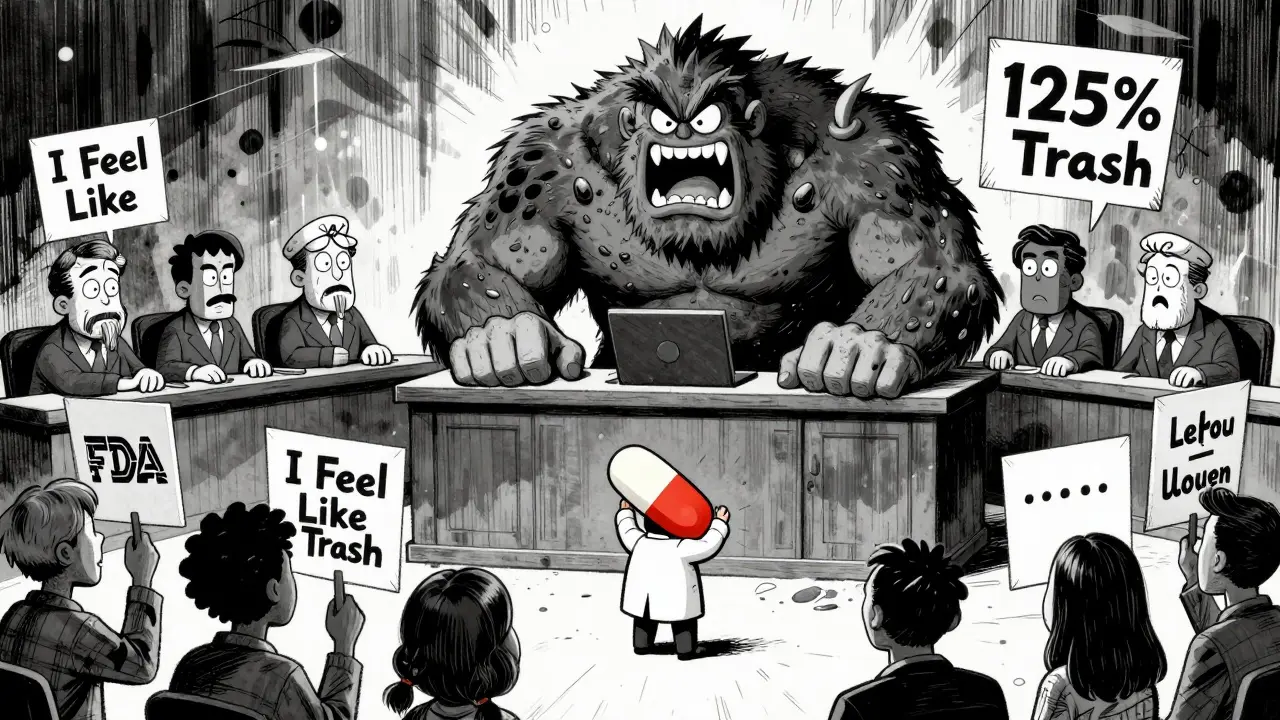
The FDA requires generics to be bioequivalent: they must deliver between 80% and 125% of the active ingredient compared to the brand-name drug. That sounds like a wide range-until you realize two different generics of the same drug can be at opposite ends of that scale and still both be approved.Imagine one generic delivers 82% of the drug’s concentration, and another delivers 123%. Both meet FDA standards. But if you switch from one to the other, your body gets a 41% jump in exposure. That’s not a typo. That’s legal.
Dr. Robert L. Lins, a pharmacokinetic expert, put it plainly: “Two generic formulations may differ pharmacokinetically by more than a 4% difference if one product is on the low side of the BE limit and the other is on the high side.” In other words, the system is designed to allow variation-and for most drugs, that’s fine.
But for NTI drugs, that variation isn’t just theoretical. It’s dangerous.
What Patients Are Saying
Real people are noticing this. On Drugs.com, 38% of users taking generic levothyroxine said they felt worse than when they were on Synthroid. On Reddit’s r/pharmacy, 63% of comments about generic bupropion (used for depression and smoking cessation) described headaches, anxiety, or mood crashes after switching. One user wrote: “I was stable for years on Wellbutrin XL. Switched to generic-suddenly I couldn’t get out of bed. My doctor said it’s all in my head. It wasn’t.”Pharmacists are seeing it too. A 2022 survey of over 3,200 community pharmacists found that 68% had seen patients have adverse reactions after switching between different generic manufacturers. Over 40% said it happened “frequently”-more than five cases per month.
ThyroidChange, a patient advocacy group, surveyed nearly 5,000 thyroid patients. Over 70% said their symptoms got worse after switching to generic levothyroxine. More than half needed a dose adjustment just to feel like themselves again.
What You Can Do
If you’re on a medication with a narrow therapeutic index, don’t assume all generics are interchangeable. Here’s what works:- Ask your doctor to write “Dispense as Written” or “Do Not Substitute” on your prescription. This legally blocks the pharmacy from switching your drug without approval.
- Stick with the same generic manufacturer if you’re already stable. If your pharmacy switches to a different brand of generic, call your doctor immediately.
- Monitor your symptoms. Keep a simple log: date, medication, dose, how you feel, any new side effects. Bring it to appointments.
- Check inactive ingredients. If you have allergies (like to lactose or sulfites), request the FDA’s Inactive Ingredient Database from your pharmacist. Some generics contain allergens the brand doesn’t.
- Ask about authorized generics. These are made by the original brand company but sold under a generic label. For example, the FDA approved an authorized generic of Synthroid in 2023. It’s chemically identical to the brand, just cheaper.
Why This Isn’t About “Placebo” or “Anxiety”
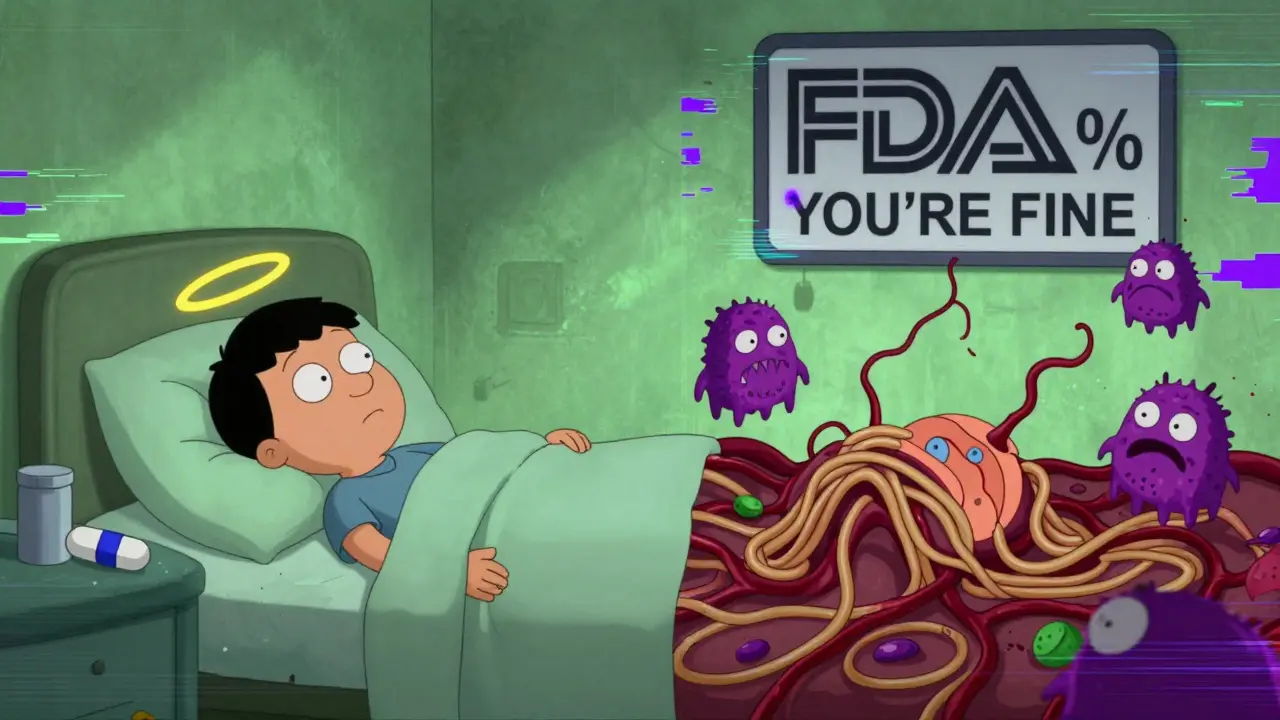
Some doctors dismiss patient complaints as psychological. “It’s just the nocebo effect,” they say. But the data doesn’t support that. The same patients who report feeling worse after switching to generics often return to feeling normal when switched back to their original formulation. That’s not placebo. That’s pharmacology.And it’s not just anecdotal. Multiple peer-reviewed studies show statistically significant differences in outcomes for NTI drugs. The FDA itself acknowledges this: 4% of generic drugs carry a “BX” rating, meaning they may not be therapeutically equivalent for certain patients.
The Bigger Picture
The U.S. saves $373 billion a year because of generics. That’s huge. But saving money shouldn’t come at the cost of patient safety. The European Medicines Agency uses a tighter bioequivalence range (90-111%) for NTI drugs-resulting in fewer generic approvals, but also fewer reported problems.The FDA is starting to catch up. In 2024, they released draft guidance proposing stricter standards for 23 high-risk medications. Research is also emerging on pharmacogenomic testing-using your DNA to predict how you’ll respond to a specific drug formulation. One 2024 study showed it could predict response accuracy at 83.7% for certain drugs.
For now, the system still favors cost over consistency. But patients aren’t silent. And the evidence is clear: for some people, generics aren’t interchangeable. They’re individual.
dean du plessis
December 28, 2025 AT 03:44Been on generic levothyroxine for three years now and never noticed a thing. Maybe it’s just my body or maybe I got lucky. Either way, I don’t get the drama.
Caitlin Foster
December 29, 2025 AT 09:31Ohhh so THIS is why my brain felt like it was wrapped in wet cardboard for six months??
My doctor told me I was ‘overreacting’-turns out my thyroid was in freefall.
Now I’m on the authorized generic. And yes, I’m still mad.
Nikki Thames
December 31, 2025 AT 01:49Let us not obscure the fundamental truth: the pharmaceutical industry has turned human physiology into a cost-center. The FDA’s 80–125% bioequivalence window is not a scientific standard-it is a corporate loophole dressed in regulatory robes. To equate a pill’s chemical composition with therapeutic equivalence is to confuse mathematics with biology. The body is not a test tube. It is a symphony of biochemistry, and no two symphonies play the same note identically.
Paula Alencar
January 2, 2026 AT 01:23As a clinical pharmacist with over two decades of experience managing endocrine disorders, I have witnessed the quiet devastation wrought by unmonitored generic substitutions in patients on narrow therapeutic index medications. The notion that ‘they’re the same’ is not merely inaccurate-it is dangerously reductive. The excipients-those inert, overlooked components-can alter dissolution kinetics, gastric transit time, and even gut microbiome interactions. For a patient on warfarin, a 12% fluctuation in bioavailability may precipitate a pulmonary embolism. For a patient on phenytoin, it may trigger status epilepticus. These are not anecdotes. These are documented clinical events. The current regulatory framework prioritizes fiscal efficiency over physiological fidelity. Until the FDA adopts the EMA’s 90–111% range for NTI drugs, we are knowingly exposing vulnerable populations to preventable harm. This is not a debate about cost-it is a debate about ethics.
Elizabeth Ganak
January 2, 2026 AT 12:26i switched to generic bupropion last year and felt like i was slowly forgetting how to be happy
my doctor said it was stress
so i switched back to the brand and suddenly i could breathe again
no one listens until you scream
Chris Garcia
January 3, 2026 AT 14:58In Nigeria, we rarely have access to brand-name drugs, so generics are our lifeline. But I’ve seen the same phenomenon-patients on epilepsy meds who suddenly seize after a pharmacy switch. The issue isn’t that generics are bad-it’s that we lack the infrastructure to track which manufacturer produced which batch. We need a national drug traceability system, not just for generics but for every pill. Knowledge is power, and power is safety. If we can track a phone across continents, why can’t we track a pill across pharmacies?
Nicola George
January 3, 2026 AT 21:52So the system lets two generics differ by 41% in drug exposure and calls it ‘legal’?
Meanwhile, my insurance won’t cover the brand because ‘it’s too expensive’
But if I die because my thyroid levels went haywire, who pays for the funeral?
Not the FDA. Not the pharmacy. Not the insurer.
It’s always the patient.
Todd Scott
January 4, 2026 AT 05:49There’s a growing body of research suggesting that pharmacogenomic testing-analyzing how your genes metabolize drugs-could predict whether you’ll respond to a particular generic formulation. A 2024 study in Nature Pharmacogenomics showed an 83.7% accuracy rate in predicting adverse reactions to levothyroxine based on CYP2D6 and UGT1A1 variants. Imagine a future where your pharmacist pulls up your DNA profile before dispensing. That’s not sci-fi-it’s coming. Until then, document everything. Track your symptoms. Demand the manufacturer name. And if your doctor dismisses you? Get a second opinion. Your body is not a variable in a cost-benefit equation.
Janice Holmes
January 4, 2026 AT 13:41THEY LET TWO GENERIC VERSIONS OF THE SAME DRUG DIFFER BY 41% IN BIOAVAILABILITY AND CALL IT ‘SAFE’??
THEY’RE NOT TREATING PATIENTS-THEY’RE PLAYING PHARMACEUTICAL ROULETTE.
AND WHEN YOU LOSE, THEY SAY ‘IT’S JUST THE NOCEBO EFFECT.’
NO. IT’S A SYSTEM THAT VALUES PROFITS OVER LIVES.
WE NEED A MOVEMENT.
WE NEED TO BOYCOTT GENERIC SUBSTITUTIONS FOR NTI DRUGS.
AND WE NEED TO MAKE THE FDA ANSWER FOR THIS.
Alex Lopez
January 5, 2026 AT 13:19My aunt was on Synthroid for 15 years. Switched to generic. Got dizzy, gained 20 lbs, started crying for no reason. Went back to brand. Back to normal in 3 weeks.
Her doctor said ‘it’s all in your head.’
So she got a second opinion. And a lawyer.
Turns out, she’s not the only one. The FDA has a list of 23 NTI drugs where this happens. They just don’t tell you.
Don’t trust the label. Trust your body. And if your doctor won’t listen? Print this post and hand it to them.
They’ll read it.
They always do.
James Bowers
January 5, 2026 AT 20:08Anyone who claims generics are ‘the same’ has never monitored a patient on warfarin. INR fluctuations from generic switches are not hypothetical-they are charted, documented, and frequently fatal. The FDA’s bioequivalence standards are archaic and dangerously inadequate for high-risk medications. This is not a partisan issue. It is a medical emergency disguised as a cost-saving measure. Until the agency revises its guidelines for NTI drugs, we are not practicing medicine-we are gambling with human lives.