GDMT: What It Is and How It Shapes Modern Heart Failure Treatment
When it comes to treating heart failure, GDMT, guideline-directed medical therapy. Also known as guideline-based therapy, it’s the standardized, evidence-backed approach doctors use to extend life and improve quality of life for people with heart failure. This isn’t just a list of drugs—it’s a carefully timed, step-by-step strategy built on years of clinical trials and real-world outcomes. GDMT isn’t optional. It’s the foundation of care.
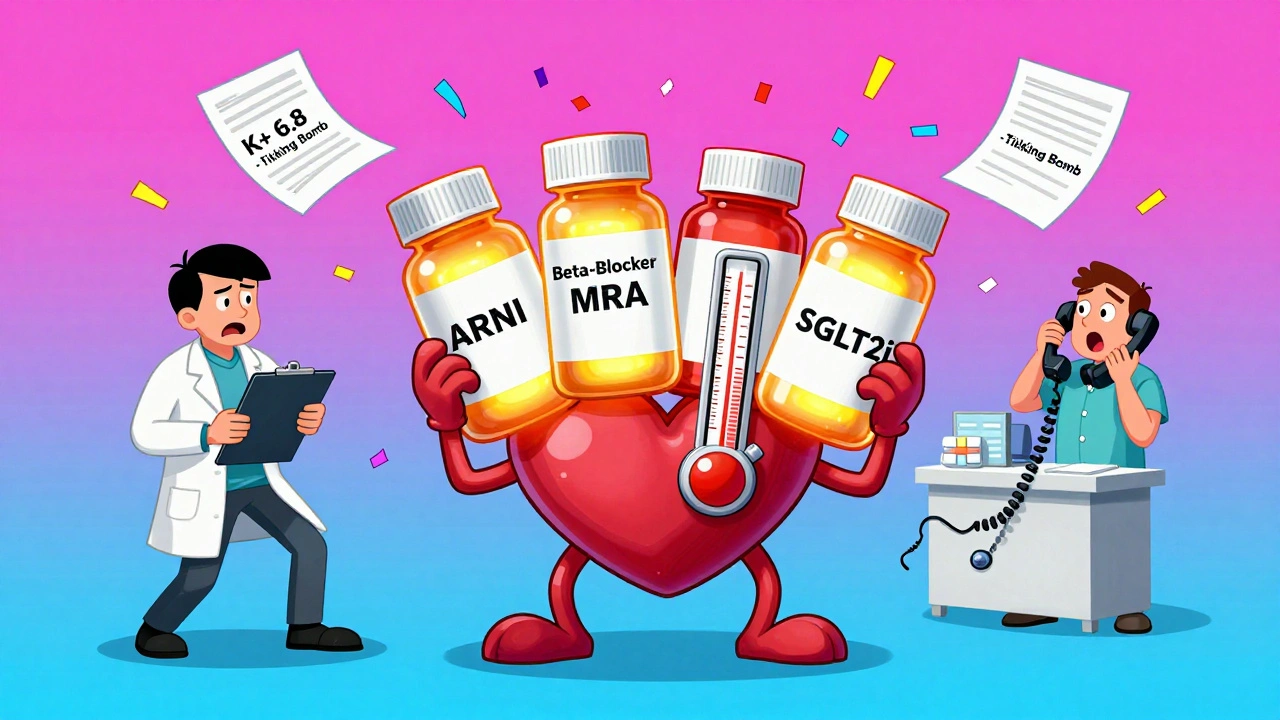
At its core, GDMT includes four main drug classes that work together: SGLT2 inhibitors, a class of diabetes drugs now proven to protect the heart, ARNIs, a newer type of blood pressure medication that replaces older ACE inhibitors in many cases, beta-blockers, drugs that slow the heart and reduce strain, and MRAs, mineralocorticoid receptor antagonists that help remove excess fluid and reduce scarring in the heart. These aren’t chosen randomly. They’re added in sequence, with dosages slowly increased until patients reach the target levels shown to cut hospitalizations and death by up to 50%.
What makes GDMT different from old-school treatment? Timing. In the past, doctors waited to add drugs until symptoms got worse. Now, we start as soon as heart failure is diagnosed—even if the patient feels fine. The goal isn’t just to manage symptoms. It’s to reverse damage. Studies show that patients who stick to full GDMT for a year often see their heart function improve, sometimes dramatically. That’s not a miracle. It’s science.
But GDMT isn’t one-size-fits-all. It changes based on whether someone has heart failure with reduced ejection fraction (HFrEF) or preserved (HFpEF). It also shifts if the patient has diabetes, kidney disease, or high blood pressure. That’s why so many of the posts in this collection focus on drug interactions, dosing challenges, and how to help patients stay on track. You’ll find articles on how to explain GDMT to seniors, how to manage side effects like low blood pressure or kidney changes, and why switching from old drugs like ACE inhibitors to ARNIs can be life-changing.
There’s also a big gap between what guidelines say and what happens in real life. Many patients never reach full GDMT doses. Some stop because of side effects. Others get confused by multiple pills. That’s where pharmacists, care teams, and clear communication come in. The posts here cover everything from how to use pill organizers safely with GDMT drugs to how to handle generic substitutions without losing effectiveness.
If you’re living with heart failure—or caring for someone who is—GDMT isn’t just medical jargon. It’s your best shot at a longer, more active life. And the good news? It works. The hard part? Making sure you get it right, on time, and without stopping. Below, you’ll find real-world guides on how to navigate this therapy, avoid common mistakes, and understand what each drug is really doing inside your body.