Polypharmacy in Elderly: Risks, Reviews, and Real Solutions
When older adults take five or more medications at once, it’s called polypharmacy in elderly, the use of multiple medications by older patients, often leading to unintended side effects and dangerous interactions. Also known as multimorbidity drug burden, it’s not always about needing all those pills—it’s often about how they pile up over time.
Each new prescription can seem harmless on its own. A blood pressure pill here, a sleep aid there, a painkiller for arthritis, maybe a stomach protector, and a cholesterol drug. But together, they can turn into a minefield. The geriatric polypharmacy, the complex use of multiple drugs in older adults, often without clear benefit or with high risk of harm isn’t just about quantity—it’s about how these drugs interact with aging bodies. Slower metabolism, weaker kidneys, and changing brain chemistry mean what was safe at 50 can become dangerous at 75. Studies show that over 40% of seniors on five or more drugs experience at least one serious side effect each year. Falls, confusion, dizziness, and kidney problems aren’t just "part of getting old"—they’re often drug-induced.
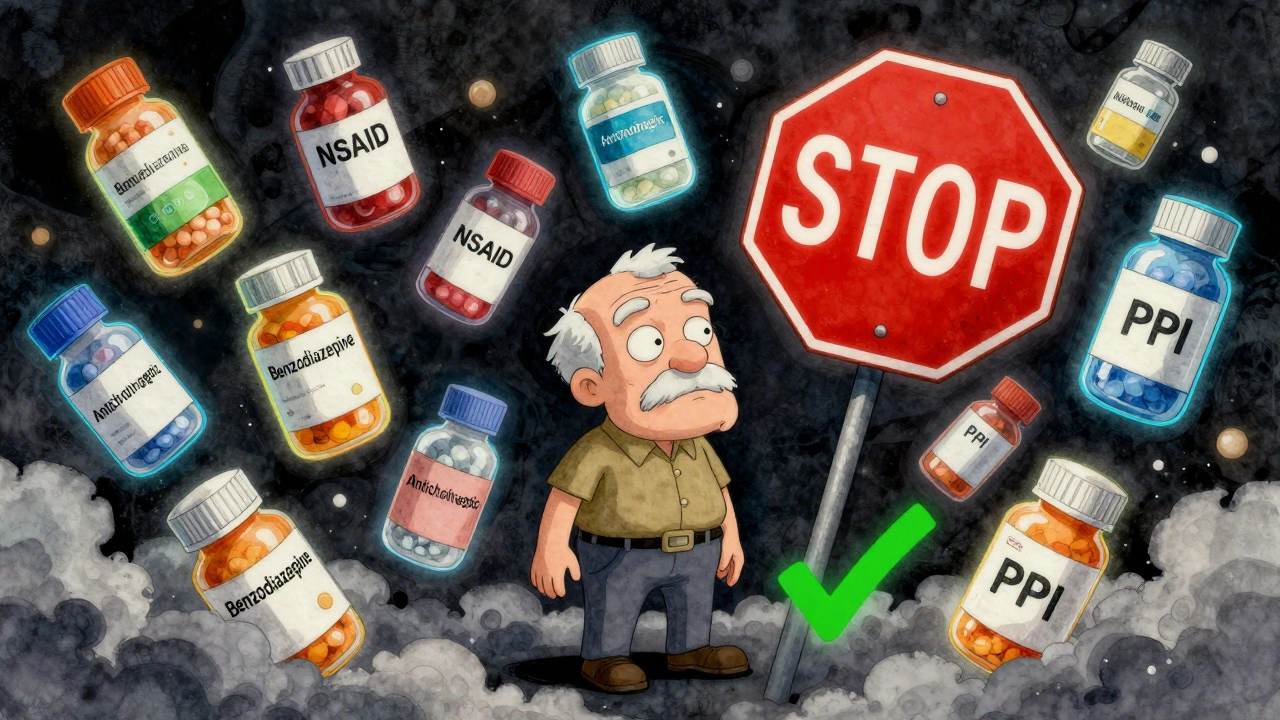
That’s where deprescribing, the planned and supervised process of reducing or stopping medications that may no longer be beneficial or are causing harm comes in. It’s not about stopping everything. It’s about asking: "Does this still help?" and "Is the risk worth it?" Tools like the Beers Criteria, a widely used list of potentially inappropriate medications for older adults, developed by the American Geriatrics Society help doctors and pharmacists spot high-risk drugs like anticholinergics, long-acting benzodiazepines, and certain painkillers that should be avoided or replaced. Pharmacist-led reviews have cut hospital visits by up to 30% in some clinics by simply trimming unnecessary pills.
And it’s not just about the drugs themselves. It’s about how they’re managed. Pill organizers help, but only if used right. Generic substitutions are safe—but only if patients understand they’re not "inferior." And when a senior switches doctors or moves to a new pharmacy, that’s when the biggest mistakes happen. One pill gets added, another forgotten, and suddenly, someone’s on eight drugs they didn’t know they were taking.
What you’ll find below are real stories, real data, and real strategies. From how to talk to a doctor about cutting back, to why melatonin can make falls worse, to how a simple medication review can prevent a hospital stay—you’ll see how polypharmacy in elderly isn’t inevitable. It’s manageable. And with the right approach, it doesn’t have to steal another year of your life.